The general public’s political views are strongly linked to their attitudes on climate and energy issues. But politics is a less important factor on biomedical, food safety, space issues.
About Pew Research Center
Pew Research Center is a nonpartisan, nonadvocacy fact tank that informs the public about the issues, attitudes and trends shaping the world. It does not take policy positions. The Center conducts public opinion polling, demographic research, computational social science research and other data-driven research. It studies politics and policy; news habits and media; the internet and technology; religion; race and ethnicity; international affairs; social, demographic and economic trends; science; research methodology and data science; and immigration and migration. Pew Research Center is a subsidiary of The Pew Charitable Trusts, its primary funder.
The general public’s political views are strongly linked to their attitudes on climate and energy issues. But politics is a less important factor on biomedical, food safety, space issues.
One of the key trends in public opinion over the past few decades has been a growing divide among Republicans and Democrats into ideologically uniform “silos.” A larger share of the American public expresses issue positions that are either consistently liberal or conservative today than did so two decades ago, and there is more alignment between ideological orientation and party leanings.1
Against this broader backdrop, some have come to worry that many – if not all – the issues connected to science are viewed by the public through a political lens. However, the Pew Research Center finds in a new analysis of public opinion on a broad set of science-related topics that the role of party and ideological differences is not uniform. Americans’ political leanings are a strong factor in their views about issues such as climate change and energy policy, but much less of a factor when it comes to issues such as food safety, space travel and biomedicine. At the same time, there are factors other than political party and ideology that shape the public’s often-complex views on science matters. For instance there are notable issues on which racial and generational differences are pronounced, separate and apart from politics.
To better understand the multiple influences on people’s attitudes and beliefs, this report uses statistical modeling to characterize the factors most strongly associated with people’s opinions on these topics. These techniques parse the independent effect of multiple factors at the same time, allowing us to understand with more clarity where traits such as political party, age and race – three important factors in opinion that overlap in meaningful ways in the United States —individually matter.
Here are the key patterns that emerge in our analysis:
Party and Ideology Matter When It Comes to Climate, Energy, Government Funding of Science
Politics are at the center of people’s views about several of today’s most hot-button scientific issues, especially those surrounding climate, energy policy, and the government’s role in funding science initiatives. Overall, Democrats and liberals are more likely than Republicans and conservatives to say the Earth is warming, human activity is the cause of the change, the problem is serious and there is scientific consensus about the climate changes underway and the threat it poses to the planet.
For example, 71% of Democrats and independents who lean to the Democratic Party say the Earth is warming due to human activity, compared with 27% among their Republican counterparts (a difference of 44 percentage points). This report shows that these differences hold even when taking into account the differing characteristics of Democrats and Republicans, such as their different age and racial profiles.
Democrats and leaning Democrats also are more likely to favor policies to mitigate greenhouse gas emissions and promote alternative energy sources. Republicans and independents who lean to the GOP are more likely to favor some key energy development policies such as offshore oil drilling, fracking and construction of nuclear power plants. In a December 2014 Pew Research survey, fully 75% of Democrats and leaning Democrats said the United States should prioritize alternative energy sources, such as wind and solar power, over expansion of oil, coal and gas production. By contrast, only 43% of Republicans and leaning Republicans expressed support for prioritizing alternative energy production over traditional energy development.
Another set of topics where consistent differences along party and ideological lines occur are views about government funding of the science and engineering enterprise. Fully 83% of Democrats and leaning Democrats say government investment in basic scientific research pays off in the long run, and just 12% say such investments are not worth it. A considerably smaller majority of the GOP and independents who lean to the GOP see benefits from government funding of basic science; 62% say government investments pay off in the long run, but 33% say such investments are not worth it. Political differences on these topics are consistent with party and ideological differences about government spending more broadly, whether related to science or to other domains.
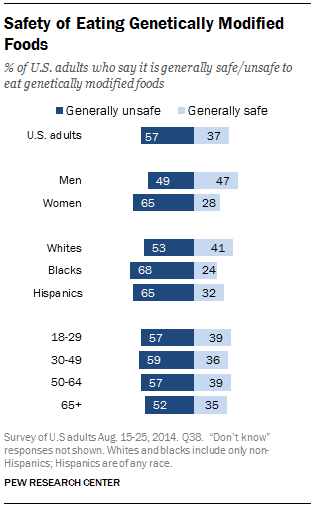
While political differences are at the center of people’s views on climate and energy issues, there are a host of other science issues where political factors either share influence with other traits or simply don’t matter. For example, party and ideology are among several factors that influence public views about human evolution. Those other independent predictors of people’s views include their religious affiliation, age, level of education, specific science knowledge and gender. Furthermore, there are no differences between the major party and ideology groups on views about the use of animals in research, the safety of eating genetically modified foods and whether to allow access to experimental drug treatments before those treatments have been shown to be safe and effective.
The findings in this analysis are in keeping with past Pew Research and other polls that showed over the past decade that strong political differences among adults affect their views on climate and energy policy topics. This focus on political differences on some science issues may have obscured the also striking influence that other factors apart from politics are tied to public views.
The remainder of the summary of findings examines key factors in public attitudes about science topics.
Generational Gaps Often Are Large and Persistent
Beyond politics, there are persistent gaps on many science topics tied to generational differences. Statistical modeling shows there are substantial differences between younger and older Americans that are independent of people’s political beliefs, education levels or other factors. These include views about climate change, where older adults are less likely to see human activity as a main reason behind global warming, and people’s level of support for stricter emission limits for power plants to address climate change. Apart from their political preferences, older adults also express more support for nuclear power and offshore oil drilling, and they are more likely to prioritize fossil fuel development over alternative energy sources such as wind and solar power.
Additionally, people’s beliefs about evolution are influenced by a host of factors, one of which is age. Older adults are, on average, less likely than younger adults to say humans have evolved over time through natural processes, even after controlling for differences in religious affiliation, politics and education. On the topic of childhood vaccines, older adults (especially those ages 50 and older) are more likely than younger adults to see childhood vaccines such as the measles, mumps and rubella (MMR) vaccine as safe and as something that should be required of all children.
There Are Mixed Findings About Role of Educational Attainment and Knowledge About Science
There is a common supposition that when ordinary people have different views from those of experts that the differences center on knowledge gaps: If only people knew more, the argument goes, they would agree with the experts. On the issues we probed here, people’s educational levels or knowledge of science sometimes do explain some of the variance in public attitudes on issues like these:
The use of animals in research
The safety of eating genetically modified foods
Opinion about building more nuclear power plants
Specifically, the more education people have, the more likely they are to favor the use of animals in scientific research, to consider genetically modified foods as generally safe to eat and to favor building more nuclear power plants. These are all positions shared by a majority of those connected with the American Association for the Advancement of Science.2
The Pew Research survey included a set of six science knowledge questions in order to evaluate whether people who know more about science, regardless of how much formal schooling they have had, hold different attitudes about science topics. Those with more science knowledge are more likely than those with less knowledge to say eating genetically modified (GM) foods and eating foods grown with pesticides are safe. Those with more science knowledge are especially likely to see bioengineered artificial organs for human transplant as an appropriate use of medical advances.
There are only a handful of topics where the impact of either education or science knowledge is classified as a “strong” factor in predicting the public’s views.3 In some cases, such as beliefs about the safety of foods grown with pesticides, there are differences among educational attainment and between knowledge groups. But, the multivariate analysis shows that educational attainment is not statistically significant once other factors are controlled and science knowledge is classified as having a “medium” effect in predicting people’s views. The Pew Research analysis also estimated the differences in people’s views when looking at the combined effect of education and science knowledge. This gives readers another way to gauge the relative impact of education and science knowledge, overall. Some of the largest differences between those with higher education and greater science knowledge, compared with those with less education and science knowledge are views about the safety of eating GM foods and views about the use of animals in scientific research.
Also of note is that the role of education and knowledge on people’s attitudes about science-related topics may be complex. Our findings show that people with more science knowledge are more inclined than those with less knowledge to consider scientists as largely in agreement about the topic of evolution, for example. Among those with more science knowledge, 79% say scientists generally agree that humans have evolved over time, compared with 54% among those with less science knowledge. Since people’s beliefs about evolution are influenced by their perceptions of scientific consensus, the total role of science knowledge in shaping a person’s opinion likely operates indirectly through beliefs about scientific consensus as well as directly through beliefs about whether humans have evolved over time. In such cases, the analysis likely understates the total effect of education and knowledge in explaining people’s views.
Opinion Differences Occur Between Men and Women on Animal Research, Genetically Modified Foods, Food Grown With Pesticides, Energy Policies, Space Exploration
There are a number of science-related topics where men and women hold different views. A majority of men favor the use of animals in scientific research, while a majority of women oppose animal use. And men are more likely than women to see GM foods and foods grown with pesticides as safe to eat.
Further, there are notable differences between men and women on energy issues, which are statistically independent from other factors. Controlling for politics and education levels, men, more than women, favor building more nuclear power plants, allowing more offshore drilling and increasing the use of hydraulic fracturing for oil and gas extraction. Men also are more likely to think astronauts are essential for the future of the U.S. space program.
There also are differences between men and women on views about a handful of biomedical topics, including views about modifying genetic characteristics to make a baby more intelligent and beliefs about human evolution. At the same time, there are some biomedical issues about which men and women hold similar views (including opinion about childhood vaccines and access to experimental drug treatments) and a few where gender differences are not statistically significant once other factors are accounted for (such as views about bioengineered artificial organs).
These dissimilar perspectives could tie to other differences between the sexes. For example, more men than women express an interest in following science and technology. This pattern is reversed, however, when it comes to interest in following health and medicine.4 And women are underrepresented in the science and engineering workforce. However, the share of women varies substantially across fields and has been on the rise over the past decade, particularly in the life sciences, engineering and the physical sciences.5
Despite a gap between men and women in their views on a range of science topics, and their interest in science, technology, engineering and mathematics (STEM) fields, men and women are about equally likely to express support for government funding of basic science, engineering and technology, and to consider our investment in the space station good for the country.
Where Race and Ethnicity Matter: Global Warming, Experimental Drugs, the Impact of Population Growth
There are several science topics where wide differences among racial and ethnic groups emerge. Hispanics stand out, particularly from whites, in their views about climate change, with a clear majority of Hispanics (70%) saying the Earth is warming due to human activity, compared with 44% among non-Hispanic whites.6
African Americans are particularly distinct in their views about allowing access to experimental drug treatments before they have been shown to be safe and effective. A majority of African Americans oppose this idea while a majority of whites and about half of Hispanics favor it. African Americans also are more likely than either whites or Hispanics to say we will find ways to stretch our natural resources such that the growing world population will not pose a major problem.
Religious Beliefs and Practices Affect Views on Evolution, Big Bang, but Elsewhere Have a Limited Influence on Americans’ Views
Another oft-discussed factor in people’s beliefs about science topics concerns the role of religion. There has been debate among religious leaders over the theory of evolution through natural selection since the initial publication of Charles Darwin’s “On the Origin of the Species” in 1859.7 Stemming from what some see as a contradiction between the theory of evolution and core tenets of the Christian faith, the debate over evolution and its place in the school curriculum has played out in local communities and the courts around the country, including the Supreme Court in State of Tennessee v. Scopes, popularly referred to as the Scopes “monkey” trial of 1925.
The analysis in this report shows that religious differences in affiliation and worship service attendance come to the fore for some science topics, particularly beliefs about human evolution and perceptions of scientific consensus related to evolution or the creation of the universe. At the same time, people’s religious differences do not play a central role in their beliefs about a range of other science topics including some in the realm of biomedical issues. We will have more to say about the intersection of religious beliefs and science in a follow-up report to come.
Introduction
There are considerable and often-intense debates about the meaning of scientific findings, research methods and public policy issues tied to science. Basic questions about the modern moment are bound up in these debates: Do citizens trust scientists and the way scientists do their work? Are many scientific issues becoming knee-jerk partisan disputes? Are those who are strong believers in religious and spiritual precepts inherently hostile to scientific inquiry? Is scientific illiteracy a major problem for society? Are scientists pushing innovation too quickly into morally challenging arenas without enough consideration of right and wrong – or even whether their work might fundamentally harm humans or habitat? The questions continue into the longer tail of specific issues that attach to each domain of science.
“The public’s perceptions of scientists’ expertise and trustworthiness are very important, but they are not enough. Acceptance of scientific facts is not based solely on comprehension levels. It can be compromised whenever information confronts people’s personal, religious, or political views, and whenever scientific facts provoke fear or make people feel that they have no control over a situation. The only recourse is to have genuine, respectful dialogues with people.”
One of the core questions about all this is whether public opinion should matter at all on policy topics for which scientific evidence is a central concern. Some have argued that such issues should not be affected by public views, especially if those views are not terribly well informed. But Americans disagree with that sentiment. New findings from the Pew Research survey show that 60% of adults back the idea that public opinion should play an important role in policy decisions about scientific issues, while 35% say it should not “because these issues are too complex for the average person to understand.” Public views on this question illustrate where some of the cultural fissures on these issues lie. Those most likely to say public opinion should play an important role included conservatives, those without a college degree and several groups of religious believers. Those most likely to say public opinion should not play a role because the issues are too complex for the average person to understand included postgraduate degree holders, moderates and liberals, and those unaffiliated with religious groups.
Roadmap to the Report
The remainder of this report looks at the underpinnings of public attitudes on science-related topics. The analysis identifies whether political, educational and science-knowledge factors are associated most strongly with people’s opinions, or whether other factors such as gender, race and ethnicity age or religion play a central role. This modeling helps make clear that no single explanation accounts for people’s viewpoints on science-related topics: Sometimes the strongest association is tied to partisanship and ideology, other times it is tied to people’s general education level and their science knowledge. Other times, demographic differences are most salient – and there are still other factors at play, including religion. All of these factors are covered in this report. We also will issue a separate report that focuses on the interplay of religion and science, and will cover those issues in greater depth.
Chapter 1 looks at the extent to which people’s political views, educational attainment, knowledge of science, religious views and other factors explain public opinions across this set of issues. The remainder of the report looks at each issue separately, showing people’s views on each issue across all of these subgroups and then summarizing the key findings from the multivariate regression analyses to address the relative influence of each factor when controlling for multiple factors simultaneously. Appendices A and B provide more details on the survey design and methodology, the exact questions asked of survey respondents, the measures used to assess science knowledge, and the factors included in the multiple regression analyses discussed throughout the report.
About the Survey and the Regression Modeling in This Report
The general public survey was conducted Aug. 15-25, 2014, by landline and cellular telephone, among a nationally representative sample of 2,002 adults. The survey tracks public attitudes about science in society and maps the contours of opinion on a wide range of issues within the domain of science and technology. The margin of error for results based on the full sample is +/- 3.1 percentage points. See Appendix A for more details on the survey methodology.
Throughout this report, we review the correlates of public views about science-related topics using a statistical technique known as logistic regression, one of several regression techniques commonly used in social science analysis. We show the cross tabulation between views on each topic and a variety of respondent characteristics including gender, race, ethnicity, age, education (including holding a degree in a scientific field at the college level or above), level of science knowledge, political party and ideology. As is typical of Pew Research Center reports, we characterize the relationships shown in these cross tabulations (sometimes referred to as bivariate relationships because they involve just two variables) based on tests of statistical significance that take into account the complex sample design of the survey.
We then present the results of a multivariate analysis, which looks at the relative influence of each characteristic, or factor, in predicting respondents’ views on each topic when all other factors are statistically controlled. The factors included in this analysis are gender, race and ethnicity, age, education, general knowledge about science, party affiliation and political ideology. To assess the relative influence of these factors, we show the difference in predicted probability between the maximum and minimum value for a given variable, holding all other variables at their means. In several cases we also report separate models with other factors, such as religious affiliation and frequency of church attendance. We rely on the results of the regression analyses to characterize the strong, medium and weak predictors of attitudes on each topic. See Appendix A for more.
Chapter 1: Patterns Underlying Public Views About Science
Science issues are part and parcel of contemporary civic discourse. Many people hope that advances in science will improve people’s lives and enhance the economy. They are anxious to understand what innovations will disrupt existing daily activities and business routines. Policy arguments about science-related issues have held center stage during President Barack Obama’s tenure, starting with the protracted arguments over medical care, insurance and the Affordable Care Act, and extending into every cranny of energy and environmental concerns, policies about food, challenges created by digital technology disruptions, and whether educators are preparing today’s K-12 students for a future with greater requirements for science literacy and numeracy.
One of the key puzzles behind these debates concerns the underpinnings of public attitudes on science-related topics and whether divisions in society are largely explained by political views, religious affiliation or educational attainment, or if they are explained by other factors, such as age, gender, race and ethnicity. This report pulls together these findings to look at the broad patterns underlying the public’s attitudes on science issues.
The Role of Political Party and Ideology
There has been a growing divide among Republicans and Democrats over the past few decades into increasingly ideologically uniform “silos.” A larger share of the American public expresses issue positions that are either consistently on the liberal or conservative side today than did so two decades ago and there is more alignment between ideological orientation and party leanings.8 Political polarization is evident in a wide swath of public views about expressly political topics that are hotly debated and covered in the news media. The polarization also extends beyond policy debates into people’s values and preferences. For instance, Democrats and Republicans now have varying ideas about the ideal communities to live in and values connected with child-rearing.
It is not surprising that in this polarized political climate some of the public’s views on science-related issues are strongly influenced by ideology and party identification. The issues that seem most intertwined with political viewpoints are those that link closely to contentious public policy debates with wide media coverage, such as climate change and energy policies.
For example, just one-in-ten conservative Republicans say the Earth is warming due to human activity. By contrast, fully 78% of liberal Democrats hold this view with other party and ideology groups falling in between. There is a similar divide when it comes to a policy proposal to address climate change by setting stricter power plant emission standards. Fully 86% of liberal Democrats favor such standards, compared with 34% among conservative Republicans.
On three energy issues – offshore drilling, fracking and nuclear power – Republicans, especially conservative Republicans, express more support than Democrats. Fully 87% of conservative Republicans (and 73% of moderate or liberal Republicans) favor allowing more offshore drilling. By contrast, 28% of liberal Democrats favor this. Similarly, conservative Republicans are more likely to favor the increased use of fracking (73%) than are liberal Democrats (21%).9 And 73% of conservative Republicans favor building more nuclear power plants, compared with 36% among liberal Democrats.
Democrats also are more inclined to back alternative energy sources, such as wind and solar power, over expansion of fossil fuel production. In a December 2015 Pew Research survey, liberal Democrats overwhelmingly said the priority for addressing America’s energy supply should be on developing alternative energy sources, such as wind and solar power, rather than expanding production of oil, coal and natural gas, by a margin of 81% to 15%. By contrast, a 53% majority of conservative Republicans prioritize expanding fossil fuel production over developing alternative energy sources (36%).
At the global level, liberal Democrats are more inclined than are conservative Republicans to see the growing world population as a major problem because of the food and resource strains such growth would bring: 69% of liberal Democrats hold this view, compared with 44% of conservative Republicans. A 54% majority of conservative Republicans say the growing world population will not be a major problem because we will find a way to stretch natural resources (compared with 30% among liberal Democrats who hold view).
There also are differences among party and ideological groups when it comes to the role of government in funding science and engineering research. The Pew Research survey asked respondents to choose among two options: whether government investment is essential for scientific progress or whether private investment will be enough to ensure that progress is made even without government investment. Among U.S. adults overall, 61% said government investment is essential and 34% said private investment would be enough. These views differ strongly across the party and ideological spectrum, however. A majority of conservative Republicans (55%) say private investment will be enough to ensure scientific progress, and 43% of this group says that government funding is essential. By contrast, an overwhelming majority of liberal Democrats (82%) say government funding is essential, just 16% say private investments, without government funds, will be enough to ensure scientific progress.
Overwhelming majorities of liberal Democrats say government investments in basic scientific research (89%) and engineering and technology (92%) pay off in the long run. Among conservative Republicans, those figures are lower (61% for basic science and 68% for engineering and technology) with a sizeable minority of this group saying that such investments are “not worth it.” Majorities of all major party and ideological groups say there are benefits from government research funding in both basic science and engineering, however.
There are times, though, when party and ideology have minimal influence on other topics
People’s party affiliations and ideological views play a less-central role in explaining their attitudes on some other science-related topics. When it comes to beliefs about evolution, for example, Americans’ political leanings are just one of several influences underlying their beliefs. And when it comes to whether childhood vaccines, such as the MMR, should be required or a decision left up to parents, adults’ political differences are somewhat associated with their attitudes, but these differences are not as central to explaining such attitudes as age. Younger Americans are more likely than their elders to support the idea that parents should be allowed to keep their children out of immunization programs.
On a host of other science-related topics, people’s differences by party affiliation and by ideological leanings are only modest explainers of opinion differences, or not statistically significant. These include views about:
The safety of genetically modified foods
The appropriateness of performing genetic modifications to make a baby more intelligent
The appropriateness of performing genetic modifications to reduce a baby’s risk of serious diseases
Views about using bioengineered artificial organs for transplant in humans
The safety of childhood vaccines for healthy children10
Whether patients should get access to experimental drug treatments before the treatments have been shown to be safe and effective
Opinions about using animals in scientific research
The benefits to the country from investments in the space station
Whether astronauts are essential in the future U.S. space program
Age and Generational Differences
Public attitudes about science topics vary across generational groups on climate and energy issues and occasionally on other topics, such as views about childhood vaccines. But, there are other science-related topics about which younger and older adults hold roughly similar points of view.
Older adults are less likely than younger adults to say the Earth is warming due to human activity. This pattern holds even after controlling for political party and other factors. In keeping with this finding, older adults are also less inclined to favor stricter power plant emission limits in order to address climate change.
On energy issues, older adults are more likely than younger adults to favor allowing more offshore drilling and building more nuclear power plants, even after controlling for party and other factors. Those ages 65 and older also tend to express more support for increased fracking, although age is not statistically significant once other factors are controlled.
On evolution, older adults are less likely than their younger counterparts to believe that humans have evolved through natural processes such as natural selection. These differences hold even after controlling for differences in religious affiliation and attendance across the generations. Older adults are also less likely than younger adults to consider scientists in agreement about evolution.11
Differences by age are particularly pronounced on views about childhood vaccines. Older generations (those ages 50 and older) are more likely than younger ones to say childhood vaccines such as the MMR and polio vaccines should be required. Larger minorities among those under age 50 say parents should be able to decide whether or not to vaccinate their children. In a separate Pew Research survey, a similar, though more modest, pattern occurred in judgments about the safety of childhood vaccines.
Older adults tend to express more support for using animals in scientific research, when controlling for other factors. But when it comes to the idea of changing a baby’s genetic characteristics in order to reduce the risk of serious diseases, older adults are more likely than younger ones to say this would be taking medical advances too far.
Younger and older adults share similar perspectives about the safety of foods grown with pesticides and the safety of GM foods. And there are no age differences in views related to government funding of science and engineering research, once other factors are controlled.
Educational Attainment and Science Knowledge
One widely discussed idea about public attitudes about science is that educational differences play a central role in people’s beliefs about science topics. Indeed, some scientists and journalists maintain that public attitudes toward science-related issues would more align with scientists’ views if this “knowledge deficit” were addressed through better education and public-awareness campaigns.
Other research has shown there is a strong correlation between more education and greater knowledge about science and scientific processes. Those with more education or more science knowledge are expected to hold attitudes that are in greater alignment with that of science textbooks and scientific experts.
Education and knowledge have been found in prior studies to correlate with interest in and attention to science information. Indeed, analyses conducted by the National Center for Science and Engineering Statistics show that those with a college or graduate-level degree tend, on average, to know more science facts and show a better understanding of scientific processes.12 Those who took three or more college-level courses in science and math are particularly likely to answer factual knowledge questions about science correctly and to demonstrate a higher level of understanding about scientific methods, according to that analysis.
Some scholars, though, have often characterized the relationship between knowledge and attitudes about science as relatively weak. In a well-known meta-analysis, Nick Allum, a professor of sociology at the University of Essex, and his colleagues describe a consistent but modest relationship between knowledge and attitudes about science topics across some 193 studies conducted across 40 countries.13
The Pew Research survey allows us to explore these issues because it included measures for each of these concepts: education, college-level training in science fields and factual knowledge about science. Training in science is based on respondents’ self-report of holding a degree in a scientific field at the college level or higher. Science knowledge is measured using a six-item index of factual knowledge questions. The six questions can be found in Appendix A and B. Those who answered five or six of the questions correctly (47%) are classified as having more science knowledge; all others (53% of those surveyed) are classified as having less knowledge. (See Appendix A for more details.)
The differences in views of science issues by education and knowledge level are substantial on some topics. Those who hold postgraduate degrees are especially likely to express views that differ from those with less formal education. And science knowledge has an independent effect in predicting varying attitudes on several science-related topics, even after controlling for demographic and political differences.
Still, there is no single topic in this set where educational attainment or science knowledge is the sole explanatory factor of attitudes. In one case – the use of animals in scientific research – educational attainment has a strong effect on views. On other topics, education and science knowledge sometimes have a medium influence on attitudes and sometimes have a weak effect, or no particular effect, in understanding public attitudes on these topics.
Issues Where Education and Knowledge Effects Are Strong or Medium
Adults’ views about food safety tend to align with their levels of education and science knowledge. Those with more science knowledge are more likely than those with less knowledge to say eating genetically modified foods and eating foods grown with pesticides are safe. Science knowledge is not the only sizable influence on views about these topics, however. Gender differences are also substantial, with men more likely to consider both GM foods and foods grown with pesticides to be safe.
Americans’ knowledge and education levels also have a sizeable influence on their perceptions of scientific consensus about evolution. A 79% share of those with more science knowledge say scientists generally agree that humans have evolved over time, compared with 54% among those with less science knowledge. Respondents’ own beliefs about evolution also tend to vary by their level of science knowledge.14 Keep in mind, however, that views about evolution also vary strongly by religion, politics and other factors.
Other topics where noteworthy differences occur among those with different levels of science knowledge include views about the use of bioengineered artificial organs for human transplant, views about the use of animals in scientific research, and opinions about allowing access to experimental drug treatments before clinical trials have shown them to be safe and effective. Those with more science knowledge are more supportive than those with less science knowledge of each of these ideas. The same pattern holds among education groups: Those with a postgraduate degree are especially likely to say bioengineered organs are appropriate and to favor animal research.
There also are consistent differences among those with different levels of education and science knowledge on issues related to government funding for science. Postgraduate degree holders are particularly likely to see benefits from government investments in basic science research and in engineering and technology. Those with more science knowledge, regardless of educational background, express more support for government funding in science and in engineering and technology. Both education and science knowledge are statistically independent predictors of views about government spending in these areas. Similarly, those with more education are especially likely to consider government spending on the space station a good investment for the country. And those with more education, especially those with a postgraduate degree, tend to consider government funding (as opposed to solely private investment) essential for scientific progress.
Issues Where Educational Attainment and Knowledge Effects Are Weaker or Not Significant
On a host of other science-related topics, differences by education and knowledge are modest or not statistically significant. These include views about:
The appropriateness of genetic modifications for the purpose of either increasing a baby’s intelligence or to reduce a baby’s risk of serious diseases
Whether childhood vaccines, such as MMR, should be required or a matter of parental choice
Whether childhood vaccines, such as MMR, are generally safe for healthy children
Whether the growing world population will be a major problem from strains on food and resources, or not a major problem because we will find ways to stretch resources
When it comes to energy issues, educational attainment and science knowledge appear to have a limited role. However, those with a postgraduate degree are especially likely to support building more nuclear power plants to generate electricity. Support for building more nuclear power plants also is higher among men, older adults and Republicans or leaning Republicans. Science knowledge is not a significant predictor of Americans’ views about nuclear power, however. There is a modest effect of science knowledge in multivariate models predicting support for the increased use of hydraulic fracturing, but more sizeable differences in views about fracking occur along political and ideological lines. There is no independent effect of education or science knowledge on views about offshore oil drilling.
Gender Differences
There are wide differences of opinion between men and women on a number of science-related topics. Men and women are largely at odds over animal research; a 60% majority of men favor the use of animals in scientific research, while a 62% majority of women oppose it. There also are sizeable gender differences in views about the safety of eating genetically modified foods and the safety of eating foods grown with pesticides. (Men are more likely than women to say both kinds of foods are safe.)
On average, men are more inclined than women to favor building more nuclear power plants, to allow more offshore oil drilling and to increasing the use of hydraulic fracturing techniques to extract oil and gas. These differences are statistically significant even when controlling for political party and other factors.
Holding all else equal, women also are more likely than men to say the Earth is warming (whether due to human activity or through natural processes).
And in one question related to space exploration, women (52%) are less inclined than are men (66%) to say astronauts are essential in the future of the U.S. space program.
On beliefs about evolution, women are somewhat less likely than men to say humans and other living things have evolved over time due to natural processes, even after controlling for differences in religious affiliation and frequency of church attendance. A majority of men and women say the use of bioengineered artificial organs for human transplant is an appropriate use of medical advances; men are, however, more likely than women to hold this view. A majority of both sexes say changing a baby’s genetic characteristics to make the baby more intelligent would be taking medical advances too far, but women are even more likely than men to hold this view. A similar pattern occurs in views about the appropriateness of genetic modifications to reduce a baby’s risk of serious diseases. However, this is a case where the gender difference is not statistically significant once other factors are controlled.
Men and women hold similar views on several topics, however. These include views about:
Whether childhood vaccines should be required or a matter of parental choice
The safety of childhood vaccines
Allowing access to experimental drug treatments before clinical trials have shown the treatments to be safe and effective
Whether the growing world population will be a major problem from strains on food and resources or not a major problem because we will find ways to stretch resources
There also are no gender differences on government funding issues related to science and engineering. Controlling for other factors, men and women are about equally likely to say government investments in basic scientific research and in engineering and technology pay off in the long run. They are about equally likely to say the space station has been a good investment for the country. And men and women are about equally likely to consider government funding (as opposed to solely private investment) essential for scientific progress.
Race and Ethnicity
Some science-related topics elicit wide differences of opinion across racial and ethnic groups.
African Americans are less supportive than either whites or Hispanics of allowing access to experimental drug treatments before such treatments have been shown to be safe and effective for a particular condition.15
Compared with either whites or Hispanics, more African Americans take the view that the growing world population will not be a major problem because we will find ways to stretch our natural resources. Fewer African Americans say such growth would be a major problem because there won’t be enough food and resources.
African Americans are less likely than whites to prioritize development of alternative energy sources over increased production of oil, coal and natural gas.
After controlling for other factors, African Americans are less inclined than whites to favor stricter power plant emission limits in order to address climate change.
African Americans also are less likely than whites to say childhood vaccines are generally safe for healthy children.
Hispanics’ views are particularly distinct from those of whites on one topic. Seven-in-ten Hispanics say the Earth is warming mostly because of human activity, compared with 44% of non-Hispanic whites.16
Religious Affiliation and Church Attendance
On a handful of topics, religious factors are central to public views. Foremost among these are beliefs about human evolution. An overwhelming majority of those who are religiously unaffiliated say humans have evolved over time and most say evolution occurred through natural processes, such as natural selection (67% of all unaffiliated). By contrast, 36% of white evangelical Protestants believe humans have evolved over time, while 60% say humans and other living things have existed in their present form since the beginning. Black Protestants are closely split, with 49% saying humans have evolved and 47% saying humans have existed as is since the beginning.
To be sure, other factors – especially politics and education – play an important role in adults’ beliefs about human evolution. Still, religion is among the strongest predictors of views about evolution even when accounting for other influences.
Similarly, religious group differences are particularly strong determinants of whether people perceive the existence of a scientific consensus about evolution and the creation of the universe.
In addition, there are a handful of biomedical topics where differences in religious observance, as measured by frequency of worship service attendance, play a sizeable role in shaping views. One such example concerns views about whether genetic modifications in order to reduce a baby’s risk of serious diseases would be an appropriate use of medical advances. A majority of those who regularly attend worship services (61%), regardless of the particular religious tradition, say genetic modification for this purpose would be “taking medical advances too far.” By comparison, 41% of those who seldom or never attend worship services say genetic modification for this purpose would be taking advances too far; a 55% majority say this would be an appropriate use of medical advances.
But on a number of other science-related topics, there is no independent effect of religious affiliation or frequency of church attendance on attitudes, once demographic and political background differences are taken into account. A follow-up report will go into more detail on religious groups’ views about all of these topics.
Chapter 2: Climate Change and Energy Issues
Public opinion about climate and energy issues is strongly divided along political party and ideological lines. This chapter reviews those patterns underlying beliefs about climate change, perceived consensus among scientists about climate change, and views about one policy prescription aimed at reducing climate change. Liberal Democrats are especially inclined to hold the view that the Earth is warming due to human activity, they are more likely to see consensus among scientists about this issue and are more in favor of setting stricter plant emission limits in order to address climate change. These patterns are consistent with Pew Research Center’s and others’ past public surveys, which show a widening gap between political groups in views about climate issues over time.17
Also consistent with past surveys, there are strong party and ideological fissures in public views related to energy issues with conservative Republicans especially likely to support more offshore drilling for oil and gas in U.S. waters, to support increased use of hydraulic fracturing to extract oil and gas from underground, and to support building more nuclear power plants to generate electricity. Other factors that predict views on these issues include gender and age: Men and older adults express more support of these energy technologies, on average, than do women or younger adults, respectively. There is one exception; a majority of all major demographic and political groups support the increased use of genetically engineered plants as a fuel alternative to gasoline.
Beliefs about the likely effect of global population growth as it relates to natural resources also are divided along political lines. Here, too, liberal Democrats tend to see the growing world population as a likely strain on food supply and natural resources, while conservative Republicans are more inclined to believe that new ways to stretch our resources will keep the growing world population from being a major problem.
Climate Change Opinions
The survey included two separate measures to gauge public attitudes about climate change. When asked to pick among three choices, 50% of adults say that climate change is occurring mostly because of human activity, such as burning fossil fuels; 23% say that climate change is mostly because of natural patterns in the Earth’s environment; and another 25% say there is no solid evidence the Earth is getting warmer. The share of the public saying climate change is due to human activity is about the same as it was in 2009 when Pew Research Center last asked this question, but more now say there is no solid evidence of warming (25% today, up from 11% in 2009) and fewer say that warming is occurring due to natural patterns in the environment (23% today, down from 36% in 2009).
In a separate series of questions, adults in the general public were asked, first, whether or not there is solid evidence that the average temperature of the Earth has been getting warmer over the past few decades. Fully 72% of adults say there is solid evidence of warming, while a quarter (25%) say there is no solid evidence of this.
Follow-up questions find that most of those who believe the Earth is warming think warming is due to human activity (46% of all adults), rather than natural patterns in the Earth’s environment (22% of all adults). Those who say there is no solid evidence the Earth is getting warmer are split between those who say the evidence is not yet clear (11% of all adults) and that warming is not occurring (13% of all adults).18
We show differences among subgroups using just one measure of views about climate change below. These patterns are roughly the same regardless of which measures are used.19 We combine responses from either approach in the multivariate analysis of factors influencing opinion about climate change.
Gender, Age, Race and Ethnicity
Consistent with past surveys, there are wide differences by age in views about climate change, with adults ages 65 and older more skeptical than younger age groups that there is solid evidence the Earth is warming.
Hispanics are more inclined than non-Hispanic whites to say the Earth is warming due to human activity.20
Men and women hold similar views about climate change on this question. However, when a randomly selected half of the sample was asked first whether there is solid evidence the Earth is warming, women were more likely than men to say this was the case (79% compared with 63%). This gender difference is consistent with past Pew Research Center surveys.
Education and Knowledge
Those with a college degree are more likely than those with less education to say that climate change is occurring due to human activity. Among all those with a college degree 56% say that warming is due to human activity. By comparison, 44% of those with a high school degree or less schooling say the same.
Views about climate change are roughly the same regardless of level of science knowledge. There are no differences in views between those with a degree in a scientific field and those with training in other fields.
Party and Ideology
Views about climate change differ substantially among party and political ideological groups, as also was the case in past surveys. The size of the differences between partisans on climate change has grown since 2006, when Pew Research first began tracking public opinion on this topic.
Fully 71% of Democrats and independents who lean Democratic say the Earth is warming primarily due to human activity. By contrast, only 27% of Republicans and those who lean Republican hold this view; 30% say climate change is mostly due to natural patterns in the Earth’s environment and 41% say there is no solid evidence the Earth is warming.21
Fully 76% of liberals say the Earth is warming due to human activity. By contrast, 29% of conservatives say the human activity is the reason for climate change; three-in-ten say that natural processes account for climate change and 39% say there is no solid evidence the Earth is warming. Moderates’ views on climate change fall somewhere in between these two groups.
A 57% majority of conservative Republicans says there is no solid evidence the Earth is warming; just one-in-ten says that human activity accounts for climate change. By contrast, 78% of liberal Democrats say that human activity accounts for climate change.
Past Pew Research surveys also have shown more skepticism among Tea Party Republicans that the Earth is warming. Among Democrats, there are substantial differences by education, with those holding a college degree more likely than those with less schooling to say the Earth is warming due to human activity.22
Multivariate Analyses
To better understand the relative influence of these factors on views about climate change we conducted a series of multivariate regression analyses. In order to maximize the sample size available for this analysis, responses from the two ways of measuring climate change were combined. Those who were unsure whether climate change is occurring or the processes that account for climate change were omitted from this analysis. We tested a series of models including the one shown here, which includes belief about scientific consensus on climate change as an explanatory factor in respondent’s beliefs about climate change. (For more on perceptions of scientific consensus and other judgments related to climate change, see below.)23
We turn, first, to predicting the view that climate change is occurring (whether due to human or natural processes) as compared with the view that there is no solid evidence of warming.24 A person who says that scientists generally agree that human activity is causing global warming has a predicted probability of saying that the Earth is warming of 0.87 on a scale of 0 to 1, or 87%. A person who says that scientists generally do not agree about this has a predicted probability of saying that the Earth is warming of 0.70 (70%) − a difference of 0.17 (or 17 percentage points). Women (+0.08) are more likely than men and Hispanics (+0.10) are more likely than non-Hispanic whites to say the Earth is warming.
Political party and ideology are also strong predictors. Republicans and those who lean Republican are 20 percentage points less likely than Democrats and those who lean Democratic to say the Earth is warming. Those with no party affiliation or lean are less likely (-0.14) than are Democrats (including independents who lean to the Democratic Party) to say the Earth is warming. Ideology also has an independent effect on views with conservatives less likely than liberals (-0.16) to say the Earth is warming. Individuals who describe their ideology as liberal and identify as Democrat or leaning Democratic have a predicted probability of 0.76, while those who are conservative and Republican or leaning Republican have a predicted probability of 0.22 of saying the Earth is warming due to human activity, holding all other factors at their means.
Next, we show the results of a logistic regression predicting the view that the Earth is warming due to human activity (as compared with saying either that natural patterns cause warming or that there is no evidence of warming). As with the above, views about scientific consensus on climate change, political party and ideology strongly predict the view that climate change is due to human activity.
A person who says scientists generally agree that human activity is causing global warming has a predicted probability of saying that the Earth is warming due to human activity of 0.65 on a scale of 0 to 1, or 65%. A person who says that scientists generally do not agree about this has a predicted probability of saying that the Earth is warming of 0.30 (30%) − a difference of 0.35 (or 35 percentage points).
In addition, being Hispanic and two additional factors – age and education – are significant predictors of this viewpoint. Younger adults are more likely than older adults to say that warming is due to human activity, which is a 21 percentage point change in predicted probability from the youngest to oldest. And those with a postgraduate degree are more likely (+0.13) than those with a high school diploma or less education to say the same, when other factors are held constant.
Separate models, not shown, found no significant effect of church attendance on views either predicting that the Earth is warming or predicting that the Earth’s warming is due to human activity, once other factors are controlled. Similarly, the major religious affiliation groups did not differ from the religiously unaffiliated in views about climate change. (Details are available upon request.)25
Perceptions of Scientific Consensus and Divide About Climate Change
A majority of Americans (57%) say they believe that scientists generally agree that the Earth is warming because of human activity, while 37% say that scientists generally do not agree. Perceptions of where the scientific community stands on climate change have fluctuated from a low in 2010, when 44% said scientists agree about human activity as the main cause of warming temperatures, to a high of 57% saying this today.26
These perceptions tend to be associated with individual views on the issue. For example, those who believe the Earth is getting warmer due to human activity are most inclined to see scientists as in agreement on this point. Those who say either that climate change is occurring due to natural patterns in the Earth’s environment or who do not believe there is solid evidence of climate change are more inclined to see scientists as divided.
Gender, Age, Race and Ethnicity
As with perceptions of scientific consensus on other topics, public perceptions that scientists tend to agree about climate change tend to vary by age. Younger generations (ages 18 to 49) are more likely than older ones to see scientists in agreement about climate change. Hispanics are more likely than are non-Hispanic whites to say that scientists agree the Earth is warming due to human activity. There are no differences between men and women on perceptions of scientific consensus about this issue.
Education and Knowledge
College graduates are more likely than those with less formal education to say that scientists generally agree the Earth is getting warmer due to human activity: 63% of college graduates say this, compared with 56% of those with some college and 55% of those with a high school degree or less. Those with a degree in a scientific field are about equally as likely as those with a degree in other fields to say that scientists generally agree that human activity accounts for climate change. Those with more science knowledge, generally, are a bit more likely to see scientists as agreeing about climate change compared with those who have less science knowledge (61% vs. 54%).
Party and Ideology
As with beliefs about climate change, there are large differences by party and ideology when it comes to perceptions of scientific consensus about climate change. Seven-in-ten (70%) Democrats and those who lean Democratic see scientists as generally agreeing that climate change is due to human activity. Those who identify or lean to the Republican Party, by contrast, are closely divided, with 45% saying that scientists generally agree and 49% saying scientists do not agree about this.
Conservatives are less likely than either moderates or liberals to say there is scientific consensus about this issue. A 59% majority of conservative Republicans say scientists do not agree that human activity accounts for climate change. By contrast, fully 83% of liberal Democrats say scientists generally agree about this issue.
Multivariate Analyses
A multivariate logistic analysis finds that older adults, political conservatives, moderates and Republicans (including leaners) are less likely to say that scientists agree the Earth is warming due to human activity. For example, the youngest adults (age 18) have a predicted probability of 0.72 (72%) of saying that scientists generally agree the Earth is warming due to human activity, while the oldest adults in the sample have a predicted probability of 0.51 of saying this – a difference that rounds to 22 percentage points. The relative influence of being a conservative (as compared with a liberal) is roughly the same (+0.22) as is the effect of being a Republican/leaning Republican as compared with being a Democrat/leaning Democrat (+0.19). Liberal Democrats are predicted to be 39 percentage points more likely to say that there is a scientific consensus on climate change than conservative Republicans, holding all other factors at their means.
Perceived Seriousness of Climate Change
Recent Pew Research surveys have also queried the public about opinions related to the seriousness of climate change. In a 2015 Pew Research survey, 46% of adults said that “global warming” was a very serious problem, up from 33% in a 2013 survey. The share saying that global warming is a very serious problem has fluctuated over time; as of June 2015, it is on a par with the share who expressed this view in 2007 and 2008.27
The Pew Global Attitudes survey conducted in 2013 with representative samples of adults in 39 countries, including the U.S., asked a series of questions of possible threats from international issues, including one question on global climate change. That survey found 40% of adults in the U.S. said global climate change is a major threat to the country, 37% said it was a minor threat, while a fifth (20%) said it was not a threat.
Concern about global climate change in the U.S. was lower than the median for the 39 nations surveyed. Concern about global climate change in the U.S. is lower than in Canada, Europe, Asia, Latin America and Africa – concern in the U.S. about this issue was on par with concern about global climate change in the Middle Eastern countries surveyed.28
Support for Measures to Address Climate Change
A separate Pew Research survey conducted in November of 2014 found broad public support for stricter limits on power plant emissions in order to mitigate climate change. A 64% majority of U.S. adults favor stricter limits on power plant emissions, while 31% oppose stricter emissions limits for power plants. Overall opinion about this issue has been roughly stable since Pew Research first asked about it in February 2013.29
Gender, Age, Race and Ethnicity
Women are more inclined than men to support stricter emission standards (68% do so, compared with 60% among men). Younger adults favor setting stricter emissions standards than do older adults. There are no significant differences by race or ethnicity on this question.
Education
Those with a college degree express higher levels of support for stricter emissions limits than do those with less schooling.
This survey did not include measures of science knowledge or science education.
Party and Ideology
As also was the case in views about climate change, there are strong differences in views about emissions standards by party and ideology. Fully 78% of Democrats and leaning Democrats favor stricter standards. Half of Republicans and independents who lean to the GOP favor stricter standards, while 45% do not.
Tea Party Republicans (including independents who lean to the GOP) are particularly likely to oppose stricter power plant emissions limits (71% oppose, 26% favor).
Conservatives are closely split on this issue, with 45% in favor and 47% opposed. A majority of moderates (72%) and liberals (82%) favor more stringent power plant emission standards in order to address climate change.
Multivariate Analyses
A multivariate logistic regression finds a number of factors predict views about emissions limits to address climate change. Republicans, including leaners (-0.24) and those with no party affiliation or leaning (-0.21) are less likely than their Democratic counterparts to favor stricter power plant emissions limits. Conservatives are less likely to favor stricter limits (-0.23), as compared with liberals. Liberal Democrats have a predicted probability of 0.87 and conservative Republicans have a predicted probability of 0.43 of favoring stricter emissions on power plants – a difference of 44 percentage points.
Views about this issue are also related to age, race and education. Older adults (-0.23), as compared with younger adults, and blacks (-0.18), as compared with whites, are less likely to favor stricter power plant emissions standards. Those with a postgraduate degree are more likely to favor stricter limits (+0.15). Gender has a more moderate effect. Women are, on average, 8 percentage points more likely to support stricter emission limits than are men, controlling for other factors.
Offshore Oil Drilling
Public opinion about energy issues varies depending on the technology considered. About half of Americans in the August 2014 survey (52%) favor allowing more offshore oil drilling in U.S. waters, while 44% are opposed.
Other Pew Research surveys asked opinions about the government allowing more offshore oil and gas drilling in connection with “government policies to address America’s energy supply.”30 While this question is not directly comparable to that asked in the August 2014 Pew Research survey, the findings also show a majority of adults support more offshore oil drilling (56% favor, 40% oppose). Views on this question have fluctuated some over time, from a high in 2009 of 68% in favor of more offshore drilling, to a low in June 2010 of 44% in favor. Views about offshore oil drilling in this context have been steady in 2013 and 2014.
Gender, Age, Race and Ethnicity
Opinion about allowing more offshore oil drilling differs by gender, race and ethnicity and age. Six-in-ten men favor allowing more offshore drilling, compared with 44% of women.
Younger adults, ages 18 to 29, stand out from other age groups for their higher levels of opposition to offshore oil drilling: 61% of adults under age 30 oppose drilling, while 37% favor more drilling. By contrast, six-in-ten adults ages 65 and older favor more drilling in U.S. waters for oil and gas; 35% are opposed.
Whites express more support for more offshore drilling than do either blacks or Hispanics. However, as noted below, differences among racial and ethnic groups about offshore oil drilling are largely explained by political differences among these groups.
Education and Knowledge
There are no statistically significant differences in views about offshore oil drilling among education or science knowledge groups.
Party and Ideology
Opinion about offshore oil and gas drilling differs strongly among party and ideological groups. Fully 72% of Republicans and leaning Republicans favor more offshore drilling, compared with 39% of Democrats and independents who lean Democratic.
Support for offshore drilling is especially low among political liberals, among whom 29% favor more offshore drilling, compared with 64% among conservatives and 57% among political moderates.
Opinion differences on allowing more offshore drilling are especially wide between conservative Republicans (87% favor and 13% oppose) and liberal Democrats (28% favor and 68% oppose).
Multivariate Analyses
A multivariate logistic analysis predicting support for more offshore drilling finds age and gender to be significant predictors of support, with older adults more so than younger adults (+0.30) and men more so than women (+0.15) in favor of allowing more drilling. In addition, both party affiliation and ideology significantly predict views on this issue. Republicans and leaning Republicans (+0.26) are more likely to favor more drilling than are Democrats and leaning Democrats. Conservatives (+0.22) and moderates (+0.23) are more likely to favor more drilling relative to liberals, while controlling for other factors. Specifically, conservative Republicans have a predicted probability of 0.76 and liberal Democrats have a predicted probability of 0.30 of favoring more offshore drilling, controlling for other factors.
A separate model (not shown) finds some significant differences among religious groups, even when controlling for these political and demographic factors. However, the factors described here remain significant predictors of support for offshore drilling even when religious affiliation and frequency of church attendance are controlled. (Details are available upon request.)
Hydraulic Fracturing
A minority of the public (41%) supports the increased use of hydraulic fracturing or “fracking” to extract oil and natural gas from underground rock formations, while 47% are opposed. Public support for fracking declined from 48% in support in March 2013 and has been stable in August and November of 2014.
An earlier Pew Research analysis found that opposition to increased fracking grew during this period, particularly among Midwesterners, women and those under age 50.31
Gender, Age, Race and Ethnicity
Men express more support than do women for the increased use of fracking (46% compared with 33%). Whites and blacks tend to support the increased use of fracking more than do Hispanics. And seniors, ages 65 and older, tend to express more support for fracking than do adults under age 30.
Note that these findings come from the August 2014 survey due to the availability of additional science knowledge and education variables. The patterns described here are roughly the same as those found in the Pew Research survey conducted a few months later in Nov. 2014.32
Education and Knowledge
Consistent with views about other energy issues, there are no differences (or only modest differences) by education on support for the increased use of fracking. Nor are there differences in views about fracking between those with more and less knowledge about science, generally.
Party and Ideology
There are wide differences of opinion among political party and ideological groups when it comes to fracking, as was also found on opinions about other energy issues. A majority of Republicans and independents who lean to the GOP express support for the increased use of fracking by a margin of 57%-33%. By contrast, a majority of Democrats and independents who lean to the Democratic Party oppose the increased use of fracking by a similar margin (62% oppose to 30% in favor).
Similarly, a majority of conservatives favor the increased use of fracking (54%) while seven-in-ten liberals oppose this idea.
Ideologically consistent party groups diverge strongly in their views about fracking. Fully 73% of conservative Republicans support the increased use of fracking, while 71% of liberal Democrats are opposed. Independents are split, with 35% in favor of the idea of increasing hydraulic fracturing and 57% opposed.
Multivariate Analyses
A multivariate logistic regression shows both party and ideological leanings significantly predict views about fracking. Republicans and those leaning to the GOP are more likely to support the increased use of fracking relative to Democrats and those leaning to the Democrats; the increase in predicted probability is 0.24. Conservatives (+0.24) and moderates (+0.15) are more likely to support the increased use of fracking than are liberals, all else being equal. Conservative Republicans/leaning Republicans are predicted to be 48 percentage points more likely to favor the increased use of fracking than are liberal Democrats/leaning Democrats, holding the other variables at their means.
Men are 12 percentage points more likely to support fracking than are women, with party and ideology statistically controlled. Blacks are 12 percentage points more likely to support fracking than are whites. There are no significant differences by education or science knowledge after controlling for other factors.
Building More Nuclear Power Plants
About half of Americans (51%) oppose building more nuclear power plants, while 45% are in favor. These figures are up modestly from 2009, when Pew Research last asked about this issue using the same question wording.
Other Pew Research surveys asked for opinions about the government promoting the use of nuclear power in connection with “government policies to address America’s energy supply.” 33 The December 2014 survey found 41% of adults in favor and 53% opposed to the government promoting the increased use of nuclear power. Views on this issue have fluctuated modestly in recent years.
Gender, Age, Race and Ethnicity
As with other energy issues, there are sizeable differences between men and women in views about nuclear power. A majority of men (54%) favor building more nuclear power plants while just 36% of women favor doing so. Older adults (ages 65 and older) are more inclined to favor building more nuclear power plants than are younger age cohorts.
Blacks tend to express less support for nuclear power than do whites. Just 35% of blacks favor building more nuclear power plants, 65% oppose. By comparison, whites are closely divided on this issue, with 48% in favor and 47% opposed to building more nuclear power plants. Hispanics and non-Hispanic whites hold similar views on this issue. As noted below, however, race and ethnic differences are not significant once other factors are statistically controlled.
Education and Knowledge
There are some, though mostly modest, differences in views about nuclear power by education. Half of those with a college degree (and 54% of those also holding a postgraduate degree) favor building more nuclear power plants. By comparison, 43% of those with some college education and 42% of those with a high school degree or less favor building more nuclear power plants.
There are no significant differences between college-degree-holders with a background in science fields as compared to other fields on this issue. And, those with more and less general science knowledge hold similar views about nuclear power.
Party and Ideology
As with views about other energy issues, there are wide differences between party and ideological groups on views about nuclear power. A 60% majority of Republicans and independents who lean Republican favor building more nuclear power plants. By contrast, a similar share (62%) of Democrats and independents who lean to the Democratic Party oppose building more nuclear power plants.
Political conservatives are more likely than moderates or liberals to support building more nuclear power plants. Conservative Republicans express lopsided support for building more nuclear power plants by a margin of 73%-25%. A majority of moderate and liberal Republicans (55%) also support building more nuclear power plants. By contrast, a majority of political independents, conservative and moderate Democrats and liberal Democrats oppose building more nuclear power plants.
Multivariate Analyses
A multivariate logistic regression finds party identification a significant predictor of support for building more nuclear power plants. Those who identify with or lean to the GOP are 23 percentage points more likely to favor building more nuclear power plants, relative to their Democratic counterparts when holding all other factors at their means. The effect of ideology is weaker – being conservative does not quite reach statistical significance at the 0.05 level.
Those with a postgraduate degree are 17 percentage points more likely to favor building additional nuclear power plants. In contrast to several other science-related topics, education and political party influence attitudes about nuclear power in the same direction. In addition, men and older adults are more in favor of building more nuclear power plants. There are no statistically significant differences by race and ethnicity once other factors are statistically controlled.
A separate analysis, not shown, found no differences by religious affiliation or frequency of church attendance in views about nuclear power. (Details are available upon request.)
Prioritizing Alternative Energy Sources or Fossil Fuels
A separate Pew Research survey asked adults to choose between developing alternative energy sources and expanding the exploration and production of fossil fuels as the more important priority for addressing America’s energy supply. Overall, six-in-ten (60%) Americans said developing alternative energy sources such as wind, solar and hydrogen technology should be the priority, 30% said expanding the production of oil, coal and natural gas should be the priority.34
Gender, Age, Race and Ethnicity
Adults under 30 prioritize alternative energy development over expanding fossil fuels by a 74%-20% margin. By contrast, those ages 65 and older are more divided with 48% giving priority to developing alternative energy sources such as wind, solar and hydrogen technology and 41% saying that expansion of oil, coal and natural gas should be the priority.
Women are a bit more likely than men to prioritize the development of alternative energy sources. Differences among race and ethnic groups are not statistically significant.
Education
On average, those with a postgraduate degree tend to prioritize the development of alternative energy sources (69%) over expansion of fossil fuel production (24%). Support for prioritizing alternative energy development over expanding fossil fuel production is lower among those with no more than a high school diploma (55%-33%).
While the index of science knowledge was not asked on this survey, one question captured an issue tied to specific knowledge about energy issues. Overall 54% of adults were aware that the amount of energy produced in the United States has been increasing “in recent years.” Knowing that America’s energy production has been on the rise is not significantly related to views about priorities for energy supply, however.
Party and Ideology
There are wide differences in energy priorities along party and ideological lines.
Democrats and independents who lean to the Democratic Party express broad support for prioritizing alternative energy production (75%-17%). Liberal Democrats also express strong support for prioritizing alternative energy sources over expanding traditional fossil fuel sources (81%-15%).
Overall, Republicans and those who lean to the GOP are more closely divided (46%-43%). Differences among this group are largely due to sizeable differences between independents, a majority of whom prioritize development of alternative energy sources, and those who identify with the GOP (only 36% of whom prioritize alternative energy development).
Multivariate Analyses
A multivariate logistic regression analysis finds a strong effect of party identification on energy policy priorities. Republicans and leaning Republicans are 33% less likely than their Democratic counterparts to prioritize developing alternative energy sources over expanding oil, coal and natural gas production. Those with no party affiliation or leaning are less likely than Democrats and independents who lean to the Democratic Party to hold this position (-0.15). And, conservatives are 14% less likely than liberals to prioritize alternative energy development. The predicted probability for a liberal Democrat (or independent leaning Democratic) to prioritize alternative energy development is 0.86, while the predicted probability for conservative Republicans (or independents leaning to the GOP) is 0.41 – a difference of 45 percentage points, controlling for other factors.
In addition, there are strong differences by age with older adults 39% less likely than younger ones to say that development of alternative energy sources should be a more important priority than expansion of fossil fuel production. Blacks are less likely than whites to say the same (-0.21), controlling for other factors.
Genetically Engineered Fuel from Plants
Fully 68% of adults favor one newer form of energy development — increased use of genetically engineered plants as a fuel alternative to gasoline. Just 26% of adults oppose the increase use of genetically engineered plants as an alternative to gasoline.
Gender, Age, Race and Ethnicity
There are few differences among subgroups of the population on this topic, perhaps reflecting limited public familiarity with this new form of energy technology. Both men and women hold about the same views when it comes to bioengineered fuel alternatives from plants. African Americans are less likely than either whites or Hispanics to express support for increased use of genetically engineered plants as a fuel alternative to gasoline. And older adults express less support for this idea than do younger adults.
Education and Knowledge
There are no differences in views about bioengineered plant-based fuel alternatives by education or knowledge levels about science facts.
Party and Ideology
Unlike other energy technologies, there are no differences in views about genetically engineered fuel alternatives by party or ideology.
Multivariate Analysis
We tested a model predicting support for the increased use of bioengineered fuel but found the model was not significant in predicting views on this issue.35
Population Growth and Natural Resources
A majority of Americans express concern that world population growth will strain the planet’s natural resources: 59% of adults have a pessimistic view about the effect of population growth, saying it will be a major problem because there will not be enough food and resources to go around. Nearly four-in-ten (38%) take the view that growth will not be a major problem because the world will find a way to stretch its natural resources. Views on this issue are roughly the same as when Pew Research last asked about them in a survey in 2013.
Gender, Age, Race and Ethnicity
African Americans are more optimistic that new solutions will emerge to address the strains on natural resources caused by a growing world population. Whites and Hispanics, by comparison, are more likely to see the growing world population as leading to a major problem. Sizeable opinion differences by race and ethnicity were also present in the 2013 survey.
There are no differences or only modest differences in viewpoints about this issue by gender or age.
Education and Knowledge
There are no differences in views about this issue across education groups. A majority of all education groups say that the growing world population will be a major problem because there won’t be enough food and resources to go around. And, those with more and less knowledge about science hold roughly the same views about this issue.
Party and Ideology
Republicans and leaning Republicans are more inclined than are Democrats and those leaning to the Democratic Party to believe that the growing world population will not pose a major problem because we will find a way to stretch our natural resources. Political conservatives, of any party affiliation, are divided between this point of view (48%) and the view that growth in the world population will pose major problems on food supplies and natural resources (49%).
A 54% majority of conservative Republicans believe we will find a way to stretch our natural resources, while 44% say that growing world population will be a major problem. By contrast, fully 69% of liberal Democrats say the global population growth will pose major problems on our food supply and natural resources and just three-in-ten say we will find a way to stretch resources such that global population growth will not be a major problem.
Multivariate Analyses
A multivariate logistic analysis finds that both party affiliation and political ideology predict views about resources and population growth. As shown above, conservatives are more likely than liberals to say that global population growth will not pose a major problem because we will find a way to stretch resources. Conservatives are 18 percentage points less likely than liberals to hold this view, holding all other factors at their means. Republicans and those who lean to the GOP are more inclined than Democrats and independents that lean to the Democratic Party to say that global population growth will not be a major problem because we will find a way to stretch resources.
African Americans are less likely to say the growing world population will be a major problem than are whites. The change in the predicted probability of a black respondent saying the growth in the global population will be a major problem is 27 percentage points as compared with a white respondent, when all other factors are statistically controlled.
A separate analysis finds religious groups to significantly predict views on this issue but the factors described above are statistically significant even with religious affiliation and frequency of church attendance controlled. (See forthcoming report on religion and science-related attitudes; model details are available upon request.)
Chapter 3: Support for Government Funding
Overall, a solid majority of adults in the U.S. say government investment in both basic science research and in engineering and technology “pay off in the long run” (71% and 72%, respectively). A minority says government investments in either area are not worth it. Support for government investments has held steady since Pew Research last asked about these topics in 2009, however, the share saying that such funding efforts are “not worth it” has risen slightly.
Public attitudes about government funding of science and engineering are related to political and ideological differences, in keeping with political differences over government funding issues more broadly. However, majorities of both party groups say that government funding of basic research and of engineering and technology pay off in the long run. In addition, those with more education and more science knowledge tend to express more support for government funding in these areas.
When asked to weigh the necessity of government as opposed to private investment in research funding, 61% of adults say government funding is essential to ensure that enough scientific progress is made while 34% say that private funding would be enough even without government funding.
Support for Government Investment in Basic Science
Roughly seven-in-ten adults (71%) say that government funding for basic science research pays off in the long run, 24% say such funding is not worth it.
Gender, Age, Race and Ethnicity
Support for government funding of research tends to be widespread across the demographic spectrum. Women are slightly more likely than men (74% vs. 68%) to say that government funding of basic science pays off in the long run.
Hispanics tend to express more support for government funding of science research than do whites and blacks.
Younger generations are a bit more likely than older ones to say research funding pays off, though a majority of all age groups say that government funding of basic science pays off in the long run. 36
Education and Knowledge
College graduates tend to express more support for research funding than do those with less formal education, although majorities of all education groups say that government funding in this area pays off in the long run. And, those who have a college-level or higher degree in a science field tend to express even more support for government funding of basic research. Those who know more about science, generally, are more likely than those with less science knowledge to see benefits from government funding of science research.
Party and Ideology
Democrats and independents who lean to the Democratic Party are more likely to see benefits from government spending on basic science than are Republicans and independents who lean to the Republican Party (83% see benefits, compared with 62% who do not). Liberals are more likely to consider government investment in basic science to pay off in the long run (83%), compared to either moderates (71%) or conservatives (66%).
There are no differences between conservative Republicans and moderate or liberal Republicans in views about this issue, however. Liberal Democrats are modestly more inclined than conservative or moderate Democrats to say that government investment in science research pays off in the long run (89% compared with 81%).
Multivariate Analyses
A multivariate logistic regression analysis finds that partisan affiliation as well as education and knowledge factors predict support for government funding of basic science. Those with a postgraduate degree are more likely to say that science funding pays off in the long run (+0.12), compared with those with high school education or less and holding all other variables at their means. Those with more science knowledge also are more likely (+0.08) than those with less knowledge to say that such funding pays off. Looking at the combined effect of education and knowledge, those with a high school degree or less and less science knowledge have a predicted probability of 0.70, those with a college degree and more science knowledge have a predicted probability of 0.85, and those with a post-graduate degree and more science knowledge have a predicted probability of 0.91 of saying government investment in science pays off in the long run.
Those who identify with or lean to the Republican Party are 19 percentage points less likely to say science funding pays off, compared with those who identify or lean to the Democratic Party. Similarly, those with no party affiliation or leaning are 20 percentage points more likely than Democrats and leaning Democrats to say science research funding pays off in the long run. In addition, Hispanics (+0.12) are more supportive of science funding than are non-Hispanic whites, controlling for other factors. Differences by gender and age are not statistically significant once other factors are controlled.
Support for Government Funding of Engineering and Technology
Views about government funding of engineering and technology are similar to those for basic scientific research. Overall, 72% of adults say that government investments in engineering and technology pay off in the long run, while 22% say such investments are not worth it.
Gender, Age, Race and Ethnicity
Majorities of all major demographic groups see benefits from government funding of engineering and technology initiatives. Unlike views about basic science, men and women are about equally likely to say that government funding of engineering pays off in the long run (72% each).
Younger adults are, on average, more likely than older ones to say research funding in engineering and technology pays off in the long run.
Support for government funding of engineering and technology is somewhat higher among blacks and Hispanics (78% each) than it is among non-Hispanic whites (70%).
Education and Knowledge
As with views about funding of basic science, views about funding of engineering and technology tend to vary by education. Those with some college or more education (and especially those holding a postgraduate degree) are more likely than those with less schooling to believe government investment in engineering and technology pays off.
Similarly, those with more science knowledge and those who have a degree in a scientific field are more inclined to see long term benefits from government support of engineering and technology.
Party and Ideology
Views about government investment in engineering and technology also tend to vary by party and ideology. Republicans and leaning Republicans are less likely than their Democratic counterparts to see benefits from government investment in engineering and technology, but a majority of both party groups says that such investments pay off in the long run. Conservatives (66%) are, on average, less likely than either moderates (72%) or liberals (86%) to say that government investments in this area pay off.
Multivariate Analyses
A multivariate logistic regression analysis finds that party, ideology, education and knowledge factors predict support for government funding of engineering and technology. Those with more science knowledge are 10 percentage points more likely than those with less knowledge to say that science funding pays off in the long run. Those with a postgraduate degree also are more likely to say such funding pays off (+0.10), compared with those who have a high school diploma or less schooling. Those who have a postgraduate degree and more science knowledge have a predicted probability of 0.91 while those who have a high school degree or less and less science knowledge on this index have a predicted probability of 0.72 of saying that government investment in engineering and technology pays off in the long run, a difference which rounds to 20 percentage points.
Party and ideology also have discernible effects predicting views on this issue. Those who identify with or lean to the Republican Party are 13 percentage points less likely to say funding pays off. Those with no party affiliation or leaning are 18 percentage points more likely than Democrats and independents who lean to the Democrats to say that government investments in engineering and technology pay off in the long run. And conservatives are less likely than liberals to say that funding of engineering and technology pays off (-0.08).
Differences by age are not statistically significant once other factors are controlled.
Government vs. Private Funding and Scientific Innovation
A majority of adults consider government funding essential for scientific progress (61%), while 34% say that private investment would be enough to ensure progress even without government investment. The share of adults who say government funding is essential has held steady since 2009. There has been a slight rise in the view that private investment, without government funds, will be enough to ensure scientific progress (from 29% in 2009 to 34% in 2014). The modest differences over time stem from a greater share of adults expressing an opinion in the 2014 survey than did so in 2009.
Gender, Age, Race and Ethnicity
There are few differences in views about this issue across major demographic groups. Men and women tend to hold similar views as do younger and older adults. Whites are somewhat more likely than Hispanics to say that private investment would be enough to ensure progress. Blacks’ views are not significantly different from the views of whites or Hispanics on this issue.
Education and Knowledge
There are some modest differences in views on this issue among education groups. Those with a high school degree or less are less likely than college graduates (and especially those with a postgraduate degree) to believe government funding is essential for scientific progress.
Among college graduates, there are no differences between those with science training and those with training in other fields.
And, there are no differences between those with more and less knowledge about science on this question.
Party and Ideology
There are sizeable differences in views about government and private funding of science across party and ideological groups. A majority of Democrats and those who lean to the Democratic Party see government investment as essential to ensure scientific progress (76%). Those affiliated with or leaning to the GOP are closely divided, with 49% saying that government funding is essential and 47% saying the private funding will be enough to ensure scientific progress, even without government funds.
Liberals are more inclined than conservatives (77% compared with 52%) to see government funding as essential. Moderates fall in between these two groups – 63% of moderates say the government investment is essential and 34% say private investment will be enough to ensure progress.
There are sizeable differences among ideologically consistent party groups on this issue. A majority of conservative Republicans (55%) say private investment will be enough to ensure scientific progress. By contrast, just 16% of liberal Democrats say private investment will be enough; 82% say that government funding is essential.
Multivariate Analyses
A multivariate logistic regression finds strong party and ideological factors predicting views on this issue. Republicans and leaning Republicans, relative to their Democratic counterparts, are 27 percentage points more likely to hold the view that private investment will be enough to ensure progress, even without government investment. Those with no party affiliation or leaning also are more likely to say this (+0.20). Conservatives (+0.15) and moderates (+0.09) are more likely to take this position than are liberals. And, when all other factors are held at their mean, blacks are 13 percentage points more likely than whites to say that private investment will be enough to ensure scientific progress. Those with a postgraduate degree are less likely to say private investment will be enough (-0.11 compared with those who have a high school education or less schooling).
Chapter 4: Evolution and Perceptions of Scientific Consensus
This chapter looks at public views about human evolution and perceptions of scientific consensus about evolution and the creation of the universe. Consistent with past Pew Research surveys and other public surveys, religious groups play a central role in beliefs about these topics. Numerous other factors also influence public views about evolution, however, including politics, education and science knowledge. We will examine respondents’ views about the intersection of science and religion and religious groups’ views about science-related topics in more detail in a follow-up report.
Beliefs About Human Evolution
Controversy over evolution has been a mainstay of American public life throughout much of the 20th century. The Pew Research survey asked about evolution using a set of two questions. Respondents were first asked whether “humans and other living things have evolved over time” or “have existed in their present form since the beginning of time.” Those who say that humans and other living things have evolved are asked a follow-up question about the processes they believe account for evolution.
In the most recent survey, 65% of adults say that humans and other living things have evolved, while 31% say humans and other living things have existed in their present form since the beginning of time. Roughly half of those who say that humans have evolved over time believe that evolution has occurred from natural processes, such as natural selection (35% of all adults), while a somewhat smaller share (24% of all adults) believe a supreme being guided the evolution of humans and other living things. Another 5% of all adults are unsure how evolution occurred.
Among the public as a whole, beliefs about human evolution have been roughly stable since first asked in a 2009 Pew Research survey.37 As we show below, there are a number of differences among subgroups of the population in beliefs about evolution, as has also been the case in past surveys.
Gender, Age, Race and Ethnicity
View about evolution and the processes guiding evolution vary across a number of groups in the population, including gender, race and ethnic groups, as well as age groups. Women are more likely than men to say that humans have existed in their present form since the beginning of time (36% of women say this, compared with 26% of men). Among those who say that evolution has occurred, women are more likely than men to say that evolution was guided by a supreme being.
Younger adults are more likely than older adults to say that evolution has occurred. Those under age 30 are especially likely to say that evolution is due to natural processes (51% of all those ages 18-29 say this). By comparison, just 22% of adults ages 65 and older say that evolution has occurred due to natural processes; 25% of seniors say that evolution was guided by a supreme being and 37% say that humans and other living things have existed in their present form since the beginning.
African Americans are less likely than are whites to say that evolution has taken place.
Education and Knowledge
Three-quarters (75%) of all college graduates and fully 81% of those with a postgraduate degree believe that humans have evolved over time. By comparison, 56% of those with a high school diploma or less say evolution has occurred.
There are sizeable differences in views about evolution between those with more and less general knowledge about science. About three-quarters (76%) of those with more science knowledge say that humans have evolved, compared with 54% among those with less science knowledge.
Religion
Beliefs about evolution among the general public also vary by religious group, with white evangelical Protestants especially likely to say that humans have existed in their present form since the beginning (60%). Black Protestants are closely divided in their beliefs on this topic, with 49% saying that humans and other living things have evolved, and a nearly equal share (47%) saying humans and other living things have existed in their present form since the beginning. Those with no religious affiliation (including those who say they have no particular religion or are atheist or agnostic) stand apart from other groups in their beliefs about evolution. Fully 86% of the religiously unaffiliated say that humans have evolved over time, and two-thirds (67%) say that evolution occurred due to natural processes. By comparison, among all those with a religious affiliation, 59% say that humans have evolved and just 26% say that natural processes account for evolution. More analysis of the relationships between religious beliefs and views about science topics is forthcoming in a separate report.
Party and Ideology
Beliefs about evolution also differ strongly across political groups. Fully 72% of Democrats and independents who lean to the Democratic Party say that humans and other living things have evolved over time, and 46% of this group believes evolution has occurred due to natural processes. By contrast, 57% of Republicans and those who lean to the GOP say that humans have evolved, and just 26% of this group says evolution occurred through natural processes.
Similarly, liberals are more likely to say that humans have evolved and most believe evolution has occurred due to natural processes. Conservatives are closely divided over whether or not evolution has occurred (48% to 47%). Moderates fall in between these two groups, with 71% saying that humans have evolved over time; 38% of moderates say evolution is due to natural processes and 29% say a supreme being guided evolution “for the purpose of creating humans and other life in the form it exists today.”
Both political and religious differences underlie beliefs about evolution. For example, partisans who are more religiously observant, measured by frequency of attending worship services, hold distinct views about evolution, as compared with fellow partisans who are less observant.
Among Republicans (including those who lean to the Republican Party) who attend church services at least weekly, fully 53% say that humans have existed in their present form since the beginning and just 9% say that evolution has occurred through natural processes. By contrast, a two-thirds majority (67%) of Republicans and leaning Republicans who attend worship services less often say that humans have evolved over time; 37% of this group says that evolution is due to natural processes.
A similar divide occurs among Democrats and leaning Democrats who regularly attend worship services and those who do not.
Multivariate Analyses
To look at the relative influence of these factors on beliefs about evolution, we conducted a series of multivariate regression analyses. The models shown here included religious affiliation and frequency of worship service attendance. The results underscore the importance of multiple influences on beliefs about evolution, especially religious tradition and church attendance, but, also, party and ideology, education and knowledge about science, age, gender and race. Belief that scientists generally agree that humans have evolved over time is also an independent predictor of beliefs about evolution.
We turn, first, to predicting the view that the humans and other living things have evolved over time (whether due to natural processes or guided by a supreme being) as compared with the view that humans and other living things have existed in their present form since the beginning.38
We find religious tradition strongly associated with beliefs about whether or not humans have evolved. Evangelical Protestants are 30 percentage points less likely to say that humans have evolved over time and mainline Protestants are 18 percentage points less likely to say this than are the religiously unaffiliated. Other Christians (a small group in the sample composed primarily of Mormons) have a high predicted probability of saying that humans and other living things have existed in their present form since the beginning (+0.69). Catholics tend to be less likely than the religiously unaffiliated to say that humans have evolved, although this factor does not reach statistical significance once other factors are controlled. Black Protestants are closely divided over whether or not humans have evolved over time; a majority of black Protestants identify as evangelical and the remainder are included with mainline Protestants in the model. There is no statistically independent effect of being black on views about evolution once religious tradition, frequency of attendance and other factors are controlled, although the effect approaches customary levels of statistical significance.
Regular worship service attendance, regardless of tradition, also predicts a lower likelihood of saying that humans and other living things have evolved (-0.09 compared with seldom or never attending worship service).
In addition to religious factors, education and science knowledge play a role. Those who generally know more about science (+0.12) as well as those holding either a college degree or a postgraduate degree are more likely to say that humans have evolved (+0.10 and +0.08, respectively). Specifically, those with a high school degree or less science knowledge on this measure have a predicted probability of 0.64, those with a college degree and more science knowledge have a predicted probability of 0.85, and those with a postgraduate degree and more science knowledge have a predicted probability of 0.87 of saying humans evolved over time.
Those who believe there is scientific consensus about evolution are also 18 percentage points more likely to say that humans have evolved over time, compared with those who do not see broad scientific consensus on this issue.39
Conservatives are less likely than liberals to say that humans have evolved over time (-0.18). And Republicans and independents who lean to the GOP are 10 percentage points less likely than are their Democratic counterparts to say that humans have evolved, after controlling for religious affiliation, service attendance and other factors.
Next, we show the results of a logistic regression predicting the view that humans have evolved due to natural processes, as opposed to other views (either that evolution was guided by a supreme being or that humans have existed in their present form since the beginning). A similar set of factors predicts this belief including religious, political, education level and other demographic differences. Those with a Christian religious affiliation (including evangelical Protestant, mainline Protestant, Catholic and other Christian) are less likely than the religiously unaffiliated to say that humans have evolved through natural processes. Those who attend services at least weekly are also less likely to believe that natural processes guided evolution (-0.14).
In addition, party and ideological factors significantly predict views about evolution with Republicans or leaning Republicans and those with no party affiliation or leaning less likely than Democrats and leaning Democrats to say that humans have evolved through natural processes (-0.14 for each). Conservatives are 12 percentage points less likely than are liberals to hold this view.
In addition, older adults (-0.21) and women (-0.12) are less likely to say that humans have evolved over time due to natural processes.
Those with a postgraduate degree are more likely to take the view that humans have evolved through natural processes (+0.13) as are those who say there is scientific consensus on this issue (+0.18).
Perceptions of Scientific Consensus About Human Evolution
As mentioned above, beliefs about whether scientists tend to agree about evolution are strongly related to respondent’s views about evolution. These beliefs are independent predictors of views about evolution even after accounting for other factors.
Overall, two-thirds of adults (66%) say that scientists agree that humans have evolved over time, while 29% say that scientists do not agree about this.
About half (47%) of those who personally believe that humans have existed in their present form since the beginning of time also say scientists agree that humans have evolved. Three-quarters of those who believe humans have evolved also see scientists as largely in agreement about evolution.
Gender, Age, Race and Ethnicity
The perception that scientists generally agree about evolution is related to a number of respondent characteristics. Younger generations (ages 18 to 49) are more likely than older ones to see scientists as in agreement about evolution. There are no differences in perception of scientists between men and women or among whites, blacks and Hispanics, however.
Education and Knowledge
Perceptions of scientific consensus on evolution tend to vary by education and science knowledge. About three-quarters of college graduates (76%) say scientists generally agree about evolution, compared with 58% of those with a high school education or less. Fully 79% of those with more science knowledge say that scientists generally agree that humans have evolved; this compares with 54% among those who have less knowledge about science. There are no differences in perception of scientists’ beliefs about evolution between college graduates with degrees in a scientific field and those with degrees in some other field, however.
Religion
Those who are religiously unaffiliated are also more inclined to say that scientists generally agree that humans have evolved over time: 78% do so compared with 62% among those with a religious affiliation. White evangelical Protestants are especially likely to say scientists disagree about evolution; 49% believe scientists do not agree that humans have evolved, while 46% say otherwise. However, a majority of black Protestants (63%) say scientists agree that humans have evolved over time. Those who attend services regularly are less likely than those who attend less often to see scientists as being in agreement about evolution.
Party and Ideology
Perceptions of scientific consensus about evolution are related to party affiliation and ideology. Six-in-ten Republicans and leaning Republicans say that scientists generally agree that humans have evolved compared with 72% among Democrats and those who lean to the Democratic Party. Conservatives are less likely than either moderates or liberals to say scientists generally agree that humans have evolved; 55% of conservatives say scientists agree, compared with 67% of moderates and 79% of liberals.
Multivariate Analyses
A multivariate logistic regression predicting the view that scientists generally agree that humans have evolved over time finds those with more science knowledge (+0.20) and postgraduate degree holders (+0.11) are more likely to believe there is scientific consensus about evolution. Those with a postgraduate degree and more science knowledge on this index are predicted to be 31 percentage points more likely to say that there is a scientific consensus on evolution than those with a high school degree or less and less science knowledge. Older adults are less likely than younger adults to say scientists are in agreement on this issue (-0.23). Conservatives (-0.12) and moderates (-0.09) are less likely than are liberals to say this. And, those who attend church services regularly (at least weekly) are less likely to believe that scientists are generally in agreement about human evolution (-0.13). There is no statistically independent effect of religious tradition in views of scientific consensus when it comes to evolution, however.
Perceptions of Scientific Consensus About the Creation of the Universe
The Pew Research survey included one question of perceived scientific consensus about the creation of the universe. Some 42% of the public as whole says that scientists generally agree the universe was created in a single event often called “the Big Bang,” while 52% say that scientists are divided in their views about creation of the universe.
Gender, Age, Race and Ethnicity
As with perceptions of consensus about evolution, the belief that scientists generally agree about the creation of the universe is related to age. Younger generations (ages 18 to 49) are more likely than older ones to say scientists are in agreement about how the universe was created. Men are somewhat more likely than are women to say that scientists generally believe the universe was created in a single, violent event (48% of men say this, compared with 36% of women). There are no differences among whites, blacks and Hispanics in views about this.
Education and Knowledge
About half of those with at least a college degree (52%) and fully 61% of those with a postgraduate degree say that scientists generally believe the universe was created in a single, violent event compared with 33% of those with a high school degree or less who say the same. Similarly, those with more knowledge about science are more likely to view scientists as generally in agreement about the creation of the universe. There are no differences in perception of scientists’ beliefs about the Big Bang between college graduates with degrees in a scientific field and those with degrees in some other field, however.
Religion
A 61% majority of the religiously unaffiliated say that scientists generally believe the creation of the universe occurred in a single, violent event. By contrast, a majority of those who identify with a religious tradition say that scientists generally are divided about how the universe was created (56%). A majority of white evangelical Protestants, black Protestants and Catholics hold the view that scientists are divided about the creation of the universe. White mainline Protestants are more evenly split, with 47% saying that scientists generally agree and 46% saying that scientists are divided about the Big Bang. Those who regularly attend worship services are less inclined than less frequent attenders to believe scientists are generally in agreement about the creation of the universe.
Party and Ideology
Partisan and ideological groups tend to hold differing beliefs about the Big Bang. A majority of Republicans and independents who lean to the GOP (61%) say scientists are divided in their views about the creation of the universe. By comparison 46% of those who identify with or lean to the Democratic Party say scientists are divided in their views about how the universe was created; a similar share (48%) says scientists generally agree that the universe was created in a single event. Close to half of moderates (47%) and liberals (50%) say scientists generally believe the universe was created in a single violent event. By contrast, a third (33%) of conservatives hold this view.
Multivariate Analyses
A multivariate logistic regression analysis finds science knowledge and education to predict views of scientific consensus. Those with more knowledge about science are 22 percentage points more likely than those with less knowledge to say that scientists generally believe the universe was created in a single, violent event. Those with a postgraduate degree are more likely than those with a high school degree or less schooling to say there is scientific consensus on this issue (+0.19). Controlling for other factors, adults with a high school education who also have less science knowledge have a predicted probability of 0.28 of saying that scientists believe the universe was created in a “Big Bang” event, compared to a predicted probability of 0.67 for those with a postgraduate degree who also have more science knowledge.
Other Christians (i.e., those who are Mormon or Orthodox Christian) are 35 percentage points less likely than the religiously unaffiliated to say that scientists generally agree about the universe was created in a single, violent event. Republicans and leaning Republicans are less likely than their Democratic counterparts to see scientists as in agreement about this issue (-0.16). Women are less likely than men to say that scientists believe the universe was created in a single, violent event (-0.10), controlling for other factors.
Chapter 5: Public Views About Biomedical Issues
This chapter looks at a handful of issues in the biomedical arena. No single set of factors is central to explaining views across all of these topics. One of the issues we examined related to changing a baby’s genetic characteristics for specific purposes. Views of genetic modification are influenced by religious observance, as measured by frequency of attending worship services; by political ideology; and by a mix of other factors depending on the circumstances posed for the genetic changes. When it comes to another new biomedical technology, other factors come into play: Opinion about artificial organs created through bioengineering for transplant in humans varies, especially by education and science knowledge with no relationship to religious affiliation or church attendance. Opinions about whether childhood vaccines, such as the measles, mumps and rubella vaccine, should be required or should be left to parents’ discretion are strongly related to age; age also predicts views about the safety of childhood vaccines. Opinions about whether to allow access to experimental medical treatments before clinical trials show them to be safe and effective for that condition are related to age, science knowledge and family income.
Modifying a Baby’s Genes
The Pew Research survey asked for people’s views about changing a baby’s genetic characteristics in order to make the baby more intelligent. An overwhelming majority of adults (83%) say that modifying genetic characteristics to make a baby more intelligent is “taking medical advances too far.” Just 15% say this would be an appropriate use of medical advances.
A separate question on the survey asked about changing a baby’s genetic characteristics in order to reduce the risk of serious diseases.
Opinion about this circumstance is closely divided, with about half of adults (50%) saying genetic changes for this purpose would be taking medical advances too far, and a nearly equal share of 46% saying this would be an appropriate use of medical advances.40
Gender, Age, Race and Ethnicity
There are generally modest differences in views about genetic modifications to make a baby more intelligent. Strong majorities of both men and women are opposed to modifications aimed at increasing a baby’s intelligence, although opinion is more negative among women (87%) than it is among men (78%).
Hispanics are a bit more likely than either non-Hispanic whites or blacks to say this would be an appropriate use of medical advances. Younger and older adults tend to hold similar views on this issue. However, those under age 50 are a bit more likely than are older generations to say changing a baby’s genetic characteristics to make the baby more intelligent is appropriate.
Education and Knowledge
There are no differences in views on this issue by education. Those who know more about science, generally, are slightly more inclined to say that genetic modification aimed at increasing a baby’s intelligence is appropriate (18% compared with 13%).
Party and Ideology
There are modest differences in views on this issue by party and ideology. Democrats and leaning Democrats are slightly more likely than are those who identify with or lean to the GOP to say that changing a baby’s genetic characteristics for this purpose is an appropriate use of medical advances (18% compared with 13%). Political liberals are a bit more likely (22%) than either moderates or conservatives (13% each) to say genetic modification for this purpose would be appropriate.
Multivariate Analyses
A multivariate logistic analysis that includes religious affiliation and frequency of church attendance finds those who regularly attend services more likely to consider genetic modifications for this purpose to be taking medical advances too far. The predicted probability of a man saying that genetic modifications to make a baby more intelligent would be appropriate is 0.18, while the probability of women saying the same is 0.10. The difference in predicted probability between men and women rounds to 7 percentage points. Hispanics (+0.09), as well as those of some other or mixed race (+0.11), are more likely to say this is appropriate than are non-Hispanic whites. Moderates are, on average, less likely than are liberals to consider genetic modifications for this purpose appropriate (-0.05). Being a conservative is not a significant predictor of views on this topic and differences by party do not reach customary levels of statistical significance once other characteristics are statistically controlled. Nor does education, science knowledge or age significantly predict views on this topic when controlling for other factors.
Modifying Genetic Characteristics to Reduce Disease Risk
Public opinion is more closely divided when it comes to the idea of modifying a baby’s genetic characteristics in order to reduce the risk of serious diseases; 46% say this is an appropriate use of medical advances while 50% say it is taking medical advances too far.
Gender, Age, Race and Ethnicity
Women are a bit more negative than men about genetic modifications to reduce the risk of serious diseases (54% of women vs. 47% of men say this would be taking medical advances too far).
There are modest differences by age on this question. Those under age 30 are a bit more likely than older adults to say that changing a baby’s genetic characteristics in order to reduce disease risk is appropriate.
These patterns by gender and age are in keeping with views about genetic modifications to make a baby more intelligent.
There are modest differences in views about this issue by race and ethnicity. Hispanics are a bit more likely than blacks to say this is an appropriate use of medical advances, but neither group is significantly different from whites in views about this issue.
Education and Knowledge
There are no more than modest differences among education groups in views about genetic modifications to reduce the risk of serious diseases. There are no differences between college graduates with a degree in a scientific field and those with some other degree. Although, those who know more about science are a bit more likely than those with less knowledge to say genetic modifications for this purpose are appropriate (52% compared with 40%).
Party and Ideology
A somewhat larger share of Democrats and those who lean to the Democratic Party say that genetic modification to reduce disease risk is appropriate than say this would be taking medical advances too far (52% vs. 44%). The balance of opinion among Republicans and Republican leaners goes in the other direction with 55% saying this would be taking advances too far and 42% saying this would be an appropriate use of medical advances.
Liberals, more than conservatives and moderates, say genetic modifications for this purpose would be appropriate. Moderates are closely divided on this issue with 47% saying genetic modifications for this purpose would be appropriate and half (50%) saying it would be taking medical advances too far.
Multivariate Analyses
A multivariate regression analysis that includes religious affiliation and frequency of worship service attendance finds a handful of predictors. Older as compared with younger adults are more likely to say that genetic modifications to reduce disease risks are taking medical advances too far. Those who attend worship services regularly are more likely to see genetic modification to reduce disease risks as taking advances too far. There are also modest differences by ideology. Political conservatives (-0.14) as compared with liberals are less likely to say that genetic modifications for this purpose are appropriate. Other factors, including political party, being African American and gender are not statistically significant predictors once religion is included in the model. Hispanics do not statistically differ from non-Hispanic whites on this issue once other factors are statistically controlled. Education and science knowledge are not significant predictors of view on this.
Bioengineering of Organs
New technologies in science and medicine are generating an increasingly wide array of medical treatments. One such treatment involves creating artificial organs, such as hearts or kidneys, for transplant in humans needing organ replacement. The Pew Research survey asked the general public whether or not they felt the use of bioengineering to create artificial organs was an “appropriate use of medical advances” or was “taking such advances too far.” Fully 74% of adults say that bioengineering of organs is appropriate, while 23% say this is taking medical advances too far.
Gender, Age, Race and Ethnicity
Majorities in the three largest racial and ethnic groups say that bioengineered organs are appropriate; blacks and Hispanics are somewhat more inclined than are whites to say this is taking medical advances too far, however. In addition, men, more than women, say bioengineered organs are an appropriate use of medical advances. Age groups tend to hold similar views on this issue, though the youngest adults (ages 18 to 29) are a bit more likely than seniors (ages 65 and older) to consider bioengineered organs to be appropriate. When looking at broader age groups, there are no differences between the views of those under 50 and those older than 50.
Education and Knowledge
There are modest differences in views about this issue by education; college graduates, especially those with postgraduate degrees, more so than those with less education, say bioengineering of organs is an appropriate use of medical advances. Those with a college or higher-level degree outside of a scientific field are more inclined than other college graduates to say the use of bioengineered organs is taking medical advances too far.
There is a wide difference in views about this issue between those who hold more and less knowledge about science.
And respondents with higher family incomes are more likely than those with lower family incomes to say bioengineered organs is an appropriate use of medical advances.
Party and Ideology
There are modest differences in views about bioengineered organs by party and ideology. Democrats and independents who lean to the Democratic party are a bit more likely than are Republicans and leaning Republicans to say the use of bioengineered artificial organs is appropriate (78% vs. 72%). Moderates and liberals are a bit more likely than are conservatives to say the use of such organs is an appropriate use of medical advances.
Multivariate Analyses
A multivariate logistic regression analysis finds that more education and more knowledge about science are associated with the idea that bioengineered organs are an appropriate use of medical advances. Those with more science knowledge are 18 percentage points more likely than those with less such knowledge to say that bioengineered organs for human transplant are appropriate, controlling for other factors. Those with a postgraduate degree are modestly more likely to say such organs are an appropriate use of medical advances (+0.08). Those with more science knowledge and a postgraduate degree are predicted to be 23 percentage points more likely than those with less science knowledge and a high school degree or less to say bioengineered organs for human transplant are appropriate.
Democrats and leaning Democrats are more likely than are those who identify with or lean to the GOP to say that such organs are an appropriate use of medical advances (a 7 percentage point change in predicted probability). Hispanics are, on average, more likely than whites to consider bioengineering of artificial organs to be taking medical advances too far (-0.08). There are no significant differences by age, gender or ideology after statistically controlling for other factors.
A separate analysis finds that neither religious affiliation nor frequency of church attendance predicts views about bioengineered organs, once other factors are statistically controlled. (Details of this analysis are available upon request.)
Views on Childhood Vaccines
Asked about whether vaccines for childhood diseases such as measles, mumps, rubella (MMR) and polio should be required or left up to parental choice, 68% of adults say such vaccines should be required while 30% say parents should be able to decide whether or not to vaccinate their children. Interestingly, a CBS News survey replicated this finding in February 2015, after the recent measles outbreak and found similar results: 66% said vaccines should be required, 32% said parents should be able to decide whether or not to vaccinate their children.41
A separate Pew Research survey conducted February 2015 found 83% of adults saying that childhood MMR vaccines are generally safe for healthy children, 9% said they are not safe and the remaining 7% did not express an opinion.
Gender, Age, Race and Ethnicity
Younger adults are less inclined than older adults to believe vaccines should be required for all children: 37% of adults under age 50 say parents should be able to decide not to vaccinate their children, compared with 22% of those ages 50 and older. By contrast, in 2009, opinions about vaccines were roughly the same across age groups.
Men and women hold similar views about requiring vaccines. At the same time, slightly more parents of minor children than those without children believe vaccinating children is a parental choice. There are no significant differences in views about this issue by race and ethnicity.
Education and Knowledge
Those with a college degree are about equally as likely as other education groups to say vaccines should be required.
There are modest differences in opinion by level of science knowledge, with those who hold less factual knowledge about science a bit more likely to say that childhood vaccines should be required. As noted below, however, differences by knowledge levels are not statistically significant in logistic regression analyses after controlling for other factors.
Views about childhood vaccines also are similar across income groups. Among adults living in households with an annual income of $75,000 or more, 29% say parents should decide whether or not their child gets vaccinated. This holds true even among the highest of earners (those in households with an annual income of $100,000 or more). These opinions are on par with those of people living in lower- and middle-income households.
Party and Ideology
There are modest differences in views about vaccines along political lines, a difference that emerged since 2009 when Pew Research last polled on this issue. In the 2014 survey, fully 74% of Democrats and independents who lean to the Democratic Party said vaccines should be required, compared with 64% of Republicans and independents who lean to the GOP. By comparison, there was no difference in views on vaccinations along party lines in 2009. The Pew Research analysis using a three-way classification of independents, Republicans and Democrats shows the same pattern.
There are modest differences by ideology with conservatives more inclined than liberals to say that parents should be able to decide whether or not to vaccinate their children (33% compared with 25%).
Multivariate Analyses
A multivariate logistic regression analysis finds age and political party affiliation to significantly predict views about childhood vaccines. As seen above, older adults are more likely than younger adults to say that vaccines should be required. The difference in predicted probability of the youngest to the oldest respondents saying that vaccines should be required is 32 percentage points.
Democrats and leaning Democrats are more likely than their Republican counterparts to say that childhood vaccines should be required, controlling for other factors (a difference in the predicted probability between the two groups of 9 percentage points). Political ideology, gender and education are not significant predictors of views on this issue. Race and ethnicity are not significant predictors of opinion, although there is a trend for Hispanics to say vaccines should be required, relative to non-Hispanic whites.
A separate analysis including religious affiliation and frequency of church attendance finds evangelical Protestants less likely to say that such vaccines should be required. Age and political party are significant predictors of vaccines, even when controlling for these religious factors.
Safety of Childhood MMR Vaccine
A separate Pew Research survey conducted in February 2015, after the recent outbreak of measles, asked about the perceived safety of childhood vaccines. The vast majority of adults, 83%, said vaccines are generally safe for healthy children. Just 9% said vaccines were not safe and 7% did not give an opinion.
Majorities of all major demographic groups say that childhood vaccines are generally safe. College graduates are a bit more likely than those with less education to consider childhood vaccines safe. There are no differences between party groups about this issue. Moderates are a bit more likely than either conservatives or liberals to say that childhood vaccines are generally safe.
Multivariate Analyses
A multivariate analysis predicting the view that childhood vaccines are safe finds older adults are more inclined to consider these vaccines safe for healthy children, controlling for other factors (+0.07). Blacks are less likely to see these vaccines as safe (-0.19), as are Hispanics (-0.07). (No analysis by science knowledge, religion or church attendance is possible in this survey.)
Access to Experimental Drugs
The Pew Research survey also asked the general public for their views about giving more people access to experimental drug treatments before clinical trials have shown whether such drugs are safe and effective for a specific disease or condition. The general public tends to favor this idea by a margin of 54%-43%.42
Gender, Age, Race and Ethnicity
Some 59% of whites favor this idea, compared with about half of Hispanics (48%) and 36% of African Americans.43 Men and women are about equally likely to favor increased access to experimental drugs before clinical trials are complete, as are those under and over age 50.
Education and Knowledge
College graduates tend to be more strongly in favor of this idea than are those with less education. Those with more knowledge about science are more likely to favor access to experimental drugs before they have been fully tested relative to those with less science knowledge. However, views among those with a college degree or higher in a science field are about the same as those with a degree in some other field.
Those with higher family incomes also tend to be more strongly in favor of allowing access to experimental medical treatments.
Party and Ideology
Republicans (including those who lean to the GOP) are somewhat more inclined than are Democrats (and those who lean to the Democrats) to favor allowing access to experimental drug treatments before they have been shown to be safe and effective for a particular condition (58% compared with 51%). There are no differences among political ideology groups in views about this issue, however.
Multivariate Analyses
The crosstabs shown above suggest an inverted-U, or curvilinear, effect of age on support for access to experimental drug treatments; this is due to the difference between the middle age groups as compared with those who are younger and older.
A multivariate logistic regression also finds that coefficients for both age and age squared are statistically significant, which is evidence of a curvilinear relationship. For example, adults age 20 have a predicted probability of 0.48, adults at the age of 50 have a predicted probability of 0.61, an adults at the age of 80 have a predicted probability of 0.54 of favoring access to experimental treatments.
The model, shown here, also included a factor for family income due to the strong bivariate relationship shown above. Higher family income also significantly predicts more support for access to experimental drug treatments (+0.25 difference in predicted probability from the lowest to highest income category).44 Those with more knowledge about science are, on average, more likely to support for this idea (+0.11). African Americans are, on average, less inclined than are whites to favor access to experimental medical treatments, controlling for other factors (-0.16).
Other factors in the model, including gender, education, party affiliation and ideology, do not significantly predict views about access to experimental drug treatments. A separate model including religious affiliation groups and frequency of attendance at worship services found that neither factor significantly predicted views on this issue. (Further details are available upon request.)
Chapter 6: Public Opinion About Food
The Pew Research survey included a handful of questions related to genetically modified (GM) foods and one on the safety of foods grown with pesticides. This chapter looks at each of these in turn. The findings point to a mix of factors that are central to the public’s beliefs about food safety. Women and blacks appear to be more leery of GM foods and pesticides on crops. And there are sizeable differences across education and knowledge groups in thinking about these foods. Additionally, the public tends to be skeptical that scientists, on the whole, have a clear understanding of the health effects of GM crops
Genetically Modified Foods
A minority of adults (37%) say that eating GM foods is generally safe, while 57% say they believe it is unsafe. And, most are skeptical about the scientific understanding of the effects of genetically modified organisms (GMOs) on health. About two-thirds (67%) of adults say scientists do not clearly understand the health effects of GM crops; 28% say scientists have a clear understanding of this.
Information about eating GM products is sometimes provided voluntarily by food producers. About half of U.S. adults report that they always (25%) or sometimes (25%) look to see if products are genetically modified when they are food shopping. Some 31% say they never look for such labels and 17% say they do not often look.
Gender, Age, Race and Ethnicity
Fewer women (28%) than men (47%) believe eating GM foods is safe. Opinions also tend to vary by race and ethnicity with fewer blacks (24%) and Hispanics (32%) than whites (41%) saying that GM foods are safe to eat. Views about GMOs are roughly the same among both younger (ages 18 to 49) and older (50 and older) adults.
Education and Knowledge
Views about the safety of GM foods differ by education. Those who hold a college degree, especially those with a postgraduate degree, are more likely than those with less education to say GM foods are safe.
Those with postgraduate degree say that GM foods are generally safe or unsafe by a margin of 57% to 38%. This is the only education group with a majority saying such foods are generally safe.
Those with more knowledge about science in general are closely divided about the safety of eating GM foods (48% safe to 47% unsafe). Those with less knowledge about science are more likely to see GM foods as unsafe to eat (26% safe to 66% unsafe).
There are no differences between those with a college degree in a scientific field and those with a degree in some other field on this issue.
Party and Ideology
There are no statistically significant differences on the safety of eating GM foods between Republicans and those who lean to the Republican Party as compared with Democrats and those who lean to the Democratic Party. Nor are there differences on this issue among political or ideological groups.
Multivariate Analyses
A multivariate logistic regression predicting the view that GM foods are generally safe finds a number of significant predictors. Belief that scientists have a clear understanding of the health effects of GM foods is a significant predictor of views about GM food safety (+0.24).45
Those with a postgraduate degree are more likely to say such foods are safe, relative to those with a high school degree or less schooling, holding other factors at their means (+0.18). A person with more science knowledge is 17 percentage points more likely to say that GM foods are safe. Adults with less science knowledge and a high school degree or less have a predicted probability of 0.30 of saying genetically modified foods are safe to eat, while adults with a postgraduate degree and more science knowledge have a predicted probability of 0.65.
The predicted probability of a man saying that GM foods are safe to eat was 0.50 (50%) while that of a woman saying such foods are safe was 0.32 (32%) – a difference of 18 percentage points. African Americans are more likely than whites to say that eating GM foods is unsafe (a difference of 14 percentage points).
Holding other factors at their means, those with no party affiliation or leaning are 21 percentage points less likely than are Democrats and leaning Democrats to say that GM foods are safe. There is no significant difference between Republicans and independents that lean to the GOP and their Democratic counterparts, however. Nor is political ideology a significant predictor of views about the safety of GM foods.
A separate model that includes a factor for the judgment that the overall effect of science on the quality of food in the U.S. was either mostly positive or mostly negative also was a significant predictor of views about GM foods. Those with a positive view of science’s effect on food quality were more likely to consider GM foods safe to eat. The other factors shown above were significant in both models. (Further details about this model are available upon request.)
Looking for GM Food Labels While Shopping
The Pew Research survey also asked respondents how often they pay attention to whether products are labeled as genetically modified when food shopping. Some 25% of adults say they always look for such labels; 25% say they do so sometimes, while 17% say they do so “not too often.” Three-in-ten (31%) say they never look for GM labeling.
In general, those who consider GM foods unsafe check for GM food labels more often: 35% of this group always looks to see if products are genetically modified, compared with 9% among those who consider such foods generally safe to eat.
Gender, Age, Race and Ethnicity
Consistent with gender differences in the perceived safety of eating GM foods, men and women also differ in their reported shopping behavior. Women are more likely to say they look for GM labels at least sometimes while men are more likely to say they never do so.
Blacks are more likely than either whites or Hispanics to say they always look for GM labels while shopping. Differences by age tend to be modest. Fewer seniors report “always” looking for GM labels. There are no differences among other age groups in self-reported attention to GM food labels.
Education and Knowledge
There are no significant differences by education or science knowledge in self-reported attention to GM labeling.
Party and Ideology
Party and political ideology groups are about equally likely to report looking for GM labels when food shopping.
Multivariate Analyses
An ordered logistic regression analysis shows that women (relative to men) and African Americans (relative to non-Hispanic whites) report looking for GM food labels more frequently. The average change in predicted probability between never and always looking for food labels among women is 6 percentage points; the average change among African Americans is 7 percentage points. None of the other factors in the model were significant predictors of attention to GM labels.
A separate model (not shown) found that beliefs about whether scientists have a clear understanding about the health effects of GM crops to be a significant predictor of more frequent attention to GM labeling. Gender and race have an independent effect, however, even when controlling for views of scientific understanding about GM crops. (Details are available upon request.)
Perceptions of Scientific Understanding About GM Crops
Survey respondents were asked: “From what you’ve heard or read, would you say scientists have a clear understanding of the health effects of genetically modified crops or are scientists not clear about this?”
Two-thirds (67%) of adults say scientists do not have a clear understanding, while 28% say scientists have a clear understanding of the health effects.
Not surprisingly, people’s views about scientific understanding of GMOs are significantly related to their views about the safety of eating GM foods and to their own reports of seeking out GM food labels when grocery shopping.
Gender, Age, Race and Ethnicity
A majority of men and women, whites, blacks and Hispanics, and of all age groups, say scientists do not have a clear understanding of the health effects of GM crops.
Consistent with gender differences about the safety of eating GM foods, women are less inclined than men to say that scientists have a clear understanding about this.
Older adults are more inclined than younger adults to say scientists do not have a clear understanding about the health effects of GM crops.
Non-Hispanic whites and blacks are more likely than Hispanics to say scientists do not have a clear understanding of this.
Education and Knowledge
While those with a postgraduate degree are particularly likely to say that eating GM foods is generally safe, a majority of all education groups, including those with a postgraduate degree, believe scientists do not have a clear understanding of the health effects of GM crops. Nor are there differences in views on this point between those with more and less knowledge about science or those with a college degree in a science field as compared with those with degrees in other fields.
Party and Ideology
Similarly, there are no differences among party and ideological groups about scientific understanding of health effects from GM crops.
Multivariate Analyses
A multivariate logistic regression model predicting the view that scientists have a clear understanding of the health effects of GM crops finds older adults inclined to hold a skeptical view about scientific understanding of GMOs. On average, the oldest adults are 25 percentage points less likely than the youngest adults to say scientists have a clear understanding about this issue, controlling for other factors. Women
(-0.06) are more likely than men to hold a skeptical view about scientific understanding of GMOs. Hispanics (+0.10) are more likely than are whites to say that scientists have a clear understanding about these issues.
Safety of Foods Grown with Pesticides
Most Americans are skeptical that eating foods grown with pesticides are safe for consumption. About seven-in-ten (69%) adults say that eating such foods is generally unsafe, while 28% say it is safe.
Gender, Age, Race and Ethnicity
The patterns of opinion on this issue are similar to those on the safety of eating genetically modified foods. Women are less likely than men to consider it safe to eat foods grown with pesticides, though a majority of both groups considers eating foods grown with pesticides unsafe.
Blacks and Hispanics are a bit more likely than whites to consider eating such foods unsafe. Majorities of all three racial and ethnic groups say that eating foods grown with pesticides is generally unsafe.
Adults ages 18 to 49 hold about the same views as those ages 50 and older on this issue. Adults under age 30 are a bit more likely than those 65 and older to say that eating foods grown with pesticides is generally unsafe (75% to 64%). Majorities of all age groups consider eating such foods to be generally unsafe.
Education and Knowledge
Those holding at least a college degree are more likely than those with less schooling to say that foods grown with pesticides are safe to eat. And those who earned a degree in a scientific field are more likely than other college graduates to consider foods grown with pesticides safe. Similarly, those with more knowledge about science, generally, are more inclined to see such foods as safe to eat. However, majorities of all education and knowledge groups say it is generally unsafe to eat foods grown with pesticides.
Party and Ideology
Republicans and independents who lean Republican are more likely than their Democratic counterparts to say it is safe to eat foods grown with pesticides (39% vs. 23%), although majorities of both groups say that eating such foods is generally unsafe. There are no differences by ideological groups on this issue.
Multivariate Analyses
A multivariate logistic regression analysis finds women (-0.16) and African Americans (-0.13) less likely to consider foods grown with pesticides to be safe for consumption, compared to men or whites, respectively. Those who know more about science are more likely to say such foods are safe (+0.14), although education, per se, is not an independent predictor of views about this issue.
Republicans and leaning Republicans are 13 percentage points more likely than Democrats and leaning Democrats to say eating foods grown with pesticides are safe, with other characteristics statistically controlled. The relative influence of party in predicting views on this issue is on par with that of other factors. There is no significant effect of ideology.
A separate model, not shown, which includes judgment that the overall effect of science on the quality of food in the U.S. was mostly positive or negative, was also a significant predictor of views about this. Those with a positive view of science’s effect on food quality were more likely to consider foods grown with pesticides to be safe. The other factors shown above were significant in both models. (Details are available upon request.)
Chapter 7: Opinion About the Use of Animals in Research
The general public is closely divided when it comes to the use of animals in research. Some 47% favor the practice, while and a nearly equal share (50%) oppose it. Support for animal research is down somewhat since 2009, when 52% of adults favored and 43% opposed the use of animals in scientific research.
Gender, Age, Race and Ethnicity
Among the general public, men and women differ strongly in their views about animal research. Six-in-ten men favor the use of animal research. By contrast, 35% of women favor animal research while 62% oppose it.
Strong gender differences also were found in the 2009 Pew Research survey.
There are no differences among racial and ethnic groups in views about animal research. And those ages 18 to 49 hold about the same views as those ages 50 and older when it comes to using animals in scientific research.
Education and Knowledge
College graduates, especially those with a postgraduate degree and those who studied science in college, tend to express more support for using animals in scientific research than do those with less education. Similarly, those with more general knowledge about science are more likely than those with less knowledge to favor the use of animals in scientific research.
Differences in support for animal research by education and knowledge about science were also found in the 2009 Pew Research survey.
Party and Ideology
There are modest differences in views about animal research by party and ideology. Republicans and independents that lean to the Republican Party are somewhat more likely than their Democratic counterparts to favor animal research. Political conservatives are somewhat more likely than either moderates or liberals to favor the use of animals in research.
Multivariate Analyses
A multivariate logistic regression analysis finds significant differences by education, age and gender.
Those with a postgraduate degree (+0.24) as well as those with a college degree (+0.18) are more likely than those a high school degree or less schooling to favor animal research. In addition, a respondent with more science knowledge is 11 percentage points more likely to favor animal research than one with less science knowledge, after controlling for education and other factors. Looking at the combined effects of education and knowledge, those with a postgraduate degree and more science knowledge have a predicted probability of 0.74, those with a college degree and more science knowledge have a predicted probability of 0.62, while those with a high school degree or less and who have less science knowledge have a predicted probability of 0.40 of favoring the use of animals in research, holding other factors at their means.
Men are 24 percentage points more likely than women to favor such research. Older adults are more likely than younger ones to favor animal research, all else being equal (+0.18).
Those with no party affiliation or leaning are less supportive of animal research, on average, than Democrats and leaning Democrats (-0.18). There is no significant difference between the two major party groups, however. Political ideology is not a significant predictor of animal research attitudes once other demographic characteristics are held constant.
Chapter 8: Attitudes on Space Issues
This chapter looks at the underpinnings of two attitudes related to space exploration. When it comes to government investment in the International Space Station, public views are influenced primarily by political factors and education. This pattern is in keeping with public views about government funding for science and engineering, more generally. When it comes to views about the place of astronauts in the future of the U.S. space program, men and women tend to diverge but there is little difference by education or political factors.
U.S. Investment in the Space Station
The Pew Research survey asked: “Do you think the space station has been a good investment for this country, or don’t you think so?”
Some 64% of the public say investment in the space station has been a good investment, 29% say it has not.
Gender, Age, Race and Ethnicity
Majorities of men and women, whites, blacks and Hispanics, and all age groups say the space station has been a good investment for the country. Younger adults, ages 18 to 49, are more likely than those ages 50 and older to say the space station has been a good investment. There are no differences on this question by gender or race and ethnicity.
Education and Knowledge
Those who have attended college or hold a college degree are more likely to say the space station has been a good investment for the country. Those with a postgraduate degree hold views that are about the same as those without such training, however. And those with a college degree in a scientific field do not differ significantly from those with degrees in other fields on this issue.
Those with more knowledge about science are more likely than those with less science knowledge to say the space station was a good investment.
Party and Ideology
There are no differences between party groups on opinion about the space station. But, liberals express more positive views than moderates or conservatives about the country’s investment in the space station.
Multivariate Analyses
A multivariate logistic regression finds that education is a significant predictor of views about investment in the space station with those holding a postgraduate degree (+0.13) as well as those holding a college degree (+0.13) more likely than those with a high school diploma or less schooling to say the space station has been a good investment for the country. Liberals are significantly more likely than moderates to hold a positive assessment of the country’s investment in the space station (a predicted difference in probabilities of 11 percentage points). Age differences in views about this issue approach but do not reach statistical significance at the 0.05 level. There are no significant differences by gender, party affiliation, race or ethnicity.
Human Astronauts and the U.S. Space Program
The Pew Research survey asked a question about the role of astronauts in the future as part of space exploration: “The cost of sending human astronauts to space is considerably greater than the cost of using robotic machines for space exploration. As you think about the future of the U.S. space program, do you think it is essential or not essential to include the use of human astronauts in space?”
A majority of the public (59%) says astronauts are essential to include in the future of the U.S. space program, while 39% say astronauts are not essential.
Gender, Age, Race and Ethnicity
Men are more likely than women to say human astronauts are essential for the future of the U.S. space program (66% vs. 52%, respectively).There are no differences in views about this issue by age, race or ethnicity.
Education and Knowledge
Views about this issue are roughly the same among education groups.
Party and Ideology
There are no differences among party or ideological groups on views about the role of astronauts in the future U.S. space program.
Multivariate Analyses
A multivariate logistic analysis finds just a few significant predictors of views on this issue. Men are more inclined than are women to say astronauts are essential in the future of the U.S. space program, controlling for other factors (11 percentage point difference in predicted probability). And Democrats and those who lean to the Democratic Party are more likely than those with no party affiliation or leaning to say that astronauts are essential going forward (14 percentage point difference in predicted probability). There are no significant differences between Republicans and independents who lean to the GOP and their Democratic counterparts, however.
About This Report
This report examines the general public’s views on a range of science-related topics and explores the degree to which political views, educational attainment, religion and demographic factors are connected to those views. It also focuses on the extent to which people’s knowledge about science connects to their views on these topics. The bulk of the analysis relies on data from a representative sample of 2,002 adults nationwide surveyed by landline and cellular telephone in August 2014. Some analysis from other Pew Research Center surveys is included where there is relevant data.
This analysis is the third in a series; the first report, based on the same sample, compared a survey of the general public with a companion survey of American members of the American Association for the Advancement of Science (AAAS). A second report focused on data from the survey of AAAS members to explore the ways in which scientists interact with citizens and journalists and their reasons for doing so. The surveys were conducted in collaboration with the AAAS. Pew Research Center bears all responsibility for the content, design and analysis of both surveys.
This report is a collaborative effort based on the input and analysis of the following individuals. Find related reports online at pewresearch.org/pewresearch-org/science2015.
Lee Rainie, Director Internet, Science, and Technology Research
Cary Funk, Associate Director, Research
Brian Kennedy, Research Associate
Monica Anderson, Research Analyst
Maeve Duggan, Research Analyst
Kenneth Olmstead, Research Associate
Andrew Perrin, Research Assistant
Michael Suh, Associate Digital Producer
Shannon Greenwood, Assistant Digital ProducerMargaret Porteus, Information Graphics Designer
Dana Page, Communications Manager
Acknowledgements
Special thanks to Nick Allum, professor of sociology at the University of Essex, for consultation and review of the statistical analysis approach used in this report. We also are grateful to the team at Princeton Survey Research International who led the data collection efforts for the survey. Pew Research Center bears all responsibility for the content, design and analysis of the survey.
Appendix A: About the General Public Survey
The bulk of the analysis in this report stems from a general public survey conducted by telephone with a national sample of adults (18 years of age or older) living in all 50 U.S. states and the District of Columbia. The results are based on 2,002 interviews (801 respondents were interviewed on a landline telephone and 1,201 were interviewed on a cellphone). Interviews were completed in English and Spanish by live, professionally trained interviewing staff at Princeton Data Source under the direction of Princeton Survey Research Associates International from Aug. 15 to Aug. 25, 2014.
Survey Design
A combination of landline and cell random digit dial (RDD) samples was used to reach a representative sample of all adults in the United States who have access to either a landline or cellular telephone. Both samples were disproportionately stratified to increase the incidence of African American and Hispanic respondents. Within each stratum, phone numbers were drawn with equal probabilities. The landline samples were list-assisted and drawn from active blocks containing one or more residential listings, while the cell samples were not list-assisted but were drawn through a systematic sampling from dedicated wireless 100-blocks and shared service 100-blocks with no directory-listed landline numbers. Both the landline and cell RDD samples were disproportionately stratified by county based on estimated incidences of African American and Hispanic respondents.
Margin of Sampling Error
Statistical results are weighted to correct known demographic discrepancies, including disproportionate stratification of the sample. The margins of error table shows the unweighted sample sizes and the error attributable to sampling that would be expected at the 95% level of confidence for different groups in the survey.
The survey’s margin of error is the largest 95% confidence interval for any estimated proportion based on the total sample – the one around 50%. For example, the margin of error for the entire sample is ±3.1 percentage points. This means that in 95 out of every 100 samples drawn using the same methodology, estimated proportions based on the entire sample will be no more than 3.1 percentage points away from their true values in the population. Sampling errors and statistical tests of significance used in this report take into account the effect of weighting. In addition to sampling error, one should bear in mind that question wording and practical difficulties in conducting surveys can introduce error or bias into the findings of opinion polls.
Interviewing Procedures
All interviews were conducted using a Computer Assisted Telephone Interviewing (CATI) system, which ensures that questions were asked in the proper sequence with appropriate skip patterns. CATI also allows certain questions and certain answer choices to be rotated, eliminating potential biases from the sequencing of questions or answers.
For the landline sample, half of the time, interviewers asked to speak with the youngest adult male currently at home and the other half of the time asked to speak with the youngest adult female currently at home, based on a random rotation. If no respondent of the initially requested gender was available, interviewers asked to speak with the youngest adult of the opposite gender who was currently at home. For the cellphone sample, interviews were conducted with the person who answered the phone; interviewers verified that the person was an adult and could complete the call safely.
Both the landline and cell samples were released for interviewing in replicates, which are small random samples of each larger sample. Using replicates to control the release of the telephone numbers ensures that the complete call procedures are followed for all numbers dialed. As many as seven attempts were made to contact every sampled telephone number. The calls were staggered at varied times of day and days of the week (including at least one daytime call) to maximize the chances of making contact with a potential respondent.
Questionnaire Development
The Pew Research Center developed the questionnaire. The design of the questionnaire was informed by consultation with a number of staff at the Pew Research Center, senior staff of the American Association for the Advancement of Science (AAAS) and several outside advisers. Questionnaire development is an iterative process. A pilot study was conducted August 5-6, 2014 with 101 adults living in the continental U.S. The sample was drawn from fresh RDD landline phone numbers (n=25) and a sample of cellphone numbers from respondents interviewed in recent RDD omnibus studies (n=76). The tested questionnaire included a number of open-ended questions to gauge what respondents had in mind when thinking about the positive and negative effects of science on society. As a final step, a traditional pretest was conducted Aug. 12, 2014, with 24 adults living in the continental U.S. The sample was drawn from fresh RDD landline phone numbers and a sample of cellphone numbers from respondents interviewed in recent RDD omnibus studies. The interviews were conducted in English under the direction of Princeton Survey Research Associates International. The interviews tested the questions planned for the study questionnaire in the full survey context. The final questionnaire lasted about 22 minutes, on average.
Weighting
Several stages of statistical adjustment or weighting are used to account for the complex nature of the sample design. The weights account for numerous factors including (1) the different, disproportionate probabilities of selection in each strata, (2) the overlap of the landline and cell RDD sample frames and (3) differential nonresponse associated with sample demographics.
The first stage of weighting accounts for different probabilities of selection associated with the number of adults in each household and each respondent’s telephone status. 46 This weighting also adjusts for the overlapping landline and cell RDD sample frames and the relative sizes of each frame and each sample. Due to the disproportionately stratified sample design, the first-stage weight was computed separately for each stratum in each sample frame.
After the first-stage weight adjustment, two rounds of poststratification were performed using an iterative technique known as raking. The raking matches the selected demographics to parameters from the U.S. Census Bureau’s 2012 American Community Survey data.47 The population density parameter was derived from 2010 census data. The telephone usage parameter came from an analysis of the July-December, 2013 National Health Interview Survey. 48 Raking was performed separately for those asked each form of the questionnaire using sample balancing, a special iterative sample weighting program that simultaneously balances the distributions of all variables using a statistical technique called the Deming Algorithm. The raking corrects for differential nonresponse that is related to particular demographic characteristics of the sample. This weight ensures that the demographic characteristics of the sample closely approximate the demographic characteristics of the population.
The first round of raking was done individually for three racial/ethnic groups (Hispanics, non-Hispanic blacks, and all other non-Hispanics). The variables matched to population parameters for each race/ethnicity group were gender, age, education and region. The variables matched to population parameters for Hispanic respondents also included nativity (U.S. born versus foreign born). The variables for other non-Hispanic respondents also included race (white race versus some other or mixed race).
A second round of poststratification raking was performed on the total sample for each form. Each form was raked to the following demographic variables: gender by age, gender by education, age by education, census region, race/ethnicity, population density and household telephone status (landline only, cellphone only, or both landline and cellphone).
Measuring Science Education
The survey also included a measure of science training at the college level or above. Survey respondents who had completed at least a four-year college degree were asked whether or not they held a degree in a scientific field. Responses among those holding a degree in a science field as compared to those with degrees in some other field are shown throughout the report. This factor was not included in multivariate regression analyses.
Measuring Science Knowledge
The survey questionnaire included six questions designed to measure factual knowledge about a range of science topics. The set included five multiple-choice questions and one true-false question. Respondents were asked to identify the main concern about the overuse of antibiotics, the mechanism behind lasers, that nanotechnology deals with extremely small things, an example of a chemical reaction, the main function of red blood cells, and the gas most scientists believe cause the average temperature to rise. The set of questions included a mix of biological and physical science topics; some involved aspects of science that are likely to come up in adult life (e.g., the main concern about the overuse of antibiotics) or in following the news (e.g., the gas most scientists believe cause temperatures in the atmosphere to rise). A majority of adults provided a correct answer to each of the six questions. The alpha reliability coefficient for the scale of six items is 0.62.49 Those who answered five (20%) or all six (27%) questions correctly were classified as having more science knowledge (47%) and compared with those who answered fewer questions correctly (53%).50
About the Multivariate Regression Analyses
The regression analyses are based on the full sample of U.S. adults in the survey who provided a response on each topic. The analysis is based on the weighted sample, thus adjusting for differences in the probability of selection and nonresponse differences across groups.51 Results are based on 0.05 level of statistical significance. The dependent variable omits respondents who said don’t know to that question. The independent variables used in each analysis are as follows: gender (women compared with men); race and ethnicity (non-Hispanic blacks, Hispanics and other or mixed race as compared with non-Hispanic whites); age; education (having a postgraduate degree, college degree or some college as compared with those having a high school degree or less education); science knowledge (those with more as compared with less knowledge about science based on the index described above); party affiliation (Republicans and leaning Republicans, those with no affiliation or leaning lean toward either party as compared with Democrats and leaning Democrats); political ideology (conservatives, moderates as compared with liberals). Additional analyses included religious affiliation and frequency of worship attendance along with the variables listed above.52 A detailed report on religious group differences related to science attitudes is forthcoming. And, for several issues, separate analyses included the variables described above in addition to one or two other relevant judgments. The total number of respondents in each analysis ranges between roughly 1,614 (when religious factors are included in the model) to a possible maximum of 2,002 respondents, depending on the number of respondents missing responses to either an independent variable in the model or to the dependent variable. Further details about the regression results reported here are available upon request. 53 The dataset will be publicly available for secondary analysis through the Pew Research Center website in the coming months.
The figures shown in the multivariate analysis tables are the difference in the predicted probability of the dependent measure when the independent variable is at its maximum value minus when it is at its minimum value, with other independent variables held at their means. For these independent variables the minimum value is zero indicating that a characteristic such as being African American is not present and the maximum value is one indicating that a characteristic such as being African American is present. The independent variable for age was re-scaled to range from 0 to 1; these values correspond to a minimum age of 18 and a maximum of 97. For the ordered logistic regression model, the figures shown are the average changes in predicted probability (or absolute value, thereof) across the set of categories in the dependent measure (the frequency of looking for GM food labels).
Each conceptual factor (gender, race and ethnicity, age, education and science knowledge, party and ideology, and religion) is classified as having a strong, medium or weak effect in explaining people’s views across the set of science-related topics. Some of these conceptual factors are based on a set of several independent variables. For example, the effect of education and knowledge is classified based on a set of four independent variables. Gender and age are based on a single independent variable. For the party and ideology factor, the set of variables used to classify the factor is based on Republican/lean Republican, conservative and moderate variables, irrespective of findings for no party affiliation or lean. Religion is based on a set of variables used to classify religious affiliation as well as variables to classify frequency of religious service attendance.54
Strong factors entail at least one statistically significant independent variable in the set, which is estimated to change the predicted probability of people’s views by at least one half of a standard deviation in that independent variable. Medium factors are statistically significant predictors where the maximum change in predicted probability is less than one half of a standard deviation in the independent variable. If no independent variable in that set meets the criteria for a strong or medium effect, the factor is classified as having a weak effect.55
These classifications are designed to help readers assess the broader patterns underlying public attitudes across a large set of topics, but they are, of course, dependent on the criteria used. Note that judging the relative effect size against the standard deviation of the independent variable means that variables with more variability such as gender and science knowledge require a change in predicted probability of about 0.24 to be classified as strong while that for those holding a postgraduate degree would need to be about 0.16 or higher.