
Americans See Catholic Clergy Sex Abuse as an Ongoing Problem
Most U.S. Catholics say sexual misconduct is not unique to their church
More than 15 years after U.S. bishops pledged “zero tolerance” for sexual abuse of children by Catholic priests, reports of previously unpublicized misconduct continue to receive wide media coverage. A Pennsylvania grand jury last year uncovered decades of sexual abuse and coverup by Catholic leaders, and Cardinal Theodore McCarrick – formerly the archbishop of Washington, D.C. – was forced to resign amid allegations that he sexually abused adults and minors.
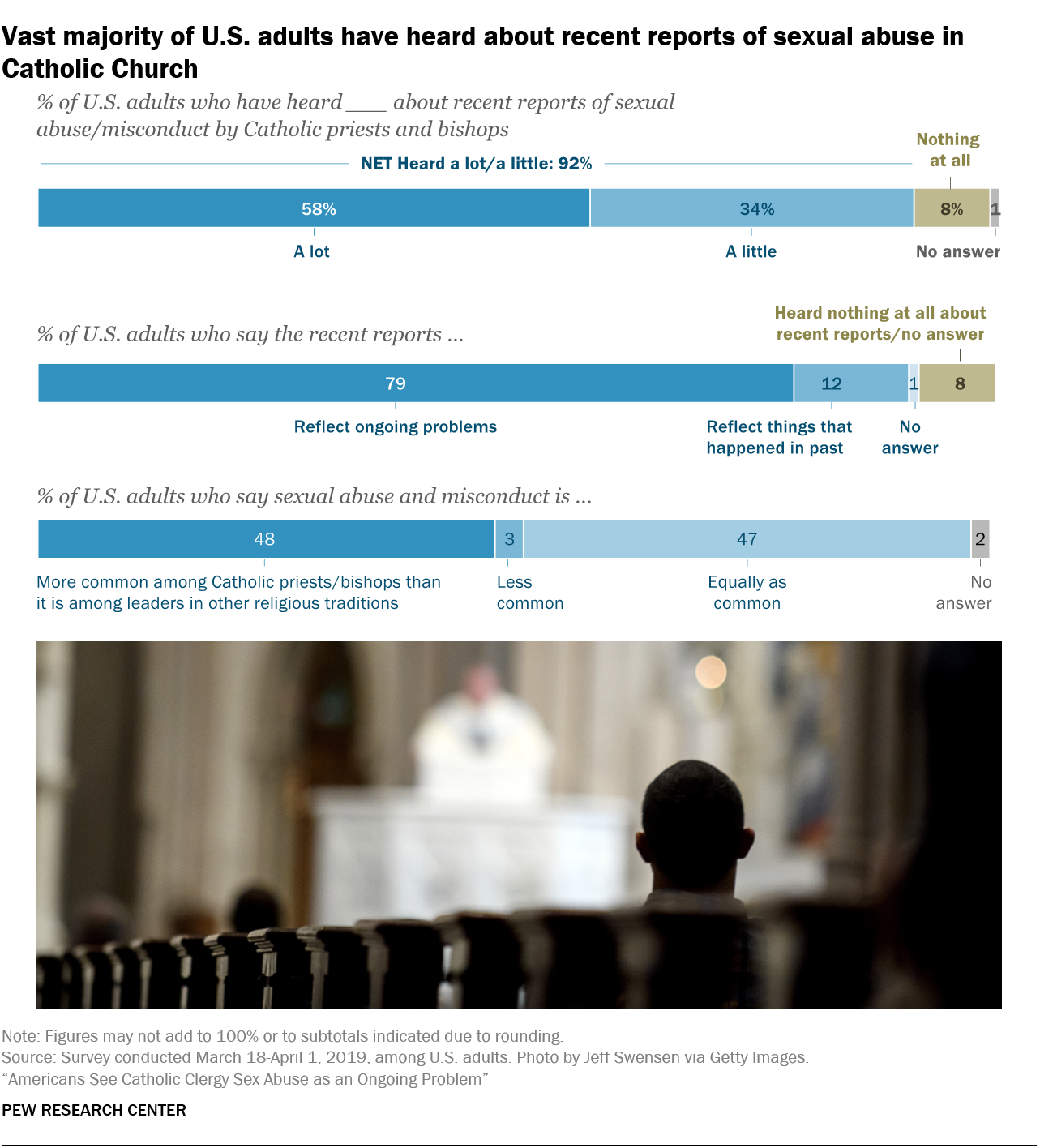
Americans are paying attention. A new Pew Research Center survey finds that about nine-in-ten U.S. adults – including 95% of Catholics – have heard at least “a little” about recent reports of sexual abuse and misconduct by Catholic priests and bishops, including a clear majority who say they have heard “a lot.” And, overall, about eight-in-ten U.S. adults say the recent reports of sexual abuse and misconduct by Catholic priests and bishops reflect “ongoing problems that are still happening” in the church. Far fewer (12%) think the recent reports reflect “things that happened in the past and mostly don’t happen anymore.”
While U.S. adults generally agree that the recent reports of sexual misconduct by Catholic priests and bishops reflect continuing problems, the public is divided over whether this is a problem unique to the Catholic Church. Roughly half of survey respondents say sexual abuse and misconduct is more common among Catholic priests and bishops than among leaders in other religious traditions (48%), while a nearly identical share say abuse is equally common among leaders in other religions (47%). Just 3% say abuse is less common in the Catholic Church than in other religious traditions.
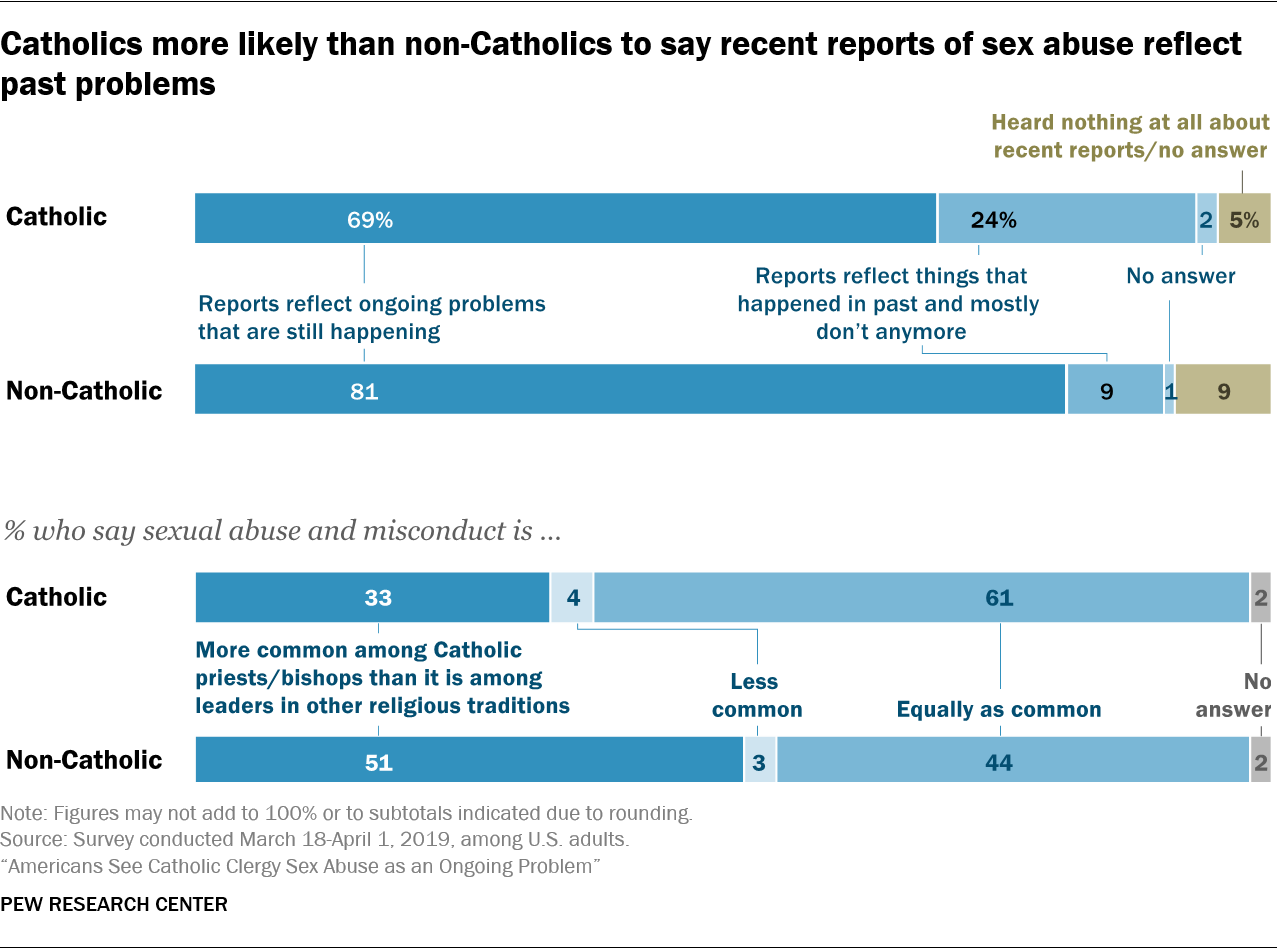
What do U.S. Catholics think about these issues? A substantial majority (69%) say that abuse by Catholic clergy is an ongoing problem. However, U.S. Catholics are more likely than other Americans to say it has mostly stopped; one-quarter of Catholics (24%) say recent reports of misconduct reflect things that happened in the past and mostly don’t happen anymore, while just 9% of non-Catholics think the abuse happened in the past and mostly no longer goes on. Eight-in-ten non-Catholics (81%) say the problems in the Catholic Church are ongoing.
Catholics also are less likely than other Americans to see sexual abuse as a uniquely large problem among Catholic clergy. A majority of U.S. Catholics (61%) say sexual abuse and misconduct is just as common among leaders in other religious traditions as it is among Catholic priests and bishops, while only a third (33%) say sexual abuse is more common in the Catholic Church. By contrast, non-Catholics are somewhat more likely to say that sexual abuse happens disproportionately in the Catholic Church (51%) than they are to say it is equally common across religious traditions (44%).
Similarly, most Catholics say sexual abuse of children is just as common among other adults who work with children, such as teachers, coaches and camp counselors, as it is among religious leaders (see here).
The survey also asked a number of questions tailored specifically to Catholics in order to measure their response to reports of sexual abuse in the church. Nearly half of U.S. Catholics (46%) say they have discussed the recent reports at least some with family, friends or acquaintances.
In addition, one-quarter of U.S. Catholics say they have scaled back Mass attendance (27%) or reduced the amount of money they donate to their parish (26%) in response to the recent reports of sexual abuse and misconduct. Fewer (18%) say they have expressed support to the priests at their parish.1
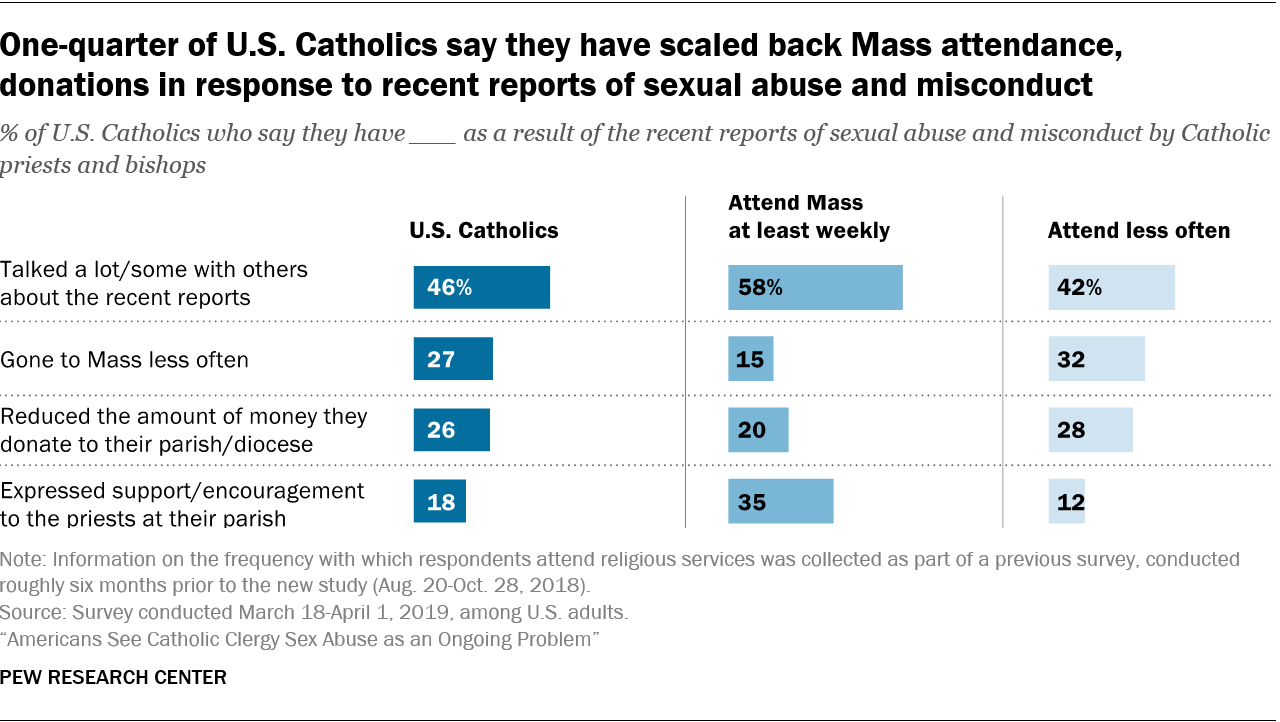
Catholics who say they attend Mass at least weekly are more likely than less-frequent attenders to say they have talked with family, friends or others about the reports of abuse. Roughly six-in-ten weekly attenders say they have done this (58%), compared with 42% of Catholics who attend Mass less often. And about one-third of weekly attenders (35%) say they have expressed support or encouragement to the priests at their parish, while only 12% of less-frequent attenders have done so. On the other hand, weekly Mass attenders are less likely than others to say their attendance at Mass has dipped (15% vs. 32%) or that they have reduced their donations (20% vs. 28%) in response to reports of sexual abuse in the church.
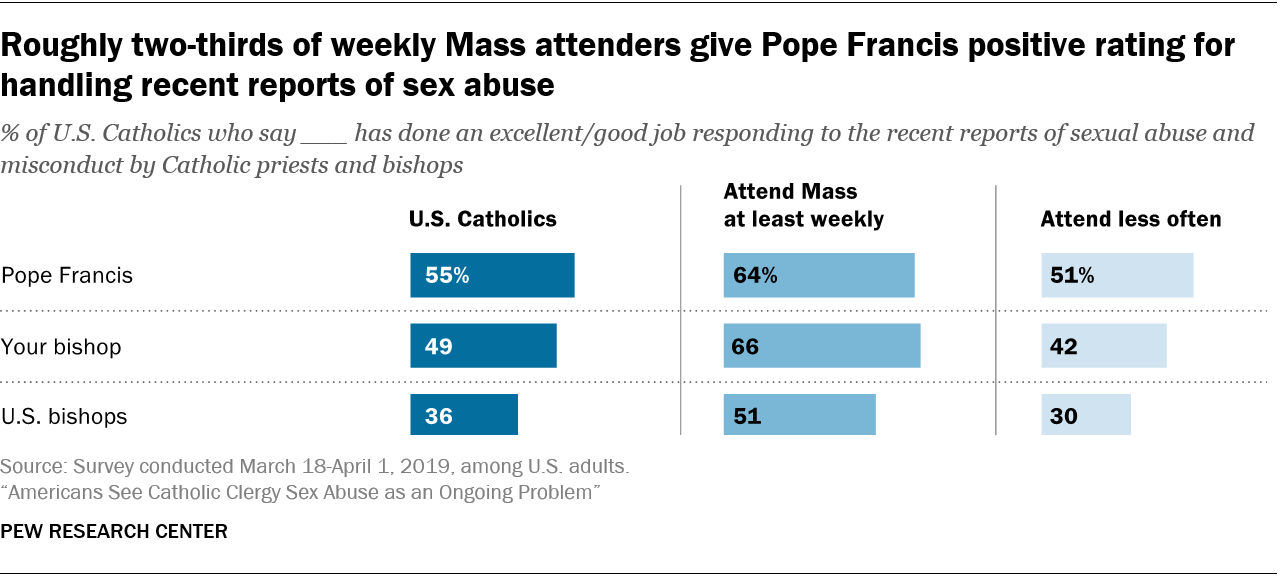
The new survey also finds that U.S. Catholics express mixed opinions about the way Catholic leaders have responded to reports of abuse and misconduct within the church. Slightly more than half of Catholics say Pope Francis has done an “excellent” or “good” job responding to recent reports of abuse (55%).2By comparison, about half (49%) say their bishop has done at least a good job responding to the reports, while fewer (36%) say the same about U.S. bishops as a whole.
Again, Catholics’ opinions on these questions vary by how often they attend Mass. Among Catholics who say they attend on a weekly basis, half or more express favorable opinions about the way that Pope Francis, their own bishop and the U.S. bishops as a whole have handled reports of sexual abuse. Opinions are less positive among Catholics who attend Mass less often; just 30% in this group give U.S. bishops excellent or good ratings.
There are few, if any, consistent patterns on these and other questions among Catholics by age, gender, education, political party or other factors (see detailed tables).
These are among the key findings from a nationally representative survey of 6,364 U.S. adults conducted online March 18 to April 1, 2019, using Pew Research Center’s American Trends Panel. The survey was conducted a few weeks after Pope Francis convened a Vatican summit on the sexual abuse crisis in late February, but before Francis issued new rules for reporting accusations. Other findings from the survey include:
-

Most U.S. adults think sexual abuse of children does not occur more often in religious settings than in nonreligious settings. A majority of the public (57%) says the sexual abuse of children is equally as common among clergy and other religious leaders as it is among other adults who work with children, such as teachers, coaches or camp counselors. Still, about a third (34%) think sexual abuse of children is more common among religious leaders than among other adults who work with children, while just 6% think it is less common.
- The American public is much more familiar with reports of sex abuse in the Catholic Church than in other religious organizations.3 Roughly seven-in-ten U.S. adults surveyed (71%) say they have heard at least a little about sexual abuse and misconduct by religious leaders outside the Catholic Church, but more say they’ve heard a little (51%) than a lot (21%) about this. By comparison, nine-in-ten U.S. adults (92%) have heard at least a little about reports of abuse among Catholic priests and bishops, and most of them (58% of all U.S. adults) have heard a lot.
- Relatively few Americans who attend religious services with any regularity (a few times a year or more often) say they have heard the clergy at their place of worship speak about sexual abuse, assault or harassment (29%). Among the messages that are being heard: One-quarter (24%) say they have heard their clergy speak out in support of victims of sexual abuse, and 12% say their clergy have cautioned against false accusations of sexual abuse. Catholics are more likely than those who identify with Protestant traditions to have heard their clergy speak out about abuse in general (41% among Catholics vs. 27% among Protestants), and Catholics are also especially likely to say they have heard only messages of support for victims (24% vs. 11%; see here).
- Most Americans have not encountered allegations of sexual misconduct within their own congregations, but a non-negligible share of U.S. adults say they have firsthand experience with this issue. About one-in-ten (9%) say they have attended a place of worship where the clergy or other religious leaders have been accused of sexual misconduct in the past five years in one or more of the following ways: an extramarital affair (6%), sexual abuse of a child (4%), verbal sexual harassment (4%) or sexual abuse of an adult (3%).4 Another question was posed only to Catholics: At the church you attend most regularly, has a priest been accused of engaging in sexual activity with other priests? Overall, 4% of Catholics say a priest was accused of this at their church, while the vast majority do not (90%).
The rest of this report looks at these questions in more detail.
How various religious groups view clergy sexual abuse and misconduct
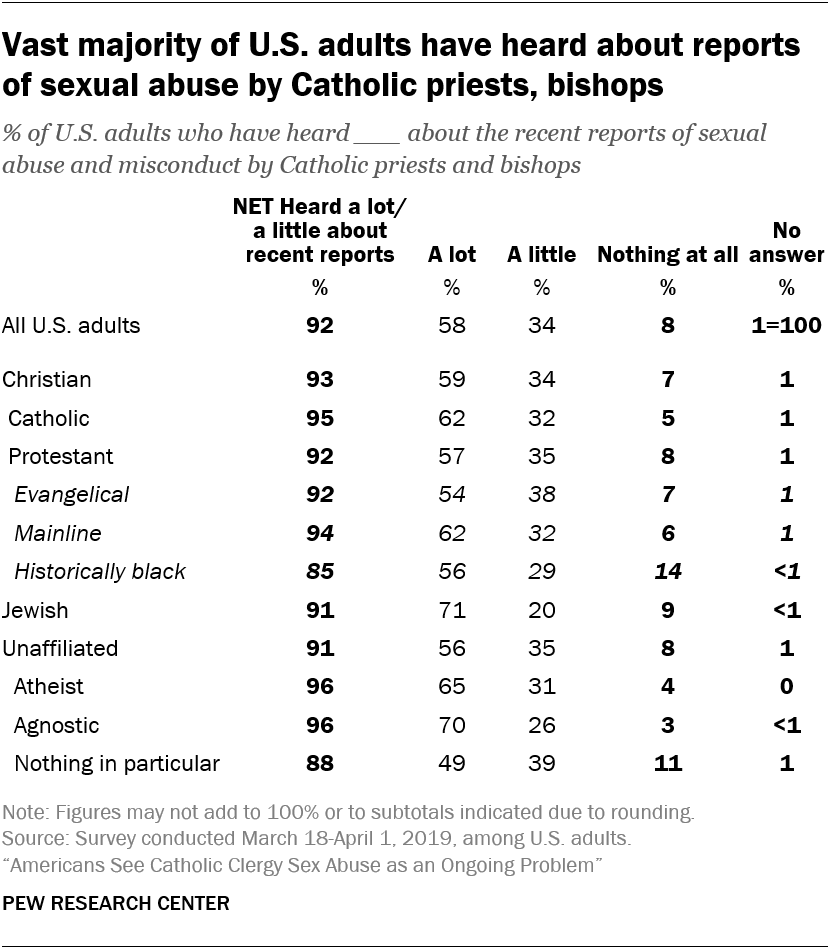
Roughly nine-in-ten U.S. adults have heard at least a little about recent reports of sexual abuse and misconduct by Catholic priests and bishops. This includes a majority (58%) who have heard “a lot” about the recent reports, one-third (34%) who have heard “a little,” and just 8% who have heard nothing at all.
Familiarity with the recent reports of abuse and misconduct by Catholic priests and bishops is broad-based. Large majorities across Christian traditions – not to mention Jews and people with no religious affiliation – say they have heard at least a little about the recent reports, including roughly half or more in each group who have heard “a lot” about them.
Nearly all Catholics included in the survey (95%) say they have heard something about the reports of abuse in their own church, including six-in-ten who have heard “a lot.” But they are not the most likely to say they have heard a lot about this topic: Seven-in-ten Jewish adults and a similarly large proportion of self-described agnostics have heard a lot about reports of abuse and misconduct by Catholic priests and bishops.
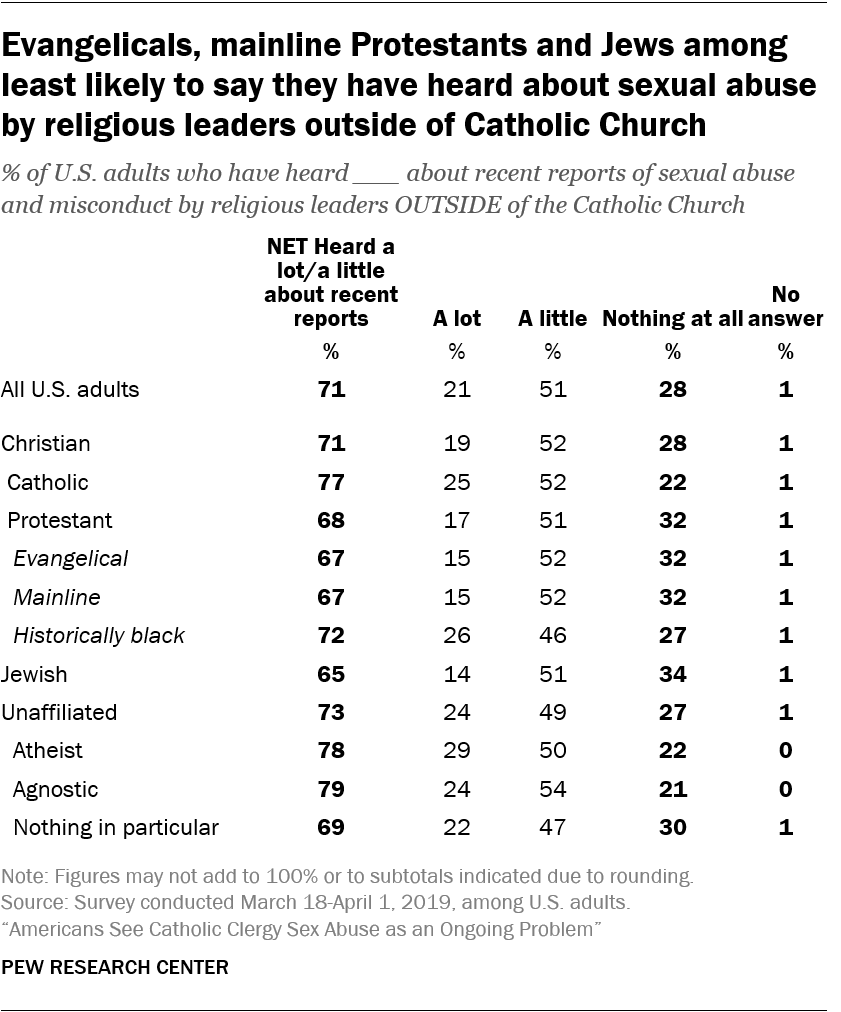
Most Americans also say they have heard something about recent reports of sexual abuse and misconduct by religious leaders outside of the Catholic Church, although U.S. adults on the whole are not as familiar with these reports as they are with abuse by Catholic priests and bishops.5 A majority of the public (71%) has heard at least “a little” about reports of abuse in faiths other than Catholicism, but more say they have heard a little (51%) than a lot (21%).
Among religious groups, Catholics (along with atheists and agnostics) are among the groups most likely to have heard something about the reports of abuse by religious leaders outside the Catholic Church. And while Jews are one of the groups most likely to have heard about abuse in the Catholic Church, they are among the least likely to say they have heard about abuse by non-Catholic leaders. Evangelical and mainline Protestants also are less likely than some other groups to have heard something about reports of sexual abuse outside of the Catholic Church, with two-thirds in each group saying they have heard at least a little.
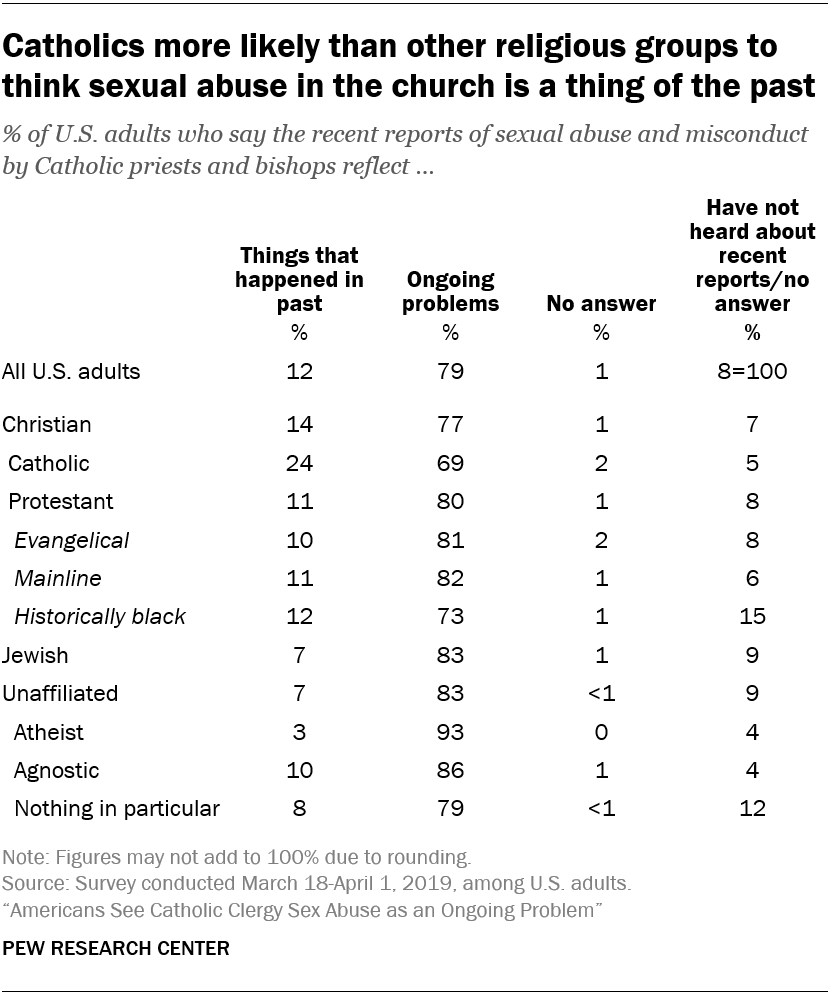
When it comes to opinions about whether the reports of sexual abuse and misconduct by Catholic priests and bishops reflect ongoing problems or things that happened in the past and mostly don’t happen anymore, large majorities across all major religious groups say the reports reflect ongoing problems. Just one-in-ten U.S. adults say the reports reflect things that are largely confined to the past.
But U.S. Catholics stand out on this question. While most Catholics say clergy sexual abuse is an ongoing problem (69%), roughly a quarter (24%) think sexual abuse and misconduct by Catholic priests and bishops mostly doesn’t happen anymore – a larger share than in any other religious group.
Conversely, atheists are particularly likely to think sexual abuse in the Catholic Church is an ongoing problem. Just 3% of self-identified atheists say reports of abuse reflect things that happened in the past and have mostly stopped, while fully nine-in-ten (93%) think there are continuing problems.
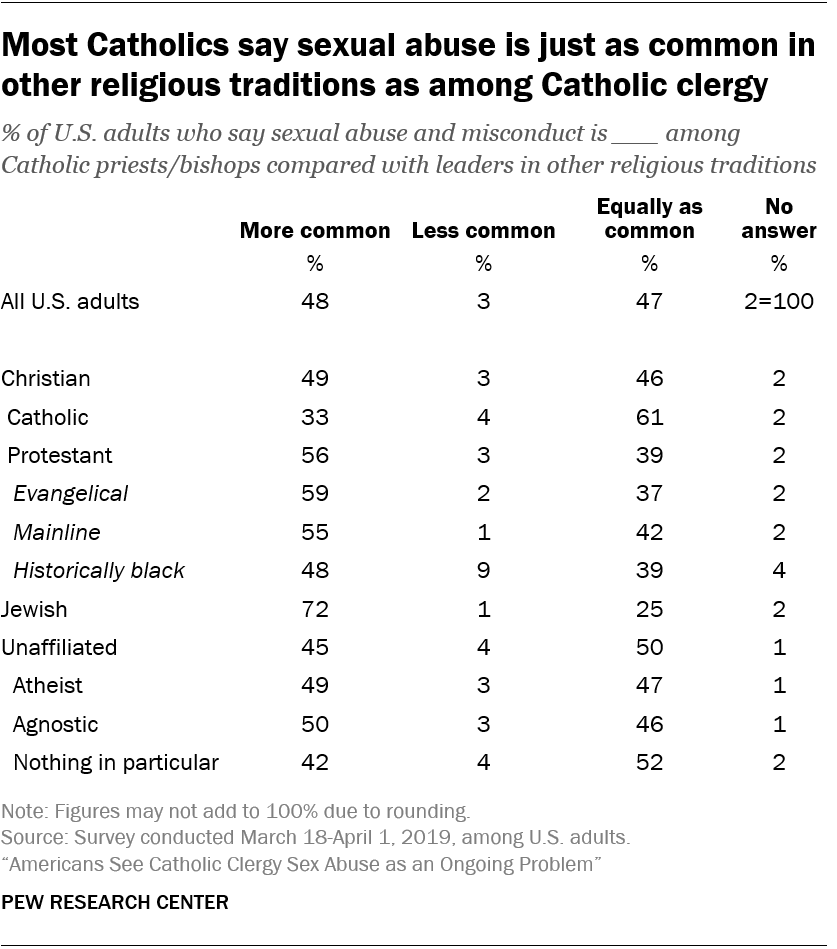
About half of U.S. adults (48%) say sexual abuse and misconduct is more common among Catholic priests and bishops than among leaders in other religious traditions, while a similar share (47%) say it is equally common across religious groups. Very few Americans (3%) say sexual abuse is less common in the Catholic Church than in other religious traditions.
Catholics, however, clearly come down on one side of this question. Just one-third of U.S. Catholics think sexual abuse is particularly common in the Catholic Church, while a majority (61%) say abuse is equally as common among leaders in other religions – the highest share who hold this view among all major U.S. religious groups.
Meanwhile, Jews are particularly likely to say sexual abuse and misconduct is more common among Catholic priests and bishops (72%). About six-in-ten evangelical Protestants and more than half of mainline Protestants share this view. Religiously unaffiliated adults tend to be more divided in their opinions.
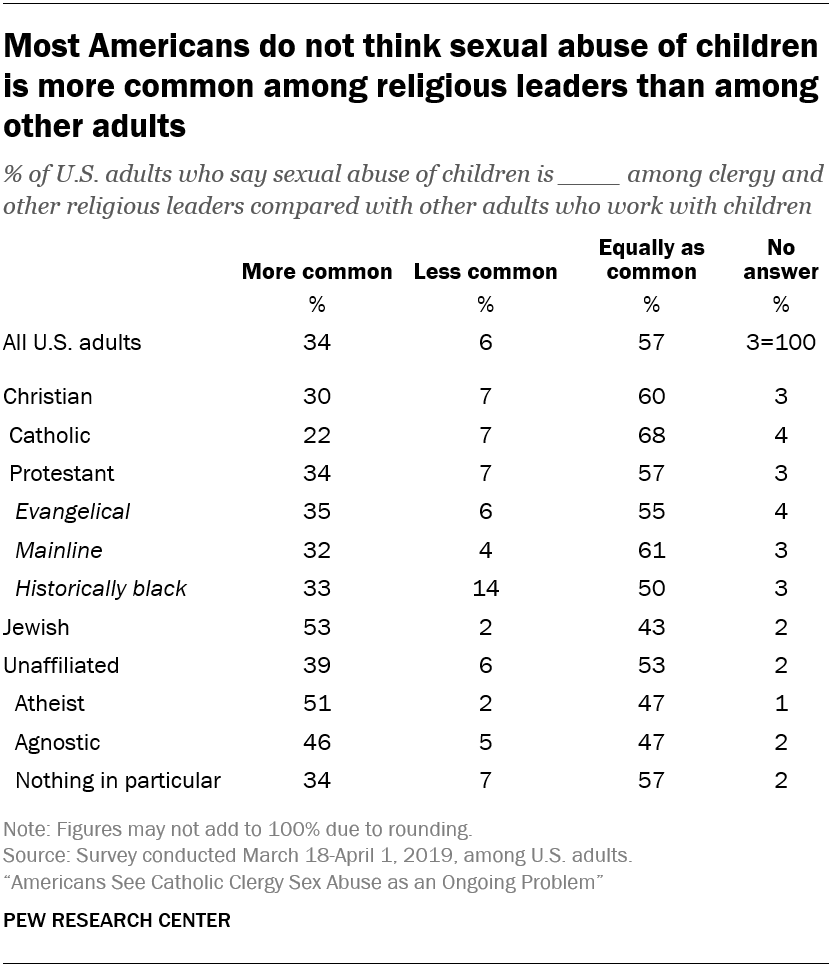
The survey also asked about the sexual abuse of children in nonreligious settings.6 Overall, a majority of U.S. adults (57%) say sexual abuse of children is just as common among adults who work with children in secular settings (such as teachers, coaches or camp counselors) as it is among clergy and other religious leaders. A third (34%) think sexual abuse of children is more common among religious leaders, and 6% say it is less common.
Again, Catholics are especially likely to say sexual abuse of children is not a problem unique to clergy but, rather, is just as common among other adults who work with children. Fully two-thirds of Catholics (68%) take this position; just 22% say sexual abuse is more common among religious leaders.
At the other end of the spectrum, Jews, atheists and agnostics are more likely to say sexual abuse of children is particularly common among clergy and other religious leaders. Roughly half of Jews (53%) and atheists (51%) and a similar share of agnostics (46%) say sexual abuse of children is a bigger issue among religious leaders than among other adults.
How Catholic subgroups view prevalence of sexual abuse in religious and nonreligious settings
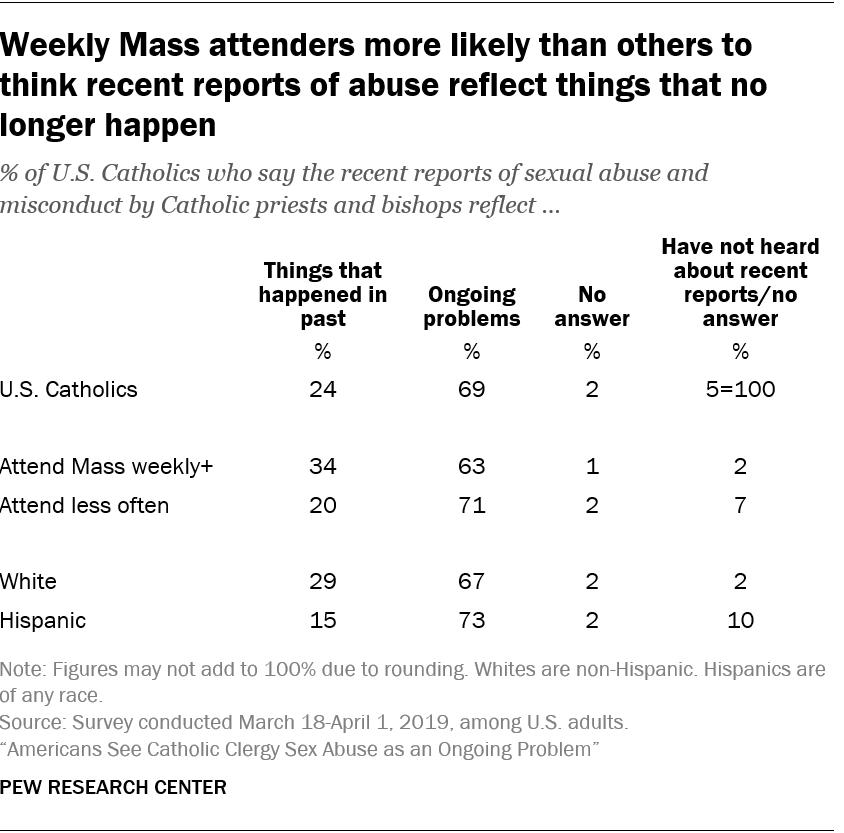
One-quarter of Catholics think the recent reports of sexual abuse and misconduct by Catholic priests and bishops reflect things that took place in the past and mostly no longer happen, while seven-in-ten say these problems are ongoing.
While majorities across Catholic subgroups say the recent reports of abuse reflect ongoing problems, there are some gaps in opinions. Catholics who attend Mass on a weekly basis are more likely than those who attend less often to say the problem is confined to the past. Fully one-third of Mass-attending Catholics say the reports of sexual abuse reflect past events that no longer happen, compared with one-in-five less-frequent attenders.
There are also divides along racial and ethnic lines. White Catholics are nearly twice as likely as Hispanic Catholics to think the reporting on sexual abuse within the church reflects things that no longer happen (29% vs. 15%).
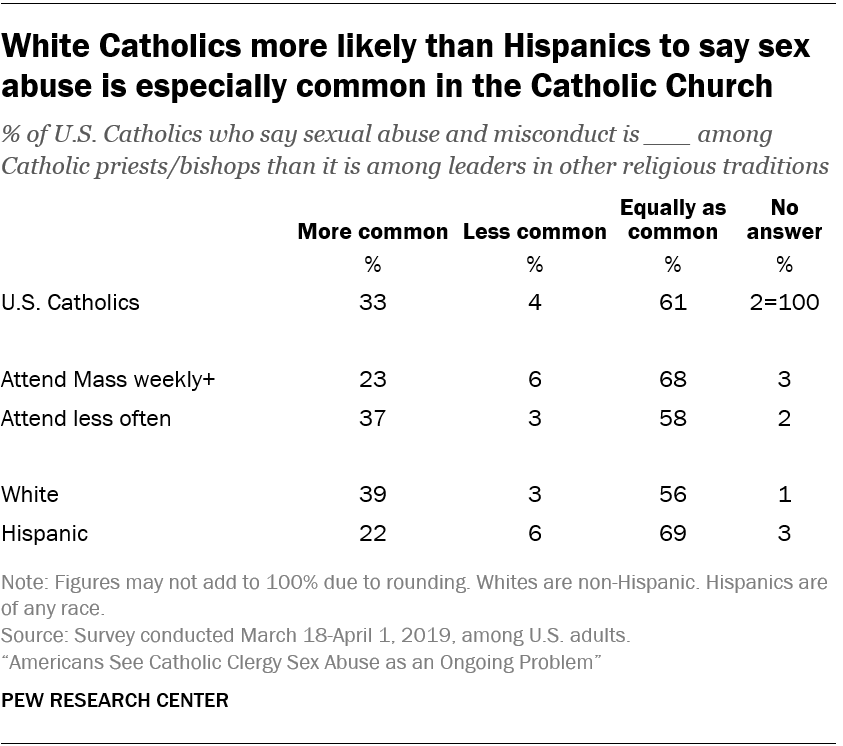
Meanwhile, most Catholics (61%) say that sexual abuse and misconduct is just as common in other religious traditions as it is in the Catholic Church, while one-third think sexual abuse is more common in the Catholic Church. This pattern is also reflected among Catholic subgroups, but views again vary by Mass attendance and ethnicity.
About one-in-four U.S. Catholics who attend Mass weekly (23%) think abuse is more common in the Catholic Church than in other religious traditions. By comparison, nearly four-in-ten Catholics who attend Mass less often (37%) say sexual abuse and misconduct is especially common among Catholic priests and bishops.
Among white Catholics, four-in-ten (39%) think sexual abuse is more common among Catholic leaders than it is among leaders in other religious traditions. But Hispanic Catholics are less likely to say abuse is more common in the Catholic Church. One-in-five in this group (22%) say sexual abuse is more common among Catholic priests and bishops, while 69% think it’s a problem that is just as prevalent in other religious traditions.
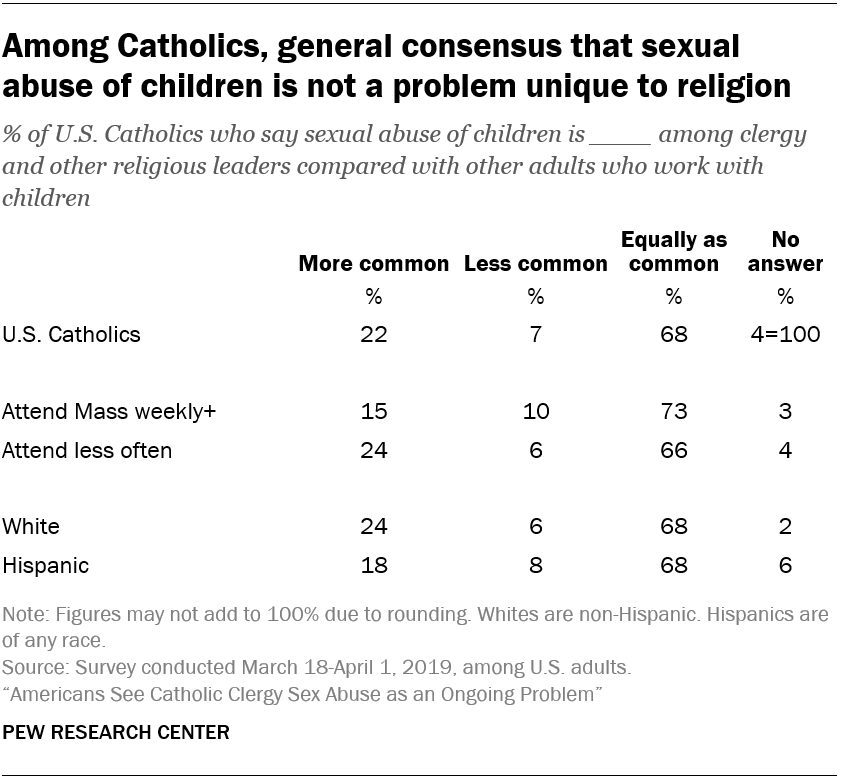
On the question of whether sexual abuse of children is more common among religious leaders than among other adults who work with children, there is consensus among Catholics. Two-thirds say sexual abuse is equally as common among religious leaders as it is among other adults who work with children (68%). The opinions of white Catholics and Hispanic Catholics mirror those of the Catholic population as a whole.
However, opinions differ somewhat between Catholics who attend Mass on a weekly basis and those who go less often. Majorities in both groups think sexual abuse of children is equally common among clergy as among other adults, but less-frequent attenders are 9 percentage points more likely than weekly attenders to say sexual abuse is more common among clergy (24% vs. 15%).
In U.S. places of worship, most do not hear talk about sexual abuse
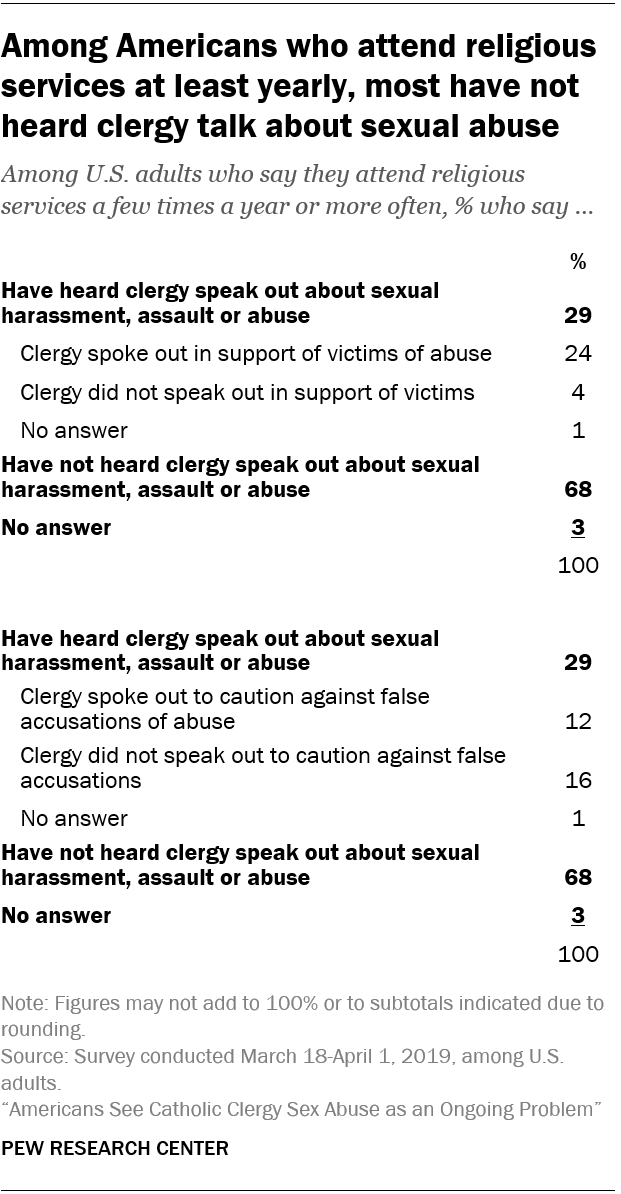
U.S. adults who say they attend religious services a few times a year or more often were asked if the clergy or other religious leaders at their place of worship have spoken out about sexual harassment, assault or abuse. Within this group, about three-in-ten say their clergy have spoken out about sexual abuse (29%) while two-thirds say they have not heard their clergy say anything about this topic (68%).
When it comes to the messages that churchgoers are hearing, one-in-four say their clergy have spoken out in support of victims of sexual abuse, and 12% say their clergy have warned against false accusations of abuse.
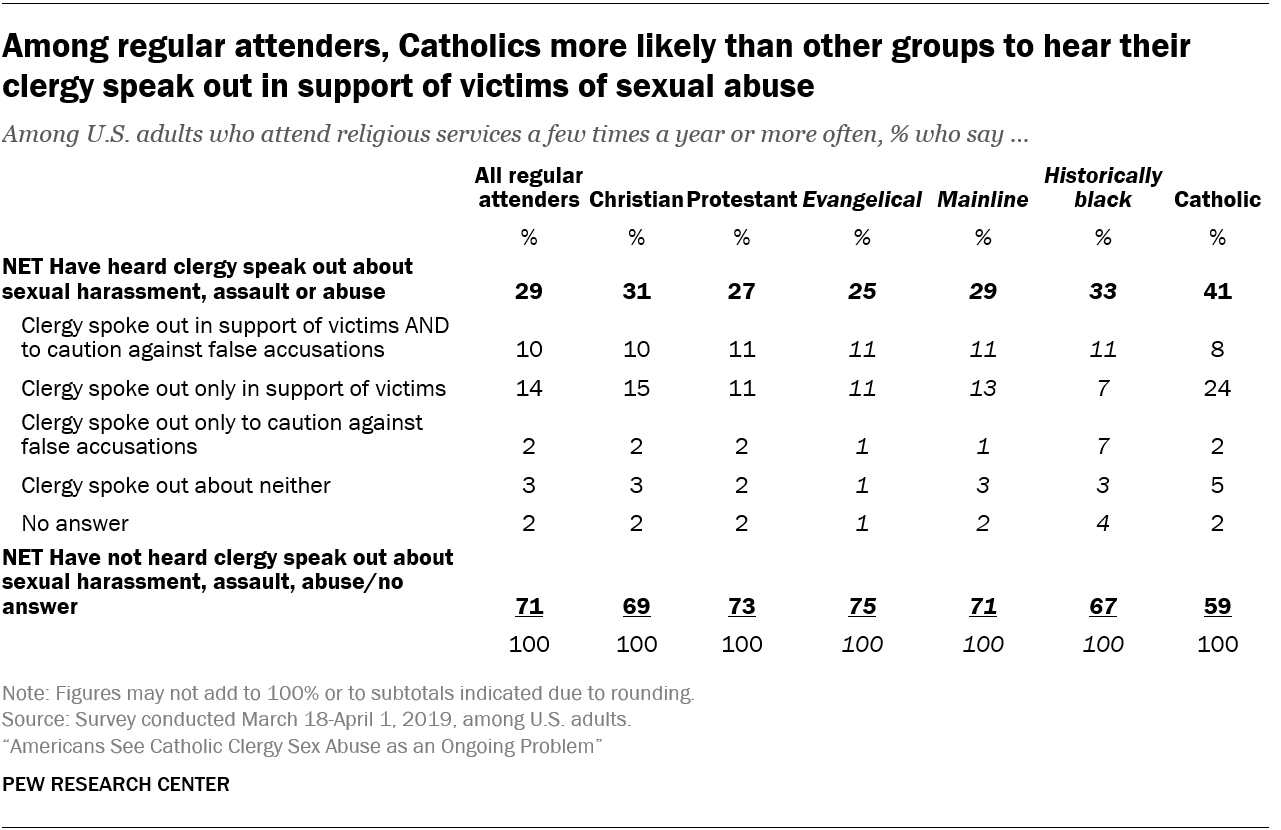
Among those who attend religious services at least a few times a year, one-in-ten say their clergy have spoken out both in support of victims of sexual abuse and to caution against false accusations. In terms of regular attenders who are only hearing one type of message from their clergy, more hear only about supporting victims (14%) than only about false accusations (2%).
There are similar patterns among religious groups, with the exception of Catholics. Catholics are more likely than other U.S. Christians to hear clergy talking about sex abuse in general (41% among Catholics vs. 27% among Protestants). And Catholics who attend Mass at least a few times a year are more likely to say they hear their clergy talk only about supporting victims (24%), compared with a smaller share among Protestants (11%).
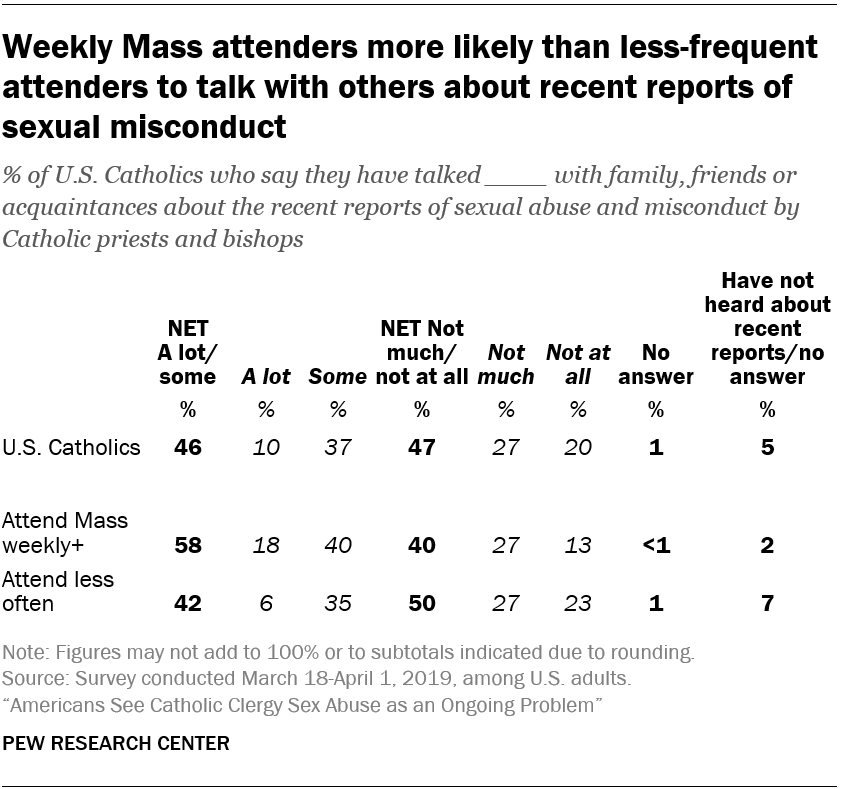
Catholics also were asked whether they have discussed the recent reports of abuse by Catholic priests and bishops with family, friends or acquaintances. Overall, about half of Catholics say they’ve talked at least some about recent reports of sexual abuse, including 10% who say they’ve talked about this “a lot,” and 37% who say they’ve talked about this “some.” A similar share (47%) say they have not talked about this issue much or at all.
Six-in-ten regular Mass attenders say they have talked with others at least some about the recent reports of abuse (58%), while four-in-ten have not talked with others much or at all (40%). By comparison, a smaller share of less-frequent attenders say they have talked at least some with family, friends or acquaintances about the recent reports of sexual abuse and misconduct (42%).


