Global Restrictions on Religion, a new study by the Pew Research Center's Forum on Religion & Public Life, finds that 64 nations - about one-third of the countries in the world - have high or very high restrictions on religion.
About Pew Research Center
Pew Research Center is a nonpartisan, nonadvocacy fact tank that informs the public about the issues, attitudes and trends shaping the world. It does not take policy positions. The Center conducts public opinion polling, demographic research, computational social science research and other data-driven research. It studies politics and policy; news habits and media; the internet and technology; religion; race and ethnicity; international affairs; social, demographic and economic trends; science; research methodology and data science; and immigration and migration. Pew Research Center is a subsidiary of The Pew Charitable Trusts, its primary funder.
Global Restrictions on Religion, a new study by the Pew Research Center's Forum on Religion & Public Life, finds that 64 nations - about one-third of the countries in the world - have high or very high restrictions on religion.
For more than half a century, the United Nations and numerous international organizations have affirmed the principle of religious freedom.1 For just as many decades, journalists and human rights groups have reported on persecution of minority faiths, outbreaks of sectarian violence and other pressures on religious individuals and communities in many countries. But until now, there has been no quantitative study that reviews an extensive number of sources to measure how governments and private actors infringe on religious beliefs and practices around the world.
Global Restrictions on Religion, a new study by the Pew Research Center’s Forum on Religion & Public Life, finds that 64 nations – about one-third of the countries in the world – have high or very high restrictions on religion. But because some of the most restrictive countries are very populous, nearly 70 percent of the world’s 6.8 billion people live in countries with high restrictions on religion, the brunt of which often falls on religious minorities.
Some restrictions result from government actions, policies and laws. Others result from hostile acts by private individuals, organizations and social groups. The highest overall levels of restrictions are found in countries such as Saudi Arabia, Pakistan and Iran, where both the government and society at large impose numerous limits on religious beliefs and practices. But government policies and social hostilities do not always move in tandem. Vietnam and China, for instance, have high government restrictions on religion but are in the moderate or low range when it comes to social hostilities. Nigeria and Bangladesh follow the opposite pattern: high in social hostilities but moderate in terms of government actions.
Among all regions, the Middle East-North Africa has the highest government and social restrictions on religion, while the Americas are the least restrictive region on both measures. Among the world’s 25 most populous countries , Iran, Egypt, Indonesia, Pakistan and India stand out as having the most restrictions when both measures are taken into account, while Brazil, Japan, the United States, Italy, South Africa and the United Kingdom have the least.
The Pew Forum’s study examines the incidence of many specific types of government and social restrictions on religion around the world. In 75 countries (38%), for example, national or local governments limit efforts by religious groups or individuals to persuade others to join their faith. In 178 countries (90%), religious groups must register with the government for various purposes, and in 117 (59%) the registration requirements resulted in major problems for, or outright discrimination against, certain faiths.
Public tensions between religious groups were reported in the vast majority (87%) of countries in the period studied (mid-2006 through mid-2008). In 126 countries (64%), these hostilities involved physical violence. In 49 countries (25%), private individuals or groups used force or the threat of force to compel adherence to religious norms. Religion-related terrorism caused casualties in 17 countries, nearly one-in-ten (9%) worldwide.
These are some of the key findings of Global Restrictions on Religion. The study covers 198 countries and self-administering territories, representing more than 99.5% of the world’s population. In preparing this study, the Pew Forum devised a battery of measures, phrased as questions, to gauge the levels of government and social restrictions on religion in each country. To answer these questions, Pew Forum researchers combed through 16 widely cited, publicly available sources of information, including reports by the U.S. State Department, the U.S. Commission on International Religious Freedom, the U.N. Special Rapporteur on Freedom of Religion or Belief, the Council of the European Union, the United Kingdom’s Foreign & Commonwealth Office, Human Rights Watch, the International Crisis Group, the Hudson Institute and Amnesty International. (The complete list of sources is available in the Methodology.)
The researchers involved in this process recorded only factual reports about government actions, policies and laws, as well as specific incidents of religious violence or intolerance over the main two-year period covered by this study, from mid-2006 to mid-2008; they did not rely on the commentaries or opinions of the sources. (For a more detailed explanation of the coding and data verification procedures, see the Methodology. For the wording of the questions, see the Summary of Results.) The goal was to devise quantifiable, objective measures that could be combined into two comprehensive indexes, the Government Restrictions Index and the Social Hostilities Index. Using the current, two-year average as a baseline, future editions of the indexes will be able to chart changes and trends over time.
Global Restrictions on Religion
is part of a larger effort – the Global Religious Futures Project, jointly funded by The Pew Charitable Trusts and the John Templeton Foundation – that aims to increase knowledge and understanding of religion around the world.
Religious Restrictions in the 25 Most Populous Countries
This chart shows how the world’s 25 most populous countries score in terms of both government restrictions on religion and social hostilities involving religion. Countries in the upper right have the most restrictions and hostilities. Countries in the lower left have the least.
Limitations of the Study
It is important to keep a few caveats in mind when reading this report. First, because freedom – defined as “the absence of hindrance, restraint, confinement or repression” – is difficult if not impossible to measure, the Pew Forum’s study instead measures the presence of restrictions of various kinds. The study tallies publicly reported incidents of religious violence, intolerance, intimidation and discrimination by governments and private actors. That is, it focuses on the problems in each country. It does not capture the other side of the coin: the amount of religious dynamism, diversity and expression in each country. The indexes of government restrictions and social hostilities are intended to measure obstacles to the practice of religion. But they are only part of a bigger picture.
Second, this study does not attach normative judgments to restrictions on religion. Every country studied has some restrictions on religion, and there may be strong public support in particular countries for laws aimed, for example, at curbing “cult” activity (as in France), preserving an established church (as in the United Kingdom) or keeping tax-exempt religious organizations from endorsing candidates for elected office (as in the United States). The study does not attempt to determine whether particular restrictions are justified or unjustified. Nor does it attempt to analyze the many factors – historical, demographic, cultural, religious, economic and political – that might explain why restrictions have arisen. It seeks simply to measure the restrictions that exist in a quantifiable, transparent and reproducible way, based on reports from numerous governmental and nongovernmental organizations.
Finally, although it is very likely that more restrictions exist than are reported by the 16 primary sources, taken together the sources are sufficiently comprehensive to provide a good estimate of the levels of restrictions in almost all countries. The one major exception is North Korea. The sources clearly indicate that North Korea’s government is among the most repressive in the world with respect to religion as well as other civil and political liberties. (The U.S. State Department’s 2008 Report on International Religious Freedom, for example, says that “Genuine freedom of religion does not exist” in North Korea.) But because North Korean society is effectively closed to outsiders and independent observers lack regular access to the country, the sources are unable to provide the kind of specific, timely information that the Pew Forum categorized and counted (“coded,” in social science parlance) for this quantitative study. Therefore, the report does not include scores for North Korea.
Footnote
1 According to Article 18 of the 1948 Universal Declaration of Human Rights, one of the foundational documents of the U.N., “Everyone has the right to freedom of thought, conscience and religion; this right includes freedom to change his religion or belief, and freedom, either alone or in community with others and in public or private, to manifest his religion or belief in teaching, practice, worship and observance.” (back to top)
Government Restrictions Index (GRI)
The Government Restrictions Index is based on 20 questions used by the Pew Forum to assess whether governments – including at the local or provincial level – restrict religious practices or beliefs. The questions are intended to gauge the extent to which governments try to control religious groups or individuals, prohibit conversions from one faith to another, limit preaching and proselytizing, or otherwise hinder religious affiliation by means such as registration requirements and fines. The questions seek to capture both relatively straightforward efforts to restrict religion – for example, through a nation’s constitution and laws – as well as efforts that are more indirect, such as favoring certain religions by means of preferential funding.
Because no single type of restriction is a reliable indicator of the overall level of restrictions in a country, the study covers a wide array of possible restrictions. But because some government actions have less impact than others on people’s lives, several of the questions allow for gradations or contain multiple sub-questions. This effectively gives some restrictions (such as favoritism in funding religious buildings and schools) less weight in the index than others (such as physical violence toward religious minorities). The questions are shown in the Summary of Results; detail on how all 198 countries and territories scored on each question is available in the Results by Country.
The mathematical presentation of these scores needs to be kept in context. If the Government Restrictions Index were based on 15 well-chosen questions instead of 20, for example, some countries’ scores would change, and even the order in which the countries appear on the index might shift in small ways. The Pew Forum has deliberately chosen not to attach numerical rankings from No. 1 to No. 198 both because there are many tie scores and because the differences between the scores of countries that are close to each other on the index may not be important. This is particularly the case at the low end of the scale, where most countries are clustered. By contrast, the numerical differences at the top end of the scale, among the relatively small number of countries with very high restrictions, are more meaningful. (See the Methodology.)
The most meaningful comparisons, however, are between broad ranges that reflect observable differences in real-world behavior. Accordingly, the Government Restrictions Index is divided into four ranges: very high (the top 5% of scores), high (the next highest 15% of scores), moderate (the next 20% of scores) and low (the bottom 60% of scores).
Countries with very high government restrictions have intensive restrictions on many or all of the 20 measures. In Brunei, for example, a 2005 law requires all religious groups other than the official Shafii sect of Islam to register with the government and to provide the names of their members. In addition, authorities in Brunei enforce religious norms, including arresting people for being in too close proximity to the opposite sex. Although conversion is technically legal, permission is required from Brunei’s Ministry of Religious Affairs before converting from Islam to any other faith.
Countries with high government restrictions have intensive restrictions on several of the 20 measures, or more moderate restrictions on many of them. For example, in Greece, the government allows only Orthodox Christian, Jewish and Muslim organizations to own, bequeath and inherit property as well as to have an official legal identity as a religion. Other religious groups, including other Christians, thus operate at a disadvantage.
Countries with moderate government restrictions have intensive restrictions on a few measures, or more moderate restrictions on several of them. Cambodia, for example, has a Ministry of Cults and Religions that has repeatedly prohibited Christians from going door-to-door to talk about their faith or pass out religious literature, and the government gives preferential treatment to Buddhism, the state religion. In France, proponents of a 2004 law banning the wearing of religious symbols in schools say it protects Muslim girls from being forced to wear a headscarf, but the law also restricts those who want to wear headscarves – or any other “conspicuous” religious symbol, including large Christian crosses and Sikh turbans – as an expression of their faith.
Countries with low government restrictions generally have moderate restrictions on few or none of the measures. In the United Kingdom, for instance, the head of state is also the head of the Church of England, yet the government does not always favor the officially established church. For example, during the period covered by this study, a British court allowed employers to require Christians to hide their religious symbols in the workplace while not requiring the same of other faiths.
Patterns in Government Restrictions
An analysis of the data shows that government restrictions on religion are high or very high in 43 countries, about one-in-five. But because many of these are populous countries (including China, India and Pakistan), more than half (57%) of the world’s population lives with high or very high government restrictions on religion. A much larger number of countries – 119 – have low levels of government restrictions. But many fewer people, about one-in-four (26%), live in these countries.
As the results clearly show, it is not sufficient simply to look at formal constitutional protections when gauging the level of government restrictions on religion. Most (76%) of the 198 countries and territories included in the study call for freedom of religion in their constitutions or basic laws, and an additional 20% protect some religious practices. But the study found that only 53 governments (27%) fully respected the religious rights written into their laws. Afghanistan’s Constitution, for instance, appears to protect its citizens’ right to choose and practice a religion other than Islam, stating that “followers of other religions are free to perform their religious rites within the limits of the provisions of law.” The Constitution qualifies that measure of protection, however, by stipulating that “no law can be contrary to the sacred religion of Islam” and instructing judges to rule according to Shariah law if no specific Afghan law applies to a case. In 2006, for example, an Afghan citizen, Abdul Rahman, was tried and sentenced to death in accordance with several judges’ interpretation of Shariah law for converting from Islam to another religion. Rahman eventually was granted asylum in Italy. (Overall, Afghanistan ranks high in government restrictions.)
It is also important to look carefully at government policies that on the surface appear to be neutral but in practice serve to restrict religion. For example, 178 countries (90%) require religious groups to register with the government for one purpose or another, such as to obtain tax-exempt status or import privileges. Further analysis shows, however, that in almost three-in-five countries (59%), these registration requirements result in major problems for (19%) or outright discrimination against (40%) certain religious groups. Singapore’s Societies Act, for example, requires all religious groups to register with the government. In 1972, the government de-registered the Jehovah’s Witnesses, and in 1982 it de-registered the Unification Church, effectively criminalizing the practice of those religions. (Singapore ranks high in government restrictions.)
Similarly, the vast majority of governments (86%) provide funding or other resources to religious groups. But in 151 countries (76%), governments provide this assistance in ways that are either clearly imbalanced or that favor only one religious group. For example, in Canada – which ranks low in government restrictions – six of the 10 provinces provide some level of funding for religious schools, but in Ontario, only Catholic education is funded. It is important to note that government support for religious groups is considered a restriction in this study only if it involves preferential treatment of some group(s) and discrimination against others. (See Summary of Results, GRI Question No. 20.3.)
Other government restrictions are much more obvious. Nearly half of all countries either restrict the activities of foreign missionaries (41%) or prohibit them altogether (6%). In addition, national or local governments in 75 countries (38%) limit efforts by some or all religious groups to persuade people to join their faith. In Indonesia, for example, the government’s Guidelines for the Propagation of Religion bar most proselytizing, and Article 156 of the Criminal Code makes spreading heresy and blasphemy punishable by up to five years in prison. (Indonesia ranks high in government restrictions.)
During the main period covered by this study, from mid-2006 to mid-2008, the governments in 137 countries (69%) harassed or attempted to intimidate certain religious groups, and in 91 countries (46%) there were reported cases of the use of physical force against religious individuals or groups by governments or government employees. Police in Eritrea, for example, detained some adherents of unregistered churches and compelled them to renounce their faith and join the Orthodox Christian Church in order to win release. And in Burma (Myanmar), the government actively enticed Muslims and Christians to convert to Buddhism. (Both Eritrea and Burma are in the very high category for government restrictions.)
Among the other countries with very high levels of government restrictions on religion are several that are frequently cited for the limits they impose on minority faiths. These include Saudi Arabia and Iran, the two most restrictive governments according to the Pew Forum’s analysis of the 16 published sources; both enforce strict interpretations of Islamic law. China is in the highest category primarily because of its restrictions on Buddhism in Tibet, its ban on the Falun Gong movement throughout the country, its strict controls on the practice of religion among Uighur Muslims and its pressure on religious groups that are not registered by the government, including Christians who worship in private homes. The primary sources for this study report numerous cases of imprisonment, beatings and torture of members of these religious groups by Chinese authorities.
But the list of countries with high restrictions also contains some that are widely seen as democratic, such as Turkey and Israel. Israel’s score is driven up by security policies that sometimes have the effect of limiting access to religious sites, and by its preferential treatment of Orthodox Jews. The government recognizes only Orthodox Jewish religious authorities in some personal status matters (such as marriage) concerning Jews and devotes the bulk of state funds provided for religion to Orthodox Jews, even though they make up only a small portion of all Jews in Israel. Among the factors in Turkey’s score is that millions of Alevi Muslims, a minority whose beliefs and practices differ in significant ways from Sunni Islam, are required to receive Sunni Muslim religious instruction in state schools. During the period studied, Alevis had numerous court cases pending against the Ministry of Education regarding forced religious instruction.
For the purposes of this study, actions by local officials were considered restrictions even if they were contrary to national policy, as long as those actions remained in force and were not contravened by national officials during the period covered by the study. For instance, although Indonesia’s national government does not apply Islamic law across the country, religious police in several districts of Aceh province enforced the wearing of Islamic attire and required restaurants to close in the daytime during the holy month of Ramadan; national authorities did not intervene.
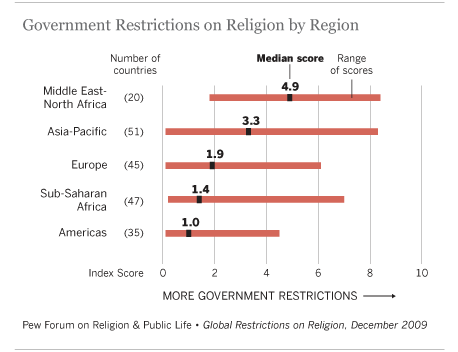
There are major differences among regions as well as among countries when it comes to government restrictions on religion. On average, restrictions are highest in the Middle East-North Africa, where the median score for the 20 countries (4.9) is considerably higher than for the 35 countries in the Americas (1.0), the region with the lowest median score.
The 51 Asian and Pacific countries have a median score in the middle range (3.3), but this masks enormous variability within this large region. Several of the more populous Asian and Pacific countries have high levels of government restrictions. Indeed, the nearly 20 countries in the region with very high or high government restrictions on religion – including Iran, Uzbekistan, China, Burma, Malaysia, Indonesia, Pakistan, Turkey, Turkmenistan, Afghanistan, Vietnam and India – account for more than half of the world’s population. On the other hand, some of the least restrictive governments are also found in the Asia-Pacific region; these include Japan, Taiwan and Australia.
Perhaps surprisingly, given its many laws and conventions promoting the protection of human rights, Europe has a median score (1.9) that is slightly higher than sub-Saharan Africa’s (1.4) and the Americas’ (1.0). The relatively high government restrictions score for Europe’s 45 countries is due in part to former Communist countries, such as Russia, which have replaced state atheism with state-favored religions that are accorded special protections or privileges. Most of the European countries with high or very high restrictions – including Belarus, Russia and Bulgaria, all of which score above 4.5 – are in the East. But a number of countries in Western Europe also have scores above the region’s median. They include Germany, France and Austria, which have laws aimed at protecting citizens from what the government considers dangerous cults or sects.
The median level of government restrictions on religion in sub-Saharan Africa is the next-to-lowest of the world’s five major regions. Among the governments with low restrictions on religion are South Africa, Namibia, Benin, Sierra Leone, Senegal and the Republic of Congo. This may be somewhat surprising, given the social and political unrest that some of these countries have experienced, but religion generally has not been a major factor in the unrest. At the same time, a few sub-Saharan countries, including Mauritania and Eritrea, have high or very high restrictions on religion. Because Somalia did not have an effective national government during the period of this study, its score at the bottom of the high range on the Government Restrictions Index reflects only the actions of local authorities and thus may be incomplete; Somalia’s ranking in the very high range of the Social Hostilities Index may more accurately reflect the actual situation in the country.
Of the five regions, the Americas have the lowest median level of government restrictions on religion. One country, Cuba, has a restriction score higher than 4.4. But only three others have scores higher than 2.0 – Mexico, Venezuela and Colombia. While Canada, the United States and Brazil all have relatively low government restrictions on religion, social hostilities are somewhat higher in the United States than in the other two, as will be discussed in the next section.
Table: Government Restrictions Index
This table shows all 198 countries and territories in descending order of their scores on the Pew Forum’s index of government restrictions on religion. The Pew Forum has not attached numerical rankings to the countries because there are numerous tie scores and the differences between the scores of countries that are close to each other on this table are not necessarily meaningful. This is particularly the case at the low end of the scale: The range of scores among the 43 countries in the Very High (top 5%) and High (next 15%) categories is greater than the range of scores among the 119 countries in the Low (bottom 60%) category.
View list of countries and territories with:
Very high levels of restrictions (top 5% of scores)
High levels of restrictions (next 15% of scores)
Moderate levels of restrictions (next 20% of scores)
Low levels of restrictions (bottom 60% of scores)
NOTE: The number of countries in each percentile range may be slightly more or less than the actual percentage because of tie scores.NORTH KOREA: The sources clearly indicate that the government of North Korea is among the most repressive in the world with respect to religion as well as other civil liberties. But because North Korean society is effectively closed to outsiders, the sources are unable to provide the kind of specific and timely information that the Pew Forum coded in this quantitative study. Therefore, the report does not include a score for North Korea on either index.* SOMALIA: The level of government restrictions in Somalia is difficult to assess due to the lack of a functioning national government; the social hostilities index may be a more reliable indicator of the situation in Somalia.** PALESTINIAN TERRITORIES: The Palestinian territories’ score on government restrictions reflects the policies of the Palestinian Authority government (headed by Mahmoud Abbas and headquartered in the West Bank) rather than the actions of Hamas in Gaza (which is not recognized by most of the sources for this report as a legitimate government).
Social Hostilities Index (SHI)
Restrictions on religion can result not only from the actions of governments but also from acts of violence and intimidation by private individuals, organizations or social groups. The Pew Forum’s Social Hostilities Index is a measure of concrete, hostile actions that effectively hinder the religious activities of the targeted individuals or groups. An absence of social hostilities does not necessarily mean, however, that there is no religious tension or intolerance in a society. In some cases, the lack of social conflict may be due to heavy-handed government actions that squelch many forms of public expression – as happened, for example, in the Soviet Union under Communist rule. Competition and even some degree of tension between religious groups may be natural in free societies, and the freer and more pluralistic the society, the more open and visible the tensions may be.
The Social Hostilities Index is based on 13 questions (see the Summary of Results) used by the Pew Forum to gauge hostilities both between and within religious groups, including mob or sectarian violence, crimes motivated by religious bias, physical conflict over conversions, harassment over attire for religious reasons, and other religion-related intimidation and violence, including terrorism and war (see the Methodology). Several of these questions allow for gradations of severity. In addition, there is some overlap among questions that measure mass violence – for example, killings picked up by Question No. 2, “Was there mob violence related to religion?” might also be picked up by Question No. 5, “Was there a religion-related war or armed conflict in the country?” – which serves to give more weight in the index to the most extreme consequences of religious hostilities, such as deaths and the displacement of people from their homes.
Like the index of government restrictions, the Social Hostilities Index is a quantitative measure, but it is important to view the numbers in context. Because there are many tie scores and the differences between the scores of countries that are close together on the index may not be very important, the Pew Forum has chosen not to attach numerical rankings from No. 1 to No. 198. The most meaningful comparisons are not between particular scores (a 3.1 versus a 3.3, for example) but between broad ranges of scores that reflect observable, real-world differences in behavior and circumstances. As with the Government Restrictions Index, the Social Hostilities Index is divided into four ranges: very high (the top 5 percent of scores), high (the next highest 15 percent of scores), moderate (the next 20 percent of scores) and low (the bottom 60 percent of scores).
Countries with very high social hostilities have severe levels of violence and intimidation on many or all of the 13 measures. In Indonesia, for example, much public animosity is aimed at the minority Ahmadiyya community. After a 2007 fatwa by the Indonesian Council of Ulamas declared the Ahmadis deviant and heretical, Muslim groups in West Java burned down the second largest Ahmadiyya mosque. Other Ahmadiyya mosques were vandalized or forced to close by militants, and rallies in opposition to these tactics resulted in violence and injuries.
Countries with high social hostilities have severe levels of violence and intimidation on some of the 13 measures, or more moderate levels on many of them. In Nigeria, for example, bloodshed between Muslims and Christians has erupted several times in recent years, including a 2008 incident in which rioters burned five churches, a police station and its barracks during a protest over alleged blasphemy by a Christian woman.
Countries with moderate social hostilities have severe levels of violence and intimidation on a few of the 13 measures, or more moderate levels on several of them. In Vietnam, for example, an evangelical house church in Tra Vinh Province was vandalized in 2007, and the pastor and some of his followers were beaten by a mob. In the United States, law enforcement officials across the country reported to the FBI at least 1,400 hate crimes involving religion in 2006 and again in 2007.
Countries with low social hostilities generally have moderate levels of violence and intimidation on a few or none of the 13 measures. In Belgium, for example, 68 anti-Semitic incidents were reported in 2007 and 31 in the first half of 2008, but none involved physical violence.
Patterns in Social Hostilities
An analysis of the data shows that nearly half the people in the world (46%) live in the 41 countries where there are high or very high levels of religious hostilities in society. An additional 17% live in the 40 countries with moderate levels of such hostilities. Only about four-in-ten (37%) live in the 117 countries with low social hostilities involving religion. But members of a religious majority may not feel the level of hostilities in their society very keenly. Often, the brunt falls on religious minorities who are perceived, rightly or wrongly, as a cultural, economic or political threat to the majority.
Like government restrictions, social hostilities range widely. Crimes, malicious acts or violence motivated by religious bias were reported in nearly three-in-four countries (72%). In the United States, for example, law enforcement officials reported crimes involving religious hatred in practically every state and against numerous religious groups; according to a report by the organization Human Rights First, there were attacks in the U.S. in 2007-2008 “on people of diverse confessions, on homes and property, and on places of worship, including Catholic, Protestant, and Mormon churches, mosques and prayer rooms of Islamic community centers, and synagogues.” Among the most highly publicized of these crimes was a spree of fires in Alabama, where two young men allegedly burned down four rural, largely black churches, and in Utah, where three arson attempts were reported on churches in 2008.
The list of countries with very high levels of social hostilities differs considerably from the list of those with the most restrictive governments. Only one country, Saudi Arabia, appears on both lists. Several others that are very high in social hostilities also score in the high range on government restrictions; these include India, Indonesia, Pakistan, Iraq, Afghanistan, Somalia and Israel. But some countries that rate very high on social hostilities do not appear on the comparable list of government restrictions on religion. Among these are Bangladesh and Sri Lanka. In Bangladesh, there was repeated violence and discrimination against Hindus, Christians and Buddhists. The Bangladesh Buddhist-Hindu-Christian Unity Council reported, for instance, that from July 2007 to April 2008, Hindus were targeted in 58 killings, 52 attacks on or occupation of temples, 39 incidents of land grabbing and 13 rapes. In Sri Lanka, Buddhists acting at the local level harassed and physically attacked Christian properties and places of worship. In 2008, for example, a mob of some 200 people reportedly converged on a pastor’s house in the Galle District and threatened to kill him if he did not leave the village.
Some degree of public tension between religious groups was reported in the vast majority of countries (87%). In 126 countries (64%), these tensions led to hostilities involving physical violence, and in 43 countries (22%) they resulted in numerous cases of violence. Indeed, in 22 countries (11%), there were acts of sectarian or communal violence between religious groups. In Egypt, for example, a large group of Muslim Bedouins attacked monks and laborers on farmland outside a Coptic Christian monastery in al-Minya Province in May 2008; one Muslim died, at least three Christians were wounded and several monks were abducted. (Egypt ranks high in social hostilities involving religion.)
In 49 countries (25%), individuals or groups used force or the threat of force to oblige adherence to religious norms. This kind of social intimidation ranges from religiously motivated harassment of women for immodest dress, which was reported by the primary sources in about one-in-ten countries (8%), to efforts by organized groups to dominate public life with their perspective on religion. Such groups – including the Ku Klux Klan in the United States, skinheads in Europe and extremist vigilantes in some Muslim-majority societies – exist in 131 countries (66%), operating at the local or regional level in 80 (41%) and at the national level in 51 (26%). At times, these groups do not appear to have a religious agenda other than to oppose certain religious minorities.
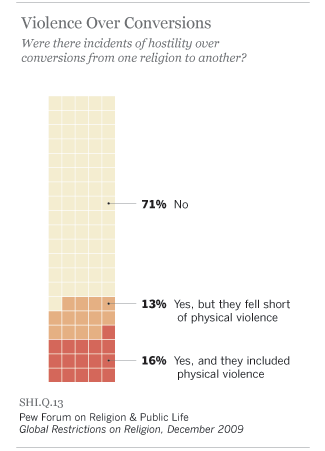
In more than half of all countries, however, it is religious groups themselves that make attempts to stop other religious groups from growing. In Russia, for example, activists and clergy of the Russian Orthodox Church have opposed the expansion of non-Orthodox Christian denominations and campaigned against religions deemed nontraditional, including other Orthodox Christian congregations. (Russia scores in the high range of social hostilities involving religion.) Tensions over conversions have resulted in physical violence in more than one-in-ten countries (16%). In Turkey, for example, two converts to Christianity were tortured and killed along with a German citizen in 2007. (Turkey ranks high in social hostilities involving religion.)
During the main two-year period covered by this study, from mid-2006 to mid-2008, religion-related terrorist groups were active in nearly one-in-three countries (30%). For the purposes of this study, religion-related terrorism is defined as politically motivated violence against noncombatants by sub-national groups or clandestine agents with a religious justification or intent. (See the Methodology.) While in many countries their activity was limited to recruitment and fundraising, religion-related terrorists caused casualties in 17 countries (9%). They caused more than 50 injuries or deaths on average per year in six countries (3%): Afghanistan, Algeria, India, Iraq, Nepal and Pakistan.
Two dozen countries (12%) were affected by current religion-related wars or the continuing displacement of people from previous religion-related fighting. For the purposes of this study, a religion-related war is defined as an armed conflict (involving sustained casualties over time or more than 1,000 battle deaths) in which religious rhetoric is commonly employed to justify the use of force, or in which one or more of the combatants primarily identifies itself or the opposing side by religion. During the two-year period studied, the largest numbers killed were in Iraq. In addition, more than 18 million people remained displaced from their homes by current or previous conflicts related to religion. Millions remained displaced from previous wars in the Palestinian territories and Sudan. Hundreds of thousands remained displaced in Bosnia-Herzegovina, Serbia and Croatia, collectively.
The regional pattern of social hostilities closely resembles that of government restrictions on religion, with the Middle East-North Africa showing the highest level of hostilities and the Americas the lowest.
The median score of the 20 countries in the Middle East-North Africa on the Social Hostilities Index is 4.4. Social hostilities are particularly high in Iraq, where violence between Sunni and Shia Muslims followed the overthrow of Saddam Hussein’s regime, which favored the minority Sunni population above the majority Shia. During the sectarian strife, many members of other religious groups, including Iraqi Christians and adherents of other faiths, were displaced from the country.
The Sunni-Shia divide is a contentious issue in Saudi Arabia as well. Though Sunnis far outnumber Shias and control the country, Shias are concentrated in the region of Saudi Arabia that has the highest levels of oil production. The ever-present religious police, or muttawa, who enforce a strict interpretation of Islam, also exacerbate the religious hostilities in Saudi society. By contrast, social hostilities involving religion are low in the United Arab Emirates and Oman. Qatar has the lowest level of religious tension in the region.
As with government restrictions, there are high levels of social hostilities in some of the most populous countries in the Asia-Pacific region. India, Pakistan, Afghanistan, Indonesia, Bangladesh and Sri Lanka all score very high on this measure, while Iran and Turkey score high. Significantly absent from the list, however, is China. Although social tensions over religion appear to be on the rise in Chinese society, particularly in the Tibet and Xinjiang Autonomous Regions, China is on the low end of the Social Hostilities Index for the period covered by this study.1 The relatively low level of social constraints may help explain why religion has grown in China despite a very high level of government restrictions on religion. Among the other countries and territories with low social hostilities in the region are Singapore, Taiwan and South Korea.
The median score for the 45 countries in Europe is the same as for Asia-Pacific, but it is higher than the median score for Sub-Saharan Africa and the Americas. The relatively higher level of religious hostilities in European societies is driven by widespread instances of anti-Semitism, tensions between Muslim minorities and secular or Christian majorities, and a somewhat general distrust of new religious groups. High levels of social hostilities are found in Romania, Georgia, Russia (which had a religion-related armed conflict in Chechnya), Moldova, Greece and Serbia. Among the European countries with low levels of social hostilities are Finland, Albania, Luxembourg and Ireland.
The median level of social hostilities in sub-Saharan Africa, while next-to-lowest of the regions, is more than double the median level for the Americas. Driving up the region’s score are several countries with very high or high levels of social hostilities, including Somalia, Nigeria, Comoros, Kenya, Ghana, Ethiopia, Liberia and Ivory Coast. The lowest levels of hostilities are found in Lesotho, Rwanda, Sao Tome and Principe, Senegal, Seychelles, Swaziland, Togo and Zambia.
As with government restrictions, the Americas have the lowest median level of social hostilities involving religion. Of all the countries in the region, only Mexico scores high on the Social Hostilities Index, a reflection of violence between Catholics and evangelical Protestants, particularly in the Chiapas region. Colombia is at the top of the moderate range, and the United States is near the bottom of that range. All other countries in the Americas have low levels of religious hostilities in society.
Footnote
1 The July 2009 riots in Xinjiang, in which nearly 200 people reportedly were killed in violence between Uighur Muslims and Han Chinese, took place after the period analyzed for this report. (back to Social Hostilities by Region)
Table: Social Hostilities Index
This table shows all 198 countries and territories in descending order of their scores on the Pew Forum’s index of social hostilities involving religion. The Pew Forum has not attached numerical rankings to the countries because there are numerous tie scores and the differences between the scores of countries that are close to each other on this table are not necessarily meaningful. This is particularly the case at the low end of the scale: The range of scores among the 11 countries in the Very High (top 5%) category is greater than the range of scores among the 117 countries in the Low (bottom 60%) category.
View list of countries and territories with:
Very high levels of restrictions (top 5% of scores)
High levels of restrictions (next 15% of scores)
Moderate levels of restrictions (next 20% of scores)
Low levels of restrictions (bottom 60% of scores)
NOTE: The number of countries in each percentile range may be slightly more or less than the actual percentage because of tie scores.NORTH KOREA: The sources clearly indicate that the government of North Korea is among the most repressive in the world with respect to religion as well as other civil liberties. But because North Korean society is e ectively closed to outsiders, the sources are unable to provide the kind of specifi c and timely information that the Pew Forum coded in this quantitative study. Therefore, the report does not include a score for North Korea on either index.
Comparing Government Restrictions and Social Hostilities
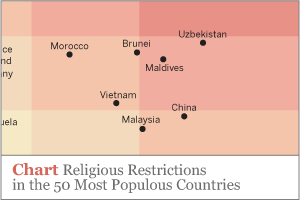
An analysis of the two main ways in which religion is restricted – by government actions and by hostilities in society – reveals a number of patterns. Some are evident in a chart that compares these two measures for the 50 most populous countries as well as for the six countries with smaller populations that score very high on either index (Brunei, Eritrea, Israel, Maldives, Sri Lanka and Somalia).
As the chart shows, nearly all of the 50 most populous countries that are high on both measures of restrictions (upper right) are in Asia or the Middle East-North Africa region. Many of the restrictions in these countries are driven by groups pressing for the enshrinement of their interpretation of the majority faith, including through Shariah law in Muslim societies and through the Hindutva movement in India, which seeks to define India as a Hindu nation. (Additional examples of restrictions on religion in India can be found in the Methodology.)
A look at the lower left of the chart shows that the most populous European countries – including France, Germany, Italy, Poland, Ukraine and the United Kingdom – generally have moderate or low levels of government restrictions as well as of social hostilities. But fewer than a dozen of the world’s 50 most populous countries are in the low range on both measures. In the United States, where government restrictions on religion are relatively few, the level of social hostilities involving religion is near the bottom of the moderate range, somewhat higher than in a number of other large, Western countries, such as Canada, Brazil and Argentina. As previously noted, only one country, Saudi Arabia, is in the very high category on both the Government Restrictions Index and the Social Hostilities Index.
When all 198 countries and self-administering territories are plotted on a chart comparing their scores on the GRI and SHI, it is apparent that the two measures tend to move together. Running through the graph is the so-called regression line, which plots how scores on one index are related, on average, to scores on the other index. The upward slope of the line indicates that higher scores on one index generally are associated with higher scores on the other. Many countries are clustered in the lower left corner, showing that they are low on both types of restrictions. Though the remaining countries are fairly dispersed, most still follow the direction taken by the regression line, and very few are located in the upper left or lower right corners of the graph. This means that, in general, it is rare for countries that are high in social hostilities to be low on government restrictions, or for those that are high on government restrictions to be low in social hostilities.
Nevertheless, there are notable exceptions. In a few nations, government restrictions on religion are considerably higher than social hostilities. These countries – including China, Vietnam, Uzbekistan and Burma – tend to have either communist or authoritarian backgrounds, and religion is often viewed by the government as a potential threat to its authority.
Countries that follow the opposite pattern – that is, where social hostilities are considerably higher than government restrictions – tend to have large segments of the population that want to protect the special place of a particular religion, such as Buddhism in Sri Lanka, Hinduism in Nepal, Islam in Bangladesh and Orthodox Christianity in Ethiopia.
Religious Restrictions in the 50 Most Populous Countries
This chart shows how the world’s 50 most populous countries and selected others score in terms of both government restrictions on religion and social hostilities involving religion. Countries in the upper right have the most restrictions and hostilities. Countries in the lower left have the least.
Religious Restrictions in 198 Countries
This chart shows how the world’s 198 countries and self-administering territories score in terms of both government restrictions on religion and social hostilities involving religion.
Methodology
Conceptual Framework
A great deal of scholarship has been devoted to the study of religious freedom and the extent of restrictions on religion. Much of this research relies upon case studies, assessments by observers within countries and reviews of news reports. This research has yielded valuable insights and has helped to call attention to places and circumstances in which religious practices or beliefs are infringed on by governments or societies. A more systematic assessment and comparison of restrictions on religion worldwide, however, requires the development of valid and reliable quantitative indicators.
Good measurement entails the translation of abstract concepts (in this case, “restrictions on religion”) into factual indicators. This translation requires indicators that satisfy several criteria. First, they must be comprehensive, covering a broad range of facets of the issue, since no single indicator, or even small set of indicators, could be expected to capture all the ways in which religion might be restricted by government or in society. Moreover, individual indicators can be affected by one-time events or temporary circumstances. The use of multiple indicators, therefore, helps to ensure that a wide range of important manifestations of restrictions on religion are captured, and also helps to minimize the impact of any single indicator on the overall score.
For the index of government restrictions on religion, creating a comprehensive measure began with the identification by the Pew Forum’s research team of four main ways in which such restrictions occur: (1) constitutional restrictions or restrictions based in national law or policy; (2) restrictions imposed by government officials at any level, whether codified in law or not; (3) use of force or coercion against religious groups by government agencies or their representatives; and (4) government favoritism toward particular religious groups. In each of these four areas, the research team developed multiple indicators, such as determining whether a country’s constitution specifically provides for “freedom of religion,” or whether it establishes a favored religion or religions. A total of 20 separate indicators make up the Government Restrictions Index.
For the measurement of social hostilities involving religion, the Pew Forum’s researchers identified three principal ways in which social hostility toward religious groups is expressed: (1) crimes or malicious acts motivated by religious hatred or bias; (2) public religious tensions that lead to violence; and (3) religion-related terrorism and war. In each of these areas, multiple indicators were devised to capture a wide range of hostilities, from individual malicious acts to mob violence and nationwide armed conflict. A total of 13 indicators make up the Social Hostilities Index.
Second, accurate measurement requires that the multiple indicators used within each of the two indexes be internally consistent. Though the indicators may focus on widely varying kinds of restrictions on religion, all of them should work in tandem to identify meaningful levels of restrictions. Put differently, countries with high levels of restrictions on religion will typically, though not always, score higher on a given indicator than countries with lower levels of restrictions. If an indicator does not follow this pattern, then it may be measuring something other than the concept of restrictions on religion.
Third, good measures also are reliable. One aspect of reliability is the extent to which different observers attempting to apply the set of indicators will get the same result. If two researchers look at the same data sources and reach different conclusions about how a country should be scored on a particular indicator, then the measure lacks reliability. Another aspect is the extent to which the score on an indicator is consistent over time, assuming that the restriction itself has not changed during that period. If a nation’s constitution and laws have not changed from one year to the next, a reliable indicator of constitutional and legal restrictions on religion will yield the same result in both years.
Finally, measures must be valid. Validity refers to the extent to which the measure captures the abstract concept under examination – in this case, restrictions on religious beliefs and practices. One way of assessing validity is to compare the results of the index with the views of experts. For example, are countries that score very high on the Government Restrictions Index considered by experts in the field to be the most restrictive nations? Conversely, do experts believe that certain countries have a high level of restrictions even though the index indicates that the level is low? Another method of assessment is to compare scores on the index with other quantitative indicators of restrictions that appear to measure restrictions on religion but are not themselves included in the index. As discussed below, the indexes correspond closely with expert assessments of countries, and they correlate strongly with other indicators of government restrictions on religion and social hostilities involving religion.
Overview of Procedures
The methodology used by the Pew Forum to assess and compare restrictions on religion was developed by Senior Researcher Brian J. Grim in consultation with other members of the Pew Research Center staff, building on a methodology that Grim and Prof. Roger Finke developed while at Penn State University’s Association of Religion Data Archives.1 The goal was to devise quantifiable, objective and transparent measures of the extent to which governments and societal groups impinge on the practice of religion. The findings were used to rate 198 countries and self-governing territories on two indexes that are reproducible and can be periodically updated.
This research goes beyond previous efforts to assess restrictions on religion in several ways. First, the Pew Forum coded (categorized and counted) data from 16 published sources, providing a high degree of confidence in the findings. The Pew Forum’s coders looked to the sources only for specific, well-documented facts, not for opinions or commentary.
Second, the Pew Forum’s staff used extensive data-verification checks that reflect generally accepted best practices for such studies, such as double-blind coding (coders do not see each other’s ratings), inter-rater reliability assessments (checking for consistency among coders) and carefully monitored protocols to reconcile discrepancies between coders.
Third, the Pew Forum’s coding took into account whether the perpetrators of religion-related violence were governmental or private actors. The coding also identified how widespread and intensive the restrictions were in each country.
Fourth, two independently coded years of data (July 1, 2006, through June 30, 2007, and July 1, 2007, through June 30, 2008) were averaged to create solid baseline measures that are less affected by methodological or informational variability in any one year.
The indexes can be used to compare nations, groups of nations or regions of the world. But one of the most valuable uses of the indexes will not be realized immediately. That is the ability of the indexes to chart change over time. Using the current two-year average for each nation as a baseline, future editions of the index could assess increases or decreases in government restrictions and social hostilities.
Countries and Territories
The Pew Forum study covers a total of 198 countries and territories. These include all 192 states that were members of the United Nations during the period under examination (mid-2006 to mid-2008), with the exception of North Korea, for which sufficiently precise and timely data was not available. In addition, the study includes seven territories: Hong Kong, Macau, Taiwan, the Palestinian territories, Kosovo, Western Sahara and Northern Cyprus. These are treated as separate entities, for various reasons, by some or all of the primary information sources for this study. The U.S. State Department, for example, reports separately on Northern Cyprus because it has been administered by Turkish Cypriot authorities since 1974.
Although the 198 countries and territories vary widely in size, population, wealth, ethnic diversity, religious makeup and form of government, the study does not attempt to adjust for such differences. Poor countries are not scored differently on the indexes than wealthy ones. Countries with diverse ethnic and religious populations are not “expected” to have more social hostilities than countries with more homogeneous populations. And democracies are not assessed more leniently or harshly than authoritarian regimes. However, several charts and related passages in this report focus on countries of roughly similar size – such as the world’s 25 and 50 most populous nations – and on broad geographic regions. Those comparisons may be more instructive than comparing very large, populous countries to much smaller ones.
Information Sources
The Pew Forum identified 16 widely available, frequently cited sources of information on government restrictions and social hostilities involving religion around the world. These sources, which are listed below, include reports from U.S. government agencies, several independent, nongovernmental organizations and a variety of European and United Nations bodies. Although most of these organizations are based in Western countries, many of them depend on local staff to collect information across the globe. As previously noted, the Pew Forum did not use the commentaries, opinions or normative judgments of the sources; the sources were combed only for factual information on specific policies and actions.
Primary Sources
1. Country constitutions
2. U.S. State Department annual reports on International Religious Freedom
3. U.S. Commission on International Religious Freedom annual reports
4. U.N. Special Rapporteur on Freedom of Religion or Belief reports (Asma Jahangir)
5. Human Rights First reports
6. Hudson Institute publication: Religious Freedom in the World (Paul Marshall)
7. Human Rights Watch topical reports
8. International Crisis Group country reports
9. United Kingdom Foreign & Commonwealth Office annual report on human rights
10. Council of the European Union annual report on human rights
11. Amnesty International reports
12. European Network Against Racism Shadow Reports
13. United Nations High Commissioner for Refugees reports
14. U.S. State Department annual Country Reports on Terrorism
15. Anti-Defamation League reports
16. U.S. State Department Country Reports on Human Rights Practices
U.S. government reports with information on the situation in the United States
17. Dept. of Justice Report on Enforcement of Laws Protecting Religious Freedom 2000-2006
18. Department of Justice “Religious Freedom in Focus” newsletters
19. FBI Hate Crime Reports
The Pew Forum’s staff developed a battery of questions similar to a survey questionnaire. Coders consulted the primary sources in order to answer the questions separately for each country. While the U.S. State Department’s annual reports on International Religious Freedom generally contained the most comprehensive information, the other sources provided additional factual detail that was used to settle ambiguities, resolve contradictions and help in the proper scoring of each question.
The questionnaire, or coding instrument, generated a set of numerical measures on restrictions in each country. It also made it possible to see how government restrictions intersect with broader social tensions and incidents of violence or intimidation by private actors. The coding instrument with the list of questions used for this report is shown in the Summary of Results.
The coding process required the coders to check all the sources for each country. Coders determined whether each source: provided information critical to assigning a score; had supporting information but did not result in new facts; or had no available information on that particular country. Multiple sources of information were available for all countries and self-administering territories with populations greater than 1 million. More than three-in-four of the countries and territories analyzed by the Pew Forum were multi-sourced; only small, predominantly island, countries had a single source, namely, the U.S. State Department reports.
Coding the United States presented a special problem since it is not included in the State Department’s annual reports on International Religious Freedom. Accordingly, the Pew Forum’s coders also looked at reports from the Department of Justice and the FBI on violations of religious freedom in the United States, in addition to consulting all of the primary sources, including reports by the United Nations, Human Rights Watch, the International Crisis Group and the U.K. Foreign & Commonwealth Office, many of which do contain data on the United States.
The Coding Process
The Pew Forum employed strict training and rigorous coding protocols to make its coding as objective and reproducible as possible. Coders worked directly under a senior researcher’s supervision, with additional direction and support provided by other Pew Forum researchers. The coders underwent an intensive training period that included a thorough overview of the research objectives, information sources and methodology.
Countries were double-blind coded by two coders, and the initial ratings were entered into SPSS data files. The coders began by filling out the coding instrument for each country using the information source that had the most comprehensive information, typically the U.S. State Department reports. The protocol for each coder was to answer every question on which information was available in the initial source. Once a coder had completed that process, he or she then turned to the other sources. As new information was found, this was also coded and the source duly noted. Whenever ambiguities or contradictions arose, the source providing the most detailed, clearly documented evidence was used.
After two coders had separately completed the coding instrument for a particular country, their scores were compared by a senior researcher. Areas of discrepancy were discussed at length with the coders and were reconciled in order to arrive at a single score on each question for each country.
Throughout this process, the coding instrument itself was continually monitored for possible defects. The questions were designed to be precise, comprehensive and objective so that, based on the same data and definitions, the coding could be reliably reproduced by others with the same results.
Pew Forum staff generally found few cases in which one source contradicted another. When contradictions did arise – such as when sources provided differing estimates of the number of people displaced due to religion-related violence – the source that cited the most specific documentation was used. The coders were instructed to disregard broad, unsubstantiated generalizations regarding abuses and to focus on reports that contained clear, precise documentation and factual detail, such as names, dates and places where incidents occurred.
Inter-rater reliability statistics were computed by comparing the coders’ independent, blind ratings. The Pew Forum took scores from one coder for the 198 countries and compared them with another coder’s scores for the same questions, computing the degree to which the scores matched. These measures were very high, with an average score of .8 or above on the key variables. Scores above .8 on a 0-to-1 scale are generally considered very good, and scores around .7 are generally acceptable. The Pew Forum’s overall inter-rater reliability average across all the variables coded was .86.
The data-verification procedures, however, went beyond the inter-rater reliability statistics. They also involved comparing the answers on the main measures for each country with other closely related questions in the dataset. This provided a practical way to test the internal reliability of the data.
Pew Forum staff also checked the reliability of the Pew Forum’s coded data by comparing them with similar, though more limited, religious restrictions datasets. In particular, published government and social regulation of religion index scores are available from the Association of Religion Data Archives (for three years of data) and the Hudson Institute (for one year of data), which makes them ideal measures for cross validation. The review process found very few significant discrepancies in the coded data; changes were made only if warranted by a further review of the primary sources.
Restriction of Religion Indexes
The study measures the extent to which governments as well as private actors (social groups, organizations and individuals) restrict religious beliefs and practices in countries around the world. To establish baseline measures for each country, the Pew Forum averaged at least two independently coded years of data (July 1, 2006, through June 30, 2007, and July 1, 2007, through June 30, 2008, in all cases, and going back in some cases to July 1, 2005, to more accurately assess recurring societal tensions).
The Government Restrictions Index is based on 20 indicators of ways that national and local governments restrict religion, including through coercion and force. The Social Hostilities Index is based on 13 indicators of ways in which private individuals and social groups infringe on religious beliefs and practices, including religiously biased crimes, mob violence and efforts to stop particular religious groups from growing or operating. The study also counted the number and types of documented incidents of religion-related violence, including terrorism and armed conflict.
Government Restrictions Index
Coding multiple indicators makes it possible to construct a Government Restrictions Index (GRI) of sufficient gradation to allow for meaningful cross-national comparisons. An additional advantage of using multiple indicators is that it helps mitigate the effects of measurement error in any one variable, providing greater confidence in the overall measure.
The Pew Forum coded 20 indicators of government restrictions on religion (see the Summary of Results). In two cases, these items represent an aggregation of several closely related questions: Measures of five types of physical abuses are combined into a single variable (Question No. 19); and seven questions measuring aspects of government favoritism are combined into an overall favoritism scale (Question No. 20 is a summary variable showing whether a country received the maximum score on any one or more of the seven questions). These 20 items were added together to create the GRI.
A test of whether the 20 items were statistically reliable as a single index produced a scale reliability coefficient of .931. Since coefficients of .7 or higher are generally considered acceptable, it was appropriate to combine these 20 items into a single index.
The GRI is a fine-grained measure created by adding the 20 items on a 0-to-10 metric, with 0 indicating very low government restrictions on religion and 10 indicating extremely high restrictions. This involved two general calculations. First, the 20 questions that form the GRI were standardized so that each variable had an identical maximum value of 1 point, while gradations among the answers allowed for partial points to be given for lesser degrees of the particular government restriction being measured. Second, the overall value of the index was proportionally adjusted so that it had a maximum value of 10 and a possible range of 0 to 10.
Social Hostilities Index
In addition to government restrictions, violence and intimidation in societies also can limit religious beliefs and practices. Accordingly, Pew Forum staff tracked more than a dozen indicators of social impediments on religion. Once again, coding multiple indicators made it possible to construct an index that shows gradations of severity or intensity and allows for comparisons between countries. The Summary of Results contains the 13 items used by Pew Forum staff to create the Social Hostilities Index (SHI).
As with the Government Restrictions Index, various types of violence and intimidation were combined. A test of whether these 13 items were statistically reliable as a single index produced a scale reliability coefficient of .919. Since coefficients of .7 or higher are generally considered acceptable, it was statistically appropriate to combine these items into a single index.
The SHI was constructed by adding together the 13 indicators based on a 0-to-10 metric, with 0 indicating very low social impediments to religious beliefs and practices and 10 indicating extremely high impediments. This involved two general calculations. First, the various questions that form the index were standardized so that each variable had an identical maximum value of 1 point, while gradations among the answers allowed for partial points to be given for lesser degrees of the particular hostilities being measured. Second, the indicators were added together and set to have a possible range of 0 to 10 by multiplying each variable by 10/13.
Levels of Restrictions
The Pew Forum categorized the levels of government restrictions and social hostilities by percentiles. Countries with scores in the top 5% on each index are categorized as “very high.” The next highest 15% of scores are categorized as “high,” and the following 20% are categorized as “moderate.” The bottom 60% of scores are categorized as “low.” Readers should note that since the indexes measure the accumulated impact and severity of restrictions, distinctions among the scores of the countries in the bottom 60% of scores are less significant than distinctions made at the upper end of the indexes, where differences in the number and severity of restrictions between countries are greater. This is evident by the fact that the range of difference between scores of countries in the entire bottom 60% (0-2.3 on the GRI and 0-1.8 on the SHI) is about the same as the range of differences between scores in just the top 5% (6.7-8.4 on the GRI and 6.8-9.4 on the SHI).
Religion-Related Terrorism and Armed Conflict
Terrorism and war can have huge direct and indirect effects on religious groups, destroying religious sites, displacing whole communities and inflaming sectarian passions. Accordingly, the Pew Forum tallied the number, location and consequences of religion-related terrorism and armed conflict around the world, as reported in the same primary sources used to document other forms of intimidation and violence. However, war and terrorism are sufficiently complex that it is not always possible to determine the degree to which they are religiously motivated or state sponsored. Out of an abundance of caution, this study does not include them in the Government Restrictions Index. They are factored instead into the index of social hostilities involving religion, which includes one question specifically about religion-related terrorism and one question specifically about religion-related war or armed conflict. In addition, other measures in both indexes are likely to pick up spillover effects of war and terrorism on the level of religious tensions in society. For example, hate crimes, mob violence and sectarian fighting that occur in the aftermath of a terrorist attack or in the context of a religion-related war would be counted in the Social Hostilities Index, and laws or policies that clearly discriminate against a particular religious group would be registered on the Government Restrictions Index.
For the purposes of this study, the term religion-related terrorism is defined as premeditated, politically motivated violence perpetrated against noncombatant targets by subnational groups or clandestine agents that have some identifiable religious ideology or religious motivation. Readers should note that it is the political character and motivation of the groups, not solely the type of violence, that is at issue here. For instance, a bombing would not be classified as religion-related terrorism if there was no clearly discernible religious ideology or bias behind it.
Religion-related war or armed conflict is defined as armed conflict (a conflict that involves sustained casualties over time or more than 1,000 battle deaths) in which religious rhetoric is commonly used to justify the use of force, or in which one or more of the combatants primarily identifies itself or the opposing side by religion.
Potential Biases
As noted in the report, the primary sources indicate that the North Korean government is among the most repressive in the world, including toward religion. Because of independent observers’ lack of regular access to North Korea, however, the sources are unable to provide the kind of specific, timely information that forms the basis of this report. Therefore, North Korea is not included on either index.
This raises two important issues concerning potential information bias in the sources. The first is whether other countries that limit outsiders’ access and that may seek to obscure or distort their record on religious restrictions were adequately covered by the sources. Countries with relatively limited access have multiple primary sources of information that the Pew Forum used for its coding. Each is also covered by other secondary quantitative datasets on religious restrictions that have used a similar coding scheme, including earlier years of coded data from U.S. State Department reports previously produced by Grim at Penn State’s Association of Religion Data Archives (ARDA) project (three datasets); independent coding by experts at the Hudson Institute’s Center for Religious Liberty using indexes also available from ARDA (one dataset); and content analysis of country constitutions conducted by the Becket Fund for Religious Liberty (one dataset). Pew Forum staff used these for cross-validation. Contrary to what one might expect, therefore, even most countries that limit access to information tend to receive fairly extensive coverage by groups that monitor religious restrictions.
The second key question – the flipside of the first – is whether countries that provide freer access to information receive worse scores simply because more information is available on them. One way to address this issue is to compare the length of U.S. State Department reports on freer-access countries with those of less-free countries. The table below shows the number of words found in the State Department’s 2007 International Religious Freedom report for 18 countries that are chosen for illustrative purposes. As the table shows, the total number of words (73,576) devoted to nine limited-access countries is more than double the number of words (32,508) for nine freer-access countries, with the median number of words approximately three times as large for the limited-access countries as for the open-access countries (7,052 vs. 2,304).
Although this quick comparison shows that problems in freer-access countries are generally not overreported in the U.S. State Department reports, it is the case that some freer-access countries, such as France, the United Kingdom and Germany, do stand out as garnering considerably more coverage than the others on the list; in the case of France, its report is even longer than Saudi Arabia’s. The disproportionate coverage for these three European countries, which general knowledge suggests are less religiously restrictive than the countries on the limited-access list, suggests that a potential over-reporting bias might exist. When one compares the actual results in the table below, however, there appears to be no such problem: The nine limited-access countries have many more reported cases of abuses (17,947) than the freer-access countries (50).
Comparing the GRI scores between the two groups also suggests that the coding methodology overcomes any potential over-reporting bias. Not only do all of the limited-access countries show higher levels of restrictions than any of the freer-access countries, but their average score is more than three times as high (6.8 vs. 2.0).
Only when it comes to religion-related violence and intimidation in society are there more problems reported in the freer-access countries than in the limited-access ones (160 vs. 109). However, the SHI includes several measures – such as Questions No. 8 (Did religious groups themselves attempt to prevent other religious groups from being able to operate?) and No. 11 (Were women harassed for violating religious dress codes?) – that are less susceptible to such reporting bias because they capture general social trends or attitudes as well as specific incidents of violence.
With these limitations in mind, it appears that the coded information on social hostilities is a fair gauge of the situation in the vast majority of countries and a valuable complement to the information on government restrictions. For example, a review of data on Iraq from other studies suggests that even though the level of government restrictions on religion decreased slightly between 2001 and 2007, the level of social hostilities – including sectarian violence, ostracism and physical abuse – steadily increased from 2003 to 2005 and remained at a high level in 2007.
Data on social impediments to religious practice can more confidently be used to make comparisons between countries with sufficient openness, which includes more than nine-in-ten countries covered in the Pew Forum’s coding. An analysis by Grim and Richard Wike, Associate Director of the Pew Research Center’s Global Attitudes Project, tested the reliability of the State Department reports on social impediments to religious practice by comparing public opinion data with data coded from the reports in previous years by Grim and experts at Penn State. They concluded that “the understanding of social religious intolerance embodied in the State Department reports is comparable with the results of population surveys and individual expert opinion.”2
Example of Data Coding: India
Pew Forum coders examined the primary sources to determine whether reported incidents were connected to a specific time, place and perpetrator and to clarify the extent and range of the problems. Looking at data from India helps illustrate this. (Download 4-page PDF.)
Footnotes
1 See “International Religion Indexes: Government Regulation, Government Favoritism, and Social Regulation of Religion” (2006) by Grim and Finke, published in the Interdisciplinary Journal of Research on Religion, Vol. 2 (Article 1). (back to Overview of Procedures)
2 See “Cross-Validating Measures of Global Religious Intolerance: Comparing Coded State Department Reports With Survey Data and Expert Opinion” (forthcoming April 2010) by Brian J. Grim and Richard Wike, to be published in Politics and Religion.
Summary of Results
Government Restrictions on Religion
To assess the level of restrictions on religion by governments around the world, the Pew Research Center’s Forum on Religion & Public Life selected the following 20 questions for the Government Restrictions Index (GRI). The Pew Forum’s staff then combed through 16 published sources of information, including reports by the U.S. State Department, the United Nations and various nongovernmental organizations, to answer the questions on a country-by-country basis. (For more detail, see the Methodology.)
This summary shows the questions, followed by various possible answers and the number and percentage of countries that fell into each category. For example, on Question No. 5 – “Is public preaching by religious groups limited by any level of government?” – the study found that 135 countries had no reported limits on preaching, 37 countries had limits on preaching by some religious groups, and 26 countries had limits on preaching by all religious groups.
To see how each country scored on each question, see the Results by Country.
This summary covers the period from July 1, 2006, through June 30, 2008, and shows whether particular religious restrictions occurred at any time during that period according to the multiple sources analyzed by the Pew Forum. Percentages may not add to 100 due to rounding.
To assess the level of social hostilities involving religion around the world, the Pew Research Center’s Forum on Religion & Public Life used the following 13 questions for the Social Hostilities Index (SHI). The Pew Forum’s staff then combed through 16 published sources of information, including reports by the U.S. State Department, the United Nations and various nongovernmental organizations, to answer the questions on a country-by-country basis. (For more detail, see the Methodology.)
This summary shows the questions, followed by various possible answers and the number and percentage of countries that fell into each category. For example, on Question No. 12 – “Were there incidents of hostility over proselytizing?” – the study found that 129 countries had no reported incidents of hostility over proselytizing, 39 countries had incidents that fell short of physical violence and 30 countries had incidents involving violence.
To see how each country scored on each question, see the Results by Country.
This summary covers the period from July 1, 2006, through June 30, 2008, and shows whether particular religious hostilities occurred at any time during that period according to the multiple sources analyzed by the Pew Forum. In some questions, events going back to 2005 are also included in the findings if they still were having an ongoing impact. Percentages may not add to 100 due to rounding.
The tables below show the results for each of 198 countries and territories on the 20 questions that comprise the Pew Forum’s Government Restrictions Index and the 13 questions that comprise the Social Hostilities Index.
Although each question is weighted equally, many of the questions contain gradations, allowing partial scores depending on intensity or severity. (See the Methodology.)
For example, on SHI Question No. 2 – Was there mob violence related to religion? – a country that had no religion-related mob violence would receive 0 points, a country that had mob violence in which no deaths were reported would receive 1/2 point (0.50), and a country that had mob violence in which deaths were reported would receive a full point (1.00).
The scores are based on two different years of data (July 1, 2006 through June 30, 2007, and July 1, 2007 through June 30, 2008) that were coded independently by separate groups of coders at the Pew Forum. If there was a change in a country’s score on a particular question from one year to the next, the country received the average of the two scores. For example, if a country had mob violence related to religion in one year but not in the other and if no deaths were reported, the country would receive a score of 0.25, the average of 0.50 in one year and 0 in the other.
Both the GRI and the SHI are scales of 0 to 10. Readers wishing to independently calculate a country’s index score from the tables below should note that the sum total of a country’s scores on all 20 GRI questions must be divided by two and the sum total of its scores on all 13 SHI questions must be multiplied by 10/13 (0.77) to convert them to the 10-point scale. For more detail on the indexes, see the Methodology.
This report was produced by the Pew Research Center’s Forum on Religion & Public Life. The Pew Forum delivers timely, impartial information on issues at the intersection of religion and public affairs. The Pew Forum is a nonpartisan, nonadvocacy organization and does not take positions on policy debates. Based in Washington, D.C., the Pew Forum is a project of the Pew Research Center, which is funded by The Pew Charitable Trusts. This report is a collaborative effort based on the input and analysis of the following individuals:
Pew Forum on Religion & Public Life
Luis Lugo, Director
Research
Alan Cooperman, Associate Director, Research
Brian J. Grim, Senior Researcher
Sahar Chaudhry, Research Analyst
Jacqueline E. Wenger, Research Associate
Maura Bardos, Michelle Burns, James P. Emanuel, Jr., Lyn-Ni Lee, Hilary Ramp, Brett Rector, Joshua Turner, Coders
Editorial
Sandra Stencel, Associate Director, Editorial
Diana Yoo, Graphic Designer and Assistant Web Editor
Tracy Miller, Editor
Hilary Ramp, Assistant Editor
Communications and Web Publishing
Erin O’Connell, Associate Director, Communications
Oliver Read, Web Manager
Robert Mills, Communications Associate
Liga Plaveniece, Program Coordinator
Pew Research Center
Andrew Kohut, President
Paul Taylor, Executive Vice President
Scott Keeter, Director of Survey Research
Michael Keegan, Graphics Director
Alicia Parlapiano, Infographic Designer