Pew Research Center

FOR RELEASE JUNE 14, 2021

Facebook Posts in Early Days of Biden Administration Reflect Ideological Divide

Posts on the social media platform covered similar topics as broader media coverage, but were more negative overall

BY Galen Stocking, Michael Barthel and Mark Jurkowitz

FOR MEDIA OR OTHER INQUIRIES:

Communications Department
202.419.4372
www.pewresearch.org

RECOMMENDED CITATION

Pew Research Center, June 2021, "Facebook Posts in Early Days of Biden Administration Reflect Ideological Divide"

About Pew Research Center

Pew Research Center is a nonpartisan, nonadvocacy fact tank that informs the public about the issues, attitudes and trends shaping the world. It does not take policy positions. The Center conducts public opinion polling, demographic research, computational social science research and other data-driven research. It studies politics and policy; news habits and media; the internet and technology; religion; race and ethnicity; international affairs; social, demographic and economic trends; science; research methodology and data science; and immigration and migration. Pew Research Center is a subsidiary of The Pew Charitable Trusts, its primary funder.

© Pew Research Center 2026

Table of contents

  • About Pew Research Center
  • Facebook Posts in Early Days of Biden Administration Reflect Ideological Divide
  • Acknowledgments
  • Methodology

Facebook Posts in Early Days of Biden Administration Reflect Ideological Divide

Posts on the social media platform covered similar topics as broader media coverage, but were more negative overall

How we did this

This study analyzes Facebook posts about the Biden administration on the most popular public Facebook pages in the time period studied that focus on current affairs. With about a third of U.S. adults (36%) regularly getting news on Facebook, more than other social media platforms, this analysis tries to get a sense of the coverage of the Biden administration in this space.

Popular public Facebook pages were selected through a multistep process using data from CrowdTangle, a public insights tool owned and operated by Facebook. All public pages in the CrowdTangle database that posted at least once about the Biden administration in the first three months of 2021 were considered, so long as those posts received at least one view from Facebook users. A total of roughly 11,510 pages included at least one such post.

Researchers calculated the total monthly interactions for each of these pages from October to December 2020 and further examined the 100 pages with the highest average monthly total interactions during this time period (which is the same period analyzed in recent research looking at news coverage on other platforms). Researchers then examined each page and removed pages that were based outside the United States, were already studied in the most recent report about news coverage, or did not have a clear current affairs focus.

The top 25 remaining pages by average total monthly interactions were included in the study, and researchers downloaded all 5,458 posts published by these pages from March 8-14, 2021, using CrowdTangle. Each post was analyzed by trained human coders to determine if it was about the Biden administration. Only the post message and embedded image, link headline and image, and the first 10 minutes of any video embedded in the post were used to make this determination. A total of 1,226 posts met these criteria and formed the basis of this study.

This is the latest report in Pew Research Center’s ongoing investigation of the state of news, information and journalism in the digital age, a research program funded by The Pew Charitable Trusts, with generous support from the John S. and James L. Knight Foundation.

For more information, see the methodology.

A new study of posts on popular public Facebook pages about the early days of the Biden administration finds that the focus of these posts, as well as the assessments of the new president, differed widely by the ideological orientation of the pages.
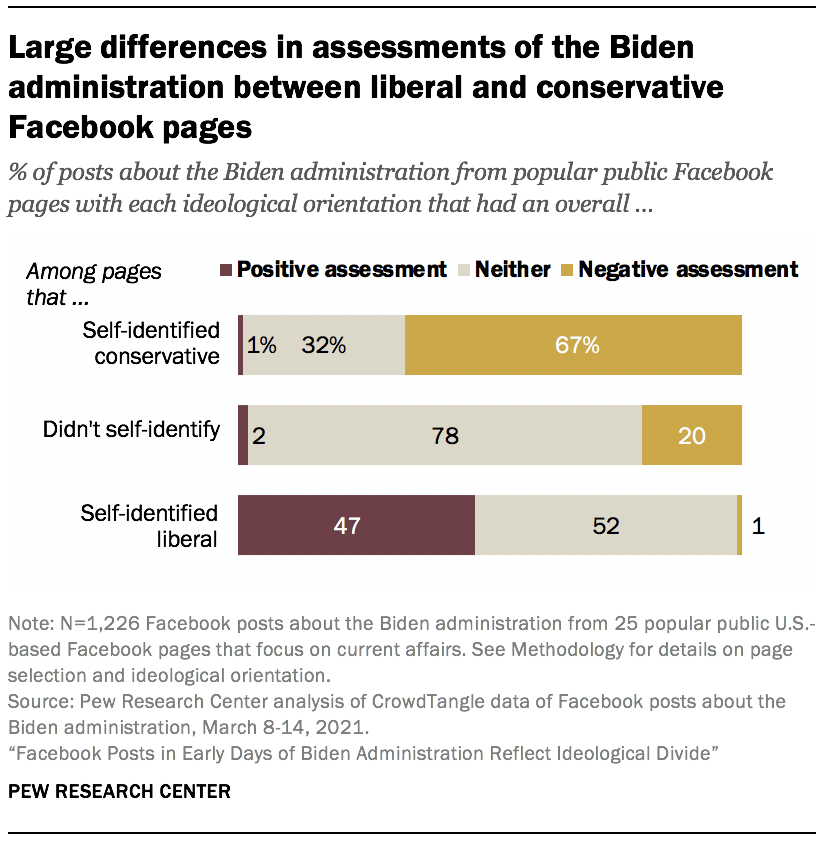
Large differences in assessments of the Biden administration between liberal and conservative Facebook pages

This analysis – which follows a recent Pew Research Center report examining a broader sample of 25 major news outlets on TV, radio and the web – focuses on the 1,226 posts published on 25 popular public Facebook pages focused on current affairs (based on average total monthly interactions) during a crucial week for President Joe Biden, March 8-14, in which he signed the $1.9 trillion coronavirus relief bill.1 (The Center also fielded a survey that week about Americans’ views of news about the new administration.) With about one-in-five U.S. adults (18%) saying they often get political news on social media, this latest research explores how news coverage on social media may have differed from broader coverage of the new administration.

The popular pages included all have a focus on current affairs and are a mix of political groups like Occupy Democrats or Team Trump; figures such as Barack Obama or Donald Trump Jr.; commentators like Ben Shapiro or Robert Reich; and news outlets like The Western Journal and NowThis.

Among popular Facebook pages that describe themselves as conservative (12 of the 25 pages studied), 1% of posts carried positive assessments of the Biden administration, while 67% were negative. For those pages that self-identified as liberal (11 of the 25), only 1% of the posts carried negative assessments while 47% had a positive one. About one-third (32%) of the posts on conservative Facebook pages and roughly half (52%) on liberal pages were neither positive nor negative.2

These differences in assessments follow the same pattern found in the broader news media study and are another reminder of the deeply polarized information environment in the country. (It is important to note that while the ideological groupings for the Facebook pages were based on self-descriptions, the groupings in the broader study were based on audience makeup – a metric not available for Facebook pages.)

Economy was a more common topic on liberal Facebook pages; immigration more common on conservative pages

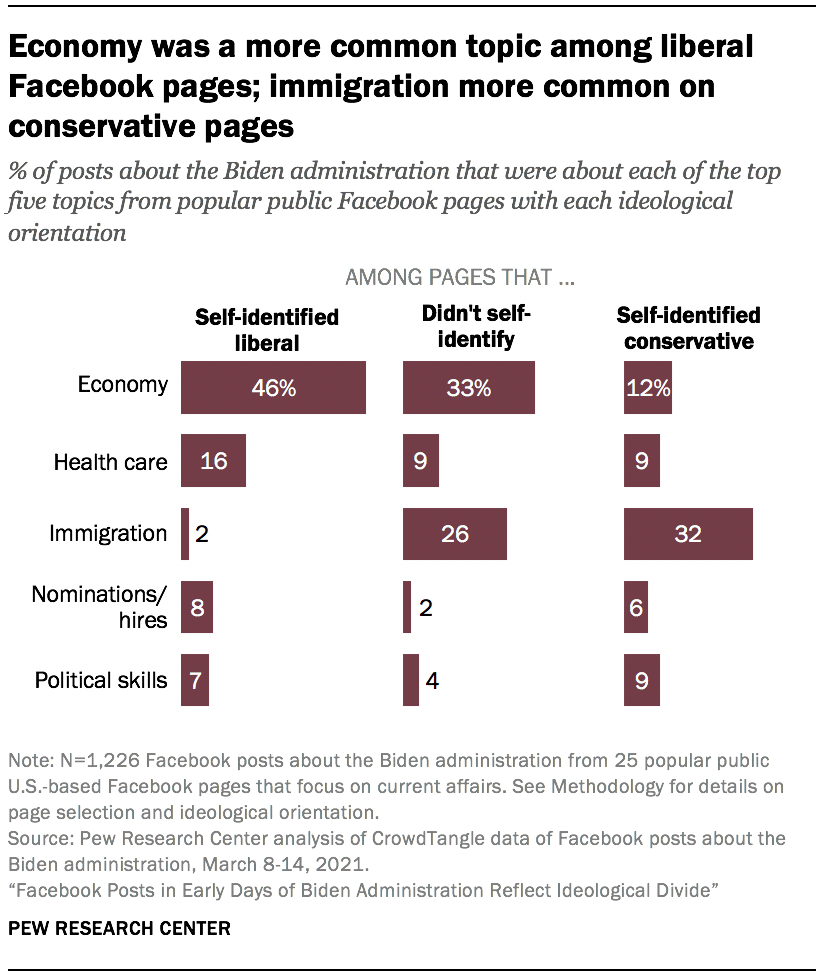
There were also clear differences by self-described ideology in the topics these pages posted about. Even with the enactment of the coronavirus relief bill, the leading topic on conservative Facebook pages during the week studied was immigration, which accounted for 32% of all posts on these pages – well ahead of the economy, at 12%. On liberal pages, however, the economy dominated, accounting for just under half of their posts (46%). In stark contrast to the conservative pages, only 2% of posts on liberal pages were about immigration. (Only two of these 25 pages did not self-identify with an ideology, and so we do not focus on their results here.)

Facebook posts covered similar topics as broader coverage but were more negative

This report also compares Facebook posts about the Biden administration with coverage in the broader mix of outlets studied in our previous report. Both samples analyzed here include only posts or stories from the week of March 8-14, 2021. The outlets studied in the previous research include 25 major news outlets on TV, radio and the web; Facebook pages of these outlets were not included in this analysis. These two samples covered the new administration using the same mix of topics but carried a more negative assessment on Facebook.

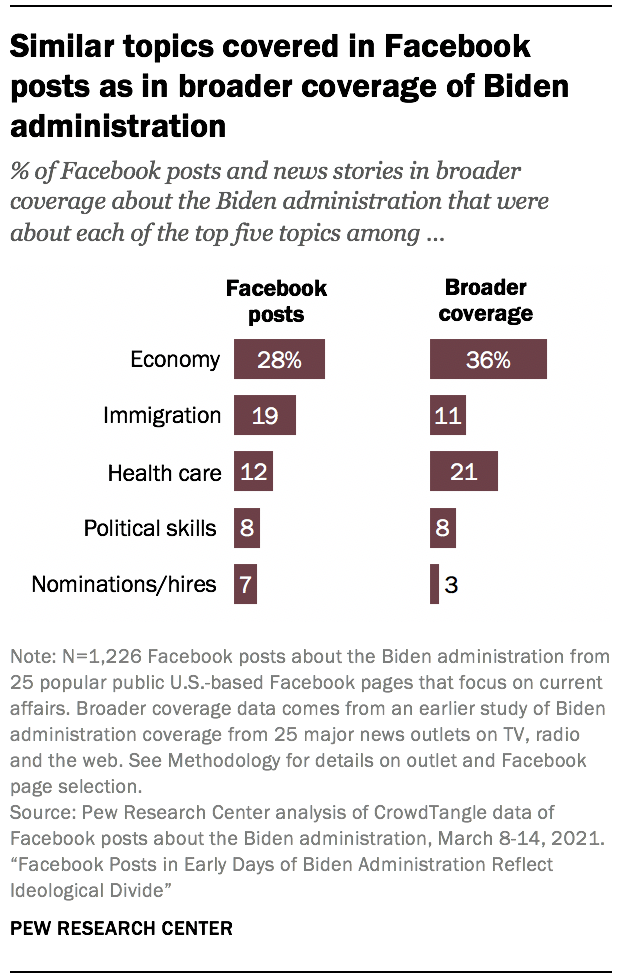
Among all Facebook posts studied, the economy was the leading subject (28% of all posts), as was the case in the study of broader coverage from TV, radio and the web, where 36% of all stories about Biden focused on that topic. The top five Biden topics were the same in both samples, although there was a slightly larger emphasis on immigration on Facebook pages (19%) than in the broader coverage (11%), and the broader coverage emphasized health care (21%) more than Facebook posts did (12%).

The two samples did differ, however, in the overall assessments they offered of the Biden administration. On popular Facebook pages, posts with negative assessments outnumbered positive ones by 36% to 21%. But in the broader coverage of Biden, it was almost an even split, with 31% of stories offering a positive assessment compared with 28% carrying a negative one. A plurality of coverage in both groups offered neither a positive nor negative assessment. One contributing factor to this difference in coverage may be the self-described ideological orientation of the 25 popular Facebook pages studied compared with the political leaning of audiences across the 25 news outlets in the broader coverage. For the 25 Facebook pages, self-identifications were almost equally divided between conservative (12) and liberal (11), while in the broader analysis, there were far more news outlets with audiences that lean to the left politically (13) than with audiences that lean to the right (6), which reflects the lower levels of trust of many major outlets among Republicans.

Higher engagement with Facebook posts that had a positive assessment of the Biden administration or mentioned Trump
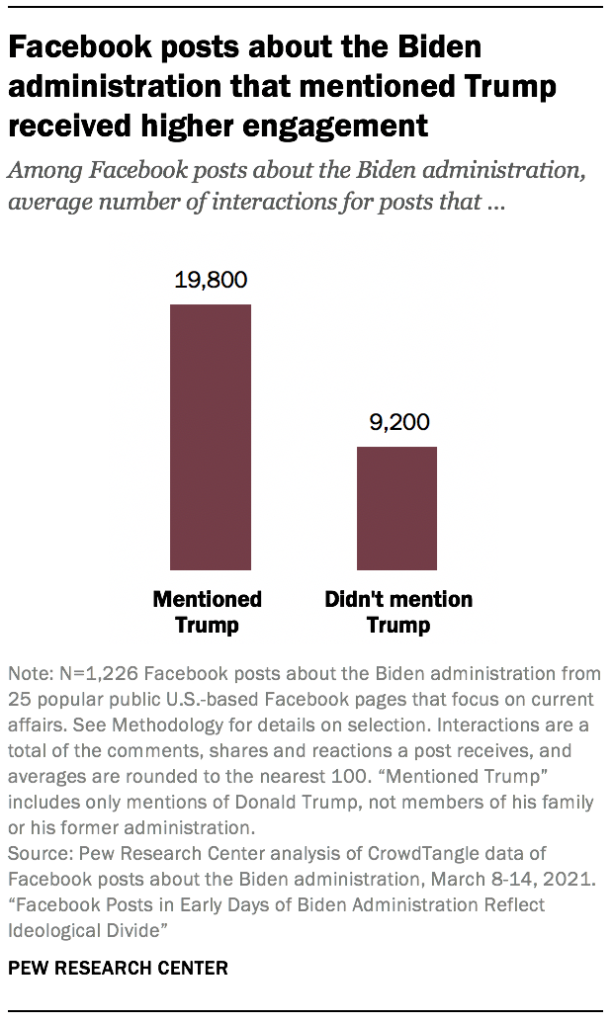
Facebook posts about the Biden administration that mentioned Trump received higher engagement

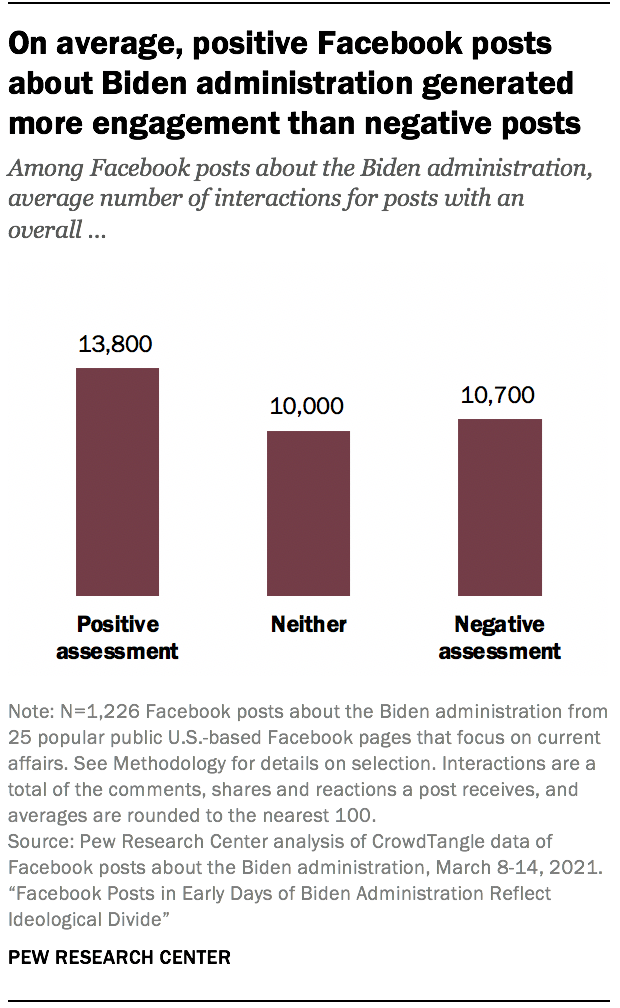
One way to gauge the impact of Facebook posts is to measure their engagement through the number of interactions – the sum of reactions (including likes and other reactions), shares, and comments – that they generate. Posts with positive assessments of Biden generated an average of about 13,800 interactions per post, considerably more than the roughly 10,700 interactions for each post with a negative assessment. More generally, posts from liberal pages generated somewhat more engagement than posts from conservative pages — an average of about 12,500 interactions per post versus about 11,300 interactions, respectively.

One catalyst for engagement was the former president. Posts that mentioned Donald Trump averaged about 19,800 interactions, more than twice as much engagement as posts that did not invoke the former president (roughly 9,200).

Liberal and conservative Facebook pages offered very different views of the Biden administration
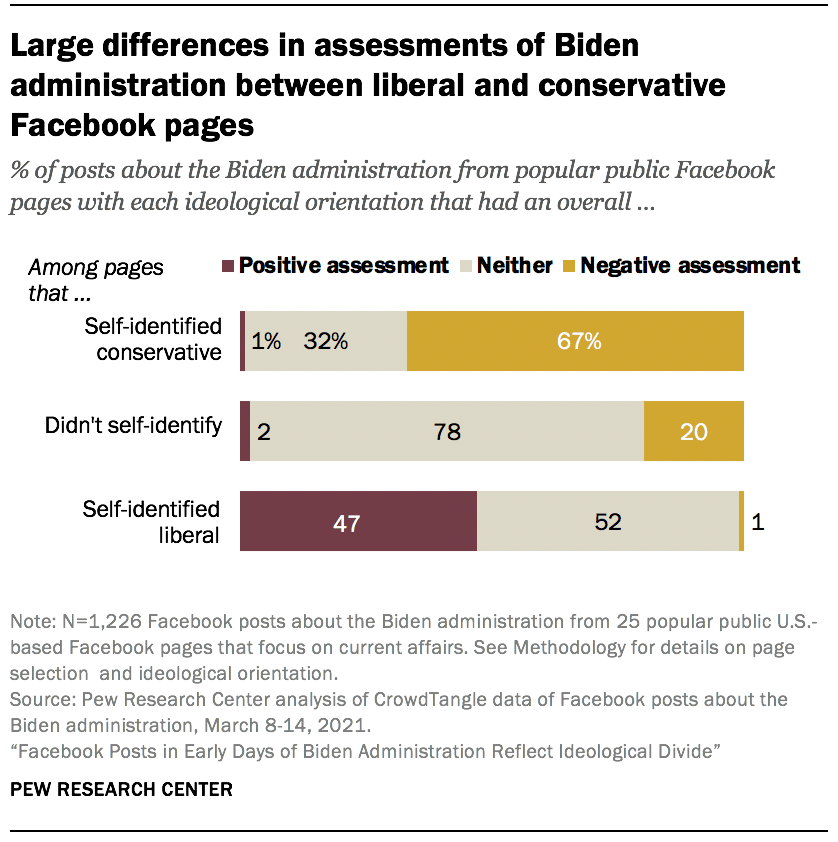
Large differences in assessments of Biden administration between liberal and conservative Facebook pages

Liberal and conservative Facebook pages widely diverged from each other in how they discussed the early days of the Biden administration across a range of aspects – including assessments of the Biden administration, storylines covered, and whether the pandemic and the former president were mentioned.

Of the 25 popular current affairs-oriented public Facebook pages examined in this report, nearly all gave some indication of an ideological orientation. Pages that identified as liberal described themselves as liberal, progressive, Democratic, or opposed to conservativism or Republicans, while pages that identified as conservative described themselves as conservative, Republican, or opposed to liberalism or Democrats. Researchers used these descriptions to classify the ideology of the page as liberal, conservative, or neither.

In all, 11 of the 25 pages self-described as liberal and 12 as conservative. Just two pages did not describe themselves as favoring one side of the political spectrum; these were classified as “didn’t self-identify” and are less of a focus of this analysis.3
Economy was a more common topic among liberal Facebook pages; immigration more common on conservative pages

The most dramatic difference between posts from the two ideologically different groups of Facebook pages is in their overall assessment of the Biden administration.4 In the self-described liberal pages, about half of the posts carried neither a positive nor negative assessment of the new administration (52%) or a positive one (47%) during the week studied (March 8-14, 2021). A mere 1% featured a negative assessment.

Among the self-described conservative pages, however, two-thirds of the posts (67%) had a negative assessment of Biden and his administration, while about another third (32%) did not have a clearly negative or positive assessment. And, in sharp contrast to the liberal Facebook pages, just 1% of posts on conservative pages offered a positive assessment of the new administration.

Popular liberal and conservative pages also focused most of their attention on different topics related to the Biden presidency. By far, the dominant topic of the posts on the liberal pages was the economy (46% of all posts on liberal pages), likely reflecting Biden’s signing of the $1.9 trillion coronavirus relief bill during the week studied. The next most common topic among liberal pages was health care, well behind at 16% of posts. No other topic was the focus of more than one-in-ten posts.

COVID-19 mentioned more frequently in posts from liberal Facebook pages

In contrast, the leading topic in posts from conservative pages was immigration (32% of posts there), with interest likely fueled by the buildup of migrants at the U.S. southern border during the early days of the Biden presidency. The economy was the focus about a quarter as often (12%) as on liberal pages and was discussed at roughly the same rate as three other topics: health care (9%), political skills (9%) and the news media (8%).

There is an even starker difference between the two types of Facebook pages on one of the biggest issues of the day: the coronavirus pandemic. In addition to whether COVID-19 was the main topic of a post, researchers also analyzed whether COVID-19 was mentioned in the text of the post or in the link or video contained in the post.5 Roughly two-thirds of posts (68%) from liberal pages mentioned the coronavirus – more than twice the proportion as conservative pages (28%). There was a smaller difference in mentions of former President Donald Trump in posts. Conservative pages were somewhat less likely to mention Trump, who appeared in 15% of their posts, compared with 22% of posts on liberal pages.

Facebook posts and broader news coverage about early Biden days are similar on topic, less so on tone

This report also examines how Facebook posts about the new Biden administration compare with the stories examined in a recent Pew Research Center analysis of coverage of the administration by 25 news outlets drawn from television, radio and the web. To make as effective a comparison as possible, data from the previous analysis, which spanned the first 60 days of the new administration, were reanalyzed to include only the week of March 8-14, the same period in which these Facebook posts were studied. Coverage from this broader sample encompassed TV, radio and web stories from a wide range of sources from CNN to Newsmax and from The New York Times to the Washington Examiner.
Similar topics covered in Facebook posts as in broader coverage of Biden administration

Looking at the overall figures for that week (rather than ideology, which was assessed differently in these two samples), Facebook posts and broader coverage focused on the same topics at about the same rates, but there was a moderate difference between the tone of the stories from the earlier study and the social media posts.

The most common topic in each analysis was the economy – which was the focus of 28% of all the Facebook posts studied, modestly less than the 36% of stories in the broader media sample that were devoted to that subject. And the ranking of topics was similar as well, with the economy at the top spot followed by a mix of health care, immigration, political skills and appointments, although there was greater emphasis on immigration among the Facebook posts.

Posts on Facebook pages about Biden somewhat more negative than stories from broader coverage

The overall assessment of the new administration varied noticeably between the two groups.

In the sample of broader coverage during that week of March, a roughly equal proportion of stories carried a positive assessment (31%) as a negative assessment (28%) of the Biden administration. But Facebook posts were 15 percentage points more likely to have a negative than a positive assessment (36% vs. 21%).

For both posts and stories, however, a plurality of coverage was neither negative nor positive (44% of posts and 41% of stories).

Positive posts about Biden administration generated highest engagement
On average, positive Facebook posts about Biden administration generated more engagement than negative posts

Among all the Facebook posts studied, those with a positive assessment of the president or his administration received an average of about 13,800 interactions per post, 29% higher than the about 10,700 average interactions generated by posts with a negative assessment.6 This stands in contrast to previous Center research that found that negative YouTube videos and oppositional Facebook posts from members of Congress typically generated higher levels of engagement.

Comparing these popular Facebook pages by their self-described ideology, liberal pages, which also published far more positive posts about the administration, generated somewhat higher engagement per post than conservative pages. On average, posts about the administration in the week studied received roughly 12,500 interactions on liberal pages, about 11% more than posts from conservative pages (about 11,300).

Engagement for liberal pages was buoyed in part by the positive posts they published, which generated about 14,100 interactions on average, 27% higher than the average engagement generated by other posts from those pages (about 11,100 interactions). In contrast, conservative pages saw very little engagement difference between negative posts about the administration and their other posts (roughly 11,200 vs. 11,600 average interactions, respectively).

There were also different levels of engagement by topic. Among the five most common topics, posts about Biden’s political skills received about 20,000 interactions on average, compared with about 12,000 average interactions for posts about health care, about 10,900 interactions on posts about business and the economy, and fewer than 10,000 interactions on posts about the president’s nominations (9,600) or immigration (9,400).7

Mentions of Donald Trump in a post proved to be a major catalyst for engagement. Posts that did not mention Trump, on average, generated roughly 9,200 interactions, while those that included the former president had more than double that number – about 19,800.

Popular pages frequently linked to their own external content
Most Facebook pages published posts about Biden that had links and were more likely to link back to their own content

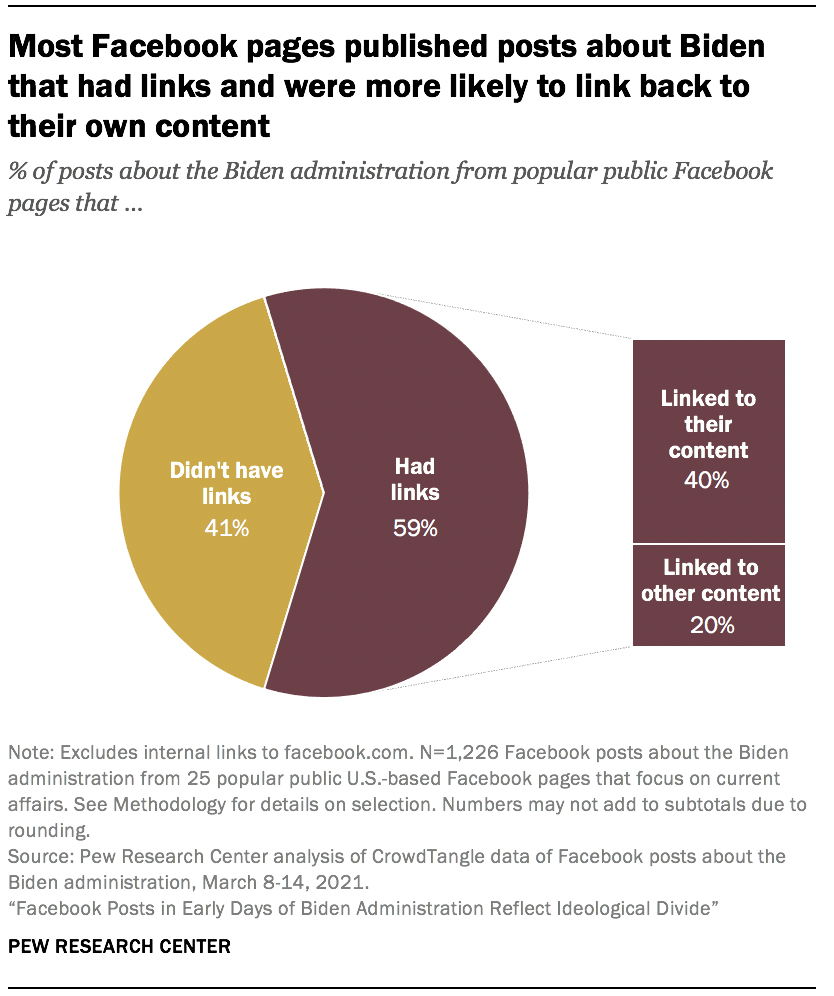
Overall, about six-in-ten Biden-related posts studied (59%) linked to a site outside of Facebook. However, self-identified conservative pages were far more likely to do so: 83% of posts from conservative pages included externallinks, compared with 29% of self-identified liberal pages.8

Many of these posts – especially on the conservative pages – linked to their own content rather than to content from another website (e.g., a post on the Pew Research Center Facebook page posting a link to pewresearch.org vs. another site). Overall, four-in-ten posts (40%) linked to their own content; this number rose to 72% for posts on conservative pages but was just 4% for posts on liberal pages.
Acknowledgments

Pew Research Center is a subsidiary of The Pew Charitable Trusts, its primary funder. This is the latest report in Pew Research Center’s ongoing investigation of the state of news, information and journalism in the digital age, a research program funded by The Pew Charitable Trusts, with generous support from the John S. and James L. Knight Foundation. This report is a collaborative effort based on the input and analysis of the Center’s journalism and media research team, communications, design, digital and editorial teams. Find related reports online at www.pewresearch.org/pewresearch-org/journalism.

Research Team

Amy Mitchell, Director, Journalism Research Katerina Eva Matsa, Associate Director, Journalism Research Galen Stocking, Senior Computational Social Scientist Mike Barthel, Senior Researcher Mark Jurkowitz, Senior Writer Jeffrey Gottfried, Senior Researcher Maya Khuzam, Research Assistant Kirsten Worden, Research Assistant Naomi Forman-Katz, Research Assistant Jacob Liedke, Research Assistant Claudia Deane, Vice President, Research Ricki Wood, Content analysis coder Dana Popky, Content analysis coder Zoe Shadan, Content analysis coder Andrea Tillotson, Content analysis coder

Editorial and Graphic Design

David Kent, Senior Copy EditorAndrea Caumont, Digital Engagement Manager Margaret Porteus, Information Graphics Designer

Communications and Web Publishing

Rachel Weisel, Senior Communications ManagerHannah Klein, Communications ManagerAndrew Grant, Communications Associate Sara Atske, Associate Digital Producer Travis Mitchell, Digital Producer

Methodology

This study examines coverage of the Biden administration on popular Facebook pages during the week of March 8-14, 2021. This complements recent research looking at coverage of the early administration on television, radio and the web across a longer time frame.

This is the latest report in Pew Research Center’s ongoing investigation of the state of news, information and journalism in the digital age, a research program funded by The Pew Charitable Trusts, with generous support from the John S. and James L. Knight Foundation.

Data collection

Posts about the Biden administration were collected from CrowdTangle, a public insights tool owned and operated by Facebook. CrowdTangle gives academic and other researchers access to public posts in their database that match keywords that the researcher supplies in their query.

Researchers developed the list of public pages and posts to study using a multistep process.

Page selection

To determine which public pages to include in this analysis, researchers first conducted a keyword search for the term “Biden” across the first three months of 2021 across all public pages in the CrowdTangle database. After removing posts that had a total view count of zero (i.e., were never viewed), this resulted in roughly 11,510 unique pages (although 11,510 pages were found, the number may change slightly as pages become private or otherwise stop being available).

Researchers then uploaded this list to CrowdTangle in order to use the service’s Leaderboard tool to retrieve the total monthly interactions for each page in the list. The total monthly interactions for October, November and December 2020 were averaged for each page to identify the pages with the highest average monthly interactions across these months (the same time period used to identify outlets in the recent research that looked at news coverage on other platforms).

Researchers first examined the 100 pages with the highest average monthly interactions. We removed pages that were based outside the United States, were already studied in the most recent report about coverage on TV, radio and web outlets, or did not have a clear current affairs focus. In the end, this analysis is based on the top 25 pages according to average monthly interactions, which were a mix of pages from political actors and organizations, commentators, and news outlets. The Facebook pages studied were:

  • Barack Obama
  • Being Liberal
  • Ben Shapiro
  • Call To Activism
  • Dan Bongino
  • David J Harris Jr.
  • Dinesh D’Souza
  • Donald Trump Jr.
  • ForAmerica
  • Forbes
  • Glenn Beck
  • Michael Knowles
  • NowThis
  • NowThis Politics
  • Occupy Democrats
  • Ridin’ With Biden
  • Robert Reich
  • Team Trump
  • The Daily Caller
  • The Democratic Coalition
  • The Other 98%
  • The Western Journal
  • Trending World by The Epoch Times
  • Turning Point USA
  • Washington Press

Post selection

All posts from these 25 pages from the time period March 8-14, 2021, were considered for this analysis, for a total of 5,458 posts. Each post was analyzed by trained human coders to determine if it was about the administration. Only the post message and embedded image, link headline and image, and the first 10 minutes of any video embedded in the post were used to make this determination. A total of 1,226 posts met these criteria and formed the basis of this study.

Content analysis

This study conducted a content analysis on two levels: at the page level, the ideological orientation of the page as it describes itself; and at the post level, a series of variables that help characterize the coverage of the administration.

The 25 pages were coded for one variable:

  • Ideology refers to a page’s self-described ideology or partisanship as stated on the page’s “about” section, associated websites and social media profiles, or interviews with the subject (if the page is for an individual) or organization (if the page is for an outlet or other organization). The following criteria were used:
    • Liberal, including Democrats, progressives, left-leaning, and opposed to conservatives or Republicans
    • Conservative, including Republicans, right-leaning, and opposed to liberals or Democrats
    • Neither, or no self-described ideology.

Five human coders examined these posts and coded them for four variables, which are largely similar to those in the recent study about news coverage of the Biden administration. In conducting this analysis, only the post message (including any embedded posts) and embedded image, link headline and image, and the first 10 minutes of any video embedded in the post were considered. Because the same variables, protocols and coders were used for this study as the most recent one and content analysis was conducted soon after it was completed for that study, an additional round of intercoder reliability was not performed (see here for previous intercoder reliability estimates). However, to ensure consistency, coders underwent an additional training in order to be refreshed on all the rules and familiarize themselves with the format of the Facebook post.

The 1,226 posts from these pages were coded for the following four variables:

  • Topic refers to the general subject matter of the story. For every post, each statement was assigned a topic, and the overall topic assigned to the post was the one that was the most common. For many posts, there was just a single statement. There were a total of 47 different topics, which are grouped below into the three broad topic categories used throughout the analysis – domestic issues, foreign affairs issues and personal/political issues:
    • Domestic issues – Abortion/family planning, agriculture, budget/taxes, business/economy, campaign finance, crime incident or trends, crime/gun policy, culture/arts, defense (U.S. domestic), disasters, education, election process, environment, health care, immigration, labor, poverty, religion, science/technology, women’s rights, Social Security, energy, news media, racial justice, LGBTQ+, other civil liberties/civil rights broadly, social media, made-up information/conspiracy – QAnon specifically, other made-up information/conspiracy, refusal to accept Biden administration, other domestic issues
    • Foreign affairs – Foreign trade, Iraq/Afghanistan generally, Iran, China, Russia, North Korea, European Union/NATO, United Kingdom, Israel/Palestine, international terrorism, other foreign issues
    • President’s management and political approach – Personal profile/character, appointments/nominations, political skills, political philosophy/ideology
    • Other
  • Assessment of the Biden administration refers to a post’s overall tone toward the president and the administration’s actions or words. Each statement in a post was analyzed to determine whether it carried a positive, negative or neither positive nor negative assessment of the president and his administration. Within a post, there needed to be at least twice as many positive as negative statements for a story to be considered positive, and vice versa to be considered negative, unless there were fewer than three statements in the post, in which case a majority was sufficient. Posts that did not meet these criteria were coded as neither positive nor negative.
  • COVID-19 mention refers to whether COVID-19 was mentioned at all in the post text, image or video.
  • Trump mention: Each post was analyzed for whether former President Donald Trump was mentioned at all in the post text, image or video. This includes all mentions of him, but not of other individuals such as his family members and former administration members or of references to his administration broadly.

An additional variable, linked source, was analyzed using a custom Python script, and refers to the domain that was linked to in the post.

These 1,226 posts were examined for each of these variables and compared with the 228 stories from the main study that were published during the same time period.

The American Trends Panel survey methodology

Overview

The American Trends Panel (ATP), created by Pew Research Center, is a nationally representative panel of randomly selected U.S. adults. Panelists participate via self-administered web surveys. Panelists who do not have internet access at home are provided with a tablet and wireless internet connection. Interviews are conducted in both English and Spanish. The panel is being managed by Ipsos.

Data in this report is drawn from the panel wave conducted March 8 to March 14, 2021. A total of 12,045 panelists responded out of 13,540 who were sampled, for a response rate of 89%. This does not include five panelists who were removed from the data due to extremely high rates of refusal or straightlining. The cumulative response rate accounting for nonresponse to the recruitment surveys and attrition is 4%. The break-off rate among panelists who logged on to the survey and completed at least one item is 1%. The margin of sampling error for the full sample of 12,045 respondents is plus or minus 1.5 percentage points.

This is the latest report in Pew Research Center’s ongoing investigation of the state of news, information and journalism in the digital age, a research program funded by The Pew Charitable Trusts, with generous support from the John S. and James L. Knight Foundation.

Panel recruitment

American Trends Panel recruitment surveys

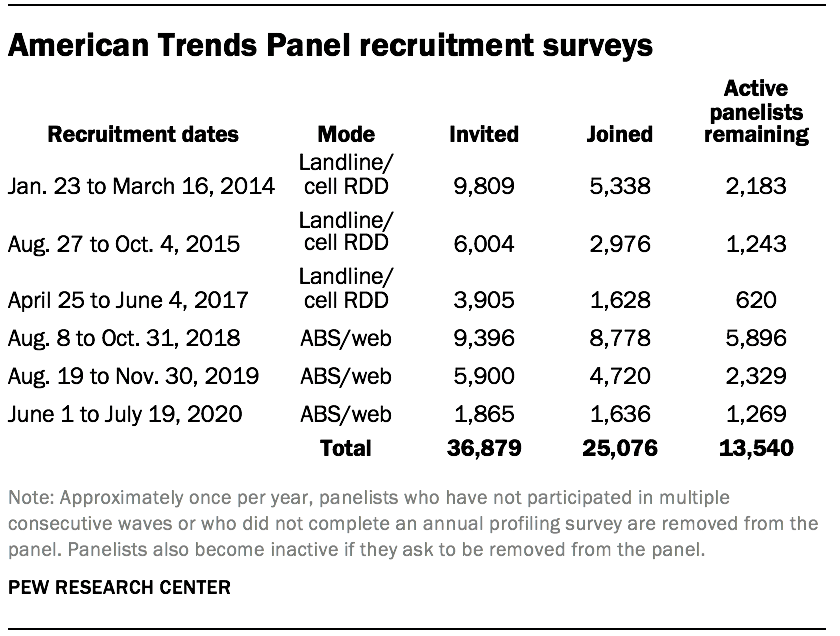
The ATP was created in 2014, with the first cohort of panelists invited to join the panel at the end of a large, national, landline and cellphone random-digit-dial survey that was conducted in both English and Spanish. Two additional recruitments were conducted using the same method in 2015 and 2017, respectively. Across these three surveys, a total of 19,718 adults were invited to join the ATP, of whom 9,942 (50%) agreed to participate.

In August 2018, the ATP switched from telephone to address-based recruitment. Invitations were sent to a random, address-based sample of households selected from the U.S. Postal Service’s Delivery Sequence File. Two additional recruitments were conducted using the same method in 2019 and 2020, respectively. Across these three address-based recruitments, a total of 17,161 adults were invited to join the ATP, of whom 15,134 (88%) agreed to join the panel and completed an initial profile survey. In each household, the adult with the next birthday was asked to go online to complete a survey, at the end of which they were invited to join the panel. Of the 25,076 individuals who have ever joined the ATP, 13,540 remained active panelists and continued to receive survey invitations at the time this survey was conducted.

The U.S. Postal Service’s Delivery Sequence File has been estimated to cover as much as 98% of the population, although some studies suggest that the coverage could be in the low 90% range.1The American Trends Panel never uses breakout routers or chains that direct respondents to additional surveys.

Sample design

The overall target population for this survey was non-institutionalized persons ages 18 and older, living in the U.S., including Alaska and Hawaii.

Questionnaire development and testing

The questionnaire was developed by Pew Research Center in consultation with Ipsos. The web program was rigorously tested on both PC and mobile devices by the Ipsos project management team and Pew Research Center researchers. The Ipsos project management team also populated test data which was analyzed in SPSS to ensure the logic and randomizations were working as intended before launching the survey.

Incentives

All respondents were offered a post-paid incentive for their participation. Respondents could choose to receive the post-paid incentive in the form of a check or a gift code to Amazon.com or could choose to decline the incentive. Incentive amounts ranged from $5 to $20 depending on whether the respondent belongs to a part of the population that is harder or easier to reach. Differential incentive amounts were designed to increase panel survey participation among groups that traditionally have low survey response propensities.

Data collection protocol

The data collection field period for this survey was March 8 to 14, 2021. Postcard notifications were mailed to all ATP panelists with a known residential address on March 8, 2021.

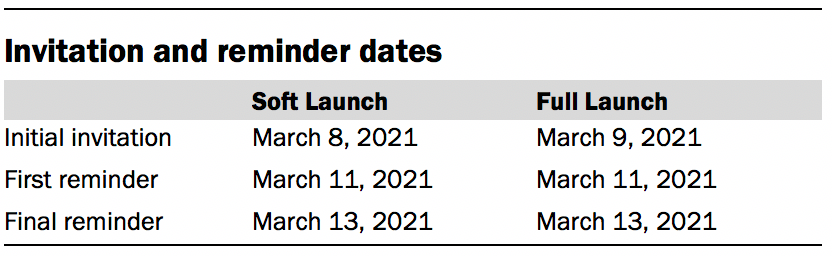
On March 8 and March 9, invitations were sent out in two separate launches: Soft Launch and Full Launch. Sixty panelists were included in the soft launch, which began with an initial invitation sent on March 8. The ATP panelists chosen for the initial soft launch were known responders who had completed previous ATP surveys within one day of receiving their invitation. All remaining English- and Spanish-speaking panelists were included in the full launch and were sent an invitation on March 9.

All panelists with an email address received an email invitation and up to two email reminders if they did not respond to the survey. All ATP panelists that consented to SMS messages received an SMS invitation and up to two SMS reminders.

Invitation and reminder dates

Data quality checks

To ensure high-quality data, the Center’s researchers performed data quality checks to identify any respondents showing clear patterns of satisficing. This includes checking for very high rates of leaving questions blank, as well as always selecting the first or last answer presented. As a result of this checking, five ATP respondents were removed from the survey dataset prior to weighting and analysis.

Weighting

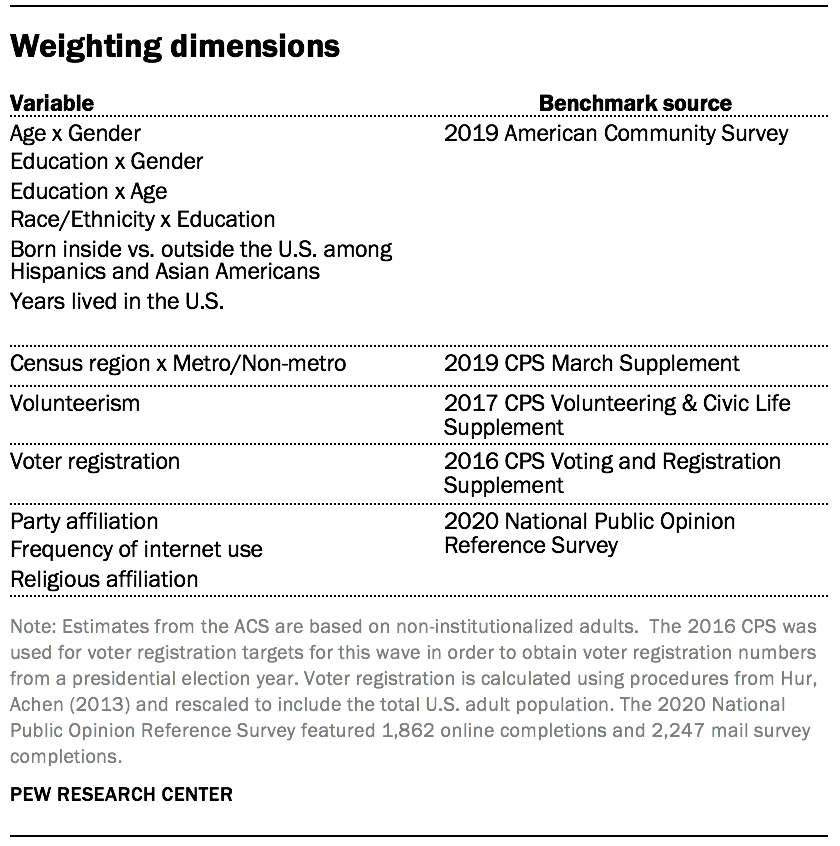
Weighting dimensions

The ATP data was weighted in a multistep process that accounts for multiple stages of sampling and nonresponse that occur at different points in the survey process. First, each panelist begins with a base weight that reflects their probability of selection for their initial recruitment survey (and the probability of being invited to participate in the panel in cases where only a subsample of respondents were invited). The base weights for panelists recruited in different years are scaled to be proportionate to the effective sample size for all active panelists in their cohort. To correct for nonresponse to the initial recruitment surveys and gradual panel attrition, the base weights for all active panelists are calibrated to align with the population benchmarks identified in the accompanying table to create a full-panel weight.

For ATP waves in which only a subsample of panelists are invited to participate, a wave-specific base weight is created by adjusting the full-panel weights for subsampled panelists to account for any differential probabilities of selection for the particular panel wave. For waves in which all active panelists are invited to participate, the wave-specific base weight is identical to the full-panel weight.

In the final weighting step, the wave-specific base weights for panelists who completed the survey are again calibrated to match the population benchmarks specified above. These weights are trimmed (typically at about the 1st and 99th percentiles) to reduce the loss in precision stemming from variance in the weights. Sampling errors and test of statistical significance take into account the effect of weighting.

The following table shows the unweighted sample sizes and the error attributable to sampling that would be expected at the 95% level of confidence for different groups in the survey.

Sample sizes and sampling errors for other subgroups are available upon request. In addition to sampling error, one should bear in mind that question wording and practical difficulties in conducting surveys can introduce error or bias into the findings of opinion polls.