
Most Americans Are Critical of Government’s Handling of Situation at U.S.-Mexico Border
Declining Republican support for allowing undocumented immigrants to remain legally in the U.S.
Pew Research Center conducted this study to understand the public’s views about immigration policy in the U.S. For this analysis, we surveyed 5,109 U.S. adults conducted April 5-11, 2021. Everyone who took part in this survey is a member of Pew Research Center’s American Trends Panel (ATP), an online survey panel that is recruited through national, random sampling of residential addresses. This way nearly all U.S. adults have a chance of selection. The survey is weighted to be representative of the U.S. adult population by gender, race, ethnicity, partisan affiliation, education and other categories. Read more about the ATP’s methodology.
Here are the questions used for the report, along with responses, and its methodology.
With Border Patrol apprehensions once again increasing this spring, Americans are expressing renewed concern over illegal immigration and the current situation at the U.S. border with Mexico.
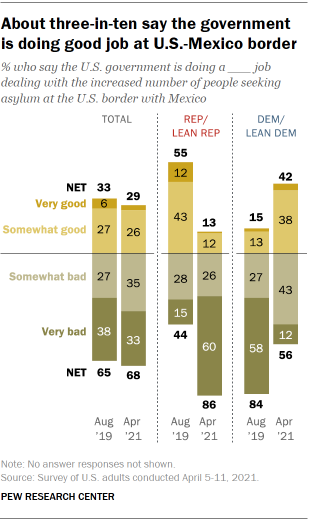
The government receives negative ratings for how it has handled the situation at the border. About two-thirds of U.S. adults (68%) say that the government is doing a very (33%) or somewhat (35%) bad job of dealing with the increased number of people seeking asylum at the country’s southern border, while fewer than half as many (29%) say it is doing a very or somewhat good job.
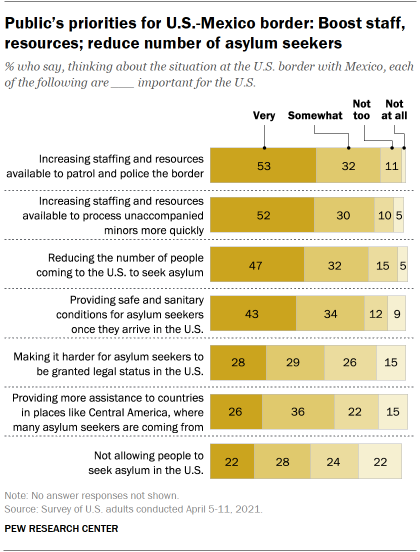
The public is in broad agreement regarding some possible government actions for dealing with the situation at the border: Large majorities say it is very or somewhat important to increase available staff both to patrol and police the border and to quickly process unaccompanied minors. About half say each of these priorities is very important. Nearly as many (47%) say it is very important to reduce the number of people coming to the U.S. seeking asylum; another 32% say this is somewhat important.
While there are partisan differences on each of these three priorities, majorities of both Republicans and Republican-leaning independents and Democrats and Democratic leaners say it is very or somewhat important to reduce the number of asylum seekers and to increase staff for border patrols and processing unaccompanied minors.
However, there are wider divides on other goals: For example, Republicans (78%) are twice as likely as Democrats (39%) to say it is important to make it harder for asylum seekers to be granted legal status in the U.S.
And while 79% of Democrats say it is very or somewhat important to increase aid to Central American countries, where many asylum seekers come from, only 40% of Republicans say the same.
The survey, conducted April 5-11, 2021, among a nationally representative sample of 5,109 adults who are members of Pew Research Center’s American Trends Panel, also finds sizable partisan differences in evaluations of the government’s handling of the border situation.
However, majorities in both parties say the government has done a bad job of dealing with the influx of asylum seekers at the border: 86% of Republicans rate the government’s performance negatively, as do 56% of Democrats.
The public’s current evaluations of the government’s performance in dealing with the border situation are overall comparable to ratings two years ago, when the Trump administration faced an influx of children and families seeking asylum in the U.S. In August 2019, 33% said the government was doing well in dealing with the situation at the border. In contrast to today, however, in 2019 Republicans were far less critical of the government’s response than Democrats.
A separate national survey of Latinos in the United States, conducted in March of this year, found that Latinos also gave negative ratings to the government’s job in dealing with the increase in children and families seeking asylum; just 36% said the government was doing a very or somewhat good job.
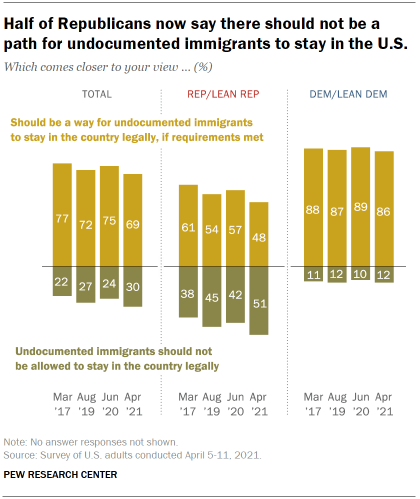
The survey also finds that the share of adults who say undocumented immigrants who are now living in the U.S. should be allowed to stay in the country legally has decreased slightly over the past four years, with the decrease being driven by shifting attitudes among Republicans.
Nearly seven-in-ten adults (69%) now say that there should be a way for undocumented immigrants who are now living in the U.S. to stay in the country legally if certain requirements are met, down from 77% in March 2017.
Republicans are closely divided on this question, with about half (48%) saying that undocumented immigrants should be allowed to stay if certain requirements are met and about half (51%) saying they should not be allowed to stay. In March 2017, a majority of Republicans (61%) said that undocumented immigrants currently living in the U.S. should be allowed to stay.
A large majority of Democrats (86%) say that undocumented immigrants currently living in the U.S. should be allowed to stay if certain requirements are met. The share of Democrats who say this has essentially stayed the same in recent years.
Among the majority of adults who favor allowing undocumented immigrants to stay legally in the U.S., most say they should be eligible to apply for citizenship. Among the public overall, 42% say that undocumented immigrants who are currently living in the U.S. and meet certain requirements should be eligible to apply for U.S. citizenship; about a quarter (26%) say they should be eligible to apply for permanent residency but not for U.S. citizenship.
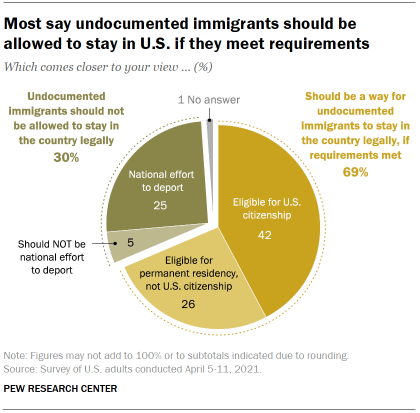
Among the 30% of adults who say that undocumented immigrants should not be allowed to stay in the country legally, a large majority also express support for a national deportation effort. A quarter of adults overall say that undocumented immigrants should not be allowed to stay in the country legally and that there should be a national law enforcement effort to deport them.
Comparatively few adults – just 5% – say that undocumented immigrants currently living in the U.S. should not be allowed to stay in the country legally but also say that there should not be a national effort to deport undocumented immigrants.
There are large partisan divisions on these questions: A majority of Democrats (56%) say that undocumented immigrants should be allowed to stay in the country legally and be eligible to apply for U.S. citizenship if they meet certain requirements, compared with about a quarter of Republicans (26%). Nearly half of Republicans (46%) – including a 53% majority of conservative Republicans – say undocumented immigrants should not be allowed to stay legally in the U.S. and there should be a national effort to deport undocumented immigrants; fewer than one-in-ten Democrats (7%) say this.
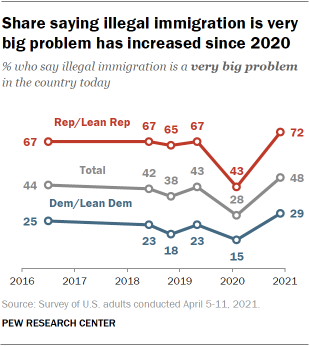
Public concern over illegal immigration fell sharply last year, as the coronavirus outbreak worsened in the U.S. Since June 2020, however, the share of Americans who say illegal immigration is a “very big” national problem has risen 20 percentage points, from 28% to 48%. The share currently citing illegal immigration as a major problem is similar to 2019 (43%) and 2018 (42%).
The increase in concern since 2020 has come among members of both parties, though as in recent years, Republicans are far more likely than Democrats to cite illegal immigration as a very big problem. Among Republicans, 72% say illegal immigration is a very big problem in the country today, compared with 43% in June 2020. Among Democrats, 29% now say this, compared with 15% in 2020. For more, see “Americans’ views of the problems facing the nation,” April 15, 2021.
Views about asylum seekers at the U.S.-Mexico border
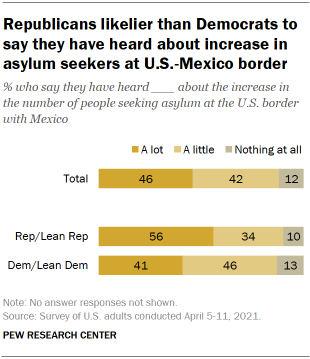
Almost half of Americans (46%) today say they have heard a lot about the increase in the number of people seeking asylum at the U.S.-Mexico border, with Republicans and Republican-leaning independents more likely than Democrats and Democratic-leaning independents to say this (56% vs. 41%). In August 2019, Republicans were also more likely than Democrats to have reported hearing a lot about that increase, but the partisan gap was narrower than it is today (5 percentage points then, 15 percentage points now).
Overall, 42% of Democrats say that the U.S. government is doing either a very or somewhat good job dealing with the increased number of people seeking asylum at the U.S.-Mexico border, while 56% say it is doing a bad job. More than eight-in-ten Republicans say the government is doing a bad job; only 13% of Republicans rate the government’s performance positively.
But there are significant differences in these views within both partisan coalitions.
Roughly half of Black (49%) and Hispanic (47%) Democrats say the government is doing a good job with asylum seekers. By comparison, 36% of White Democrats say this. And while few Republicans rate the government’s performance positively, White Republicans are even less likely than Hispanic Republicans to do so (9% vs. 18% respectively).
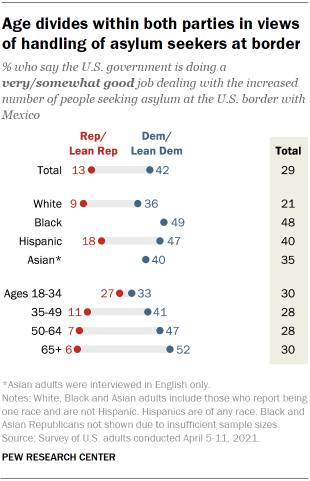
Younger Republicans are more likely than their older counterparts to say the government has done a good job with those seeking asylum (27% of those under 35 say this, compared with just 11% of those 35-49 and just 7% of those 50 and older). Among Democrats, the pattern is reversed – while about half (49%) of Democrats 50 and older say the government has done a good job handling the asylum situation at the U.S.-Mexico border, that drops to 41% among those 35-49 and 33% among those under 35. As a result, there is virtually no partisan gap in these views among adults under 35, while there is a substantial partisan divide among older Americans.
Partisan priorities for the U.S.-Mexico border
While Republicans and Democrats differ in many respects in their priorities for the situation at the U.S.-Mexico border, there also are some shared priorities.

For example, clear majorities of both Democrats and Republicans say it is at least somewhat important both to increase staff and resources available to patrol and police the border and to process unaccompanied minors more quickly. However, Republicans are more likely than Democrats to consider an increase in resources for patrolling the border very important (68% vs. 42%, respectively), while Democrats are more likely than Republicans to say increased resources for processing unaccompanied minors is very important (66% vs. 37%).
Republicans are far more likely than Democrats to say it is important to reduce the number of asylum seekers, to make it harder to be granted asylum and to not allow people to seek asylum. For instance, while 78% of Republicans say it is at least somewhat important that the U.S. make it harder for asylum seekers to be granted legal status in the U.S., 39% of Democrats say the same. Similarly, seven-in-ten Republicans say it is at least somewhat important that the U.S. not allow people to seek asylum in the U.S., compared with just 35% of Democrats.
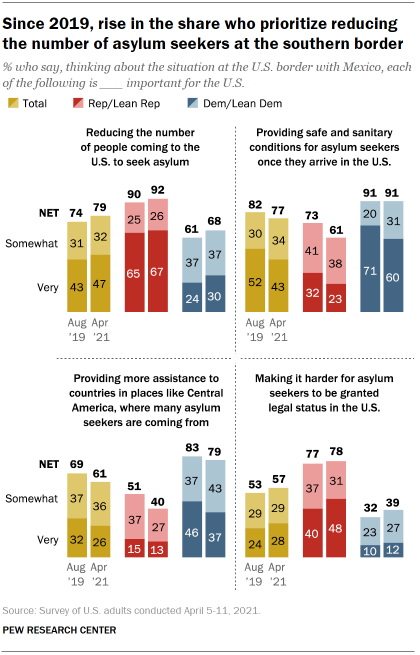
By contrast, Democrats (79%) are about twice as likely as Republicans (40%) to say that providing assistance to countries in places like Central America where many asylum seekers are coming from is at least somewhat important. And while majorities of both Democrats and Republicans say it is at least somewhat important to provide safe and sanitary conditions to asylum seekers once they arrive in the U.S., fully 91% of Democrats say this (including 60% who rate this as very important), compared with 61% of Republicans (23% say this is very important).
Overall, the public’s views of priorities for the southern border are similar to 2019, although the shares saying it is important to reduce the number of asylum seekers or to make it harder to seek asylum have increased, while the shares placing importance on providing safe and sanitary conditions for asylum seekers and on assistance to Central American countries have decreased.
Democrats are slightly more likely to now say that reducing the number of people coming to the U.S. to seek asylum is important than they were in 2019 (61% then, 68% now). GOP opinion on this question is little changed since 2019.
The share of Republicans saying that providing safe and sanitary conditions for asylum seekers in the U.S. is important has declined over this period (73% then, 61% now). As in 2019, about nine-in-ten Democrats (91%) say that providing safe and sanitary conditions for asylum seekers is at least somewhat important, although the share saying this is very important has dropped (71% then, 60% now).
The share of Americans saying it is at least somewhat important for the U.S. to provide assistance to countries in places like Central America where many asylum seekers are coming from has declined from 69% in 2019 to 61% today. While Democrats remain far more likely than Republicans to place importance on this, the decline occurs in both partisan groups.
Most say undocumented immigrants should be allowed to stay in the country legally, if certain requirements are met
Overall, 69% of adults say that undocumented immigrants should be allowed to stay in the country legally if certain requirements are met, including 42% who say they should be eligible to apply for U.S. citizenship (26% say they should be eligible to apply for permanent residency but not for citizenship). Three-in-ten say that undocumented immigrants should not be allowed to stay legally, including a quarter who say there should be a national effort to deport undocumented immigrants.

More than eight-in-ten Democrats – 83% of conservative and moderate Democrats and 90% of liberal Democrats – say there should be a way for undocumented immigrants who meet requirements to stay in the country legally. Support for a path to citizenship is higher among liberal Democrats than among conservatives and moderates: Two-thirds of liberal Democrats say undocumented immigrants who meet requirements should be eligible for citizenship, as do about half of conservative and moderate Democrats (48%).
Republicans are divided over whether undocumented immigrants should be eligible to stay in the country legally if they meet certain requirements (48% say they should, 51% say they should not), and there is an ideological divide within the GOP. Nearly six-in-ten conservative Republicans (59%) say that undocumented immigrants should not be allowed to stay in the country legally, with 53% saying there should be a national deportation effort. In contrast, about six-in-ten moderate and liberal Republicans (61%) say that undocumented immigrants should be allowed to stay if certain requirements are met (34% say this should include eligibility for citizenship, while 27% say it should include permanent residency but not citizenship).
Hispanic adults (84%) are more likely than Black (78%), Asian (68%) or White (64%) adults to say that undocumented immigrants should be allowed to stay in the country legally. About half (51%) of Hispanic adults, and a similar share of Black adults (47%), say that undocumented immigrants who meet certain requirements should be eligible to apply for citizenship. White (40%) and Asian (37%) adults are somewhat less likely to say this.
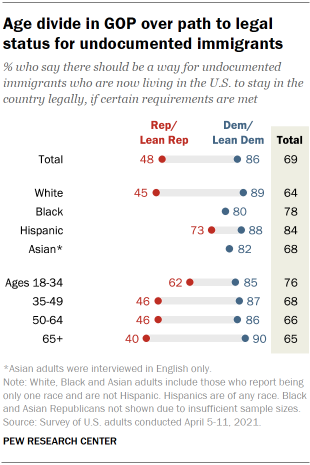
Hispanic Republicans are much more likely than White Republicans to say that there should be a way for undocumented immigrants who are now living in the U.S. to stay in the country legally if certain requirements are met. Nearly three-quarters of Hispanic Republicans (73%) say this, compared with 45% of White Republicans.
There also are age differences within the Republican Party: 62% of Republicans under 35 favor allowing undocumented immigrants to stay, compared with 46% of those ages 35 to 64 and 40% of Republicans 65 and older.
Among Democrats, while eight-in-ten or more across racial and ethnic groups say that undocumented immigrants should be allowed to stay in the country legally, this rises to roughly nine-in-ten among White (89%) and Hispanic (88%) Democrats.


