A Decade Later, Iraq War Divides the Public
Republican Support for War at All-Time Low
Overview

A decade after the U.S.-led invasion of Iraq, the public offers a divided judgment of the war: 46% say the U.S. has mostly succeeded in achieving its goals in Iraq, about as many (43%) say it has mostly failed.
The public also is split over the original decision to use military force in Iraq. While 44% say it was the wrong decision to use force in Iraq, 41% say it was the right decision.
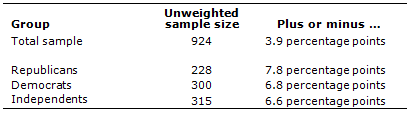
The national survey by the Pew Research Center, conducted March 14-17 among 924 adults, finds that the percentages saying the war was a success and the decision to go to war was the right one have declined since November 2011, as U.S. forces were being withdrawn from Iraq.
At that time, 56% said the U.S. had mostly succeeded in Iraq, 10 points higher than today. Nearly half (48%) said the war was the right decision — among the highest percentages since the second year of the war.
The decline in the percentage saying the war was the right decision has come largely among Republicans. Currently, 58% of Republicans say the war was the right decision, down 14 points since November 2011 and the lowest percentage since the war began in 2003. Opinions among Democrats and independents are little changed since 2011.
Fewer Say U.S. Has Achieved Its Goals in Iraq
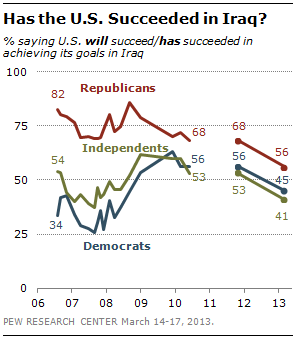
The percentage saying the U.S. has achieved its goals in Iraq has declined among all partisan groups since November 2011, and opinion among Republicans stands at a record low.
Overall, more Republicans say the U.S. has achieved its goals in Iraq than say it has failed (56% vs. 36%). While still positive, on balance, this is the lowest percentage of Republicans saying the U.S. has achieved or will achieve its goals in Iraq since the question was first asked in 2006. Less than two years ago, 68% of Republicans thought the U.S. had achieved its goals. In September 2008, 86% said the United States would definitely or probably succeed in achieving its goal.
Democrats are as likely to say the U.S. has mostly succeeded (45%) as mostly failed (45%) in achieving its goals in Iraq. In November 2011, Democrats also were more positive (56% mostly succeeded, 35% mostly failed). From 2006 through 2008, no more than about four-in-ten Democrats said the U.S. would succeed in Iraq, but Democrats became more optimistic after Barack Obama took office in 2009. In December 2009, 63% of Democrats said the U.S. would succeed in Iraq; today, just 45% say the U.S. has succeeded in achieving its goals there.
Among independents, 49% say the U.S. has failed to achieve its goals in Iraq, while 41% say the U.S. has succeeded. As with Republicans and Democrats, the percentage of independents saying the war was successful has declined; in December 2009, 60% of independents said the United States would be successful in achieving its goals in Iraq.
Views of Decision to Use Force in Iraq

The percentage of Republicans saying the war was the right decision has fallen to an all-time low of 58%. Nonetheless, more Republicans than independents (42%) or Democrats (33%) say the war was the right decision.
The percentage of Republicans saying the war was the right decision is now substantially lower than at any point during the war. During 2003, the first year of the war, 90% of Republicans said the war was the right decision, according to an average of polls conducted that year.
Democrats continue to view the war in Iraq as the wrong decision, by a 55%-33% margin. Opinion was similar in November 2011 (59% wrong decision, 37% right decision). The percentage of Democrats saying the war was the right decision reached a low of 17% in 2008.
Independents are divided about the original decision to use force in Iraq: 42% call it the right decision, 45% the wrong decision. The percentage of independents saying the war was the right decision fell below 50% in 2005 and has changed little since then.