
Public More Optimistic About the Economy, But Still Reluctant to Spend
Overview The public is increasingly optimistic that the nation’s economy will improve in the next year, while a growing number also expect their personal finances to get better. But this has not caused people to open their wallets: The proportion saying they have cut back on personal spending remains as high as it was earlier […]
Overview
The public is increasingly optimistic that the nation’s economy will improve in the next year, while a growing number also expect their personal finances to get better. But this has not caused people to open their wallets: The proportion saying they have cut back on personal spending remains as high as it was earlier this year.
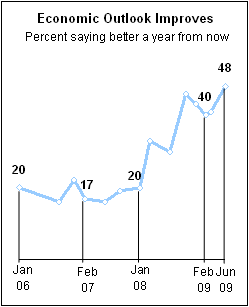
Nearly half of Americans (48%) say they expect economic conditions a year from now to be better than today, up from 40% in February. Over the same period, the percentage saying they expect their personal finances to improve at least some has risen from 54% to 63%.
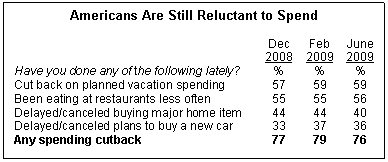
Despite these positive signs, there is no indication that Americans are more willing to spend money. Roughly three-quarters (76%) report they have cut back on vacation spending, been eating at restaurants less often, or have delayed purchasing a car or major home items. That figure is largely unchanged from February (79%) and last December (77%).
When changes in savings, investment and home-purchasing decisions are factored in, nearly nine-in-ten Americans (87%) say they have made at least one spending cutback or an investment or saving adjustment. This also is about the same as in February (86%) and December (85%).
As in the past, more people say they are cutting back on spending because they worry their financial situation might get worse rather than because it actually has gotten worse. Fully 50% say they have delayed or cut back spending out of fear about the future, while 36% say they are cutting back because their finances have gotten worse.
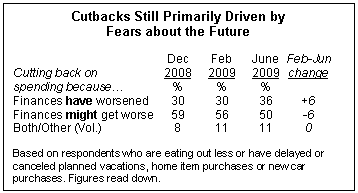
This represents only a modest change since February or December, when a majority of those who had cut back in personal spending – 56% in February and 59% in December – said it was because they were concerned about the future, not because their own finances had deteriorated. In effect, the psychology of bad times continues to affect people’s spending decisions as nearly much today as it did in December, even though there is greater financial optimism and assessments of the current state of the economy are somewhat less bleak.
Views of Current Conditions
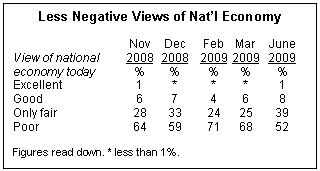
The latest national survey by the Pew Research Center for the People & the Press, conducted June 10-14 among 1,502 adults reached on landlines and cell phones, finds that while just 9% say that current economic conditions are excellent or good – which is little changed from March (6%) – there has been a substantial decline in the percentage saying that conditions are “poor.”
About half (52%) now view the economy as poor, down from 68% in March. The current measure is the lowest proportion viewing the economy as poor since last July (52% now, 50% then). Since March, the proportion rating the economy as “only fair” has risen from 25% to 39%.
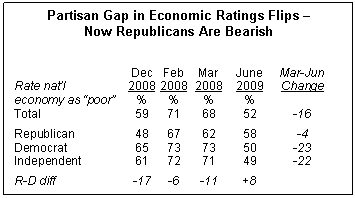
Much of the decline in poor economic ratings has come among Democrats and independents; roughly half in each group now view the current national economic situation as poor (50% of Democrats, 49% of independents); in March, 73% of Democrats and 71% of independents said the national economy was in poor shape.
By contrast, there has been little change in Republicans’ ratings of the economy; 58% now say the economy is poor compared with 62% in March. As a consequence, a greater share of Republicans than Democrats or independents views the economy as poor. This represents a reversal of the pattern through much of the Bush administration, when Republicans rated the
national economy much more positively than did Democrats.
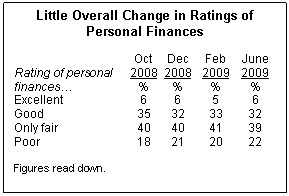
While ratings of the national economy have become less negative, there has been little change over the past several months in people’s assessments of their own financial situations. About four-in-ten (38%) say they are in excellent (6%) or good shape (32%) financially; most rate their finances as only fair (39%) or poor (22%). In February and December, 38% also rated their personal finances positively.
More Economic Optimism, But Not Among the Poor
While economic and personal financial optimism has increased sharply since February, the shift has come among middle-income and more affluent Americans – not the poor. Currently, about half (52%) of those with
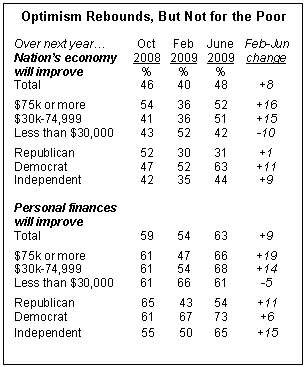
family incomes of $75,000 or more say they expect economic conditions to be better a year from now, up from 36% in February. The shift has been as large among those with incomes between $30,000 and $75,000 (from 36% to 51%).
But those with low incomes ($30,000 or less) are now less optimistic that economic conditions will improve than they were in February (42% today, 52% then).
There also have been increases in the percentages of Democrats (by 11 points) and independents (9 points) who expect national economic conditions to improve. Republicans’ expectations about the economy, which turned much more negative following the election, have not changed since February.
Overall, 63% say they think their financial situation will improve a lot (9%) or some (54%) over the course of the next year. That is up nine points from February and is the highest measure of personal financial optimism since early 2007 (63%).
Two-thirds (66%) of those with family incomes of $75,000 or more expect their finances to improve, as do 68% of those with incomes of $30,000-$75,000; in February, only about half in both groups expected their financial situations to improve (47% and 54%, respectively).
However, poor people are no more optimistic than they were in February (66% then, 61% today). Four months ago, people with family incomes of $30,000 or less were more confident than those with higher incomes that their finances would improve; today, if anything, they are slightly less confident.
Notably, Republicans and independents express more personal financial optimism than they did in February. Nearly two-thirds of independents (65%) expect that their personal finances will improve a lot or some over the next year, up from 50% in February. Republicans (up 11 points) also are more optimistic, though there continues to be a sizable partisan gap in personal financial expectations. Nearly three-quarters of Democrats (73%) expect at least some improvement in their financial situations over the next year, compared with 54% of Republicans.
Top Economic Problems
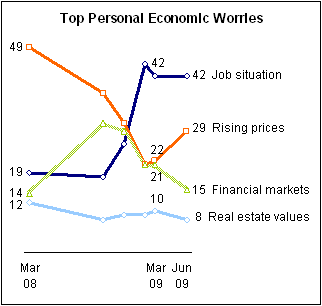
Public concern about the job situation, which surged earlier this year, has leveled off. Currently, 42% cite the job situation as the economic issue they worry about most, which is largely unchanged from March (42%) and February (45%). Last December, only 26% viewed jobs as their top economic concern.
Meanwhile, worries about rising prices – which dominated the public’s economic concerns last year during the rapid run-up in gas prices – are once again increasing. Currently, 29% say rising prices are the issue that most worries them, up from 22% in March. A year earlier, fully 49% named rising prices as their biggest economic worry.
As the stock market has become less volatile, concern over problems in financial markets has declined. Currently, 15% cite problems in the markets as their top economic worry, down from 21% in March and 31% last October. In March, comparable shar es cited rising prices (22%) and problems in the financial markets (21%) as their biggest economic worry; now, nearly twice as many say they are most worried by rising prices (29% vs. 15%). Fewer
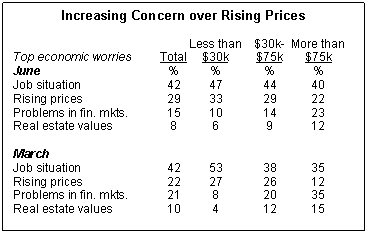
than one-in-ten (8%) cite declining real estate values as the economic issue that they find most worrisome, a figure that has stayed fairly constant for more than a year.
Among those with family incomes of $75,000 or more, concern about rising prices has nearly doubled – from 12% to 22% – since March. Over the same period, the share of this group saying problems in financial markets are most worrisome has declined, from 35% to 23%.
Cutting Back and Changing Plans
As has been the case for the last several months, an overwhelming majority of the public (87%) reports having made changes in personal financial behaviors, either by cutting back on spending or adjusting retirement or
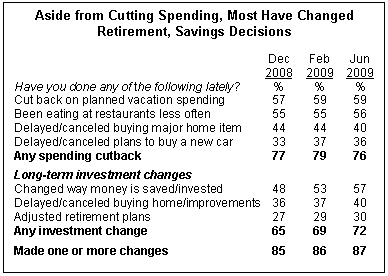
savings and investment plans. In particular, majorities say they have cut back on planned spending for vacation travel (59%), changed the way their money is saved or invested (57%) and are eating out at restaurants less often (56%).
The proportion of Americans reporting changes in most of these behaviors remains virtually unchanged since December. However, over this time period, there has been a nine-point increase in the percentage saying they have changed the way their money is saved or invested (from 48% to 57%).
While those in all income groups are equally likely to report having made one or more changes in their personal financial behavior, those with annual family incomes of $75,000 or more are less likely than those earning less than $75,000 to say they delayed or canceled plans to buy a home or make home improvements (33% vs. 45%), put off buying a new car (30% vs. 39%), or cut back on vacation spending (52% vs. 63%).
