Pew Research Center

FOR RELEASE MAY 1, 2008

Obama’s Image Slips, His Lead Over Clinton Disappears

Public Support for Free Trade Declines

FOR MEDIA OR OTHER INQUIRIES:

Communications Department
202.419.4372
www.pewresearch.org

RECOMMENDED CITATION

Pew Research Center, May 2008, "Obama’s Image Slips, His Lead Over Clinton Disappears"

About Pew Research Center

Pew Research Center is a nonpartisan, nonadvocacy fact tank that informs the public about the issues, attitudes and trends shaping the world. It does not take policy positions. The Center conducts public opinion polling, demographic research, computational social science research and other data-driven research. It studies politics and policy; news habits and media; the internet and technology; religion; race and ethnicity; international affairs; social, demographic and economic trends; science; research methodology and data science; and immigration and migration. Pew Research Center is a subsidiary of The Pew Charitable Trusts, its primary funder.

© Pew Research Center 2026

Table of contents

  • About Pew Research Center
  • Obama’s Image Slips, His Lead Over Clinton Disappears
  • Section 1: Impressions and Images of the Candidates
  • Section 2: Primary Contest Tightens
  • Section 3: The General Election
  • Section 4: Trade and the Economy
  • Section 5: Less Optimism about Iraq
  • About the Survey

Obama’s Image Slips, His Lead Over Clinton Disappears

Public Support for Free Trade Declines

Summary of Findings

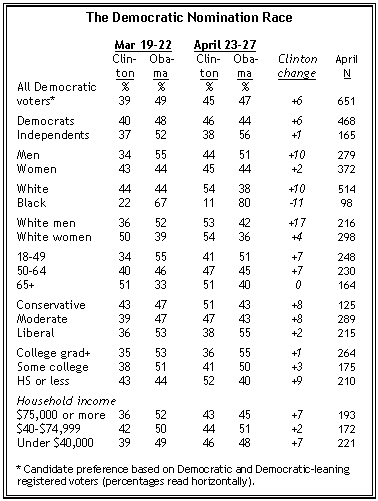
Democratic voters are not as positive about Barack Obama as they were a month ago. Somewhat smaller percentages of Democrats describe Obama in favorable terms, and he has lost his lead over Hillary Clinton in the race for the Democratic nomination. Nationally, Democratic voters are about evenly divided between Obama and Clinton; Obama holds a slight 47% to 45% edge. In late March, the Illinois senator held a 49% to 39% lead over his New York rival.

The tightening Democratic race reflects a modest but consistent decline in Obama’s personal image rather than improved impressions of Clinton. Fewer Democrats ascribe positive qualities to Obama than did so a month ago, with white working-class Democrats, in particular, expressing more skeptical views of the Illinois senator. Since late February, his unfavorable rating has risen six points among all Democratic and Democratic-leaning voters. At the same time, Clinton’s unfavorable rating among Democratic voters also has increased by seven points.

Compared with a month ago, race and class are now bigger drivers of preferences in the Democratic contest. Obama has lost ground among whites – especially white working-class voters – who now prefer Clinton by an even larger margin than they did in late March. Her lead among whites who did not attend college has increased from 10 points in March to 40 points today, and her lead among white Democrats who earn less than $50,000 a year has increased from two points to 24 points. Clinton has taken a 10-point lead among white male Democratic voters – erasing Obama’s advantage with the group – and she now runs better among Democrats under age 50 than she had previously.

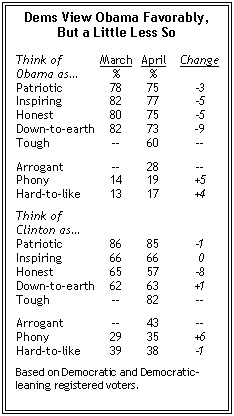
Although Obama’s personal image has eroded modestly, it remains highly positive and surpasses Clinton’s on most dimensions. Large percentages of Democratic voters continue to see him as honest, inspiring, and down-to-earth; however, fewer associated each of these qualities with him – particularly down-to-earth – than did so a month ago. The proportion of Democratic voters who view Obama as down-to-earth has fallen nine points since March and the decline has been even larger among white Democrats with annual incomes of below $50,000 (15 points).
Beyond the small increase in negative opinion about Obama, fewer voters are now using highly complimentary terms to describe their impressions of him. Asked what one word best describes their impression of Obama, “inexperienced” is mentioned most frequently, as in February, but fewer mention Obama’s charisma and intelligence than did so two months ago.

The latest national survey by the Pew Research Center for the People & the Press was conducted April 23-27, before the appearance by Rev. Jeremiah Wright, Obama’s controversial former pastor, at the National Press Club. It finds that Clinton holds a substantial advantage over Obama with respect to two personal qualities – toughness and patriotism. Clinton holds her greatest image advantage in perceptions of toughness; 82% of Democratic voters view Clinton as tough, compared with 60% who say this trait applies to Obama. However, significantly more voters describe Clinton as arrogant than say that about Obama (43% vs. 28%).

And while she has made gains in overall support among Democrats, Clinton’s credibility problem is, if anything, greater than it was a month ago. The proportion of Democratic voters describing Clinton as honest fell from 65% to 57%, and the percentage describing her as phony increased from 29% to 35%.

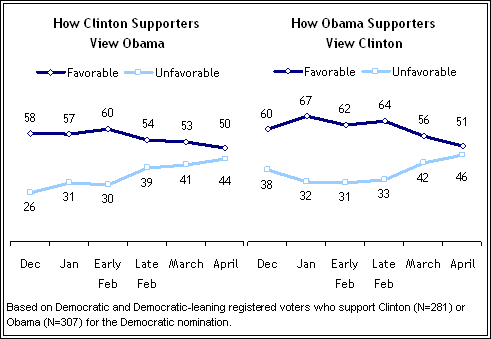
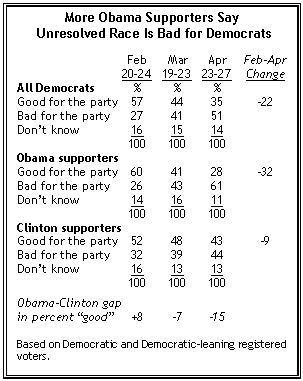
The unresolved Obama-Clinton race is wearing thin on an increasing number of Democrats. About half of Democratic and Democratic-leaning independent voters (51%) say the fact that the race is not settled is a bad thing for the Democratic Party. In March, just 41% of Democrats expressed this view, and in February only 27% of Democrats said the protracted battle was bad for the party. In addition, the campaign has taken a toll on how both Obama and Clinton voters view the other candidate; since the beginning of the year, unfavorable opinions of both Obama and Clinton have increased substantially among the supporters of each candidate’s rival.

Nonetheless, there is no indication that either Obama or Clinton have been weakened in general election matchups against John McCain. As in March, both Democrats best McCain in general election matchups by small margins (Obama by 50% to 44%, and Clinton by 49% to 45%).

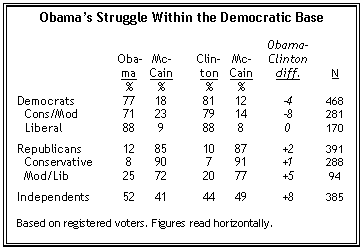
As was the case in previous surveys, the Democrats have different patterns of voter support in the general election tests. Clinton runs slightly better than Obama among core Democrats; 81% of Democratic voters favor Clinton over McCain, while 77% of Democrats support Obama over the presumptive GOP nominee. Obama runs a bit better than Clinton among independents; he wins 52% of the votes of independents, while she garners 44%.
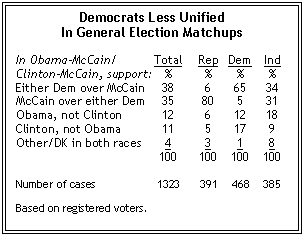
When the two possible November matchups are analyzed together, Democrats are more divided in their preferences. About two-thirds of core Democratic voters (65%) say they will back either of the Democratic candidates over John McCain, compared with 80% of Republicans who say they will back McCain regardless of the Democratic nominee. About three-in-ten Democrats (29%) say they will back only one of the Democrats this fall (17% Clinton only, 12% Obama only).

About a third of independent voters (34%) say they would support either Democratic candidate over McCain, while 31% say they would back McCain over either Obama or Clinton. Obama’s appeal among independents is evident in the combined November matchups; twice as many independents say they would support Obama but not Clinton in the fall as say the opposite (18% vs. 9%).

McCain Seen as More Centrist
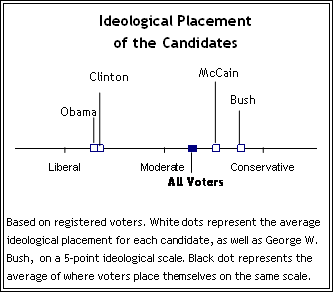
For his part, McCain runs better in the general election tests against both Democratic candidates among college graduates and white men. More generally, the current poll finds that McCain’s competitiveness against both Democrats is buttressed by the fact that voters continue to see him as a centrist whose views are fairly close to their own, and less conservative than George W. Bush’s. In contrast, voters place both Clinton and Obama considerably to the left of where they place themselves. These ideological perceptions of the candidates have changed little over the past three months.

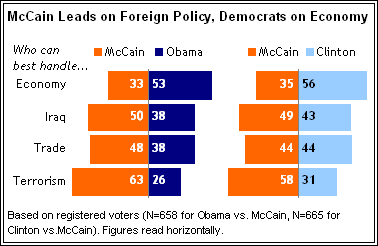
While McCain is seen as more centrist than the Democratic candidates, he does not inspire as much confidence as either of them does to handle the issue voters would most like to see the candidates address: the economy. By wide margins, voters choose either Obama or Clinton as better able than McCain to improve economic conditions.

Yet voters have much more confidence in McCain than either Democrat to defend the country against future terrorist attacks. McCain’s advantage over Obama is particularly large. By 63% to 26%, more voters say McCain rather than Obama would do a better job of handling terrorism, which is a far greater margin than Bush ever enjoyed over John Kerry on this issue.
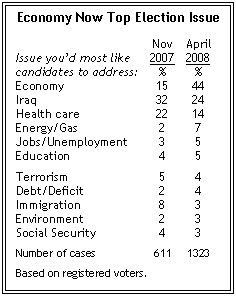
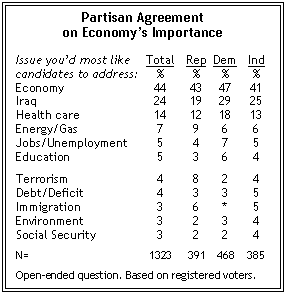
The economy is much more important in this election than terrorism – or any other issue – in the eyes of voters. Fully 44% name the economy as the single issue they would like to hear the candidates address, up from just 15% in November. About a quarter (24%) say they most want to hear about the war in Iraq, down from 32% in November. Just 4% of voters volunteer terrorism as the single issue they want the candidates to address.

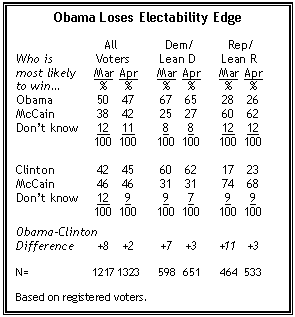
The survey finds that voters are more closely divided than in March about whether Obama or McCain would prevail in a general election matchup. Currently, 47% say Obama would be more likely to win, while 42% choose McCain. In March, Obama was seen as the likely victor by a greater margin (50% to 38%). Voters are evenly split over who would win a Clinton-McCain election; 46% predict McCain would win while 45% say Clinton. Opinions about how this race might turn out have not changed much since March.

Election Enthusiasm Gap

The Weekly News Interest Index has shown a decline in public interest in the presidential campaign since early March. However, a large percentage of voters say they are giving a lot of thought to the election; 77% currently say they are giving a lot of thought to the election, virtually unchanged from last month (78%). This is comparable to the proportion of voters who typically say they are deeply engaged in the election at the end of the campaign.
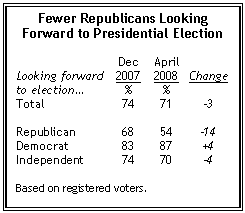
About equal numbers of Democratic and Republican voters say they have given a lot of thought to the election. But the poll also finds evidence of a partisan enthusiasm gap. Fully 87% of Democratic voters say they are looking forward to the fall election compared with just 54% of Republican voters. In December, before the start of the primaries, 68% of Republicans said they were looking forward to the general election.

Trade, Iraq Viewed More Negatively

With public views of the national economy continuing to be quite negative, Americans now are taking a much more critical view of free trade agreements. Nearly half of Americans (48%) say that the World Trade Organization and free trade agreements such as NAFTA have been bad for the country; 35% say such agreements have been good for the United States. This is the first time a plurality has expressed a negative view of the impact of free trade agreements since the question was first asked a decade ago.
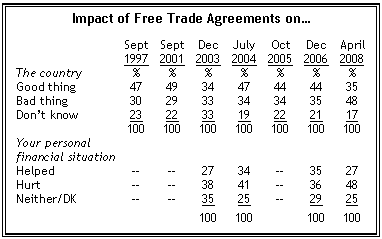
An increasing number of Americans also say that their personal financial situation has been hurt by free trade agreements. The proportion expressing this opinion has increased by 12 points since December 2006.

Most Americans now say that free trade agreements lead to job losses (61%) and make workers’ wages lower (56%); both percentages are up sharply from 2006. In addition, half of the public says that free trade agreements make the economy slow down, an increase of 16 points since 2006.

The survey also finds that the positive recent trend in public perceptions and attitudes about the war in Iraq has been reversed. A solid majority of Americans (56%) favors withdrawing U.S. forces from Iraq as soon as possible, rather than keeping them there until the situation is stable. In February, 49% favored a troop withdrawal. The share saying the United States will succeed in achieving its goals in Iraq, which reached its highest level in more than a year in February (53%), has declined to 47% in the current survey.
Section 1: Impressions and Images of the Candidates

The continuing and increasingly bitter primary battle in the Democratic Party is taking a small but noticeable toll on the personal images of both Clinton and Obama. Though both remain popular among Democratic voters, favorable ratings for Clinton and Obama are lower now than they were two months ago. And on a range of personal traits, both candidates are somewhat less well regarded by Democratic voters now than even a month ago. On the Republican side, voter impressions of John McCain have remained stable over the past few months

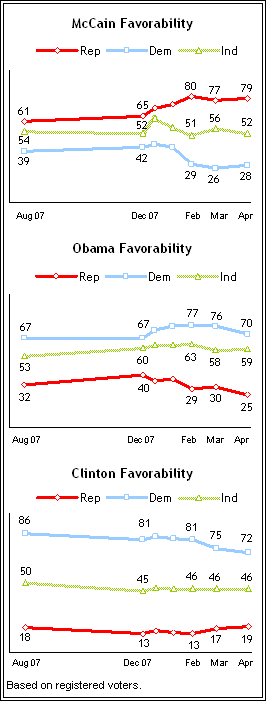
Obama’s favorable rating among voters overall is now 52%, down five points from late February. His unfavorable rating rose eight points (from 34% to 42%) in the past month alone. Among Democratic voters, 70% now have a positive impression of Obama, six points lower than in March, but the drop among white Democrats with annual incomes of less $50,000 the decline was much larger (17 points). Among Republicans, Obama’s unfavorable rating has risen 10 points since March, from 60% to 70%. Among independent voters, however, Obama’s image has been relatively stable: 59% now have a favorable opinion of him, about the same as last month (58%).

Hillary Clinton’s overall favorable rating has changed very little in the past two months; 49% of voters currently have a favorable impression, down one point from late February. But Democrats today (72% favorable) are somewhat less positive than in February, when 81% regarded her favorably. Impressions of Clinton among independents are unchanged.

Meanwhile, voters’ impressions of John McCain are little different than they have been over the past two months: 50% have a favorable impression, 40% an unfavorable one. About half of independent voters (52%) have a favorable impression of McCain, which is a little higher than Clinton’s rating among independents (46%) but a little lower than Obama’s (59%). McCain is better regarded among Democrats (28% favorable) than Hillary Clinton is among Republicans (19%). A quarter of Republicans (25%) have a favorable view of Obama.

Candidate Traits

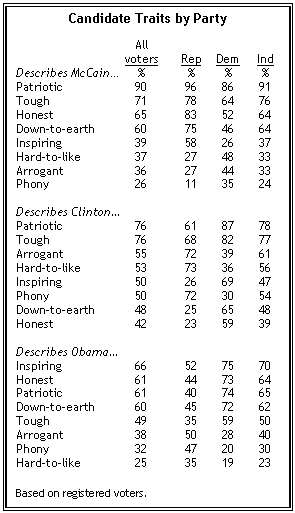
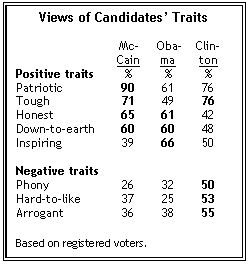
McCain is well-regarded on a number of personal traits. Nine-in-ten voters agreed that he is patriotic, and 60% or more regard him as tough, honest, and down-to-earth. Independents are just as likely as Republicans to describe him as patriotic and tough, and nearly two-thirds of independents (64%) say he’s honest and that he is down-to-earth.

At the same time, relatively few voters say the negative descriptor of phony applies to McCain (26%), and only somewhat more say that he is hard-to-like (37%) or arrogant (36%). Fewer than half of Democrats ascribe any of these negative traits to McCain. However, just 39% of voters overall say that McCain is inspiring, and even among Republicans just 58% say this.

Barack Obama matches McCain on the positive traits of honesty (61%) and being down-to-earth (60%), though the number seeing him as down-to-earth declined seven points overall since last month. On both of these traits he is better regarded than Hillary Clinton, who is seen by fewer than half of all voters as down-to-earth (48%) or honest (42%).

Significantly more voters regard Obama as inspiring (66%) than say this about either Clinton (50%) or McCain (38%), though the number of Democrats who say Obama is inspiring declined by seven percentage points since March.

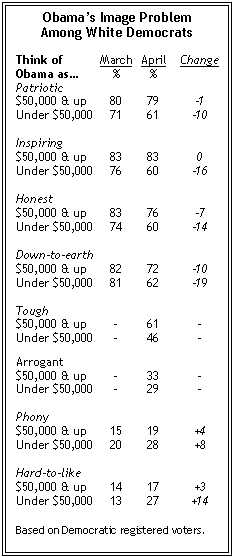
Obama’s image within his own party is generally more positive among more affluent and better educated Democrats, a pattern reflected in exit polling in most of the primaries this year. The decline in Obama’s image since last month has also been greater among lower income and less educated white Democrats than among black Democrats, and more affluent and educated whites.

The belief that Obama is down-to-earth fell more among Democrats – 11 percentage points – than did other personal traits. The decline was 19 points among Democratic voters with household incomes under $50,000; among those with incomes of $50,000 and higher, the decline was 10 points. Similarly, the number of less affluent white Democrats who say Obama is inspiring fell 16 points, while there was no change in this perception among those with higher incomes. This pattern of change is apparent on several other traits, and is also seen in comparisons of college educated and non-college whites.

Obama’s Image – No Longer Glowing

Beyond the small increase in negative opinion about Obama, the survey found that fewer voters are now using highly complimentary terms to describe their impressions of him, and his relative lack of political experience remains the single most commonly mentioned characteristic. Asked what one word best describes their impression of Obama, far more voters mentioned “inexperienced” than any other trait, as was the case in February. Inexperience topped the list even among people with a favorable opinion of him.

The most notable change since February is the decline in the number of people mentioning his charisma and intelligence, which in February were the most common words used after inexperience. Those terms are still used but by fewer people than two months ago. Now the second most common word is the more generic “good.” “Change” is still a common word used to describe him, and several people mentioned other positive qualities such as “honest,” “inspirational,” “new,” and “energetic.” Other frequent mentions included “liberal,” “different,” “scary,” and “unknown.”

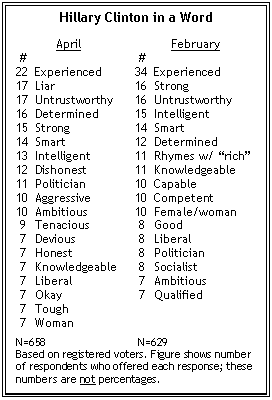
Hillary Clinton’s image with voters is similar to what it was in February, though her persistence on the campaign trail is now reflected in some of the impressions voters mention about her. “Determined” and “strong” were commonly heard, as they were in February, but now they have been joined by “aggressive,” “ambitious” and “tenacious.”

“Experienced” remains the most common word used to describe Clinton, but fewer voters in April than in February used this word. Two negative terms followed experience in the list: “liar” and “untrustworthy”; “dishonest” was also mentioned by several voters. “Smart” and “intelligent” also were common, as they were in February.

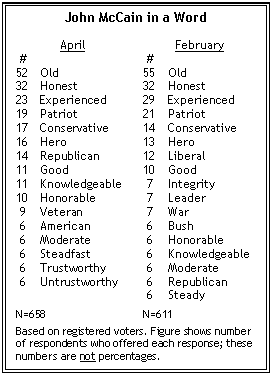
Voter impressions of John McCain have changed very little over the course of the campaign. The top six words mentioned remained unchanged – and in the same order of frequency – from February to April. “Old” remains the most common word, followed by “honest,” “experienced,” “patriot,” “conservative,” and “hero.” Mentions of “Republican” were more common this month, and “liberal” no longer appeared among the most common impressions of voters.

Section 2: Primary Contest Tightens

Clinton has whittled away Obama’s advantage in the race for the Democratic nomination in part because of her growing strength among white voters, especially white men. Clinton now leads Obama among white male Democratic voters by 11 points (53% to 42%). In March, she trailed Obama among white Democratic men, 36% to 52%.

Clinton also has recaptured her advantage among less educated Democratic voters. She now leads among Democratic voters with no more than a high school education by 12 points (52% to 40%); in March and late February, these voters divided fairly evenly between Clinton and Obama. Earlier in the campaign, Clinton led by a wider margin among non-college voters (by 60%-24% in early February).

Obama continues to maintain substantial advantages among both college graduates and liberal Democratic voters. He leads among college grads by 55% to 36%; his lead among college graduates has held steady at about 20 points since early February. Obama also has led among liberal Democratic voters by solid margin since late February, and leads 55% to 38% currently. By comparison, moderate Democrats have divided their support fairly evenly between Obama and Clinton since early February.

Long Campaign Taking a Toll

The undecided primary contest has taken a toll on how the supporters of Clinton and Obama view the other candidate. More than four-in-ten Obama supporters (46%) now express an unfavorable opinion of Clinton; approximately the same proportion of Obama backers (44%) expresses an unfavorable view of Clinton.

Negative opinions of each candidate among the other’s supporters have risen gradually since early February. At that time, only about three-in-ten Clinton and Obama supporters had an unfavorable view of their candidate’s rival.

Obama’s Electability Edge Narrows

Neither Obama nor Clinton has a clear electability advantage over McCain in the eyes of voters. In an Obama-McCain matchup, 47% think Obama would win, and 42% pick McCain. If Clinton is the nominee, the margin is only slightly different (45% think she would win, 46% McCain.)

By contrast, Obama held a clear edge in perceived electability a month ago. In late March, voters picked Obama to win over McCain by a 50% to 38% margin. That was substantially different from how people predicted a Clinton-McCain outcome (42% Clinton, 46% McCain). Overall, the shrinking of the electibility gap reflects a slight increase in the number of people who think Clinton can win, and a slight decrease in the number who think Obama can win.

Among Democratic and Democratic-leaning voters, about the same number say either Obama (65%) or Clinton (62%) can beat McCain this fall; in March, 67% said Obama was likely to beat McCain and 60% said the same about Clinton. In addition, Republican voters saw Obama as more of a threat than Clinton a month ago (28% said he could beat McCain, 17% said the same about Clinton). Currently, 26% of Republicans say Obama is more likely to beat McCain, while 23% expect Clinton to win.

Among Democratic voters, supporters of Obama and Clinton overwhelmingly believe that their candidate will prevail in a general election matchup against McCain. Fully 79% of Obama supporters and 77% of Clinton supporters believe their candidate will beat McCain. There is less consensus, however, that the other Democratic candidate can win. Only half of Clinton supporters (49%) say Obama will win and 49% of Obama supporters say Clinton will win.

When the two races are analyzed together, 44% of Democratic voters believe that either Democratic candidate is likely to beat McCain in the fall. A third of Democratic voters believe that one of the two Democratic candidates would lose to McCain, and 11% believe that McCain will win regardless of whether Obama or Clinton is the nominee.

When pressed to predict which of the two Democratic candidates has the better chance against McCain in November, Democratic voters give Obama an advantage (47% to Clinton’s 37%); Republican voters see little difference (38% say Obama compared with 34% who say Clinton).

More Dems Want Contest Settled

In late February, more than twice as many Democratic and Democratic-leaning voters said that the fact that the nomination was not yet decided was good, rather than bad, for the party (57% vs. 27%). But the balance of opinion on this question has changed dramatically; a majority (51%) now says the undecided nomination contest is bad for the party while slightly more than a third (35%) sees it as a good thing.

Obama supporters, in particular, have reversed their opinion of the unresolved nomination fight; in late February, 60% said it was good for the party, but currently about the same percentage (61%) sees it as a bad thing for the party. Views among Clinton’s supporters have shifted less dramatically. In the current survey, 43% of Clinton supporters say the unresolved contest is good for the party, down nine points since late February.

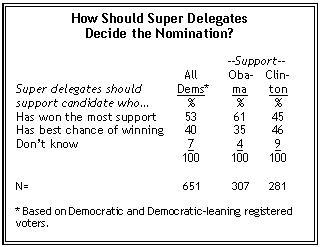
If the Democratic race continues and super delegates decide the nomination, 53% of Democratic voters say that the super delegates should vote for the candidate who has won the most support in the primaries and caucuses, while 40% believe they should vote for the candidate who they think has the best chance of defeating John McCain in November.

Fully 61% of Obama supporters believe that the super delegates should back the candidate who has amassed the most support, while just 35% say they should back the most electable candidate in the fall. Clinton supporters are evenly divided; 45% say the candidate who has won the most support, while 46% say the candidate who has the best chance of defeating McCain.

Section 3: The General Election

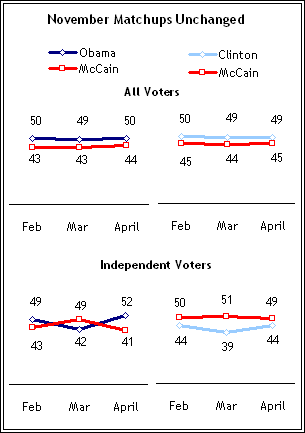
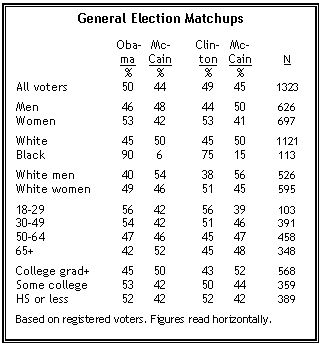
While the dynamics of the Democratic primary contest continue to fluctuate, voter preferences in general election matchups between either Obama or Clinton and McCain remain stable. Among registered voters nationwide, Barack Obama holds a six-point edge over McCain (50% to 44%) while Clinton leads McCain by a comparable margin (49% to 45%). Neither race has changed over the past two months, with Clinton and Obama consistently holding slim leads over McCain.

The preferences of independent voters have shifted, particularly in the Obama-McCain matchup. A month ago, 49% of independents favored McCain, while 42% favored Obama. In the current survey, Obama holds a 52% to 41% advantage over McCain among independents. Hillary Clinton, by comparison, continues to struggle to win over independent voters; while Obama currently leads McCain by 11 points, Clinton trails McCain by five (45% to 49%).

While Obama clearly has more appeal than Clinton to independent voters, this advantage is counterbalanced by his struggles with conservative and moderate Democrats. Overall, 18% of Democratic voters say they would support McCain over Obama, and the number rises to 23% of conservative and moderate Democrats. By comparison, just 12% of Democrats overall, and 14% of conservative and moderate Democrats, favor McCain over Clinton. Liberal Democrats are equally loyal to the party’s nominee whether it is Obama or Clinton.

The question of whether Obama or Clinton will head the Democratic ticket has little impact on other demographic patterns of candidate support. There is a substantial gender gap, with both Obama and Clinton running about equally well against McCain among women, and McCain running stronger among men. Voters under age 30 prefer either Democrat over McCain by comparably large margins, while McCain runs stronger among older voters.

White voters favor McCain over either Democrat by five points (50% to 45% in both head-to-head matchups). Fully 90% of black voters say they will vote for Obama over McCain, compared with 75% who will back Clinton over McCain.

Economy Tops the Issue Agenda

The economy has become the dominant concern among voters in the 2008 election. When asked what issue they most want to hear the candidates talk about, 44% cite the economy, up from just 15% in November 2007. When other economic issues are included, such as jobs and unemployment (5%), the national debt and budget deficit (4%), about half of voters cite an economic concern as the top issue in the campaign.

Economic concerns top the list of campaign issues for Republicans, Democrats and independents. The focus on the economy also spans race, gender and age groups. College graduates are as likely to prioritize the economy as are high school graduates, and while there are some differences across income groups, they reflect different economic priorities. Those in households earning under $50,000 annually are more likely to cite jobs and unemployment, while those earning over $50,000 more often cite the general economic state of the nation.

As the economy has become more important, both Iraq and health care have decreased in importance over the past five months. About a quarter of voters (24%) say that Iraq is the issue they want to hear most about, down from 32% in November. Iraq is cited as a top election issue more frequently by Democrats (29%) and independents (25%) than by Republicans (19%). The proportion of voters citing health care as the top issue fell from 22% in November to 14% today. More Democrats (18%) than Republicans (12%) or independents (13%) list health care as the issue they most want to hear about.

More Americans want to hear about energy and gas prices as campaign issues than in November 2007. Currently, 7% cite energy and gas prices, up from 2% in November. Other issues, such as education (5%) and terrorism (4%) continue to be cited less often as top campaign issues. More Republicans (8%) want to hear about terrorism than do either Democrats (2%) or independents (4%).

Democrats Lead McCain on the Economy

When it comes to the most important issue this election, voters believe that both of the Democratic candidates can better handle the economy than McCain by wide margins. When asked to compare McCain and Obama, 53% of voters say that Obama could do the best job of improving economic conditions while only 33% say McCain. Similarly, when asked whether McCain or Clinton could do the best job on the economy, 56% choose Clinton and 35% McCain.

In contrast, voters overwhelmingly think McCain can do a better job of defending the country from future terrorist attacks. By greater than two-to-one (63% vs. 26%) more say McCain, rather than Obama, can best handle the issue of terrorism; the margin is not as wide when voters are asked to choose between McCain and Clinton (58% vs. 31%).

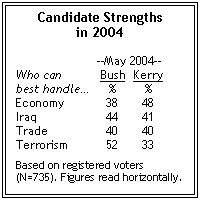
Notably, McCain’s lead over the Democrats on terrorism is wider than the advantage Bush had over Kerry in 2004 on this issue. In May 2004, Bush held a 52% to 33% edge over Kerry on who could do the best job of defending the country from future terrorist attacks.

McCain also holds an advantage over Obama, but not over Clinton, when it comes to the issues of Iraq and trade. He holds a 12-point edge over Obama (50% to 38%) on who can best handle the situation in Iraq, compared with a narrower six-point edge over Clinton (49% to 43%). By comparison, in May 2004 about the same number cited Bush (44%) and Kerry (41%) as best able to handle the situation in Iraq.

When it comes to handling U.S. trade policies, McCain holds a 48% to 38% edge over Obama, while McCain and Clinton are tied at 44% each.

Clinton’s Issue Strengths

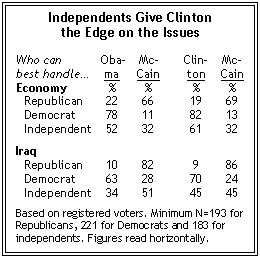
While independent voters express substantially more support for Obama at the top of the Democratic ticket than they do for Clinton, they tend to rate Clinton as the stronger candidate on many issues. On the economy, she holds a 61% to 32% margin over McCain among independents, compared with a 52% to 32% margin for Obama. And the gap is even more noticeable when it comes to handling Iraq, where Clinton runs even with McCain (45% each) among independents, while Obama trails by a 34% to 51% margin.

While Democrats overwhelmingly favor both Obama and Clinton over McCain on issues, Clinton’s advantage is consistently larger. By nearly three-to-one (70% to 24%), Democrats favor Clinton over McCain on handling Iraq; Obama’s advantage, while substantial, is not as large (63% to 28%).

Candidate Ideology

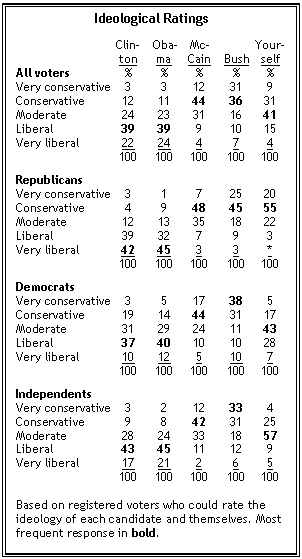
Majorities of voters describe Clinton and Obama as liberal and McCain as conservative, but the presumptive Republican nominee is seen as much more centrist than either Democratic candidate. About three-in-ten voters (31%) who are able to McCain’s ideology describe him as moderate; by comparison, 24% describe Clinton as a moderate and 23% say that about Obama. About four-in-ten voters (41%) describe themselves as politically moderate.

A 56% majority of voters say McCain is conservative, but only 12% describe him as very conservative. By comparison, two-thirds describe George W. Bush as conservative and 31% say he is very conservative. Clinton and Obama, on the other hand, are seen as liberal by 61% and 63% of voters, respectively. Comparable percentages also view each as very liberal (24% Obama, 22% Clinton). More voters view Obama as very liberal than did so in January (15%); the proportion saying Clinton is very liberal has not changed.

A majority of Democrats (52%) see Obama’s political views as liberal, while somewhat fewer (47%) say the same about Clinton’s views. Only about one-in-ten say either candidate is very liberal. By contrast, only 35% of Democratic voters describe their own political views as either liberal (28%) or very liberal (7%), while 43% describe themselves as moderate.

Republican voters are far more likely than Democrats to describe both Clinton and Obama as liberal; about eight-in-ten Republicans describe Clinton (81%) and Obama (77%) as liberal. This includes more than four-in-ten who perceive each candidate as very liberal (42% for Clinton, 45% for Obama). There is greater agreement among Republicans and Democrats about McCain’s ideology; 55% of Republicans and 61% of Democrats say McCain is conservative.

Most independents (54%) view McCain as conservative. By comparison, 60% of independents say Clinton is liberal and 66% say Obama is liberal. Fully 57% of independents rate their own political views as moderate; 29% say they are conservative, and 14% consider themselves liberal.

Section 4: Trade and the Economy

Americans express increasingly negative opinions toward the World Trade Organization (WTO) and free trade agreements such as NAFTA. In the current survey, a 48% plurality says that free trade agreements are a bad thing for the country, compared with 35% of the public who call them a good thing. Last November, opinion about free trade’s impact on the country was evenly split; for the previous decade, modest pluralities said that free trade agreements were a good thing for the country.

A larger proportion of Americans also says that free trade agreements are having a negative impact on their own personal financial situation. Nearly half (48%) says that free trade agreements have hurt their personal financial situation, up from 36% in December 2006.

There is now broad agreement that free trade negatively affects wages, jobs and economic growth in America. By greater than six-to-one (61% to 9%), the public says free trade agreements result in job losses rather than in new jobs. A solid majority (56%) says that free trade makes wages lower in the United States, and half (50%) say it slows the economy.

Americans are more divided when it comes to free trade’s impact on the price of products. A 39% plurality say free trade leads to higher prices for Americans, but 29% say that prices are lower because of free trade. In December of 2006, a slim plurality said free trade agreements lead to lower prices for American consumers.

The public does see one beneficiary from free trade agreements: people in developing countries. By a 58% to 12% margin, Americans say free trade is good for the people of developing countries. Opinion on this question has changed little since December 2006.

Views on Trade, Economy Linked

Public views on free trade have long been linked to overall economic assessments, and as ratings of the economy have soured, evaluations of the impact of free trade agreements have turned more negative. In December 2006, 38% of Americans said the economy was in excellent or good shape, and the balance of opinion toward free trade agreements among these people was more positive (51% good for the country) than negative (33% bad).

Today, the balance of opinion toward free trade remains just as favorable among Americans who think the economy is doing well, but just 11% of Americans are of this opinion.

At the other end of the spectrum, people who think the economy is in poor shape have consistently rated free trade agreements more negatively, and their views have become more critical since December 2006. More important, the share of Americans who believe the economy is in poor shape has increased from 19% to 56% since December 2006.

Dems, Reps See Trade Costing Jobs

In general, Republicans express more positive views than do Democrats about the impact of free trade agreements on the United States. Still, as many Republicans see free trade agreements as a bad thing as a good thing (43% vs. 42%). Democrats, by 50% to 34%, say free trade agreements are bad for the United States. A narrow majority of independents (52%) views free trade agreements as bad for the country.

Solid majorities of Democrats (64%), independents (64%) and Republicans (55%) say that free trade agreements lead to job losses – rather than create jobs – in the United States. There also is fairly broad agreement that free trade agreements lower, rather than raise the wages of American workers.

Democrats, by nearly four-to-one (57% to 15%) say that free trade agreements slow the economy down rather than make it grow; this also is the prevailing view among independents (50% vs. 18%). Republicans are more evenly divided about the economic impact of free trade, with 40% saying it slows the economy and 29% saying it spurs economic growth.

Trade’s Personal Impact

Opinions about the personal impact of free trade continue to vary along socioeconomic lines. In general, people with higher incomes, the young, and the better educated are less likely to feel that they have suffered financially because of free trade, while older Americans and those with lower levels of income and education report being hurt by free trade agreements in greater numbers.

For example, among those in households earning $75,000 a year or more, only 33% say free trade agreements have hurt their financial situation. By contrast, majorities of those earning less than $75,000 a year say they have been hurt by free trade agreements. In addition, 39% of college graduates say free trade has hurt their financial situation compared with 54% of those with no more than a high school education.

Middle-aged and older Americans also are more likely to report being negatively affected by free trade than are younger people. About one-in-three 18-29 year olds (34%) say they have been hurt financially by free trade, compared with about half or more of those in older age groups.

Economic Problems Blamed on Iraq and Energy Prices

Views of the nation’s economy remain about as negative as they were in March. A majority of Americans (56%) continues to describe the country’s economic conditions as poor, while 33% say conditions are only fair. Just 11% say the economy is in excellent or good shape (10% good and 1% excellent).

Asked to choose among five alternatives, people who rate the economy as only fair or poor most often cite the war in Iraq and rising energy prices as the biggest reason for the nation’s economic problems. Roughly three-in-ten cite the war, while 26% blame rising energy prices; other factors, such as foreign competition (12%), too little regulation of financial institutions (11%), and the normal ups and downs of the economy (9%) are mentioned less often.

Nearly half of Democrats (45%) say the war in Iraq is the biggest reason for the nation’s economic problems, compared with just 13% of Republicans. By contrast, a plurality of Republicans (37%) blames rising energy prices for the economic downturn. Republicans also are far more likely than Democrats to view normal economic ups and downs as the biggest reason for the economic problems (15% vs. 5%).

Americans are less negative about their own personal finances than they are about the nation’s economy. More than four-in-ten (43%) say they are in excellent or good shape financially, compared with 55% who rate their finances as only fair or poor. People’s views of their personal finances have declined slightly since March when 47% rated their finances as excellent or good.

Section 5: Less Optimism about Iraq

In February, there was a decidedly positive shift in several of the public’s perceptions about the war in Iraq and views of what to do next. In the current survey, however, many of these trends have been reversed.

Currently, just 44% of Americans believe that the U.S. military effort in Iraq is going very or fairly well; a narrow majority (52%) says that things there are going not too well or not at all well. In November and February, public perceptions about progress in the U.S. military effort were evenly split (48% going well, 48% not well).

Similarly, the public is now divided in its view of whether the United States will succeed or fail in achieving its goals in Iraq (47% succeed, 46% fail). In February, a 53% majority said the United States would eventually succeed in Iraq, compared with 39% who said it would fail.

In addition, 56% of Americans favor withdrawing U.S. forces from Iraq as soon as possible while 41% support keeping U.S. troops in Iraq until the situation is stable. The proportion favoring a troop withdrawal as is now at its highest point in nearly a year (56% in June 2007. Opinions about withdrawing U.S. troops – like other attitudes regarding Iraq – remain deeply polarized politically. About seven-in-ten Republicans (72%) favor keeping U.S. troops in Iraq until the situation is stable, compared with 40% of independents and just 20% of Democrats. Support for maintaining U.S. troops in Iraq has slipped among all three groups since February.

In contrast with other attitudes on Iraq, views about the original decision to use military force in Iraq had remained stable in previous surveys, with majorities saying the decision was wrong. In the current survey, the proportion opposing the decision to go to war has edged up to 57%, the highest percentage expressing this view in the five years of the Iraq war; in December 2007, 56% said the decision to use force was wrong.

Perceptions of Progress

The improved climate of public opinion about Iraq had been particularly evident in measures of progress toward specific goals, such as reducing the level of civilian casualties and defeating the insurgents militarily. But in these and other areas, increasing numbers of Americans say the United States is losing ground.

For instance, a plurality (48%) now says the United States is losing ground in reducing the number of civilian casualties while 37% say the United States is making progress toward this objective. The balance of opinion on this issue has flipped since February 2008, when 46% said progress was being made and 40% said the United States was losing ground.

The public is evenly divided about whether the United States losing ground (43%) or making progress (42%) in defeating the insurgents militarily. In February, by a wide margin (49% to 35%), more people said the United States was achieving progress in defeating the Iraqi insurgency.

Public evaluations of whether the United States is making progress in preventing a civil war in Iraq have not changed much in the past two months. In February, about half (49%) said the United States was losing ground and about the same proportion expresses that view currently (51%).

And opinions about progress in one area – rebuilding Iraq’s infrastructure – have continued to improve, despite the downward movement in other perceptions of progress. Currently, 53% say the United States is making progress in rebuilding roads, power plants and other services, up from 47% in February. In June 2007, just 36% of the public said the United States was making progress toward this goal.

Iraq and Terrorism in the U.S.

Roughly four-in-ten Americans (41%) say that, if the United States withdraws its forces from Iraq while the country remains unstable, it would make a terrorist attack on the United States more likely; 42% say a troop withdrawal under such circumstances would not make a difference in the terrorism threat in this country, while 11% say this would make an attack on the U.S. less likely.

Opinions on this issue have changed modestly from April 2007, when 45% said withdrawing U.S. forces from Iraq with the country unstable would raise the risk of terrorism in the United States. However, fewer Democrats, in particular, say a troop withdrawal would lead to an increased risk of terrorism in the United States. A year ago, 35% of Democrats said a troop withdrawal with Iraq still unstable would make an attack on the U.S. more likely; just 23% of Democrats say that today. Views among Republicans and independents have shown less change; 65% of Republicans and 37% of independents currently say a withdrawal from a still-unstable Iraq would increase the terrorism risk in this country.

The belief that a long-term U.S. military presence in Iraq would increase the terrorism risk in the United States also has declined modestly over the past year. Currently, 35% say if U.S. troops remain in Iraq for many years, it would make an attack on this country more likely; 41% expressed that view in April 2007.

About the Survey

Results for this survey are based on telephone interviews conducted under the direction of Abt SRBI, Inc. among a nationwide sample of 1,502 adults, 18 years of age or older, from April 23-27, 2008. The following table shows the error attributable to sampling that would be expected at the 95% level of confidence for different groups in the survey:

In addition to sampling error, one should bear in mind that question wording and practical difficulties in conducting surveys can introduce error or bias into the findings of opinion polls.