
Most Americans Unfamiliar with Petraeus, Rice Remains Popular
Summary of Findings Gen. David Petraeus has played a pivotal role in crafting the U.S. military strategy in Iraq, but he is an unfamiliar figure to most Americans. On the eve of Petraeus’ congressional testimony on the situation in Iraq, a solid majority (55%) says they do not know enough about the top U.S. commander […]
Summary of Findings

Gen. David Petraeus has played a pivotal role in crafting the U.S. military strategy in Iraq, but he is an unfamiliar figure to most Americans. On the eve of Petraeus’ congressional testimony on the situation in Iraq, a solid majority (55%) says they do not know enough about the top U.S. commander in Iraq to offer an opinion of him.
The latest national survey by the Pew Research Center for the People & the Press, conducted March 24-29 among 1,001 adults, finds that 27% view Petraeus favorably while 18% say they have an unfavorable view of him.
Views of Petraeus are divided along party lines, with more than twice as many Republicans as Democrats offering a positive rating of the general (45% vs. 19%). A quarter of independents rate Petraeus positively. However, large percentages in all partisan groups, including nearly half of Republicans (47%), are not familiar enough with Petraeus to offer their opinion of him.
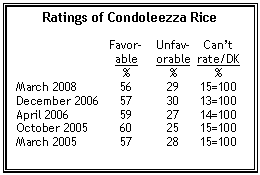
Rice’s Favorability Remains High
Although the Bush administration gets low ratings for its handling of foreign policy, Secretary of State Condoleezza Rice continues to be viewed positively by a majority of Americans (56%). The percentage saying they have a favorable opinion of Rice has remained largely unchanged since March 2005.
Rice is broadly popular among Republicans and also receives favorable ratings from a majority of independents. More than three-quarters of Republicans (77%) and 54% of independents have a positive opinion of her. Democrats offer mixed opinions about the Secretary of State – 43% express favorable views and 44% have an unfavorable opinion.
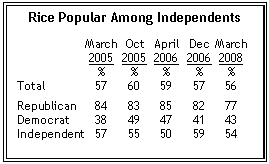
Despite her overwhelmingly favorable ratings among Republicans, Rice’s popularity with that group has declined somewhat in the past two years. In April 2006, fully 85% of Republicans offered a positive opinion of the Secretary of State, eight points higher than in the current poll.
