Pew Research Center is a nonpartisan, nonadvocacy fact tank that informs the public about the issues, attitudes and trends shaping the world. It does not take policy positions. The Center conducts public opinion polling, demographic research, computational social science research and other data-driven research. It studies politics and policy; news habits and media; the internet and technology; religion; race and ethnicity; international affairs; social, demographic and economic trends; science; research methodology and data science; and immigration and migration. Pew Research Center is a subsidiary of The Pew Charitable Trusts, its primary funder.
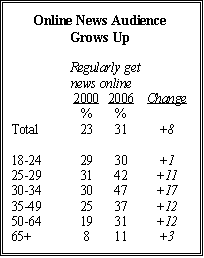
A decade ago, just one-in-fifty Americans got the news with some regularity from what was then a brand new source the internet. Today, nearly one-in-three regularly get news online.
But the growth of the online news audience has slowed considerably since 2000, particularly among the very young, who are now somewhat less likely to go online for news than are people in their 40s. For the most part, online news has evolved as a supplemental source that is used along with traditional news media outlets. It is valued most for headlines and convenience, not detailed, in-depth reporting.
Broadcast news outlets continue to struggle over the last two years alone, the audiences for nightly network, local TV news and radio news have all slipped. Even so, the recent trends in news consumption are relatively stable when compared to the 1990s when TV news in particular was suffering losses of far greater magnitude.
Similarly, the latest Pew news consumption survey finds that newspapers, which also have seen their audience decline significantly, are now stemming further losses with the help of their online editions. However, the discrete online-only newspaper audience is quite modest in size.
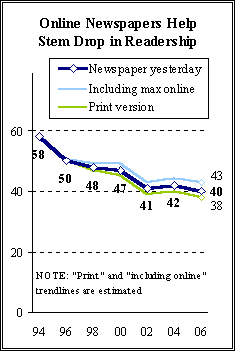
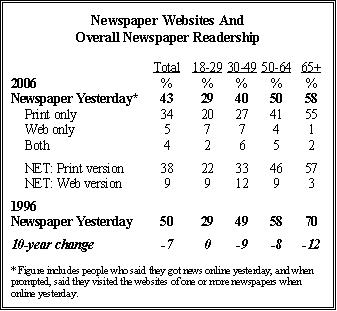
Four-in-ten Americans say they read a newspaper yesterday, with 6% reading a newspaper online 4% read both a print and online newspaper, while 2% read it only online. In addition, 3% say they read something on a local or national newspaper website yesterday. As a result, even the highest estimate of daily newspaper readership 43% for both print and online readers is still well below the number reading a print newspaper on a typical day 10 years ago (50%).
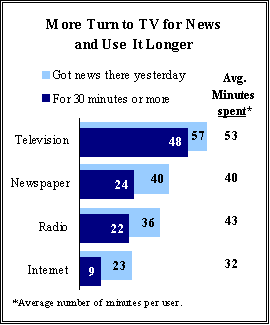
The biennial news consumption survey by the Pew Research Center for the People & the Press, conducted among 3,204 adults from April 27 to May 22, finds that the audience for online news is fairly broad, but not particularly deep. People who say they logged on for news yesterday spent 32 minutes, on average, getting the news online. That is significantly less than the average number of minutes that newspaper readers, radio news listeners, and TV news viewers spend with those sources. And while nearly half of all Americans (48%) spend at least 30 minutes getting news on television, just 9% spend that long getting news online.
The web serves mostly as a supplement to other sources rather than a primary source of news. Those who use the web for news still spend more time getting news from other sources than they do getting news online. In addition, web news consumers emphasize speed and convenience over detail. Of the 23% who got news on the internet yesterday, only a minority visited newspaper websites. Instead, websites that include quick updates of major headlines, such as MSNBC, Yahoo, and CNN, dominate the web-news landscape.
The rise of the internet has also not increased the overall news consumption of the American public. The percentage of Americans who skip the news entirely on a typical day has not declined since the 1990s. Nor are Americans spending any more time with the news than they did a decade ago when their news choices were much more limited. In 1996, people on average spent slightly more than an hour (66 minutes) getting the news from TV, radio or newspapers. Currently, they spend virtually the same amount of time (67 minutes) getting the news from all major news sources, the internet included.
As internet news has gone more mainstream, its audience has aged. Since 2000, nearly all of the growth among regular internet news users has occurred among those ages 25-64. By contrast, virtually the same percentage of 18-24 year-olds say they get news online at least three days a week as did so six years ago (30% now, 29% then). Currently, about as many people ages 50 to 64 regularly get news on the internet as do those in their late teens and early 20s.
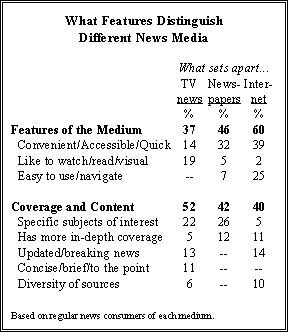
To some degree, news consumers are drawn to the internet for the very reason that it does not take much time to get news online. Most users say what distinguishes web news is its format and accessibility the ease of navigation, speed with which information can be gathered, and convenience “at my fingertips.” Convenience is a factor for newspapers and television as well, but more readers and viewers refer to the subject matter and journalistic and editorial qualities of the content than is the case among web users.
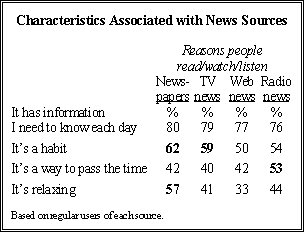
The bottom line for the vast majority of news consumers regardless of news source is that it provides information they need to know each day. A majority of newspaper readers (57%) also say they find the experience “relaxing.” Fewer regular radio news consumers (44%), TV news consumers (41%) and especially internet news users (33%) say they find it relaxing to get the news from those sources.
The long-standing generation gap in newspaper reading has narrowed over the past decade, in part because of online newspapers, but this is a decidedly mixed blessing for newspapers. It reflects the fact that while newspapers continue to draw anemic numbers of young readers just 29% of those under age 30 that figure has remained stable since 1996, as some young people have turned to online papers. However, newspaper readership among older age groups has fallen significantly over that period. Even when online newspapers are included, 58% of those ages 65 and older say they read a newspaper yesterday, down from 70% a decade ago.
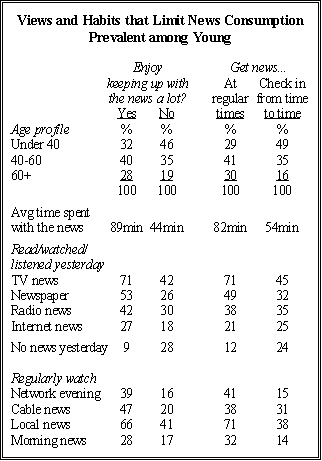
The views and habits that continue to constrain the size of news audiences are shared widely among younger people. Nearly half (46%) of those who do not get a great deal of enjoyment from keeping up with news are under age 40; similarly, 49% of those who check in with the news from time to time, rather than get the news at regular times, are under age 40. These opinions and news habits, which are largely unchanged from past surveys, are strongly associated with less usage of all types of news sources, with an important exception. People who like to check in on the news go online for news about as often as do people who like to read or tune in at set times of the day.
The survey shows that newspaper readers’ tastes and newspapers themselves have evolved considerably over the past two decades. But one constant remains: Local and community news continues to be the biggest draw for newspapers. And as was the case during the mid-1980s, roughly nine-in-ten of those who at least sometimes read a newspaper say they spend a significant amount of time getting the news about their city, town or region.
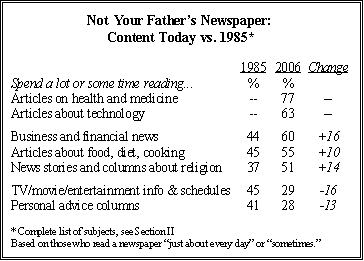
Yet other subjects in the newspaper also attract interest from sizable numbers of readers. More than three-quarters of newspaper readers (77%) say they spend a lot or some time reading articles about health and medicine, while 63% spend time with articles on technology; neither subject was asked about in 1985. Since that time, news about business, food and diet, and religion have grown more popular with readers; in contrast, fewer say they are spending time getting TV and movie information and schedules, and reading personal advice columns.
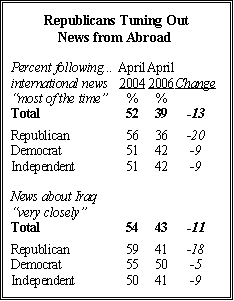
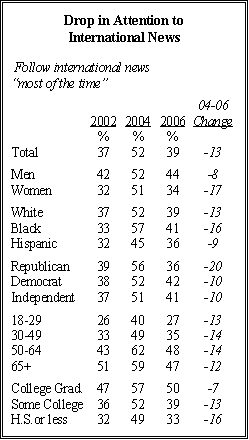
For the most part, the public’s broad news interests have changed little in recent years. But interest in international news and news about the situation in Iraq has declined since the spring of 2004. Currently, a solid majority of Americans (58%) say they follow international news closely only when something important is happening, while 39% say they follow overseas news closely most of the time. In April 2004, a majority of Americans (52%) said they tracked foreign news closely most of the time. (The current survey was conducted before the recent surge of violence in the Middle East and the missile tests conducted by North Korea).
Similarly, public interest in news about Iraq has faded since the spring of 2004, amid the violent uprising in Falluja and the revelation of abuses at the U.S. prison at Abu Ghraib. At that time, 54% said they were following news about the current situation in Iraq very closely. That compares with 43% in the current survey. There also has been a notable decline in the percentage of Republicans following international news most of the time, and the percentage who say they track news about the situation in Iraq very closely. The fall off in interest has been less dramatic among Democrats and independents.
In addition, public interest in national political news is not as great as during the presidential campaign of two years ago. In April, 17% said they follow news about political figures and events in Washington DC, down from 24% two years earlier. In this case, the decline has occurred across the political and ideological spectrum, with one notable exception. About a third of liberal Democrats (34%) say they follow political news from the nation’s capital very closely no change from 2004, and a much higher percentage than in any other political group.
Other Findings
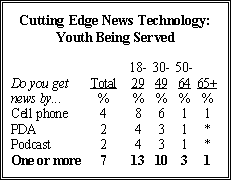
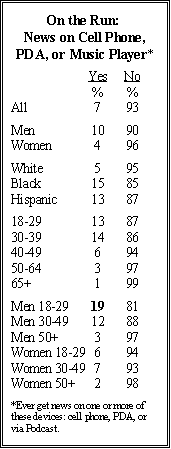
While the growth of internet news has stalled among the very young, a significant number of young people (13%) say they get news via a cell phone, a personal digital assistant such as a PalmPilot or Blackberry, or an iPod or similar portable music player.
The credibility ratings for most major news organizations are either flat or have slipped since 2004. These ratings are highly partisan, though the political differences for most sources have narrowed over the past year as Democrats take a more negative view in the believability of several leading news outlets.
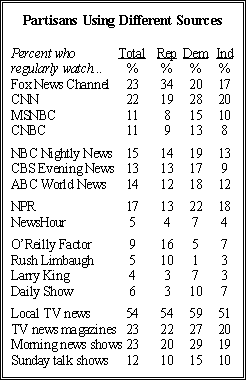
The percentage of people who say they regularly watch Fox News Channel increased by half between 2000 and 2004 but has stabilized over the past two years. Currently, 23% say they regularly watch Fox News Channel, roughly the same as in 2004 (25%). The network’s audience continues to include a relatively large percentage of Republicans 34% of whom say they regularly watch Fox News Channel, compared with 20% of Democrats.
The percentage of Americans who say they regularly listen to National Public Radio has approximately doubled since 1994 (from 9% to 17%). Nearly twice as many Democrats as Republicans say they regularly listen to NPR (22% vs. 13%). A decade ago, NPR’s audience was fairly evenly balanced politically.
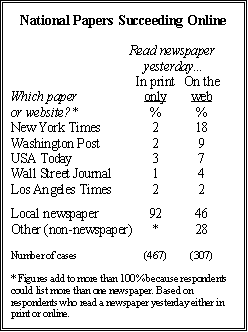
Online newspapers have extended the reach of national newspapers, such as the New York Times, the Washington Post, and USA Today. While more than nine-in-ten readers of print newspapers read local newspapers, only about half of readers of online newspapers do so with many of the rest reading the New York Times and other national newspapers.
The audience for network news morning programs has remained stable in recent years, largely on the strength of women viewers. Fully 64% of those who say they regularly watch these programs are women, while just 36% are men.
Just 4% of Americans say they regularly read online blogs where people discuss news events, but that figure increases to 9% of those ages 18-24. About the same numbers of Republicans, Democrats and independents read news blogs regularly.
Section 1: Watching, Reading and Listening to the News
Getting the news is an integral part of the daily routine for most Americans. Still, the percentage getting news from any source is significantly lower than it was in the mid-1990s, before internet news became popular. Roughly eight-in-ten (81%) say they got news yesterday either from TV, newspapers, radio, or by going online. That represents a slight decline from 2004 (85%), but a more substantial drop since 1994 (90%).
In terms of other daily activities, 63% say they watched a non-news program on television in the day prior to the survey; that is slightly greater than the percentage watching TV news (57%).
About half of Americans (53%) say they went online, either from home or from work. That represents a significant increase (from 47%) since 2004. But far fewer (23%) say they went online for news yesterday, virtually no change from two years ago (24%).
An increasing number of Americans say they exercise on a typical day. More than four-in-ten (44%) say they got some form of vigorous exercise yesterday, such as jogging or working out at a gym; in 2004, 38% reported getting some exercise on a typical day, and a decade earlier just 26% did so.
Reading books remains a popular activity, with 38% saying they had read a book not related to work or school in the day before the survey. Slightly more respondents said they read books of non-fiction rather than fiction (20% vs. 15%).
Competing Time Demands
For young people in particular, getting the news often takes a back seat to other daily activities. For instance, 40% of those under age 30 say they watched a movie at home on video, DVD or pay-per-view yesterday. That is far more than the number who say they read a newspaper (24%), listened to radio news (26%), or went online for news (24%), and only somewhat less than the number who watched TV news (49%).
In addition, playing video games is a popular activity with young people, especially young men. Overall, 28% of those under age 30
36% of men in this age category say they played a computer or video game yesterday. Twice as many men under age 30 as women in that age group reported playing a video game (36% vs.18%).
More surprising, perhaps, is the fact that reading books also is a favored activity of many young people. Indeed, somewhat more people ages 18-29 say they read a book yesterday than do people ages 30-49 (41% vs. 34%), and about the same percentages of people under age 30 and those ages 50 and older read a book yesterday. However, far fewer young people actually enjoy reading. Just 39% of those age 18-29 say they enjoy reading a lot, compared with majorities in older age categories.
Many Young People Get No News
Despite the vast array of news sources these days, a significant number of Americans (19%) say they got no news yesterday from television, newspapers, radio or the internet. Young people and those with a high school education are most likely to go newsless 27% of Americans under age 30, and 25% of those with a high school education or less, say they did not get news from any of these sources yesterday.
About one-in-five men under age 50 say they did not get news yesterday (19%), but that figure drops to 9% of men who are ages 50 and older. There is less of a difference between women under 50 and those ages 50 and older. Comparable percentages of Republicans, Democrats and independents say they get no news on a typical day.
Time With the News
On average, Americans spend just over an hour 67 minutes watching, reading, listening and logging on for news. Thirty minutes, on average, is spent watching television news, and about 15 minutes each is spent on newspapers and radio. Just six minutes of time each day comes from news on the internet. The relatively low impact of the internet reflects the fact that fewer than one-in-four (23%) get any news online on a typical day.
The total time that people spend with the news is largely unchanged from a decade ago. The time people devote to reading newspapers is down from an average of 19 minutes to 15 minutes, partially because fewer are reading papers and partially because those who do spend a bit less time at it. Time spent watching TV news or getting news on the radio is largely unchanged from 1996.
Men spend considerably more time with the news than do women, mostly arising from their greater consumption of television and radio news. In particular, men spend an average of 74 minutes watching television news, compared with 61 minutes for women.
There is a particularly large gap in time spent on the news by age people ages 18-29 spend just 49 minutes with news on a typical day, compared with 65 minutes among those 30-49; 76 minutes for those 50 to 64; and 79 minutes among people ages 65 and older.
This age gap is based on the fact that younger people are so much less likely to read a newspaper or watch television news on a typical day; even when they do they spend less time with these sources than do older people. This age difference is greatest when it comes to newspapers.
Just 24% of people under age 30 read a newspaper on a typical day, and when they do they average eight minutes of reading. By comparison, 58% of people ages 65 and older read a paper on a typical day, and spend an average of 25 minutes with it when they do.
Using Multiple Sources
Television remains the most popular source of news, with most Americans watching at least some news programming on a given day. But for many Americans, one source is not enough. Half of the public uses multiple news sources on a typical day the other half either gets news from a single source (31%) or does not get any news (19%).
The arrival of the internet as a news option has not changed this basic pattern of news consumption over the past decade. In 1996, 52% used multiple news sources on a typical day, 33% just one source, and 15% got no news little different from today. This stability reflects the fact that the internet is, for the vast majority of its users, a supplement to other traditional news sources. Of the 23% who get news online on a given day, the vast majority also use other news sources; just 4% of the public relies on the web alone. And the average online news consumer spends far more time per day getting news on TV, newspaper and radio than they do getting news online.
Regular News Audiences: TV
The number of Americans who say they regularly watch nightly network news, cable TV news, and local news has fallen over the past two years. Currently 28% say they regularly watch the nightly network news on CBS, ABC or NBC, compared with 34% in 2004. In 1993, fully 60% said they regularly watched one of these broadcasts.
The regular cable news audience also has declined, from 38% to 34%, since 2004. And local TV news also has lost ground from 59% to 54%. However, as is the case with nightly network news, the audience for local TV news is about the same size as it was in 2000 (56%).
As in past news consumption surveys, there is a sizable generation gap in TV news viewership, with the biggest divide in nightly network news. Notably, both young people (those under age 30) as well as those ages 65 and older are tuning into network news in smaller numbers than in the past.
Only about one-in-ten Americans (9%) under age 30 say they regularly tune into the nightly network news on CBS, ABC, or NBC; that is about half the number saying that in 2004 and 2002. Yet network news also is losing older viewers, who have long been the mainstay of its audience.
Roughly four-in-ten of those ages 65 and older say they regularly watch one of the nightly network broadcasts (43%). In 2004 and 2002 (and in previous Pew surveys dating to 1993), solid majorities of seniors tuned into an evening news program. A decade ago, fully 64% of respondents ages 65 and older said they watched one of these programs.
The age differences in viewership of local news and cable news are smaller than for network news. And for cable news, in particular, the gap has narrowed. Roughly four-in-ten seniors (38%) say they regularly watch cable news channels like Fox, CNN or MSNBC; that is down a bit from 2004 but the same percentage as in 2002. That compares with 30% of people ages 30 and younger. The percentage of young people tuning into the cable news outlets has increased since 2002 (from 23%).
Specific TV News Outlets
There has been little change in the regular audiences for most individual TV news outlets over the past two years. This includes Fox News Channel, whose regular audience increased impressively
from 17% to 25% of the general public between 2000 and 2004. This year, 23% say they regularly watch Fox News, virtually no change from two years ago.
Currently, 22% say they regularly tune into CNN, which is unchanged since 2004 but roughly a third below CNN’s audience in the early 1990s (35% in 1993). About one-in-ten Americans continue to say they regularly watch MSNBC (11%) and CNBC (11%).
Nearly identical percentages of Americans say they watch the nightly network news on NBC (15%), ABC (14%) and CBS (13%); those numbers are down slightly from 2004. And 5% say they regularly watch the NewsHour with Jim Lehrer, largely unchanged from recent news consumption surveys.
Radio News Down Not Talk or NPR
Fewer than four-in-ten Americans (36%) say they listened to radio news the day before the interview. That is down only slightly from the past two media consumption surveys, but is substantially lower than in 1998 (49%).
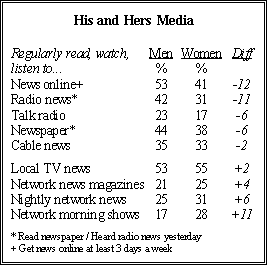
The audience for radio news, which has long been popular with auto-bound commuters, is largely comprised of well-educated, middle-aged males. More than four-in-ten men (42%) say they listened to news on the radio yesterday, compared with 31% of women. Roughly four-in-ten people (41%) ages 30-64 say they tune into radio news on a typical day, compared with 27% of those ages 65 and older, and 26% of those under 30. And college graduates are far more likely to tune into radio news on a typical day than people with a high school education or less (by 47% to 28%).
While fewer people rely on radio news than in the 1990s, the regular audience for radio call-in programs has increased modestly. One-in-five Americans say they regularly listen to shows that invite callers to discuss politics and other subjects; that compares with 13% in 1998. There also is less of a partisan tilt to the radio talk show audience than in the late 1990s. Nearly identical percentages of Republicans (21%), Democrats (20%), and independents (20%) say they regularly listen to such programs. In 1998, about twice as many Republicans as Democrats said they listened to call-in radio programs (20% vs. 11%).
National Public Radio’s regular audience has held steady in recent years, and has increased significantly since the mid-1990s. Currently, 17% of Americans say they regularly listen to NPR, up from 13% a decade ago (and 9% in 1994). Over the past decade, NPR has attracted greater numbers of people under age 30 (from 9% to 15%); those with post-graduate experience (25% to 30%); and Democrats (15% to 22%). Consequently, there is a now sizable political gap among NPR listeners, with Democrats outnumbering Republicans by 22%-13%; a decade ago, 15% of Democrats, 14% of independents, and 11% of Republicans said they regularly listened to NPR.
Web News Dominated by A Few Sites
The online news market is dominated by a few large players. In particular, among those who say they regularly get news on the internet, 31% list MSNBC.com as one of the websites they use most often; 23% name Yahoo.com; and the same percentage names CNN.com.
Other websites that are widely used for news are Google.com (9%); AOL.com (8%); and FoxNews.com (8%). The New York Times (5%) and USA Today (5%) are the most frequently mentioned newspaper websites among online news sources.
As a whole, news aggregators such as Google News, Yahoo News and AOL News are a major source of online news. Not only are they frequently volunteered as websites used most often for news, but nearly half (45%) of Americans who regularly get news online (and 18% of the public overall) say they regularly visit these websites to get news.
Roughly a third (32%) of online news consumers say they regularly visit the news sites of TV networks such as CNN.com, MSNBC.com and ABCnews.com.
Newspaper websites overall are used about as frequently as network news sites; 29% of online news consumers 14% of the total population say they visit newspaper websites regularly.
However, while two players MSNBC.com and CNN.com dominate the network website category, the public visits a wide variety of newspapers online, both national and local.
Just 4% of the public and 8% of online news consumers say they
regularly go to online blogs where people discuss events in the news. Comparably small percentages 3% of the public and 6% of online news consumers regularly visit online news magazines and opinion sites such as Slate.com and Salon.com.
However, blogs that discuss news events have become a destination for a significant number of young people, especially those ages 18-24. About one-in-ten (9%) in this age category say the regularly read these types of blogs, while another 10% say they sometimes do so.
Nearly a quarter of those who say they went online for news yesterday say they read news blogs regularly (10%) or sometimes (12%). Yet even among these online news consumers, 62% say they never read news blogs. (The Pew Internet & American Life Project has detailed research on blogs and other online activities and pursuits at www.pewresearch.org/pewresearch-org/internet)
Search Engines More Popular
An increasing number of internet users say they employ search engines like Google and Yahoo to get news on subjects of personal interest. Nearly three-quarters of all internet users (74%) say they have used a search engine for this purpose, and 40% say they have done this in the past week. Both numbers have risen sharply since 2004 (63% and 30%, respectively).
The use of internet search engines to look for news stories is especially popular among those under age 30; fully 81% of internet users in this age category say they have ever relied on a search engine for this purpose and 46% have done this in the past week. But the practice is widespread among older internet users as well. A solid majority of internet users who are 65 and older (57%) say they have ever used a search engine to seek out a news story on a subject that interests them and about a third (32%) have done this in the past week.
Even as more internet users are using search tools to actively seek out stories of interest, an increasing number are inadvertently getting news while they are online for other purposes. About three-quarters of internet users (76%) say they “bump into” the news when online; the percentage of online users saying they get news in this fashion has increased steadily since 2000 (from 55%).
Internet users who are ages 65 and older are less likely than younger people to come across news when online for other reasons. But there are at most only modest educational and income differences in accidental online news consumption. About three-quarters of internet users with post-graduate experience (77%) say they inadvertently come across online news, as do 71% of those with a high school education or less.
Emailing News Stories
Another common practice among internet users is to use email to disseminate stories of interest. Roughly six-in-ten internet users (61%) say they have ever been emailed a news story from a friend or associate, and 26% say this has happened in the past week. A smaller number (40%) say they have actually sent a new story to a friend or colleague.
Notably, older internet users are as likely as young people to send and receive news stories via email. Nearly two-thirds (65%) of online users ages 50 and older have received news stories by email (including 61% of those ages 65 and older); that compares with 59% of those under age 30.
Section 2: The Challenge for Newspapers
The latest news consumption study confirms the sluggish circulation figures reported by most newspapers. Four-in-ten Americans reported reading a newspaper “yesterday” in the survey, down from 50% a decade ago. And the drop-off is even more severe over the longer term. A 1965 Gallup survey found fully 71% reading a paper on the previous day.
But the long-term decline in newspaper readership has stabilized over the past few years. Since 2002 there has been no significant change in the percent reading a newspaper yesterday.
To some extent, this stabilization reflects the growing availability of newspapers online. But the reach of newspaper websites is still limited. By far, most newspaper readers are still reading the print version on a typical day fully 94% read it in print, while 14% read it on the internet (some do both). Put in other terms, if internet newspaper consumption were removed from the long-term trend and we looked at only the share reading the print version of the newspaper, the proportion who read yesterday would drop only a few points to 38% overall.
While asking people if they “read a daily newspaper yesterday” provides a good estimate of overall trends in readership on a typical day, it may understate the size of the online newspaper audience. Some who visit a newspaper’s website for news or information may not recall that experience when asked if they “read a daily newspaper” precisely because it does not fit the traditional definition of newspaper reading.
To get the most comprehensive measure of newspaper consumption, the survey also asked whether people got any news on the internet on the previous day; if they did, they were asked if they read anything on a newspaper’s website while online. When these additional web newspaper readers are added to those who said they read a daily paper yesterday, 43% reported reading a paper either in print or on the web yesterday. This includes 38% who read the print version, and 9% who read a newspaper online. Of this 9%, nearly half (4% overall) also read a print paper on the same day, while for 5% their only exposure to the newspaper was online.
Web Helping Keep Younger Readers
While the availability of newspapers online has not significantly increased newspaper readership, it has stemmed the losses, particularly among young readers. Currently, 29% of people ages 18 to 29 read a newspaper on a typical day either in print or online. This is fewer than in any other age group, but no lower than a decade ago. By comparison, newspaper readership has dropped over the past decade in all other age groups, even when online readership is figured in.
But younger Americans do not make up the core audience for online newspapers just 9% read the paper online on a typical day. By comparison, Americans ages 30-49 are the most likely to read a newspaper online on a typical day 12% report having done so “yesterday.” In fact, people ages 50 to 64 are just as likely as the youngest cohort to read online newspapers.
The difference is that for younger people who read online, the web is likely to be the only way they see a newspaper. Less than a quarter of 18-29 year-olds who read a newspaper online also read a print paper on the same day, compared with nearly half of 30-49 year-olds and a majority of those age 50 and over.
Clearly, younger Americans are not adopting the habit of reading the newspaper in print. Just 22% of those under age 30 report reading the newspaper in print on the previous day, down from 29% a decade ago. Newspaper websites make up for much of this loss. In fact, the very youngest adults surveyed those ages 18 to 24 were slightly more likely to have read a newspaper this year than a decade ago, due in large part to their increasing use of online newspapers.
Newspapers Losing Core Readers
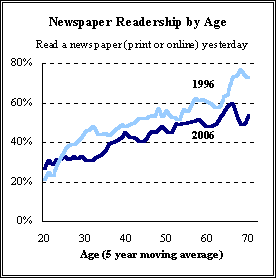
The overall drop in newspaper readership over the past decade is most visible in older age categories, even when online newspaper readership is factored in. The percentage of people ages 30 to 49 who read a newspaper on a typical day has declined from 49% to 40% since 1996. Among 50 to 64 year-olds there is a comparable drop from 58% in 1996 to 50% today. And in 1996, fully 70% of Americans age 65 and over read a paper on a typical day, compared with 58% currently.
Because of these changes, the “generation gap” in newspaper readership is smaller today than it has been in at least the past two decades. Currently, Americans ages 18 to 29 are exactly half as likely as those ages 65 and older to read a paper on a typical day (29% vs. 58%). In 1996, the age divide was much larger (29% vs. 70%). However, the narrowing gap has more to do with falling readership among seniors than growing readership among the young.
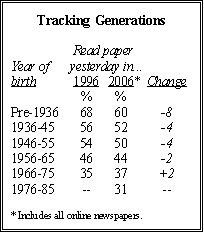
Americans born prior to 1936 who are in their 70s or older today are less likely to read a newspaper on a typical day than they were 10 years ago when most were in their 60s. Roughly the same percentage of people now in their 60s read a newspaper as when they were when they were in their 50s, and the same is true for people now in their 50s. Among people born between 1966 and 1975, who are currently in their 30s, there has been a slight uptick in newspaper readership 37% read a paper on a typical day, up only slightly from 35% when they were in their 20s.
Online Papers Not Attracting Less Educated
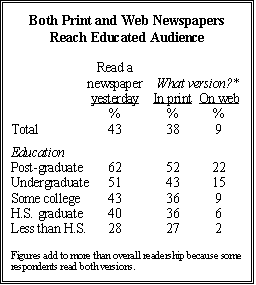
One factor limiting the power of the internet to greatly expand the newspaper audience is that, in socioeconomic terms, the people who read the newspaper online are largely the same people who tend to read the paper in print.
The largest audience for online newspapers are the most educated Americans nearly a quarter (22%) of people who have had at least some post-graduate education read an internet newspaper on a typical day, compared with 15% of college graduates with no postgraduate training; 9% of those who attended some college; 6% of high school graduates; and just 2% of adults who have not finished high school. Because of this pattern, web newspapers contribute greatly to the overall readership of the most educated 62% of people with post-graduate education read a newspaper on a typical day but does little to increase the use of newspapers among those with less education.
Web Broadens Reach of National Papers
While the web has not grown the overall newspaper audience, it has significantly broadened the public’s access to some of the major national newspapers that they might otherwise not read on a regular basis. Among people who read only the print version of the newspaper, very few are reading the New York Times (2%), Washington Post (2%) or USA Today (3%). But people who read newspapers online are far more likely to read these papers. Fully 18% of Americans who read a paper online yesterday read the New York Times, 9% read the Washington Post online, and 7% read the USA Today online.
By comparison, local papers have had less success reaching online readers. Fewer than half (46%) of the readers who went to newspaper websites yesterday visited the website of a local newspaper, compared with 92% of those who read only the print newspaper.
Most Visiting the Homepage
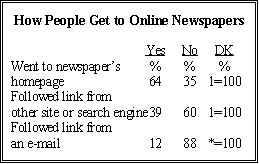
There are a number of ways people arrive at newspaper websites, some of which are indirect. The main access point for online newspapers is a paper’s homepage. Roughly two-thirds (64%) who visit a newspaper website on a typical day go to a paper’s homepage to browse or look for something.
Four-in-ten (39%) report following links to specific newspaper articles from other websites or search engines, most of which bypass the paper’s homepage and go directly to the story of interest. Fewer (12%) report reading the newspaper yesterday based on e-mailed links from friends or associates. Many who read newspapers online arrive there through more than one of these routes, though as many as one-in-four on a typical day read access newspaper websites only through links from other sites or e-mails, rather than going directly to a newspaper homepage.
What Sets Newspapers Apart?
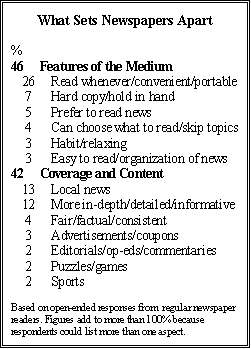
When asked to describe what sets newspapers apart from other news sources, about half of readers cite the usability of the paper itself, while somewhat fewer point to characteristics of the news content. Among the former, most references are to the convenience of the physical newspaper the ability to read it any time and any place, and the preference for reading hard copy over audio or video presentations. “I can have a cup of coffee and look at the headlines and if it’s interesting I read it,” said one reader. “It’s convenient to be able to read it anywhere,” said another.
[the stories]
Many readers also favor newspapers for their content. In particular,13% say that coverage of local news is what most sets newspapers apart from TV, radio and the internet, and 12% say that newspapers provide more in-depth, detailed and informative coverage than other sources. The emphasis on in-depth coverage is viewed as a feature both in terms of content and format by many readers. As one put it: “You can get a little more in-depth and you can take your time without someone throwing it all at you at once.” Said another, “You can go over it more slowly, and it contains more information rather than TV and radio where they give you an overview, while print media gives you a fuller aspect.” “There is usually deeper coverage that is more detailed. And there’s a leisure…I can set it aside and go back and read it.”
Newspapers’ Negatives
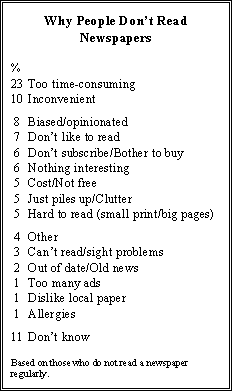
People who do not regularly read the paper mostly see it as time-consuming, as compared with TV, radio and the internet. In addition, newspapers are seen as inconvenient by many either relative to the ease of watching TV, surfing the web, or listening to the radio, or in terms of the hassles of subscribing and having newspapers piling up around the house.
Fewer mention what’s in the paper as what they like less about newspapers than other news sources. Some say they think their local paper is biased and unreliable, and others complain that there is just nothing that interests them in the newspaper.
Overall, nearly half of all Americans (47%) say they spend less time reading the newspaper these days, compared with 40% who say they are spending more time with the paper. Like people who have stopped reading newspapers regularly, people who say they are spending less time with the paper mostly mention time constraints, while many say they can get the same information elsewhere. Relatively few cite dissatisfaction with the newspaper content as the reason they are reading less.
For the most part, criticism of newspaper content is not widespread. When asked about the quality of the newspaper with which they are most familiar, 38% say it has gotten better, 27% worse (virtually identical to measures taken ten years ago in 1996). Among those happy with the development of their regular paper, most refer to broader and more in-depth coverage than in the past. Among those who see their paper in decline, there is a range of concerns. Many say the paper they are most familiar with is biased in its coverage of events, while others criticize the paper for being too narrowly focused and shallow. Some also feel the quality of reporting and overall credibility of the paper has worsened.
Relaxing with the Paper
Newspaper readers are considerably more likely to describe reading the paper as “relaxing” than are users of other news sources. Fully 57% of regular readers say it is relaxing to read the paper, compared with just 44% of radio news listeners, 41% of television news viewers, and 33% of those who get news online. This positive association with reading the newspaper spans generations, with younger readers as almost as likely as older ones to describe newspaper reading as relaxing.
A majority of newspaper readers (62%) also say that reading the paper is a habit for them. Nearly as many regular television news viewers say watching TV news is a habit (59%), but smaller percentages of regular radio news listeners (54%) and internet news consumers (50%) express this view.
Large majorities of news consumers regardless of source cite information they need to know as a factor in their news choice. By comparison, only about four-in-ten regular consumers of TV and internet news (42% each) and newspapers (40%) describe getting the news as “a way to pass the time.” But somewhat more radio news listeners (53%) say it is a way to pass the time for them.
What Sets Internet News Apart
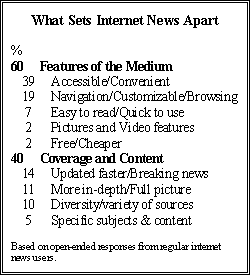
While newspapers stand out in readers’ minds for being relaxing, slow-paced and thorough, the characteristics that set the internet apart as a source of news are speed and convenience. Most internet news users cite some aspect of the usability of the medium as the defining feature of the web its accessibility, navigation features that allow customization, searching and browsing, and the speed with which information can be accessed. A number of online news consumers emphasized that “It’s at my fingertips.” Others echoed that sentiment: “I just point and click,” “It’s all in one place,” and “My home page has the top stories of the day and it is easy and quick to get them.”
Many users also cite the ease with which information can be gathered online. “I can navigate it easier and it’s free,” said one regular internet news consumer. Some particularly like the web for the ability to seek out what they are personally interested in. “It is easier to look up what I want and find it without having to read through everything in the newspaper.” Others enjoy browsing: “When I go online it’s going on the top of the screen and I can stop and read whatever catches my eye.” Many also see the internet as a reference page: “It’s a research tool.” “You can look up anything anytime you want, even past news.”
Even online news consumers who mention content as setting the internet apart focus on the speed of the medium. You can “get alerts as things occur,” said one, while others offered similar comments the internet is “frequently updated,” and “more up to date” than other sources. As with newspapers, some extol the depth of internet news coverage. It has “better information” and gives “access to things that are not available elsewhere.” But unlike newspapers, web users note the diversity of sources as a key feature of the web. People feel they can “read several opinions,” “compare different sources,” and get a “variety of perspectives” online.
Very few internet news users cite the medium as standing out for its coverage of specific subjects in the news or any other content that is unique to web news. This is quite different from newspapers, which stand out in readers’ minds for local news coverage, or television, which provides local, weather, and other content of note.
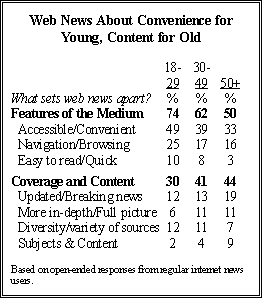
The emphasis on convenience, navigation and ease of use is particularly evident among younger web news consumers. Nearly three-quarters of younger people getting news online describe its advantages in terms of being more accessible and convenient, or the appeal of being able to search, browse and get to news more easily. About half of web news consumers ages 50 and older emphasize convenience and ease of use to describe what sets the web apart as a resource. These users focus instead on what content the web covers, including the internet’s advantage in allowing people to stay on top of breaking news.
What Sets Television News Apart
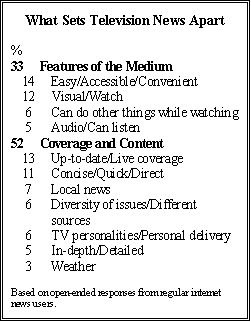
Unlike newspapers and the internet, there is no single feature which sets television news apart from other sources. As with the other sources, many TV news viewers do cite characteristics of the medium that make it easy and convenient, such as that they prefer the visual aspect of the news and the fact that you can do other things while the news is on. Many others note aspects of TV news coverage that it is more “up to date” and can provide live coverage of events as they are happening. Many also like television news for its ability to summarize the important parts of the news quickly. As one viewer put it, “It’s brief, concise, and has all the information I need in thirty minutes.” Another said, “It gives you the highlights of the day without taking too much of your time.”
Many TV news viewers also point to specific elements of news content as the most outstanding characteristic. Some say it is local news coverage or weather coverage that stands out. Others refer to specific TV personalities, programs, or the fact that the news is delivered in a more personal way.
TV, Newspapers Fill Different Niches
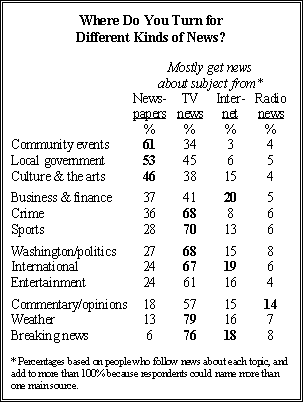
Television news is the main source of information on most subjects for most people, but newspapers, the internet, and radio fill important niches on certain subjects. Television’s position as the “go to” source is particularly notable when it comes to national and international news where more count on TV for information than all other sources combined. Two-thirds of Americans who follow international news (67%) say they get most of their news from television, compared with 24% who mostly rely on newspapers. These margins are roughly the same (68% vs. 27%) for news about people and events in Washington.
Where newspapers stand out is on local and community news. Most who follow news about people and events in their community (61%) say they get most of their news from newspapers, nearly twice as many as cite television (34%) as their main source. Similarly, 53% who follow local government news cite papers as their main source, compared with 45% who rely mostly on television news.
Newspapers are also a significant source among people who follow business and finance 37% of whom get most of their news from papers, 41% from television, and 20% from the internet.
Both business and international news are topics that many turn to the web for to stay informed. One-in-five business news consumers cite the web as their main source of information, as do 19% who follow international news. The internet also stands out as a source for breaking news 18% say they get most of their breaking news online. But 76% say television is where they most often receive breaking news reports.
Most Americans say they are not interested in getting commentary and opinions on the news, but among those who are, television is the place they most often turn. Just over half (57%) say they mostly get news commentary and opinions on TV, compared with 18% who turn to newspapers and 15% the web. News commentary is a topic that stands out for radio news broadcasts 14% of those who are interested cite radio as their main source, far more than cite radio as the main source of any other news topic.
While the sports section is often cited as a feature of newspapers some people like, newspapers have a difficult time competing with television as the main source for sports news. While one-in-three Americans do not follow sports news at all, among those who do the vast majority (70%) say they get most of their news from television, compared with just 28% who cite newspapers as their main source. Even fewer (13%) say they get most of their sports news on the web.
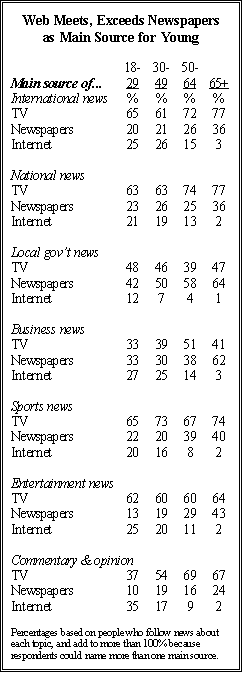
There is a stark generational divide over where people turn for most of their news, with younger people not only in their teens and twenties but thirties and forties as well increasingly turning to the internet to follow certain subjects. One-in-four Americans under age 50 who follow international news say they get most of their information online. This is greater than the number who count on newspapers to stay informed about the world. Similarly, roughly twice as many young people turn to the web for entertainment news as read newspapers for this information (25% vs. 13%).
Where younger and older Americans turn for business news is particularly revealing of the mix of sources that younger generations utilize. A third of those under age 30 get most business news on TV; another third turn mostly to newspapers; and 27% rely mostly on the web. By comparison, people ages 50-64 mostly rely on TV for business news, and most people ages 65 and older count on newspapers to keep up with what’s going on in the business world.
The web has also become a major source of opinion pieces for the minority of younger people interested in commentary. While 54% of Americans, and 65% of those under age 30, say they are not interested in news commentary and opinions, among the minority who are the internet has become a major source for the young. Roughly a third (35%) of under-30 internet news consumers get most of their news commentary and opinion online, far more than in any other age category.
Newspaper Readers Seeking Local News
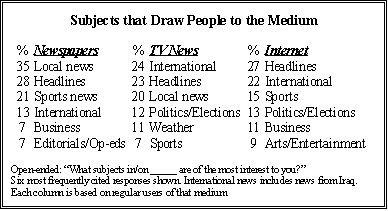
Further evidence of the way Americans associate newspapers with local news rather than national or international news is seen in how readers and viewers describe the topics that most interest them from each source. In short, people have different subjects in mind when they think about what each news medium provides for them. Among regular newspaper readers, more than a third (35%) say the subject in the paper that most interests them is local news. By comparison, 20% of TV news viewers cite local news as the main subject that draws them in, and just 6% of internet news consumers say the same.
International news is a topic more closely associated with TV and the web than newspapers. Nearly a quarter (24%) of regular viewers say international news is what interests them most on television broadcasts the single most cited subject. This includes 10% who say that news about Iraq is what most interests them in TV news. Roughly the same number of online news consumers (22%) cite international news as the most interesting topic they follow online.
Newspapers From Front to Back
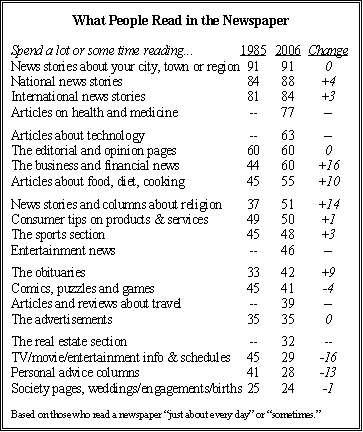
While local news coverage stands out as the subject that sets newspapers apart from other sources, it is not the only section of the paper that readers look at. Nine-in-ten people (91%) who say they often or sometimes read a newspaper spend at least some time on news about their city, town or region, but 88% say the same about national news stories, and 84% spend time reading international news. These figures and the standing of local, national and international news as the most read parts of the newspaper are unchanged from measures taken twenty-one years ago by the Pew Research Center.1
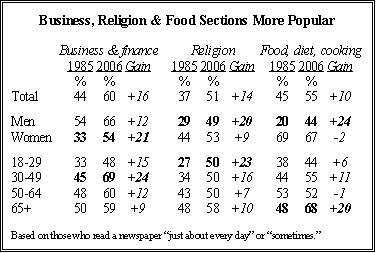
Three sections of the newspaper have grown significantly more popular since 1985: business and financial news, news about religion, and articles about food, diet and cooking. Today, 60% of those who say they read a paper almost every day or sometimes say they spend at least some time reading business news, up from 44% in 1985, and interest among female readers has risen particularly sharply. While men remain considerably more likely to read the business section (66% vs 54% of women), the gender gap has closed from a 54% to 33% difference in 1985.
About half (51%) of those who often or sometimes read a paper spend time on stories and columns about religion, up from 37% two decades ago. Here, the increased interest is mainly from men and younger people, closing what were sizable gender and age differences on this subject. In 1985, women were far more likely than men to spend time reading religion stories and columns, but rising attention to these stories among men has virtually closed the gap. Similarly, the share of 18-29 year-olds who read religion stories has nearly doubled (from 27% to 50%) and younger readers now express nearly as much interest in these stories as do older readers.
Articles about food, diet and cooking also are read by more readers today than in 1985. Here again, the gender gap has narrowed substantially, as men are twice as likely to read stories on this topic today (44%) as they were in 1985 (20%). Despite no change in women’s attention to these stories, they remain significantly more interested than do men (67% vs. 44% of men). Attention to food, diet and cooking articles is also up among seniors, as 68% of readers age 65 and older spend at least some time on this topic, up from 48% in 1985.
Two parts of the newspaper are read significantly less today than in 1985. Just 29% say they spend time reading information and schedules for TV shows, movies and other entertainment, down from 45%. And just 28% read personal advice columns, down from 41%. Declining interest in advice columns is steepest among women 34% of whom spend a lot or some time reading, down from 54% in 1985.
Some subjects not tested in 1985 rank high in interest among readers today. Three-quarters of newspaper readers say that they spend time reading articles on health and medicine, and 63% read articles on technology in the newspaper. Travel (39%) and real estate (32%) are far lower on the list.
Who’s Reading What Sections?
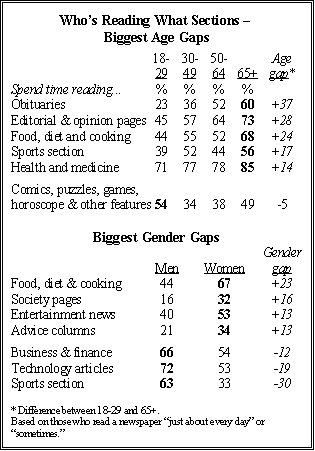
The only sections of the newspaper that younger readers spend more time on than their seniors are features such as comics, puzzles, games and horoscopes. More than half (54%) of readers age 18-29 spend time on these parts of the paper, compared with just 34% of readers age 30-49 and 38% of those age 50-64.
There are a number of other sections with the reverse pattern more attention from older than younger readers. This is particularly the case with the obituaries, editorial pages, and food, diet and cooking articles. The gap is largest when it comes to obituaries, which most young readers skip entirely and most readers ages 65 and older follow. Younger readers also express notably little interest in newspaper editorials and opinion pages. Most readers who are under age 30 either skip the editorial pages entirely (35%) or just glance at them (17%), just 15% spend a lot of time reading the op-eds. By comparison, most readers ages 65 and over either spend a lot (45%) or some (28%) time reading the editorials & opinion pieces.
Section 3: Attitudes Toward the News
A narrow majority of Americans say they enjoy keeping up with the news “a lot,” and this attitude is one of the strongest predictors of how much news people actually seek out. Enjoyment of the news has been very stable over the past dozen years. About one-third (34%) say they enjoy keeping up with the news “some,” while the rest say “not much” or “not at all.”
Enjoyment of the news is somewhat greater among those with higher levels of education, but the differences are not dramatic; 61% of college graduates enjoy the news a lot, compared with 53% among those with some college experience and 47% among high school graduates. Greater differences are seen by age, with young people least likely to say they enjoy the news (38% among those under 30 years of age), and older people most enthusiastic (59% among those age 50 and older).
Two other constraints on the public’s appetite for news are also long-standing and are each shared by about four-in-ten people: lack of time to follow the news, and a lack of background information with which to interpret the news. Overall, 38% of the public agrees with the statement that “I am often too busy to keep up with the news,” while 60% disagree. And 38% say they lack the background to follow news stories; 59% disagree.
Being too busy for the news is a greater obstacle for younger people than for older ones, but there is little difference across age groups in the feeling that one lacks the background to keep up with the news. Lack of background knowledge is a bigger problem for the less educated (44% among those with a high school education, compared with just 29% of those with a college degree).
Most people express little concern about “information overload.” Just 28% say they feel overloaded with information, “considering all the TV news shows, magazines, newspapers, and computer information services.” By contrast, 64% say they like having so much information available. The balance of opinion on this question has changed very little s
ince it was first asked in 1995, at the dawn of the internet age.
News also has a social value, giving people something to talk about with family and friends. Roughly three-quarters of Americans (76%) either completely agree (32%) or mostly agree (44%) with the statement: “I often talk about the news with family and friends.” This practice is widely shared; although young people get less enjoyment from following the news, they are only slightly less likely than older Americans to say they talk about it with friends and family.
News From Your Point of View?
In the eyes of many news consumers, the news media are largely undifferentiated in terms of trustworthiness 45% say this though a small majority (52%) says that they trust some news sources more than others. There has been little change in these views over the past two years. Compared with the less educated, better educated people are far more likely to say they trust some sources more than others; 66% of those with a college degree say this, compared with just 44% of those with a high school education. People who enjoy keeping up with the news are also more likely to see differences among news sources.
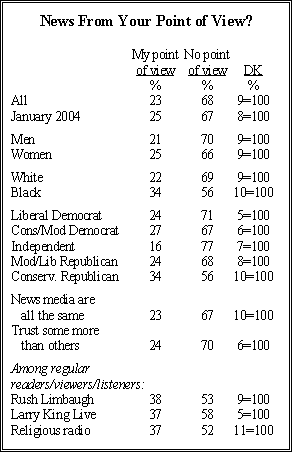
But a preferences for some sources over others does not mean that people are looking for a particular slant to the news. In fact, a large majority of the public continues to say that they prefer getting news from sources that don’t have a particular point of view 68% in the current poll, unchanged from two years ago. Only about a quarter (23%) say they prefer getting news that shares their point of view.
Conservative Republicans (at 34%) are more likely than other partisans to say they prefer news with a point a view, and independents are least likely to do so (at 16%). Regular news audiences for most sources and programs do not differ much on this question, though a few stand out as especially interested in news with a point of view. The regular audiences for Rush Limbaugh (38%), Larry King Live (37%), and religious radio programs (37%) are all significantly above the average in preferring news with a point of view.
Audiences Remain Divided along Party Lines
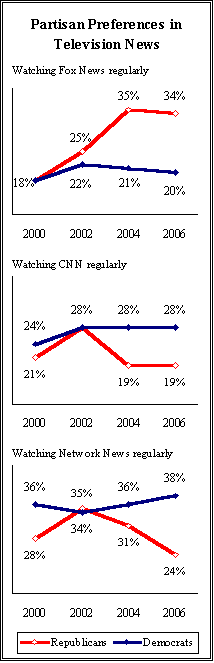
News audiences for cable television news became more polarized along partisan and ideological lines between 2002 and 2004. That polarization remains but has not increased since 2004. Republicans are still much more likely than Democrats to say they regularly watch the Fox News Channel (34% for Republicans, 20% for Democrats), while Democrats are more apt to turn to CNN (28% vs. 19% for Republicans).
But there has been a modest increase in partisan polarization for other news sources. The gap between Republicans and Democrats in regular viewership of the nightly network news on ABC, CBS, or NBC is now 14 points, nearly three times as large as it was in 2004; currently, 38% of Democrats regularly watch compared with 24% of Republicans. There is a slightly smaller gap in the regular audience for NPR 22% of Democrats listen regularly, compared with 13% of Republicans.
The general pattern for network news, CNN, and NPR is also seen with many other news sources. More Democrats than Republicans say they regularly watch a wide range of different news programs. There is a five-point partisan gap in regular viewing of local television news (59% for Democrats, 54% for Republicans), and five and nine-point gaps, respectively, in the audiences for the networks’ news magazine shows and morning news shows. More Democrats than Republicans also regularly watch Sunday morning talk shows (15% vs. 10%). Nearly twice as many Democrats as Republicans (7% vs. 4%) are regular viewers of the News Hour with Jim Lehrer. And Democrats also outnumber Republicans among regular viewers of the Daily Show with Jon Stewart (by 10% to 3%).
Republicans are more numerous among the regular audiences of The O’Reilly Factor; 16% of Republicans say they watch the show regularly, compared with 5% of Democrats. And there is an even more lopsided disparity among the audience for Rush Limbaugh: 10% of Republicans say they listen regularly, compared with just 1% of Democrats.
News Audiences and Ideology
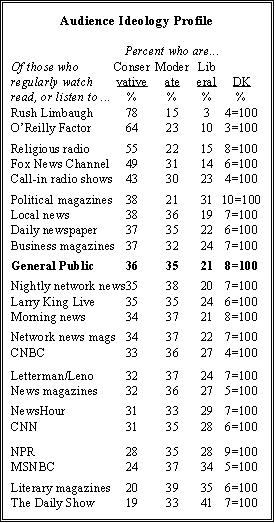
General-interest news organizations that command large audiences do so in part by appealing to viewers and readers across the ideological spectrum. The regular audiences for local television news, local newspapers, the network nightly news, and network magazine and morning news programs each have about the same number of conservatives, moderates, and liberals as in the public at large. So too do business magazines and the Larry King Live show on CNN.
Although conservatives outnumber liberals by 36% to 21% in the public, the regular consumers of the Daily Show, literary and political magazines such as The Atlantic and The New Yorker, and the MSNBC cable channel are significantly more liberal than conservative. Liberals and conservatives are equally numerous in NPR’s audience, and among regular viewers of the NewsHour and CNN.
At the other end of the spectrum, the audiences for Rush Limbaugh and the O’Reilly Factor are overwhelmingly conservative. Conservatives greatly outnumber liberals in the regular audiences for religious radio and for the Fox News Channel.
Moderates, who constitute 35% of the general public, are in short supply among regular readers of political magazines such as the Weekly Standard and The New Republic, where they are 21% of the readership. In addition, moderates make up a relatively small proportion of the regular audiences for religious radio (22%), the O’Reilly Factor (23%), and Rush Limbaugh’s radio show (15%).
Section 4: Audience Segments
Majorities of Americans say they follow local news (57%) and national news (55%) most of the time, not just when important events occur. But the opposite is true for international news just 39% say they follow overseas news most of the time, compared with 58% who follow it only when something important happens.
That represents a significant shift from 2004, when 52% said they followed international news most of the time. However, the current measure is consistent with findings from earlier news consumption surveys.
The spike in regular attention to foreign news in April 2004 came during a particularly tumultuous period in Iraq. Since then, interest in news from Iraq has fallen, as has the percentage saying they regularly track overseas news.
Notably, interest in foreign news has declined most among many of the same demographic and political groups that showed the biggest increases two years ago. The percentage of women saying they follow international news most of the time rose from 32% in 2002 to 51% in 2004; since then, it has fallen to 34%, which has led to a reopening of the gender gap on this measure.
Similarly, educational differences in the regular audience for international news have re-emerged. Half of college graduates say they follow overseas events most of the time, compared with a third of those with a high school education or less. And while regular interest in foreign news increased more among Republicans than Democrats or independents between 2002 and 2004, it also has fallen much more among Republicans since then.
Where Foreign News Consumers Go
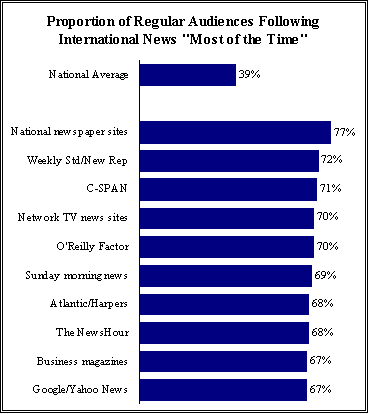
Several news outlets stand out for their success in attracting news consumers who follow international news most of the time, and not just when something important happens. The websites of major national newspapers such as USA Today.com, New York Times.com, and the Wall Street Journal online have especially large numbers of regular foreign news consumers. More than three-quarters (77%) of those regularly visiting such sites say they follow international news most of the time regardless of whether something important is happening.
Other internet audiences disproportionately drawn to foreign news include those of network TV news sites such as CNN.com, ABCNews.com, and MSNBC.com (70%), as well as those who regularly visit websites such as Google News, AOL News, and Yahoo News (67%).
Among television news sources, C-SPAN (71%), Sunday morning interview programs (69%), the O’Reilly Factor (70%), and the NewsHour (68%) have especially large numbers of international news consumers. In the print media, political magazines such as the Weekly Standard and the New Republic (72%) and literary magazines such as The Atlantic, Harpers, and The New Yorker (68%) stand out for their high proportion of foreign news consumers. But so too do business magazines such as Fortune and Forbes (67%).
Weather Tops News Interests
The overall pattern of public news interest has remained fairly steady over the years, although there have been recent declines in interest in both news about international affairs and news about political figures and events in Washington, DC. Fully half of Americans say they track weather news very closely, by far the highest percentage for any subject listed.
The percentage who say they follow news about international affairs (17%) is now at its lowest point since 2000 (14%). Similarly, the percentage tracking political news very closely has fallen from 24% two years ago to 17%. The current measure is even a bit below the 21% recorded in 2002, the most recent midterm election.
The News Gender Gap
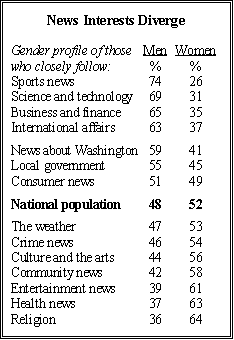
Men and women not only go to different places for news, but the topics they follow are often different as well. Men dominate the audience not only for sports news but also for news about science and technology, business and finance, and international affairs. More men than women are also found among those who closely follow news events and people in Washington, DC, as well as among those who say they pay close attention to news about local government.
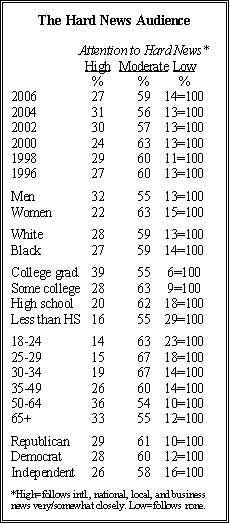
But women greatly outnumber men among those who closely follow news about religion, health, and entertainment. They are also disproportionately represented among those paying close attention to community news and to news about culture and the arts. Men and women are about equally likely to be found among the audiences for crime, weather, and consumer news. The upshot of these differences is that men are significantly more likely to be regular consumers of “hard news” 32% vs. 22% for women. This orientation is reflected in their choices among different kinds of news media and in preferences among specific sources.
Men are significantly more likely than women to regularly turn to the internet, to radio news, talk radio, and to newspapers. By contrast, women are substantially more likely to regularly watch morning network news shows, and are somewhat more likely to turn to television news in a variety of forms.
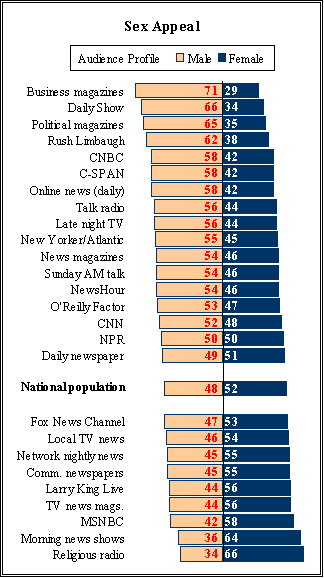
Looking at specific news outlets and sources, men significantly outnumber women in the regular audiences for business magazines, political magazines such as The Weekly Standard and New Republic, Rush Limbaugh’s radio program, and also the Daily Show with Jon Stewart. For each of these, men constitute more than 60% of the audience. Men are also significantly more numerous (at 58%) among the regular viewers of CNBC and C-SPAN and among daily internet news consumers. They are also disproportionately represented in the audience for talk radio, for literary and political magazines such as the Atlantic and New Yorker, and for late night television.
By contrast, women constitute a much larger share of the audience for religious radio (66% of the regular audience), the morning network television news shows (64%), and for the MSNBC cable channel. They also outnumber men among the regular audiences for TV news magazine shows such as Dateline and 60 Minutes, and for Larry King Live.
Knowledgeable News Audiences
News audiences vary widely in age, education, and how much they know about what’s going on in the nation and the world. Most regular consumers of news are better informed, better educated, and older than the average American. But the audiences for some news sources stand out in this respect.
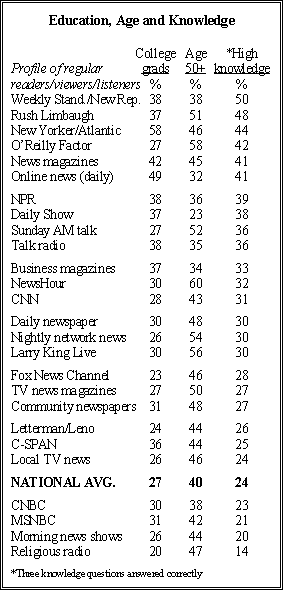
Judged by their answers to three news knowledge questions1, the most informed audiences belong to the political magazines, Rush Limbaugh’s radio show, the O’Reilly Factor, news magazines, and online news sources. Close behind are the regular audiences for NPR and the Daily Show.
Audiences with the highest educational achievement, by far, are the literary magazines and online news outlets. Readers of news magazines, political magazines and business magazines, listeners of Rush Limbaugh and NPR, and viewers of the Daily Show, and C-SPAN also are much more likely than the average person to have a college degree.
Some of these attentive and educated audiences also are older than average. The oldest audiences belong to the NewsHour (60% age 50 or older), the O’Reilly Factor (58%), Larry King Live (56%), network nightly news (54%), and Sunday morning talk shows (52%). The youngest audience though also one of the most knowledgeable belongs to the Daily Show, where just 23% are age 50 or older and 33% are under age 30.
After growing modestly between 2000 and 2004, the attentive audience for political, international, and business news commonly referred to as “hard news” is somewhat smaller in 2006. Currently, 27% of the public follows each of four kinds of stories, including news about political figures and events in Washington, international affairs, business and finance, and local government. Two years ago, this hard news audience accounted for 31% of the public. The decline was greater among Republicans (now 29%, down from 38% in 2004) than among other groups. Republicans and Democrats (28%) now exhibit similar enthusiasm for hard news.
The hard news audience is better educated and older than the average, though even among people with four year college degrees, fewer than a majority (39%) fall into this category. More men than women (32% vs. 22%) are hard news enthusiasts. There is no significant racial difference on this measure.
Section 5: Media Credibility
No Outlet Stands Out as Most Reliable
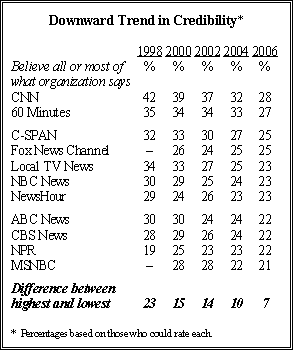
Since the mid-1980s, Americans have become increasingly skeptical of what they see, hear, and read in the media, and almost no major news outlet has escaped this trend. For many media outlets there has been little change in public evaluations in the last four years, but ratings for some continue to inch downward.
As a consequence, there is far less variance in public views of the credibility of major news organizations than in the late 1990s. Some of the sources that were viewed as the most credible then have seen their numbers fall substantially, and today no news organization stands out from the crowd as a significantly more reliable source of information.
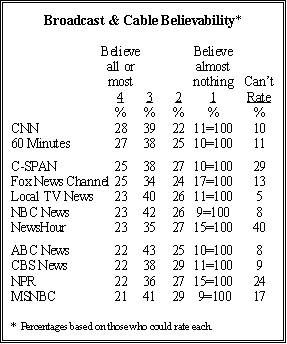
Changing public views of CNN perhaps best exemplify these trends. In 1998, 42% of those familiar enough with CNN to rate the network said they believed all or most of what CNN reported, significantly more than for any broadcast or cable news outlet tested. Today, just 28% give CNN the highest believability rating, a share which is statistically indistinguishable from most other television news sources.
Other TV news sources, such as 60 Minutes, C-SPAN, and local news stations, have seen similar declines in credibility over the past decade and no longer stand apart as significantly more reliable than other sources.
One of the few sources that has not suffered a credibility decline in recent years is Fox News Channel. Currently, one-in-four (25%) say they believe all or most of what they see on Fox News Channel, virtually unchanged since the outlet was first tested in 2000. This overall stability, however, belies the increasingly polarized views of the cable channel. An increasing number of Republicans give Fox News Channel the highest rating for believability, while there has been a comparable decline in ratings among Democrats doubling the partisan gap in views of the network’s credibility between 2004 and 2006.
Credibility ratings for the three major broadcast networks are comparable currently fewer than a quarter believe all or most of what they see on NBC News (23%), ABC News (22%) or CBS News (22%). As recently as 2000, closer to three-in-ten rated news from these sources as highly credible, though the networks’ ratings have stabilized in the past few years.
It is worth noting that for all major broadcast sources, most Americans generally give positive credibility ratings (a “3” or “4” out of a four-point scale). But the share who say they generally do not believe what they see and hear has grown across the board. On balance, CNN receives more positive than negative ratings by a margin of two-to one (67% vs. 33% among those who gave a rating), but this is down from a nearly five-to-one margin (82% vs 18%) in 1998.
Print Sources
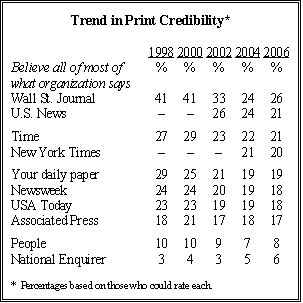
There is little change in opinions of the credibility of most print news sources compared with two years ago, though as with TV and radio, there has been no recovery from a long, downward trend. Just 19% say they believe all or most of what is printed in their daily newspaper, down from 25% in 2000, but unchanged from 2004. And while the Wall Street Journal remains one of the most believable print outlets, the share who gives it the highest credibility rating fell from 41% in 2000 to 24% in 2004, and stands at 26% today.
The New York Times receives roughly the same credibility rating as other print news sources, but it also has more than its share of strong detractors. While 20% say they believe all or most of what they see in the New York Times, nearly as many (18%) say they believe almost nothing, significantly higher than for other major print news outlets.
Despite steep declines in credibility for such sources as CNN and local news, television sources continue to be rated somewhat higher for credibility than print news sources. Seven of the 10 television news sources tested are rated as highly credible by 23% or more who rate them. By comparison, seven of the eight print news sources tested receive the highest marks for credibility by 21% or fewer who offer ratings.
Partisanship Evident
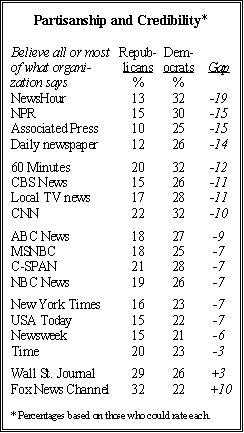
Republicans express less confidence than Democrats in the credibility of nearly every major news outlet, with the exception of Fox News Channel. Among TV and radio sources, the partisan gap is particularly evident for the NewsHour with Jim Lehrer and NPR Democrats are twice as likely as Republicans to say they believe all or most of what these outlets report, placing them among the most credible sources for Democrats, and among the least credible for Republicans.
At the other end of the spectrum is Fox News Channel, which receives the highest credibility rating among Republicans and one of the lowest ratings among Democrats. Nearly a third of Republicans (32%) rate Fox News Channel as highly credible, far more than say the same about its major competitors CNN (22%) or MSNBC (18%). For Democrats, the believability of cable news sources is virtually the reverse just 22% believe all or most of what they see on Fox, compared with 25% for MSNBC and 32% for CNN.
Party differences also are substantial for daily newspapers as well as for the Associated Press a major provider of newspaper content. Just 10% of Republicans who could rate the AP said they believe all or most of what the wire service reports, compared with 25% of Democrats. Similarly, 12% of Republicans give their daily newspaper the highest rating for credibility, compared with 26% of Democrats.
Democrats More Skeptical
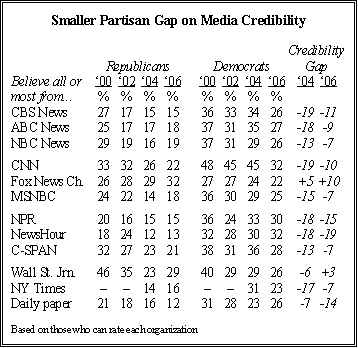
Despite the substantial partisan differences in credibility ratings, the gap has narrowed since 2004 for many major outlets. This has occurred largely because Democrats see many news sources as less credible now than they did two years ago, including CNN, the major television networks, and the New York Times. At the same time, the credibility of nearly all of the sources remained statistically unchanged for Republicans.
In 2004, 45% of Democrats gave CNN the highest ratings for credibility, compared with 26% of Republicans. There has been a 13-percentage point drop in views of CNN’s credibility among Democrats in the past two years, significantly shrinking the difference in opinion across party lines. The same is true for both CBS News and ABC News, which Democrats rate eight percentage points lower today than in 2004; again, Republican views have remained largely unchanged. And currently just 23% of Democrats give the New York Times the highest believability rating, down from 31% in 2004.
Section 6: Other Findings
Cell Phones, DVDs, DVRs on the Rise
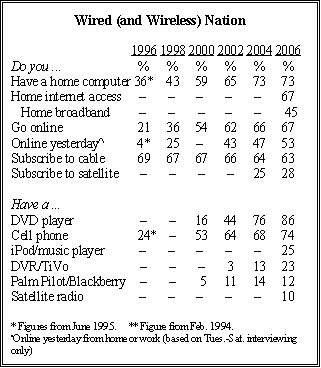
Americans own a wide and growing array of electronic devices and services for communication and entertainment. The vast majority of households (86%) have a digital video disc (DVD) player, and nearly as many (82%) subscribe to cable or satellite television services. The digital video recorder (DVR or TiVo), owned by just 3% of respondents four years ago, is now found in nearly one-quarter (23%) of households. A similar number of respondents (25%) report having an iPod or other digital music player, and 10% report having a subscription to a satellite radio service such as XM or Sirius.
The number of Americans who have a home computer has remained stable over the past two years (73% in both years), but the number who go online has edged upward, with 67% now reporting that they do this and 53% reporting having done so yesterday from either home or work. Moreover, the number who go online from home with a high-speed internet connection has been rapidly rising and now constitutes nearly half of the public (45%). But there has been no growth in the number who say they have a Palm Pilot, Blackberry, or other similar product (12% this year, 14% in 2004).
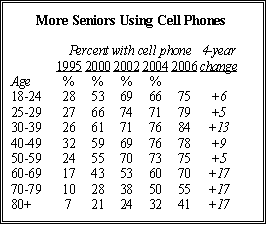
Cell phones are also becoming more common, with nearly three-quarters of Americans (74%) reporting that they have one. Men and women are equally likely to report having a cell phone, and the percentage of senior citizens with cell phones continues to climb very rapidly. Among Americans 60 and older, 59% now have a cell phone.
Portable Electronic Devices: New Gateway for News?
Many of the portable electronic devices that Americans use are capable of playing prerecorded news and commentary or receiving news headlines or stories. Among cell phone users, 6% say they receive news headlines or read news reports on their cell phones, and about half of those do so at least a few times a week. Nearly one-in-five people with a PDA (18%) receive news on these devices. And among those with an iPod or other portable music player, 8% say they listen to news podcasts, including 5% who do so at least a few times a week.
A relatively small number of Americans about 7% of the general public are getting news via one or more of these types of electronic devices, with just 4% doing so at least a few times a week. But among some groups in the population, the numbers are substantially higher. For example, among young men (ages 18-29) nearly one-in-five (19%) report getting news this way, as do 15% of African Americans and 13% of Hispanics.
One other technology that may help the on-the-go American stay informed is the DVR. Nearly one-in-five DVR owners (17% or approximately 4% of all households) say they have their DVR programmed to regularly record a news program.
Public’s Knowledge
A solid majority of Americans know a key fact about the current political environment: 64% can correctly identify the Republicans as the party that has a majority in the U.S. House of Representatives. That is up from 56% in April 2004, but is not as high as in the months after the GOP regained the majority in November 1994.
But fewer people are able to recall the names of two important political figures on the international scene. Just over four-in-ten (43%) can name Condoleezza Rice as the current secretary of state, the same number who could name her when she was appointed to the position following the 2004 election. Slightly more could name her predecessor, Colin Powell, in April 2002 (48%).
Even fewer could name Vladimir Putin as the current president of Russia; 32% accurately recalled his name, down from 37% in late October 2005. His predecessor, Boris Yeltsin, was somewhat better known to the American public, with 44%-50% of individuals surveyed able to name Yeltsin as the president of Russia in polls conducted between 1994 and 1997.
Overall, about one-fourth of the public (24%) knew all three facts, while 28% knew none of them.
There are large differences in knowledge of these three facts across groups in the population. Education is a strong predictor of knowledge for each. There are sizable gender differences as well. Women are 18 percentage points less likely than men to be able to name Rice, who is the second female secretary of state in the nation’s history. There is also a fairly large knowledge gap between whites and blacks on naming Putin, and knowing that the Republicans control the House of Representatives, but a much smaller racial difference in naming Rice (six percentage points). On all three knowledge items, differences between Republicans and Democrats are fairly small.
Cell-Only Households’ News Usage
Survey researchers are increasingly concerned about the growing number of people who cannot be reached on a landline telephone and have only a cell phone, a group estimated by government studies to be 7%-9% of the public. Compared with people who have a landline, these individuals tend to be younger, less affluent, and less educated. These characteristics are also associated with lower levels of news consumption, raising the question of whether studies that rely on conventional random digit dialing samples may be overestimating the true levels of media use.
To evaluate the news usage of the cell-only population, Pew conducted a shorter version of the media consumption survey with a sample of 250 people who have a cell phone but no landline telephone. Respondents were interviewed on their cell phones, using a sample drawn from a nationally representative cell telephone number database. The interviews were conducted May 15 – June 3, 2006.
News consumption for some sources especially newspapers was lower among cell-only respondents than among those with a landline phone. However, when the cell-only respondents are included with the respondents reached on a landline, and this blended sample is weighted to match the full U.S. population demographically and with respect to telephone status, overall estimates of news consumption are affected by an average of less than one percentage point.
Much of the difference between the landline and cell-only samples is a result of the fact that the cell-only group is much younger, on average, than the landline sample. 56% of the cell-only respondents were under 30 years of age, compared with just 14% in the unweighted landline sample. Younger people tend to be much less likely to read newspapers or watch network newscasts. The normal demographic weighting applied to the landline sample helps to compensate for the under-representation of young people, and mitigates the absence of the cell-only population.
This result occurs in large part because younger people accessible by landline are not especially different in media consumption habits from those who are reachable only on a cell phone. On nearly every measure of news consumption, there was no statistically significant difference between 18-29 year olds interviewed on a landline and those interviewed on a cell phone.
These findings are consistent with a Pew report, released in May, which focused on political attitudes. Examining a range of questions, it found that the cell-only trend has not yet seriously undermined public opinion polls that use the random digit dialing method (see “The Cell Phone Challenge to Survey Research“)