Pew Research Center

FOR RELEASE APRIL 28, 2021

At 100 Day Mark: Coverage of Biden Has Been Slightly More Negative Than Positive, Varied Greatly by Outlet Type

About two-thirds of news coverage dealt with Biden’s policy agenda, while about three-quarters of early Trump coverage was framed around leadership skills

FOR MEDIA OR OTHER INQUIRIES:

Communications Department
202.419.4372
www.pewresearch.org

RECOMMENDED CITATION

Pew Research Center, April 2021, "At 100 Day Mark: Coverage of Biden Has Been Slightly More Negative Than Positive, Varied Greatly by Outlet Type"

About Pew Research Center

Pew Research Center is a nonpartisan, nonadvocacy fact tank that informs the public about the issues, attitudes and trends shaping the world. It does not take policy positions. The Center conducts public opinion polling, demographic research, computational social science research and other data-driven research. It studies politics and policy; news habits and media; the internet and technology; religion; race and ethnicity; international affairs; social, demographic and economic trends; science; research methodology and data science; and immigration and migration. Pew Research Center is a subsidiary of The Pew Charitable Trusts, its primary funder.

© Pew Research Center 2026

Table of contents

  • About Pew Research Center
  • At 100 Day Mark: Coverage of Biden Has Been Slightly More Negative Than Positive, Varied Greatly by Outlet Type
  • 1. News coverage of Biden’s early days in office varied across outlet groups, with more focus on policy agenda than leadership, character
  • 2. News outlets with right-leaning audiences used fewer types of sources than those with left-leaning or mixed audiences
  • 3. Comparing early news coverage of Biden with that of past administrations – among a smaller mix of outlets
  • 4. Most Americans have been following news about the Biden administration closely
  • 5. Many Americans say early media assessments of Biden administration were mostly positive, fair and accurate
  • 6. Americans differ by news diet on which Biden administration issues get too much coverage, which get too little
  • 7. Americans more familiar with Biden administration’s proposed minimum wage increase than vaccination goals
  • Methodology
  • Appendix A: Grouping outlets by audience ideology and grouping survey respondents by media diet
  • Appendix B: Detailed tables comparing news coverage of the first 100 days vs. 60 days of the Trump administration in 2017
  • Appendix C: Content analysis detailed tables
  • Acknowledgments

At 100 Day Mark: Coverage of Biden Has Been Slightly More Negative Than Positive, Varied Greatly by Outlet Type

About two-thirds of news coverage dealt with Biden’s policy agenda, while about three-quarters of early Trump coverage was framed around leadership skills

How we did this

Pew Research Center conducted this study to understand the news media coverage of the early days of the Biden administration and Americans’ perceptions of that coverage. The Center has analyzed news coverage of the beginning of each of the five presidential administrations since President Bill Clinton in 1993. The current study is comprised of two components, an analysis of media content and a survey analysis.

The analysis of media content is based on a selection of media coverage collected from Jan. 21 to March 21, 2021. Stories were collected from television, radio, digital and print outlets and coded by a team of nine coders trained specifically for this project. The Center has also conducted similar analyses for the early months of the four prior administrations: those of Donald Trump, Barack Obama, George W. Bush and Bill Clinton. The historical comparison is conducted across a smaller universe of outlets that existed during all five study periods, representing a mix of print publications and network evening news. For more details, see the methodology.

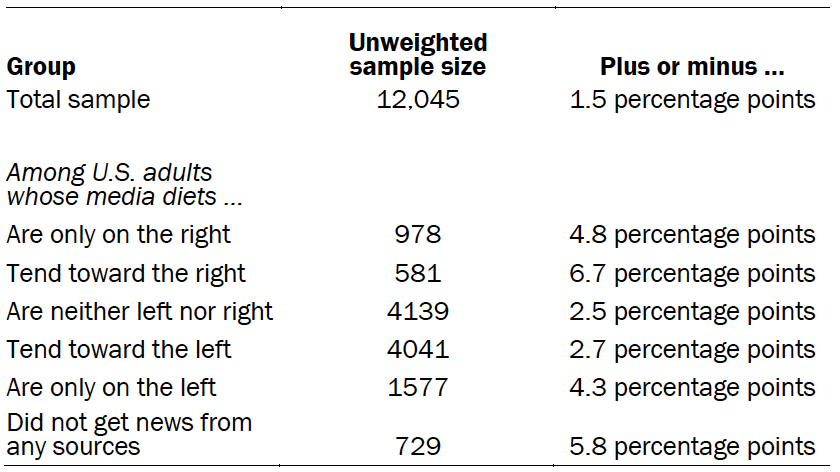
For the survey analysis, we surveyed 12,045 U.S. adults from March 8 to 14, 2021. Everyone who completed the survey is a member of the Center’s American Trends Panel (ATP), an online survey panel that is recruited through national, random sampling of residential addresses. This way nearly all U.S. adults have a chance of selection. The survey is weighted to be representative of the U.S. adult population by gender, race, ethnicity, partisan affiliation, education and other categories. Read more about the ATP’s methodology.

See here to read more about the questions used for this report and the report’s methodology.

This is the latest report in Pew Research Center’s ongoing investigation of the state of news, information and journalism in the digital age, a research program funded by The Pew Charitable Trusts, with generous support from the John S. and James L. Knight Foundation.
News coverage of the early days of the Biden administration somewhat more negative than positive, though varies among outlet groups

News coverage of President Joe Biden’s early days in office was modestly more negative than positive, and most of the stories were centered around his ideology and policy agenda rather than his character and leadership – a contrast with coverage of former President Donald Trump at the start of his administration, according to a new Pew Research Center study that examines media coverage of the new administration.

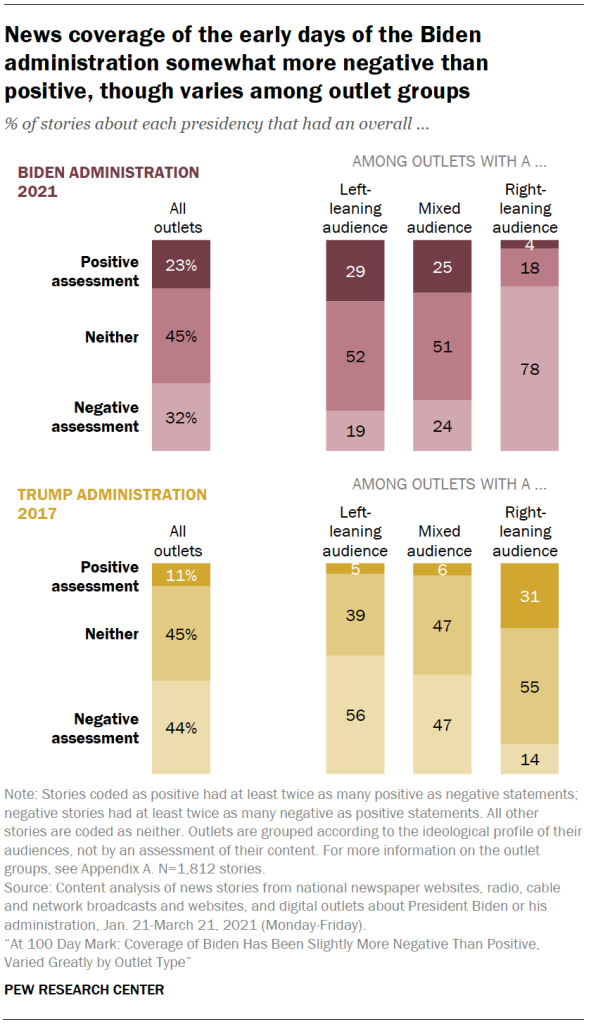
Overall, 32% of stories about the Biden administration had a negative assessment, while 23% had a positive one and 45% were neither positive nor negative. But those numbers varied widely by types of media outlets. Fully 78% of the stories from outlets with predominantly right-leaning audiences carried a negative assessment. That stands in stark contrast to the 19% of stories with a negative assessment from outlets with left-leaning audiences and about a quarter of stories (24%) from outlets with a mixed audience.

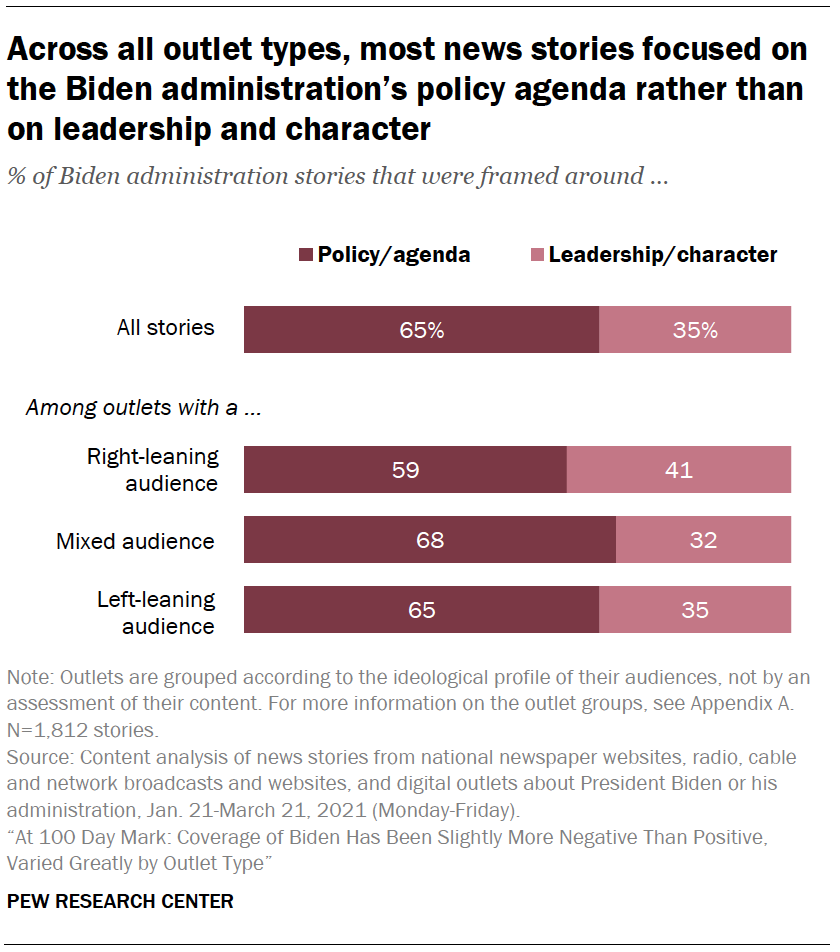
That pattern emerged in a number of different aspects of coverage of the Biden administration’s first 60 days – from the topics of stories to the sources cited in those stories. The one area where there was less divergence by media outlet group, however, was in the framing of the Biden stories. Overall, 65% of the stories were framed around the new president’s policy agenda and ideology, compared with 35% around character and leadership. And in each of the three main media groupings studied, at least 59% of the stories were oriented around policy and agenda.

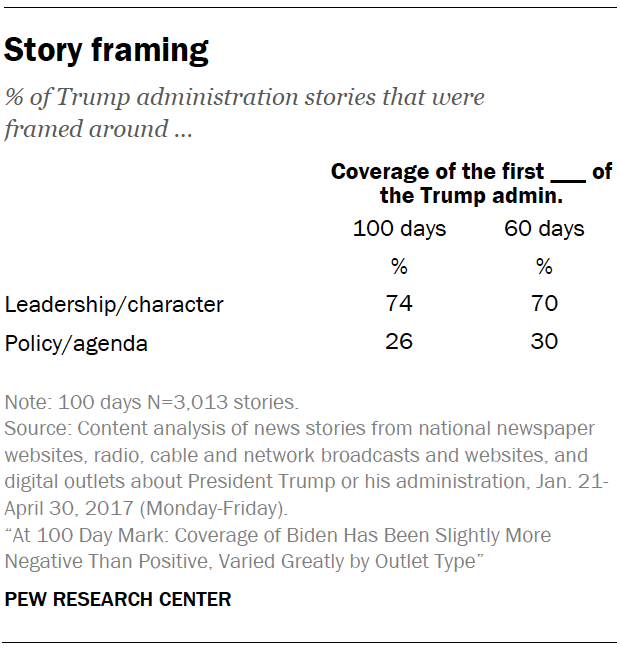
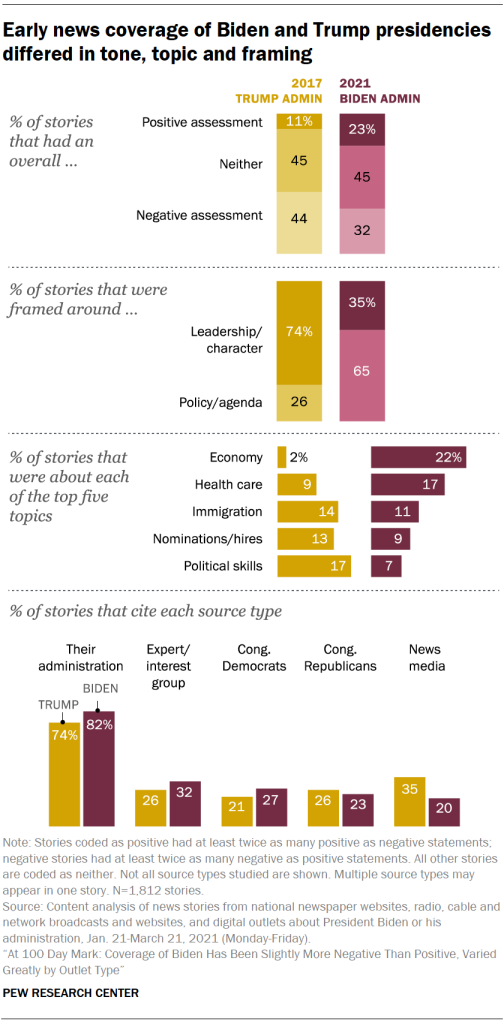
That framing is dramatically different from the coverage of the first few months of the Trump administration four years earlier. Then, 74% of all stories were oriented around his character and leadership, compared with only about one-quarter (26%) framed around his ideology and policy agenda. Another significant difference in their coverage is that while the negative Biden stories modestly outnumbered the positive ones, negative stories about Trump exceeded positive ones by four-to-one.

Related: Most Americans Say They Are Tuned In to News About the Trump Administration (March 2025)

One new element of this year’s study – in Part 2 of this report – is a survey component that measures Americans’ exposure to and sense of news coverage during this early time period, how that differs by media diet, and how it compares with the analysis of media content in Part 1. For example, while the topic of the economy was covered most heavily by outlets with a left-leaning audience, a large majority of Americans, regardless of their media diet, report hearing a lot about the passage of the economic stimulus bill in the news. At the same time, the public’s sense of news coverage of the Biden administration is more positive than the study of the news coverage reveals: 46% of U.S. adults say that the early coverage they’ve seen about the Biden administration offered mostly positive assessments, far more than the 14% who say they’ve seen mostly negative ones.

These are among the key findings of a new study of media coverage in the early days of the Biden presidency. This report includes two main elements: A content analysis of news coverage of the first 60 days of the Biden administration by 25 major news outlets, which can be compared with early coverage of the Trump administration and previous administrations dating back to 1993; and a survey of 12,045 U.S. adults conducted March 8-14, 2021, as part of the American Trends Panel. See Methodology for details.

Methodological note

This study looks at coverage of the Biden administration in two different ways: 1) studying the content published by different news organizations, and 2) asking Americans about their opinions on coverage of the administration.

For our analysis of the content published by news organizations in the early days of the Biden administration, we group news organizations by the political party and ideology of their audiences. For our analysis of Americans’ views of news coverage, we group respondents by their news media diet.

Each news outlet in this study was placed in one of three groups based on the political profile of its audience (i.e., those respondents in the survey who reported getting political news from each outlet in the past week).

  • Outlets with a left-leaning audience: In these outlets’ audiences, the share of liberal Democrats is at least two-thirds larger than the share of conservative Republicans. Thirteen of the 25 outlets in this study have a left-leaning audience.
  • Outlets with a right-leaning audience: In these outlets’ audiences, the share of conservative Republicans is at least two-thirds larger than the share of liberal Democrats. Six of the 25 outlets in this study have a right-leaning audience.
  • Outlets with a mixed audience: These outlets’ audiences have about equal numbers of liberal Democrats and conservative Republicans (i.e., neither liberal Democrats nor conservative Republicans make up at least two-thirds more of the audience than the other). Six of the 25 outlets in this study have a mixed audience.

The survey respondents in this study are grouped according to the audience makeup of outlets they turned to for political news in the past week.

  • U.S. adults whose media diets are only on the right: Respondents who only turned to outlets with right-leaning audiences
  • U.S. adults whose media diets tend toward the right: Respondents who turned predominantly to outlets with right-leaning audiences
  • U.S. adults whose media diets are neither left nor right: These respondents didn’t turn predominantly to either outlets with a left-leaning or right-leaning audience; either they turn to outlets with left-leaning and right-leaning audiences at roughly similar rates, or they turn only to outlets with mixed audiences
  • U.S. adults whose media diets tend toward the left: Respondents who turned to predominantly to outlets with left-leaning audiences
  • U.S. adults whose media diets are only on the left: Respondents who only turned to outlets with left-leaning audiences
  • Respondents who didn’t turn to any of the 25 outlets.

See Appendix A for more about how these groups were created and for the breakdown of all of the outlets in this study and their audience classification.

Part 1: Study of coverage by 25 news outlets during the first 60 days of Biden administration
News outlets often differed in early coverage of Biden administration based on ideology of audience

There are four key metrics in examining the media’s coverage of the early days of a new administration: the topics of those stories, the assessments of the administration, and the framing and the sources used.

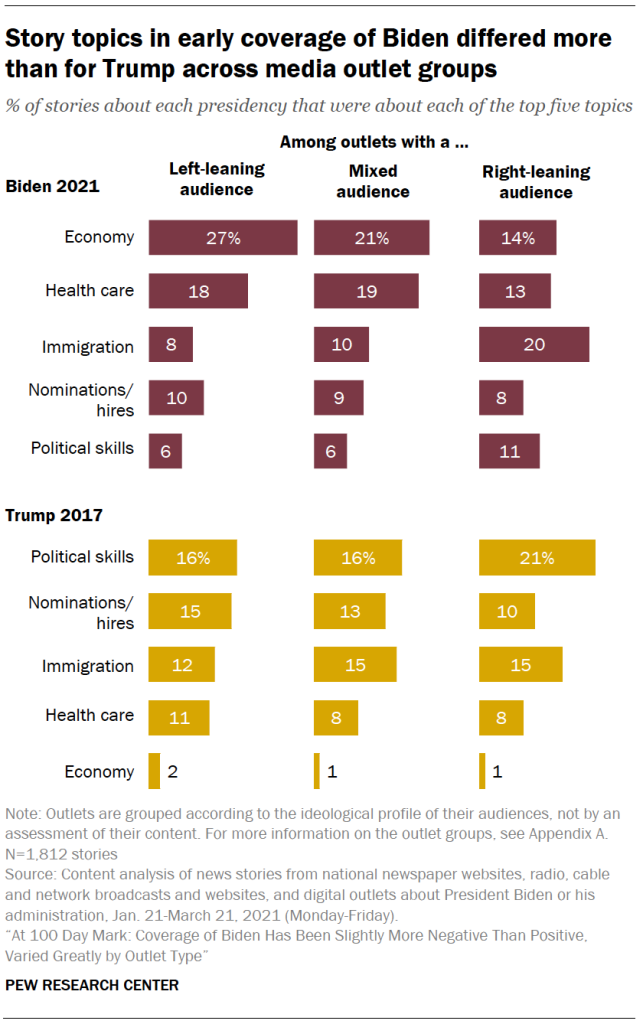
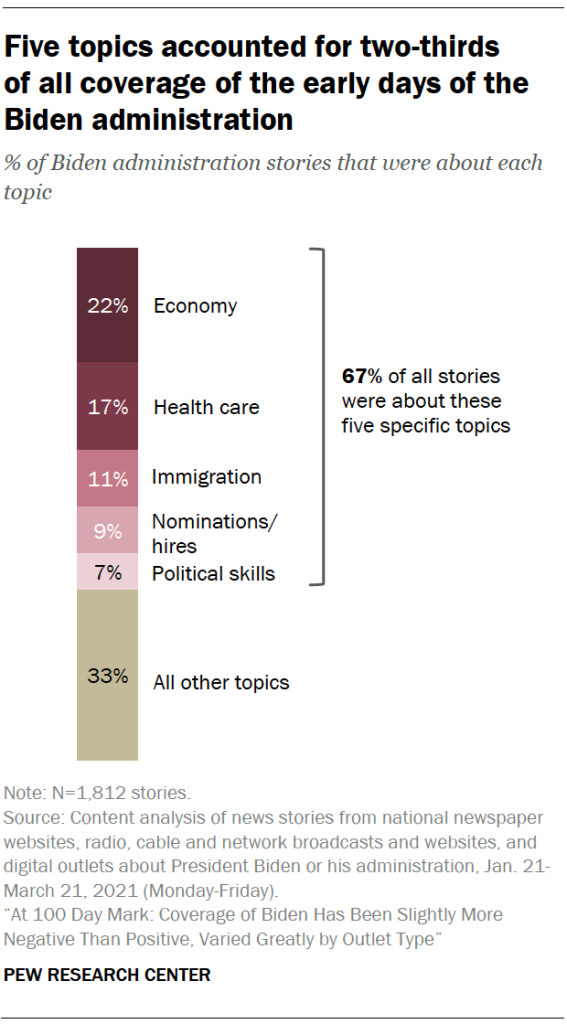
Across the 25 news outlets studied, five broad topics accounted for two-thirds (67%) of all the coverage related to the Biden administration. The economy and health care were at the top, each accounting for about 20% of total coverage.

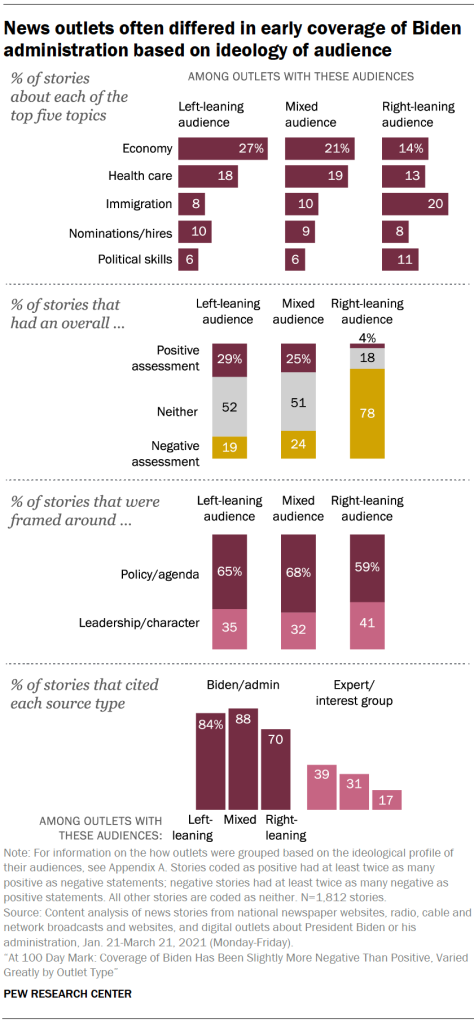
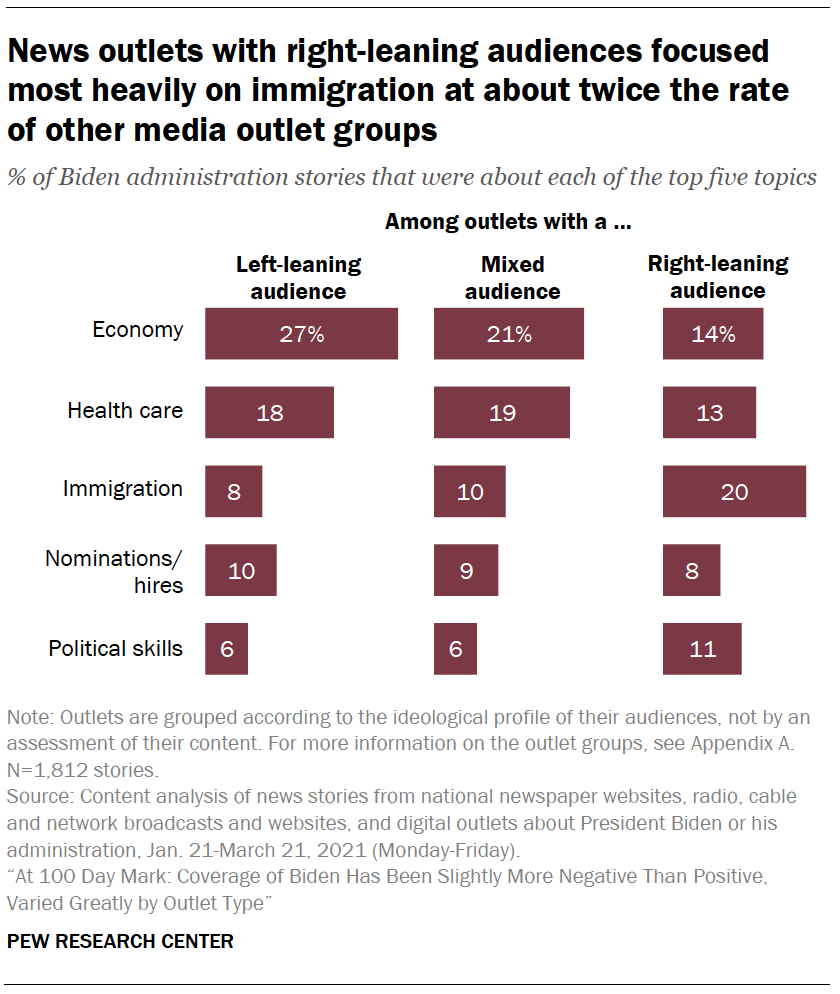
But the topics that outlets gave the most attention to differed based on the ideological makeup of their audience (see box). Specifically, outlets whose audiences lean to the right politically put their heaviest emphasis on immigration, which was the focus of 20% of their stories related to the Biden administration. (Americans who consume news from these outlets were also much more likely to report hearing a lot about immigration policy reform, according to the survey data.) Outlets with left-leaning or mixed audiences, on the other hand, gave greatest attention to the economy and to health care, each of which was the focus of 18% or more of stories for both media groups, while immigration amounted to 8% and 10% for each.

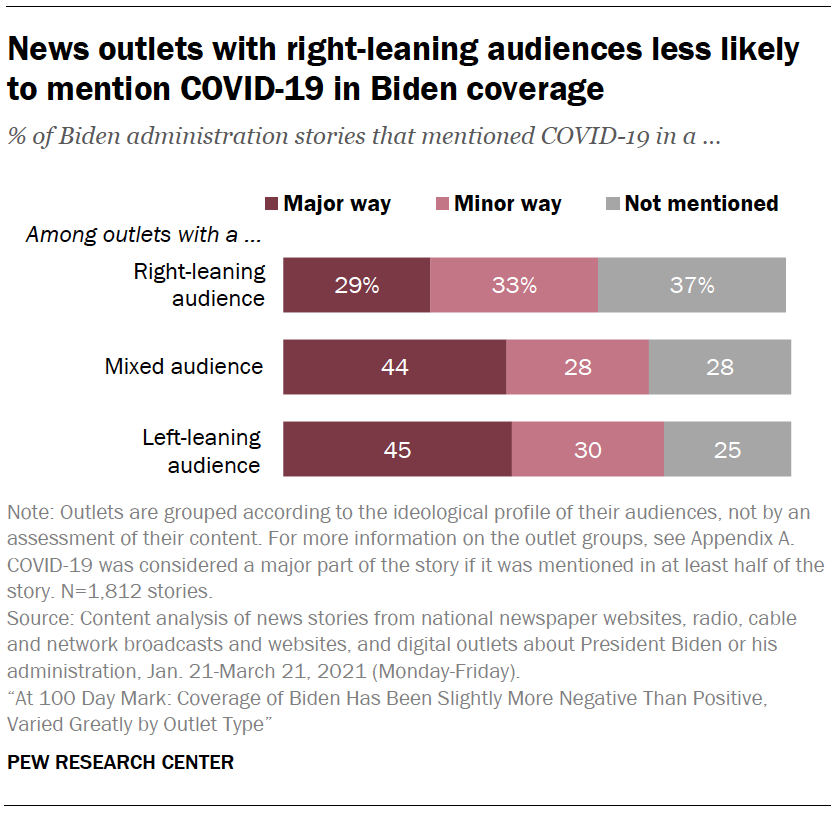
The COVID-19 pandemic has been such a pervasive part of recent news that its presence in coverage was measured separately. Indeed, the virus outbreak was mentioned – as a major or minor component – in 72% of all stories about the Biden administration, including nearly every health care story and 96% of all economy stories, as well as other topic areas. Outlets with right-leaning audiences had fewer stories in which COVID-19 was a major focus (meaning it was a part of half or more of the story): 29%, versus 45% of the left-leaning audience outlets and 44% in the mixed audience group. A majority of stories for all three outlets groups had at least some reference to the coronavirus.

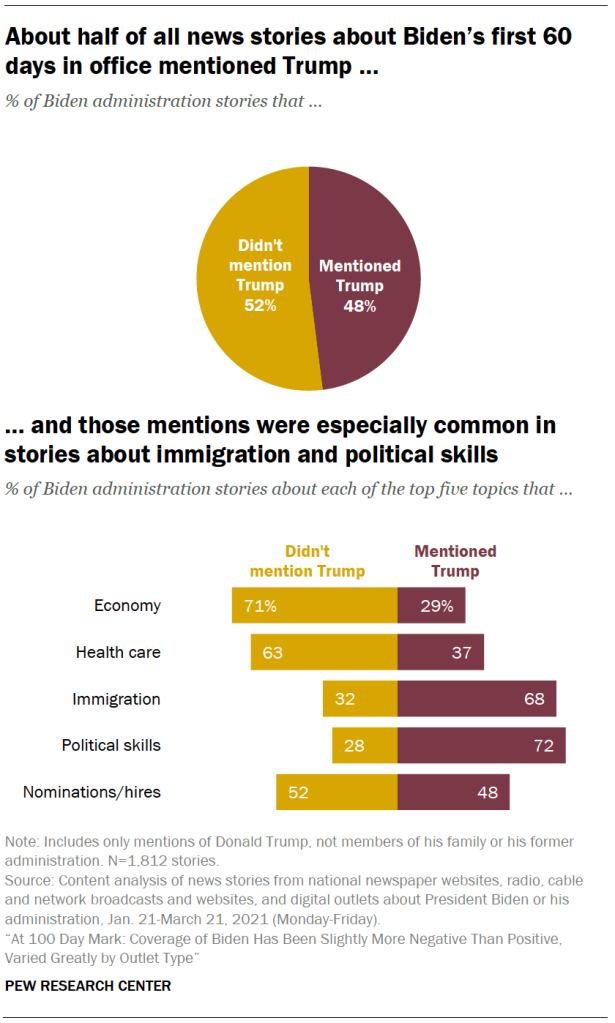
Given the unusual circumstances of the Trump-Biden transition, with Trump still contesting the election results, it is perhaps unsurprising that Trump himself was mentioned in about half the stories about the new Biden administration. There was virtually no difference in the frequency of those mentions across outlets with left-leaning audiences (50% of stories), outlets with right-leaning audiences (47% of stories) and outlets with a mixed audience (47% of stories).

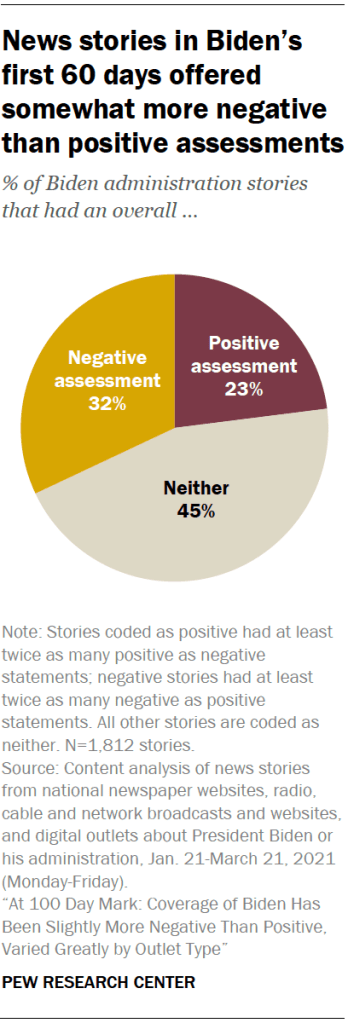
Within a news story, the statements from the sources cited as well as the reporter’s own language determine the overall assessment of the Biden administration. During these first 60 days, stories were slightly more likely to carry an overall negative assessment of the administration (32%) than a positive one (23%), though just under half were neither positive nor negative (45%).1

Outlets with right-leaning audiences presented a primarily negative view of the new Biden administration. In all, about three-quarters (78%) of their stories offered a negative assessment of the administration and its actions, with only 4% offering a positive assessment. Among outlets with a left-leaning audience, the assessment was a little more positive than negative (29% of stories vs. 19%), while 52% of stories were neither positive nor negative. In outlets with a more mixed audience, the coverage of the Biden administration was also mixed: 25% of the stories had a positive assessment, 24% had a negative one and 51% were neither positive nor negative.

One area where there is little difference across the three media groups is whether the journalist framed the story around Biden’s leadership and character or his ideology and agenda. Biden’s policy and agenda framed the majority of coverage overall (65%), including 68% of the stories from outlets with mixed audiences and 65% of stories from outlets with left-leaning audiences. Stories from outlets with right-leaning audiences were modestly less likely to be framed around ideology and agenda (59%), but that still constituted a majority of stories.

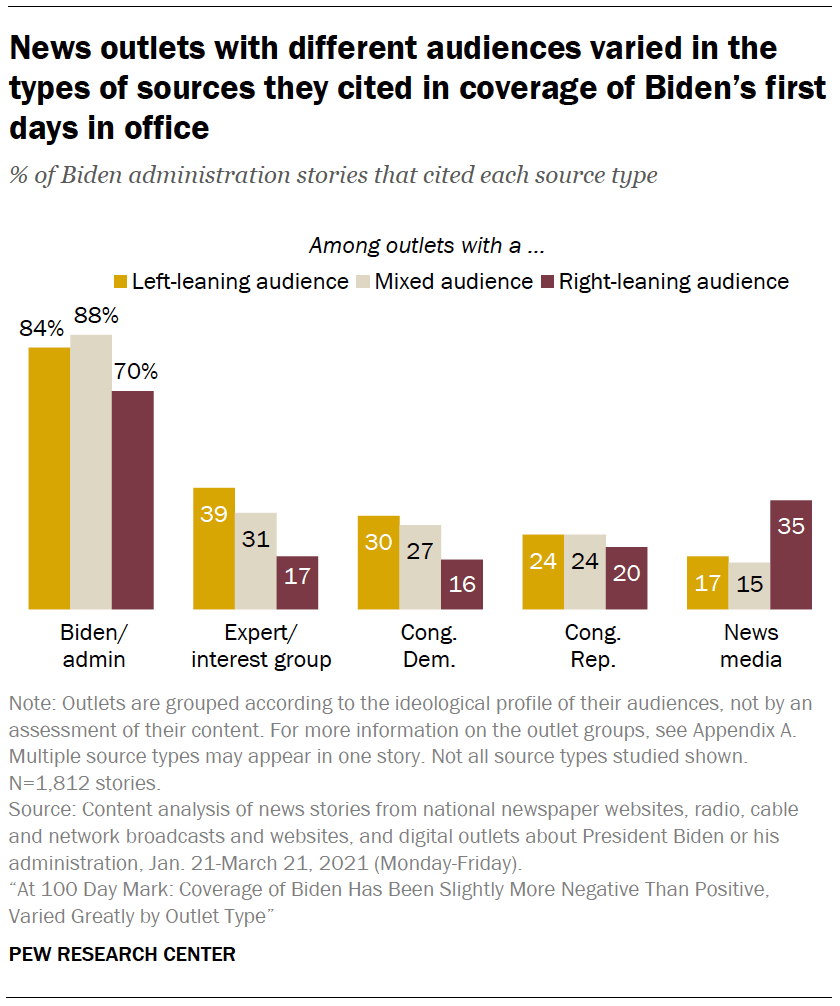
The study also catalogued the presence in each story of 13 possible types of sources. Biden and/or members of his administration were by far most likely to be cited, appearing in 82% of all stories studied – including 70% of stories in outlets with right-leaning audiences. Among the other most common types of sources were groups focused on policy issues (such as the ACLU and Susan B. Anthony List) and/or experts (such as academics), which were cited in 32% of stories, Democratic members of Congress (27%), Republican members (23%) and other journalists or media organizations (20%).

Outlets with right-leaning audiences diverged from the other media groups in some types of sources they cited in stories about the Biden administration. For example, just 17% of the stories in the right-leaning audience group used sources who are experts or members of issue groups, compared with 31% of stories in the mixed-audience outlets and 39% of stories in the left-leaning group. At the same time, the outlets with right-leaning audiences were much more likely to cite other journalists and media outlets (35% of stories, versus 17% of stories from outlets with left-leaning audiences and 15% in mixed-audience outlets).

How early news coverage of Biden compares with coverage of Trump in 2017
Early news coverage of Biden and Trump presidencies differed in tone, topic and framing

Pew Research Center has studied news coverage of the start of each new administration since 1993, when Bill Clinton began his presidency. While the structure of the analysis and specific outlets studied have evolved with the media landscape (an abbreviated long-term trend can be found here), the 2017 study of news coverage of the early days of the Trump presidency and this 2021 study of Biden are very similar in methodology, allowing for a direct comparison of most measures.

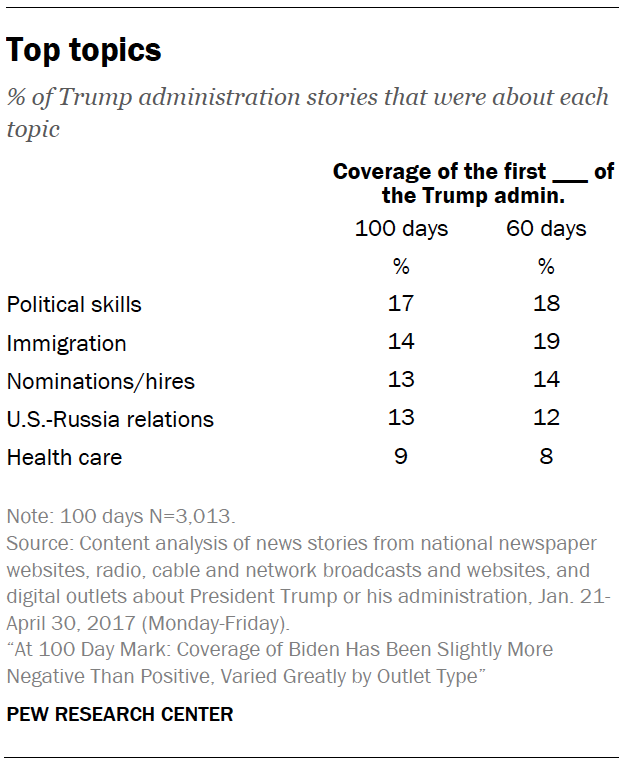
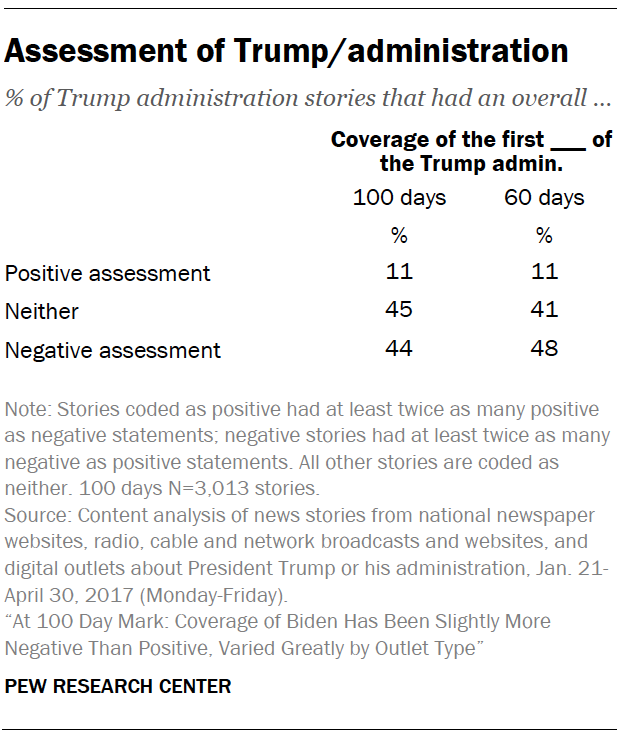
One difference to note in the Trump-Biden comparison is that the 2017 study covered the first 100 days of the administration, while this year’s study covers only the first 60 days. Still, a comparison of the 2017 data for the full 100 days and the first 60 days found only minimal percentage differences and no changes in the overall findings (see Appendix B for details.)

Four of the same subjects were among the top five most covered topics in the first months of both the Trump administration in 2017 and the Biden administration in 2021: health care, presidential appointees, immigration and political skills. U.S.-Russia relations was a leading topic in 2017, but not in 2021, while the economy was the leading 2021 topic but not among the top five in 2017. One other key difference was that in 2017 the new president’s political skills was the most covered topic, while it ranked fifth in 2021.

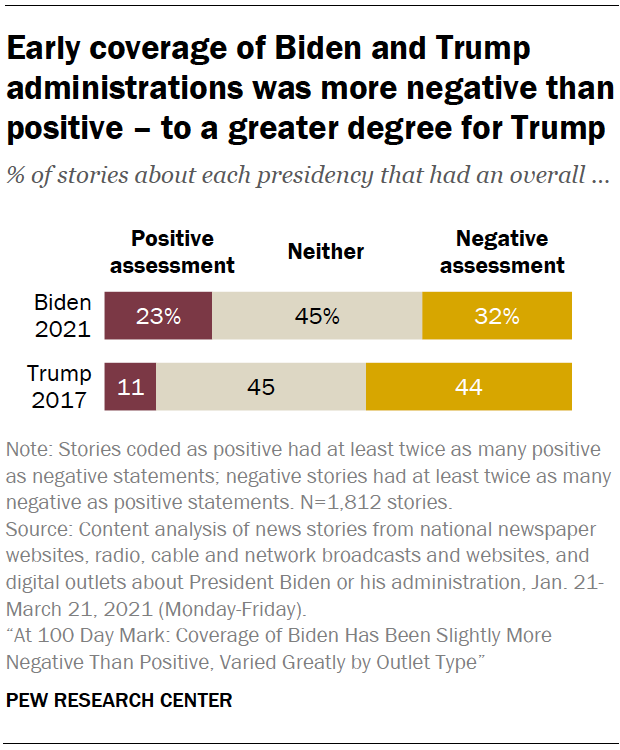
When it comes to the tone of coverage, both new administrations received more negative assessments than positive assessments of their activities. But while the percentage of Biden stories with an overall negative assessment (32%) modestly outnumbered the share with positive assessments (23%), stories with negative assessments of Trump outnumbered those with positive assessments by four-to-one (44% to 11%). The same share of stories about each president were neither positive nor negative (45% for both Biden and Trump).

Another stark difference in the early coverage of the Biden and Trump administrations was in how stories were framed. About two-thirds of Biden stories (65%) were framed around ideology and agenda, while about one-third (35%) focused on leadership and character. With Trump, the numbers were roughly reversed, with 74% framed around leadership and character and 26% around policy and ideology.

One similarity in coverage of the two most recent administrations has been the main source cited in news stories: Just as the Trump administration was by far the most cited source in news stories soon after Trump became president (cited in 74% of stories), so is the Biden administration the most cited source now (82%). Among other types of sources, though, there were some shifts in the rate at which they made their way into stories.

Long-term news coverage trend
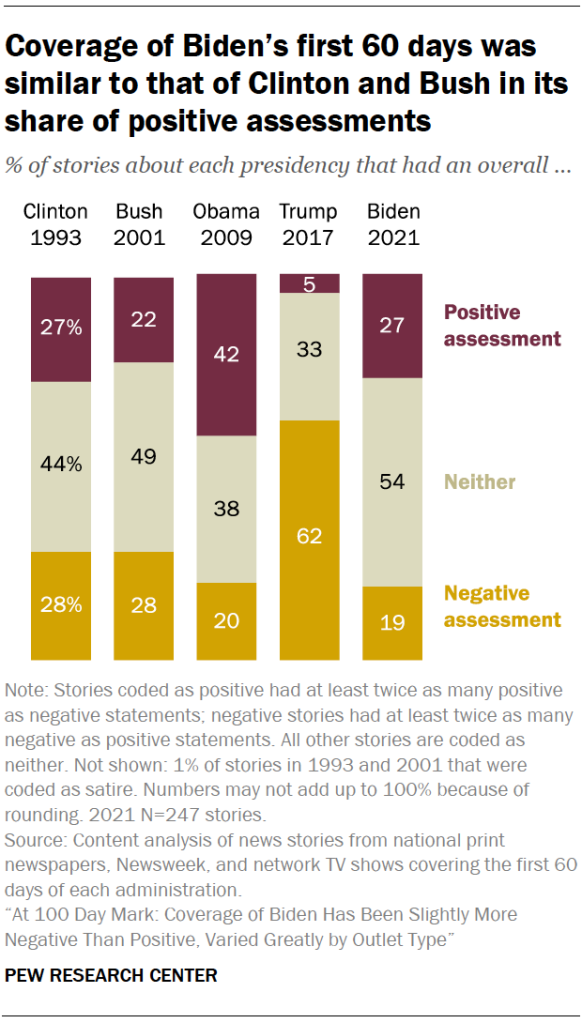
Coverage of Biden’s first 60 days was similar to that of Clinton and Bush in its share of positive assessments

While the media landscape has changed dramatically since Clinton’s presidential inauguration, the Center has been able to conduct a long-term comparison for each of the recent administrations across a smaller subset of outlets and variables.2

This year’s analysis finds that coverage of the Biden administration in this smaller sample of news outlets was more likely to carry neither a positive nor a negative assessment compared with the first 60 days of the Trump, Obama, Bush and Clinton administrations. The level of positive coverage was roughly on par with that of George W. Bush and Bill Clinton, but lower than for Barack Obama – with all four higher than Trump. Additionally, coverage of the early days of the Biden administration focused more on policy and agenda over leadership qualities than any other administration except for Bush.

Part 2: Survey of U.S. adults’ views of news coverage of the Biden administration

In addition to the analysis of the media coverage of the early days of the Biden administration, this project, for the first time, includes a survey component designed to study Americans’ sense of the news coverage of the new administration based on their different media diets.

To do this, the survey of 12,045 U.S. adults conducted March 8-14, 2021, on Pew Research Center’s American Trends Panel, asked respondents to indicate whether they got political news in the past week from each of 25 national news outlets (the same outlets as in the content study – see Appendix A for details). People were then organized into five media diet groups based on the audience of the outlets they frequent.
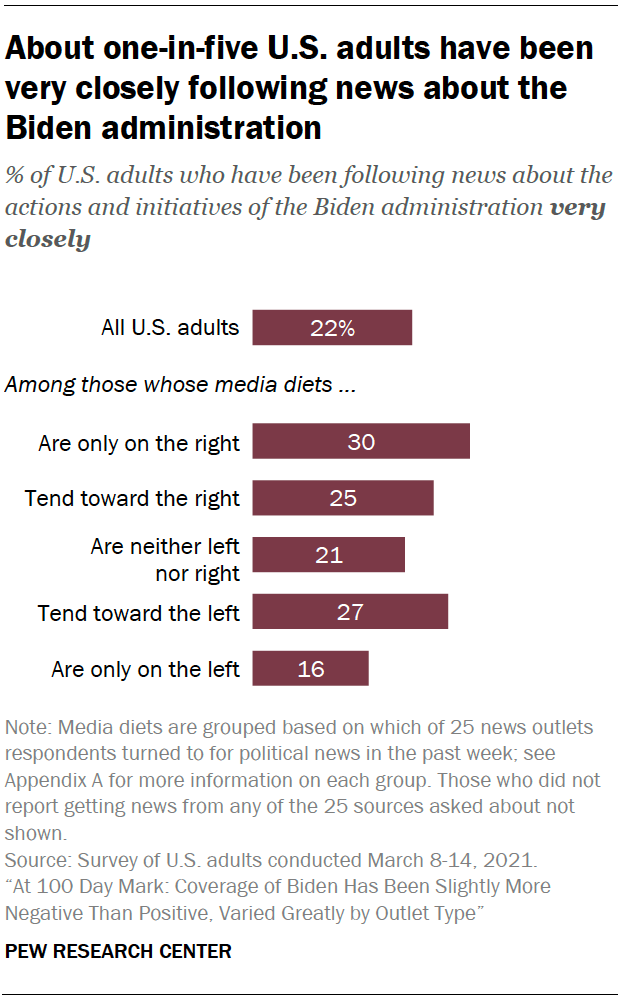
About one-in-five U.S. adults have been very closely following news about the Biden administration

Overall, about one-in-five U.S. adults (22%) said that at the time of the survey they had been following news about Biden very closely, with another 44% following it fairly closely. But attention varied across the media groups, with Americans who turn only to outlets with left-leaning audiences least likely to be following news about the Biden administration very closely (16%) – and their counterparts on the right almost twice as likely to do so (30%).

The survey also asked how much Americans had heard about each of seven specific efforts and initiatives of the new administration. Passage of the economic stimulus bill and the distribution of the COVID-19 vaccine topped the list, with nearly eight-in-ten U.S. adults (77%) saying they had heard a lot about the stimulus package and 74% hearing a lot about vaccine distribution. This aligns with the content analysis, which found that the economy and health care were the two leading topics for the period studied (see Chapter 1).

Roughly half of U.S. adults (52%) said they had heard a lot about Biden’s use of executive orders to reverse many Trump administration policies. Fewer had heard a lot about the other topics mentioned, such as the pursuit of talks with Iran (just 10% said they had heard a lot).

Americans who get news only from outlets with right-leaning audiences were most likely to say they had heard a lot about Biden’s use of executive orders (79%), nearly twice the share among those who turn only to outlets with left-leaning audiences (42%). This right-oriented group was also about twice as likely as the left-oriented group to have heard a lot about immigration reform efforts (45% vs. 21%).

Vaccine distribution was the one storyline the groups with media diets on the left or tending left had heard considerably more about than the right-only or tend-right groups. Again, the broader topic of health care was covered slightly more by outlets with a left-leaning and a more mixed audience, the content analysis found.

In looking at how the exposure to news stories lines up with the topics that received more or less coverage in Part 1, the two storylines Americans were most likely to have heard a lot about – passage of the economic stimulus bill and the distribution of the vaccine – align with the two topic areas to receive the most coverage: the economy and health care.
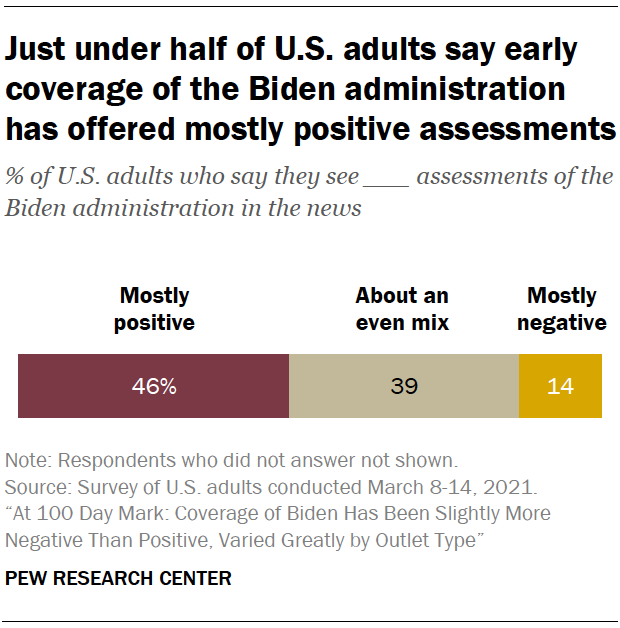
Just under half of U.S. adults say early coverage of the Biden administration has offered mostly positive assessments

Some nuances emerge, though, within people’s media diets. While the topic of the economy was covered more by outlets with a left-leaning audience, a large majority of Americans, regardless of their media diet, report hearing a lot about the passage of the economic stimulus bill in the news.

Americans’ sense of the early coverage about the Biden administration tends to be more positive than the tone of the content that was studied. Overall, just under half of U.S. adults (46%) say that the early coverage they’ve seen about the Biden administration has offered mostly positive assessments, while far fewer – 14% – say the news they’ve come across has given mostly negative assessments. About four-in-ten (39%) say the assessments have been about an even mix of positive and negative.
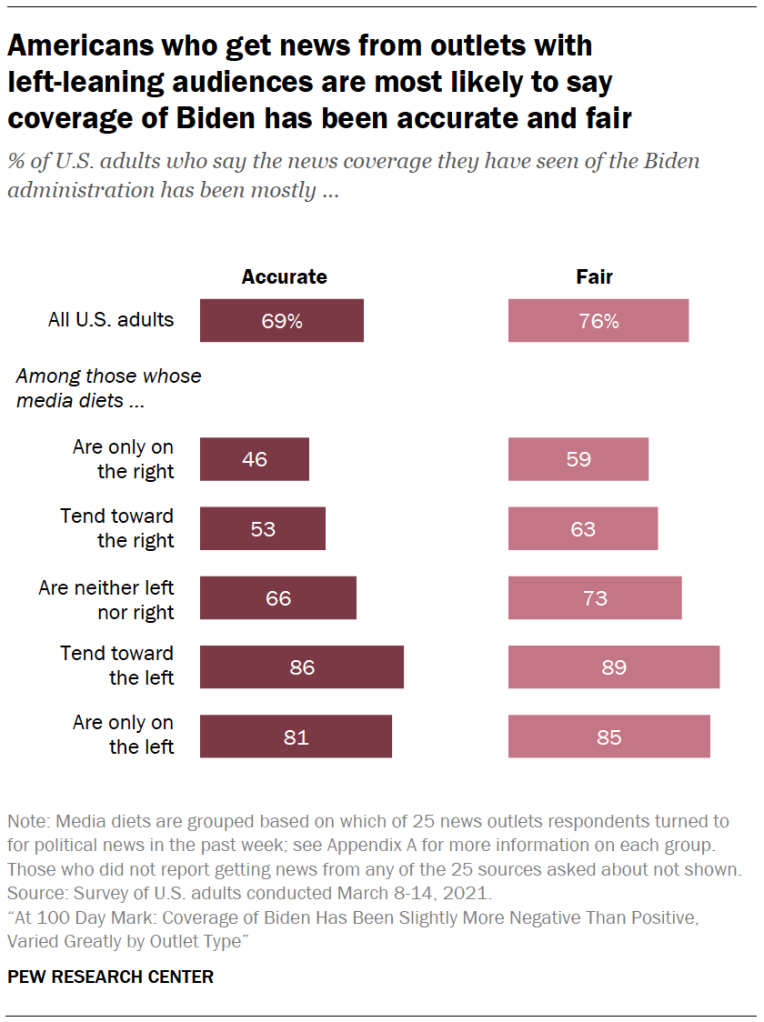
Americans who get news from outlets with left-leaning audiences are most likely to say coverage of Biden has been accurate and fair

However, just as in the coverage studied, U.S. adults in the right-only and tend-right diets are most likely to say it has been mainly negative (35% and 32%, respectively, versus 6% of the left-only group and 4% of the tend-left group).

Most also say the coverage has been largely fair rather than unfair (76% vs. 21%) and accurate rather than inaccurate (69% vs. 26%). Again, however, Americans who get their news from sources with right-leaning audiences are more likely than others to say that the overall coverage they’ve seen of the Biden administration has been unfair and inaccurate. Still, a majority in the right-only media group say it is fair, and just under half say it is accurate (see Chapter 2 for details).

Which of Biden’s efforts are getting too much coverage, and which too little?
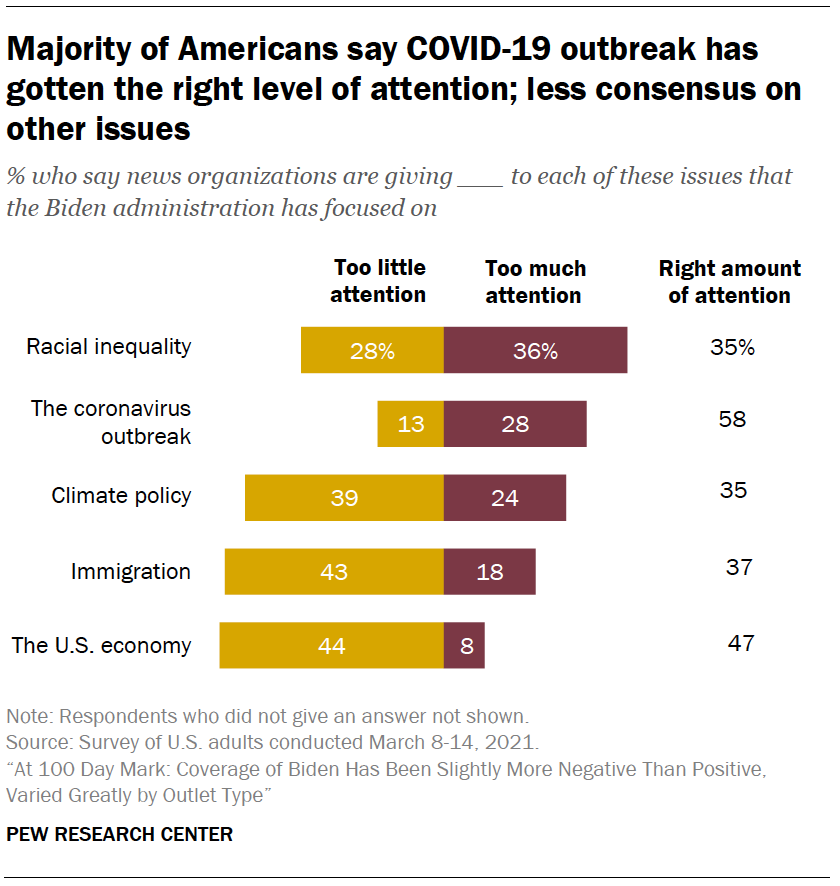
Majority of Americans say COVID-19 outbreak has gotten the right level of attention; less consensus on other issues

When asked whether five key priorities of the new administration were getting too much attention, too little attention or the right amount of coverage, only one such topic – the COVID-19 pandemic – was identified by a majority of Americans (58%) as getting the right amount. Racial inequality is the topic that the highest percentage of Americans say is getting too much attention (36%), though the sense overall is divided, with 28% saying the issue is getting too little attention and 35% saying the level of coverage given to racial inequality is about right.3

The economy and immigration are the topics with the highest shares saying they are not getting enough attention (44% and 43%, respectively).

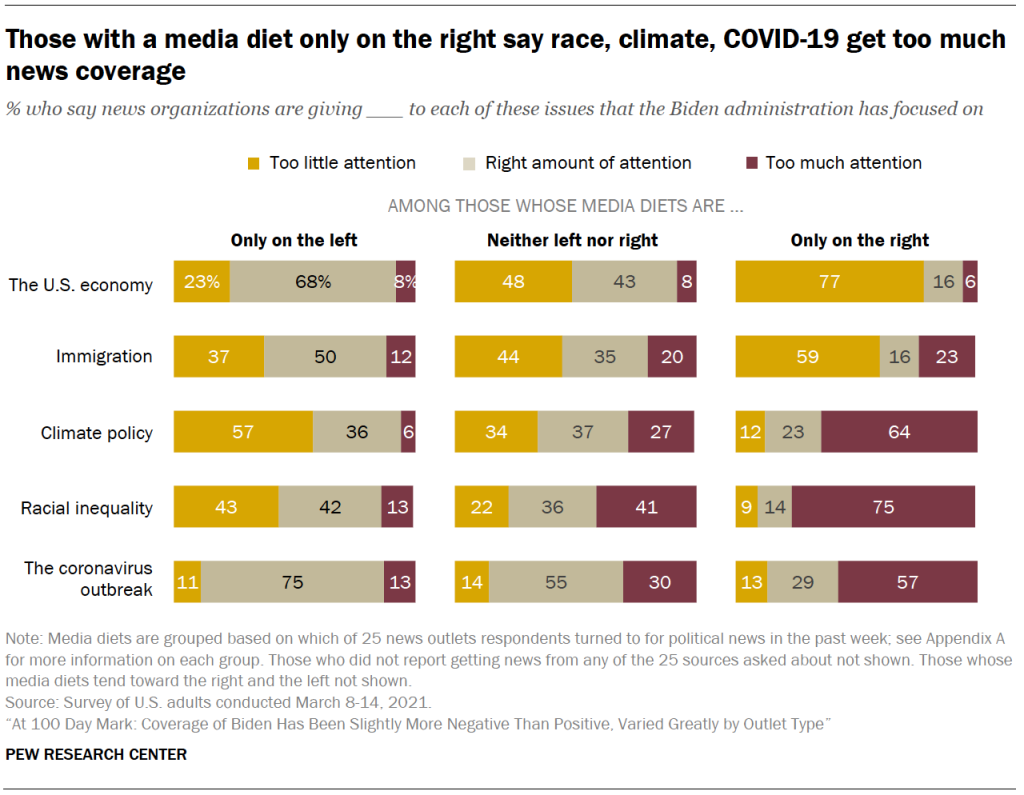
Three-quarters of those who get their news only from outlets with right-leaning audiences say the subject of racial equality gets too much attention, far more than among those with a mixed-audience media diet (41%) and a left-only diet (13%). Also, by significant margins, those in the right-only group are likeliest to say climate policy (64%) and the COVID-19 pandemic (57%) are getting too much attention.

The survey also asked Americans which of these five issues is getting the most attention from their main news sources (rather than the news media overall).

Those who get political news only from outlets with right-leaning audiences vary – about a third (34%) say they see their news sources covering immigration the most, 27% say this of the coronavirus outbreak and 21% say the U.S. economy gets the most coverage from their sources.

For those with media diets only on the left, nearly two-thirds (64%) say the coronavirus is the most covered of the five topics. People in this left-only group are much less likely than those on the right to name immigration as the topic getting the most attention (5% vs. 34%). Americans in the mixed media group are also most likely to say the pandemic is getting the most attention from their main news sources (53%), with the economy next at 21%.

The areas of coverage people say they are getting most of from their main sources broadly align with the share of coverage devoted to each in Part 1. The coronavirus was very prevalent throughout coverage in the outlets with left-leaning and mixed audiences, with the economy as the top specific topic area. And among the outlets with right-leaning audiences, immigration was the most covered topic area.

Americans’ knowledge of key news events varies

The survey also assessed Americans’ awareness of the news by asking five fact-based questions related to issues early in the Biden administration. Two of the questions were correctly answered by large majorities of Americans: a question about the proposed increased national minimum wage (81% correctly answered $15 an hour) and a question about the number of doses required for the COVID-19 vaccines approved in the U.S. (69% correctly answered that the number of doses required varies depending on the vaccine).4

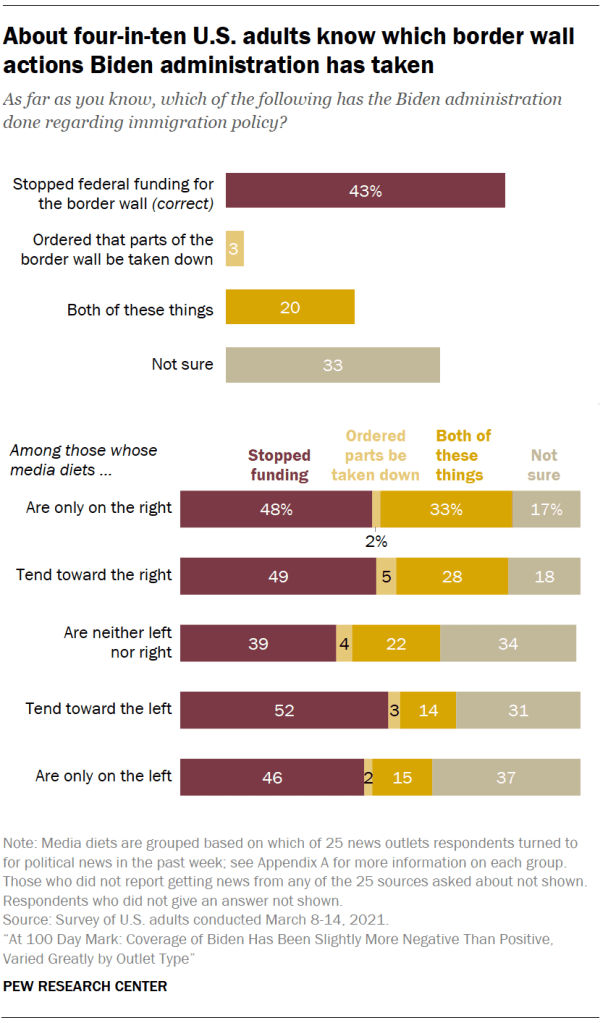
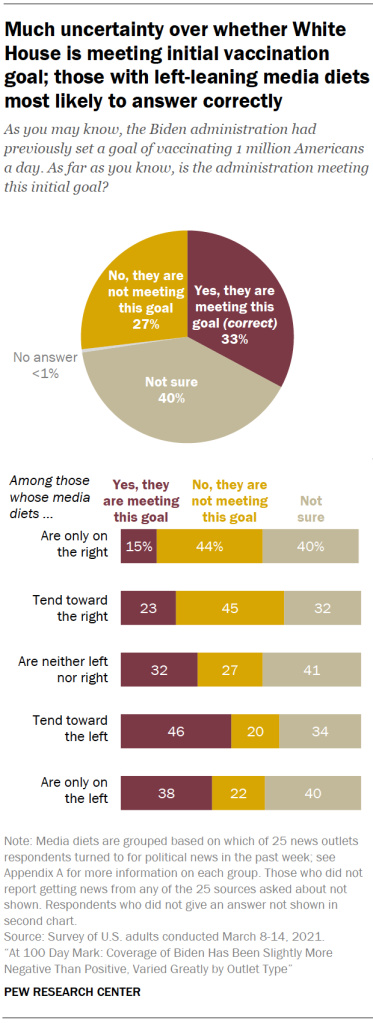
Americans were less likely to answer the other three questions correctly. Roughly half (49%) knew that the administration has both reentered the Paris agreement and rescinded construction permits for the Keystone XL pipeline, 43% correctly said that the administration has stopped federal funding for the border wall but not ordered that the wall be dismantled, and 33% knew at the time of the survey that the Biden administration was meeting its goal of vaccinating 1 million Americans per day.

Terminology for elements of news coverage studied

This study examined how the news media covered the first 60 days of President Biden and his administration from Jan. 21 through March 21, 2021. Researchers coded stories from the 25 news outlets – with content pulled from more than 45 specific programs or websites – for a number of measures:

Topic: News stories were first coded as being about one of 47 specific topics or storylines (the most prominent topic within each story was coded as the story’s overall topic). These topics and storylines were in turn grouped into three broad topic categories, in addition to an “other” category:

  • Domestic issues
  • Foreign affairs and
  • The president’s management and political approach.

Frame: When reporting a story about a specific topic, there are various frames that journalists can use to orient the narrative. This study classified stories into one of two main frames (whichever accounted for more than 50% of the story):

  • Leadership and character or
  • Core ideology and policy agenda.

For example, an article or segment about health care could be framed around the legislative differences in what the administration is proposing versus members of Congress (thus coded as core ideology and policy agenda). Or, such a story could be framed around the evaluation of the president in terms of his outreach to and relationship with members of Congress, which would then be coded as leadership and character.

Source types: The study also measured 13 different types of sources that might be cited in a story:

  • Biden or a member of the administration
  • A Biden family member (not in the administration)
  • A congressional Democrat
  • A congressional Republican
  • A state or local official
  • A foreign official
  • Donald Trump, his family or former administration
  • An issue-based group or expert
  • Businesses and corporations
  • A poll
  • A journalist (other than the reporter or anchor of the story) or news organization
  • A citizen and
  • Anonymous or unnamed sources.

This measure identifies the presence of a type of source in any given article, not the total number of individual sources. There could be more than one source within any source category, such as quotes from two members of the administration. There may also have been sources used outside the types listed above that were not captured in this study.

Assessment of the Biden administration: In this analysis, each statement in a story (made by a source or the reporter him or herself) was analyzed to determine how, if at all, it assessed President Biden and his administration’s actions or words. Within a story, there needed to be at least twice as many positive as negative statements for a story to be considered positive and vice versa to be considered negative. If this threshold was not met, stories were coded as neither positive nor negative.

COVID-19 focus: In this study, each story was assessed for the extent to which COVID-19 was mentioned as part of the story. This was measured separately from topic since COVID is so intertwined with many of the other topic areas and captures whether COVID-19 was a major part of the story (meaning at least half the story addressed it), a minor part of the story (addressed in less than half the story), or not a part of the story at all.

Trump mention: Each story was analyzed for whether former President Donald Trump was mentioned. This includes all mentions of him, but not of other individuals such as his family members and former administration members or of references to his administration broadly.
1. News coverage of Biden’s early days in office varied across outlet groups, with more focus on policy agenda than leadership, character

The 25 news outlets analyzed in this study emphasized a varying mix of topics during President Joe Biden’s first 60 days in office, and they differed dramatically in terms of the balance of positive and negative assessments they provided. Outlets with right-leaning audiences, in particular, stood out in these respects.

At the same time, these media outlets similarly framed their stories much more around Biden and his administration’s policy agenda than on leadership and character, a sharp break from the pattern observed in the early days of Donald Trump’s administration.

Roadmap to Part 1 of this report

Part 1 of this study examines news coverage of the first 60 days of the Biden administration across 25 news outlets. These outlets are grouped into three categories based on the ideological leaning of their audiences: outlets with audiences that lean to the right, outlets with audiences that lean to the left and those with audiences that are more mixed ideologically. (See Appendix A for more details about these groupings.) Categorizing media outlets in this way can show how coverage differs by media type, particularly since Americans’ news choices often align with their political leanings.

Five topics dominated early coverage of Biden administration

Across the 25 news outlets included in this study, five topics accounted for two-thirds (67%) of all coverage in Biden’s first 60 days. Stories about the economy ranked highest, making up 22% of all stories studied, followed closely by health care news at 17%.

Both the economy and health care were major areas of focus in the early days of the administration: Biden signed a $1.9 trillion economic stimulus bill into law on March 11, while the federal government ramped up efforts to distribute COVID-19 vaccines. These two initiatives, as well as several others, were deeply intertwined with the COVID-19 pandemic. Because of that intense overlap, story references to COVID-19 were also measured separately – measuring whether COVID-19 was a major or minor part of the story – and are discussed in detail below.

The next most frequently covered topic was immigration (11% of all stories studied during this period), which gained attention as migrant apprehensions at the U.S.-Mexico border surged.

Biden’s appointments, nominations and hires accounted for 9% of all stories studied, reflecting weeks of Senate action on his appointees ranging from Secretary of Defense Lloyd Austin, who was confirmed in late January, to Secretary of Health and Human Services Xavier Becerra, who was confirmed in mid-March.

Stories discussing the political skills of Biden and his administration made up 7% of all stories (a topic area that broadly encompasses their level of expertise, strategy and management). All other individual topics accounted for 5% or fewer of media stories in the administration’s first 60 days.

News outlets with right-leaning audiences stood out for their focus on immigration

News outlets with right-leaning audiences focused most heavily on immigration at about twice the rate of other media outlet groups

The emphasis of news coverage during the early days of the Biden administration differed somewhat across news outlets based on the ideological leaning of their audiences.

Outlets with left-leaning audiences and those with more mixed audiences both focused heavily on the economy and health care during Biden’s first 60 days in office. These two topic areas accounted for just under half (45%) of all stories from outlets with left-leaning audiences and 39% of stories from outlets with mixed audiences. Outlets with right-leaning audiences, by contrast, put more emphasis on the issue of immigration, which ranked first at 20% of news stories. The economy and health care came in among the next for this group at 14% and 13% respectively.

COVID-19 was a major part of early coverage across a number of topic areas

Most news stories in Biden’s first 60 days in office referenced COVID-19 in some way

COVID-19 was a pervasive part of the media narrative of Biden’s first 60 days in office, cutting across a wide range of topic areas, especially the economy and health care. As such, references to the pandemic were measured separately from topic.

Overall, 72% of all stories about the Biden administration’s early days mentioned COVID-19 in some way. It was a major part of the reporting – meaning at least half the story was focused on it – in 42% of all stories and a minor part of the reporting in another 30%.

COVID-19 most frequently came up in media coverage related to health care and the economy. Nearly every health care story analyzed in this study referenced the coronavirus in some way, with a large majority of these stories including it as a major element of the reporting. The vast majority of stories about the economy (96%) also mentioned the virus, with 79% focusing on it in a major way. COVID-19 came up in 80% of stories about Biden’s political skills and management and 64% of immigration stories, usually only in a minor way – i.e., in less than half of the story.

The pandemic was mentioned less frequently in news stories about Biden’s presidential nominees: 42% of these stories mentioned COVID-19, usually in a minor way.

News outlets with right-leaning audiences less likely to mention COVID-19 in Biden coverage

Outlets with left-leaning and ideologically mixed audiences were most likely to mention the coronavirus in their reporting. Three-quarters of all stories from outlets with left-leaning audiences (75%) mentioned COVID-19, including 45% in which it was a major focus. Outlets with more mixed audiences referenced the virus in 72% of stories, including 44% in which it was a major focus. Outlets with right-leaning audiences were less likely to mention the virus, though 63% of stories from these sources still did so, including 29% in which the coronavirus was a major focus.

Story topics in early coverage of Biden differed more than for Trump across media outlet groups

The topics that make the news at the outset of one administration can differ from those in another administration, but there are some recurring themes in 2021 and 2017.1

Four of the top five topics covered during the early days of the Biden administration also made the top five in the Trump administration’s first days: political skills, immigration, nominations and hires, and health care. The exception was the topic of the economy, which was the most frequently covered subject during the Biden administration’s early days but not among the top topics for Trump. Conversely, U.S.-Russia relations were among the top subjects covered in Trump’s early days but not among those for Biden.2

Another difference worth noting: While the president’s political skills was among the most frequently covered topics in the early days of the Trump administration (17% of stories), it was the focus of a much smaller share of stories about Biden’s early days in office (7%).

Perhaps more noteworthy is the greater degree of difference among the three types of outlets this year when compared with the first 100 days of the Trump administration. In a 2017 analysis, all three types of outlets devoted comparable attention to a similar mix of topics. In 2021, outlets with right-leaning audiences stood out in their heavier focus on immigration.

Assessments of Biden’s early days in office were slightly more negative than positive, but far more positive than coverage of Trump’s early days

News stories in Biden’s first 60 days offered somewhat more negative than positive assessments

The statements made by sources in a story – as well as the words used by reporters – can determine whether it offers a positive assessment, a negative assessment or neither. In this study, Center researchers analyzed each statement made by the reporter and sources cited in a story to determine how, if at all, it assessed the words or actions of Biden and his administration. Stories were considered positive if they had at least twice as many positive as negative statements; they were considered negative if the reverse was true. If neither threshold was met, researchers coded stories as neither positive nor negative. (It is important to note that deeming stories positive or negative does not mean they are biased or inaccurate, but rather that the mix of comments ended up offering a positive or negative sense of what occurred. Read more about the methodology here.)

During the first 60 days of the Biden presidency, news stories were slightly more likely to carry a negative assessment than a positive one, though stories more often ended up largely balanced in their assessment. Overall, roughly one-third of stories (32%) had a negative assessment of the actions of the Biden administration, compared with 23% that had a positive assessment. Just under half of the stories (45%) offered neither a negative nor a positive assessment.

Outlets with right-leaning audiences stood out for their negative assessment of the Biden administration’s early actions

Stories from news outlets with right-leaning audiences were most likely to offer a negative assessment of Biden

Assessments of Biden and his administration differed dramatically between outlets with right-leaning audiences and those with left-leaning or ideologically mixed audiences.

About eight-in-ten stories from outlets with right-leaning audiences (78%) offered a negative assessment of the actions of Biden or his administration. Just 4% offered a positive assessment, while 18% were neither positive nor negative.

News stories produced by outlets with left-leaning audiences, by contrast, were more likely to offer a positive than negative assessment (29% vs. 19%). Outlets with mixed audiences offered roughly equal portions of positive and negative assessments (25% vs. 24%). For both the left and mixed outlet groups, about half all assessments were neither positive nor negative.

Early coverage of Biden and Trump administrations was more negative than positive – to a greater degree for Trump

News assessments of the Biden administration’s early days differed substantially from those in the early days of the Trump administration – both overall and by media outlet type.

Stories about Trump’s first 100 days in office were four times as likely to be negative as positive (44% vs. 11% respectively).3 For both Biden and Trump, however, just under half of all assessments were neither positive nor negative.

For both Biden and Trump, tone of early media coverage differed widely by media outlet type

In 2017, outlets with right-leaning audiences were far more positive than negative in their assessment of Trump’s early days. Stories produced by these outlets were about twice as likely to offer a positive than negative assessment of the Trump administration (31% vs. 14%), even though 55% were neither positive nor negative. By contrast, stories produced by news outlets with left-leaning or ideologically mixed audiences were far more likely to offer a negative than positive assessment of Trump’s early actions.

Early coverage of Biden administration much more focused on policy agenda than leadership skills and character

Across all outlet types, most news stories focused on the Biden administration’s policy agenda rather than on leadership and character

When reporting a story about a specific topic, journalists can use various frames to orient the narrative. This study classifies stories into one of two main frames (whichever accounted for more than 50% of the story): the president’s leadership and character, or his policy and agenda. In the first 60 days of the Biden administration, all three media outlet groupings were much more likely to frame their stories around the president’s policy agenda than his character and leadership skills.

Overall, roughly two-thirds of the stories (65%) were framed around Biden’s policy agenda. That included majorities of stories from all three media groups, with right-leaning outlets the least likely to do so, at 59%.

How framing of stories differed between the early days of Biden and Trump administrations

The framing used by the news media in 2021 stands in contrast to the framing used during the early days of the Trump administration in 2017. Four years ago, around three-quarters of stories about the new Trump administration (74%) were framed around the president’s leadership and character, with very little difference among media groupings.

Assessment of the Biden administration varied by topic being addressed

Immigration and political skills stories were much more likely to have a negative than positive assessment of Biden

The media’s assessment of the Biden administration’s first 60 days didn’t just vary by the type of outlet doing the reporting. It also varied based on the topic area being addressed, as well as whether the framing of the story was around the Biden administration’s policy agenda or leadership and character.

Stories that addressed Biden’s political skills and management and his administration’s efforts on immigration were much more likely to offer negative than positive assessments. Roughly half of stories about Biden’s management and political skills (53%) had a negative assessment, while 25% had a positive assessment and 22% had neither. When it came to the administration’s efforts on immigration, 51% of stories had a negative assessment and 15% had a positive assessment, while 34% offered neither a positive nor a negative assessment.

Out of the five most commonly covered topic areas in Biden’s first 60 days, the one that saw more positive than negative assessments was health care (29% positive, 17% negative, 53% neither positive nor negative). Stories about the economy most likely had neither a positive nor a negative assessment and were about as likely to have a negative (25%) as a positive assessment (21%).

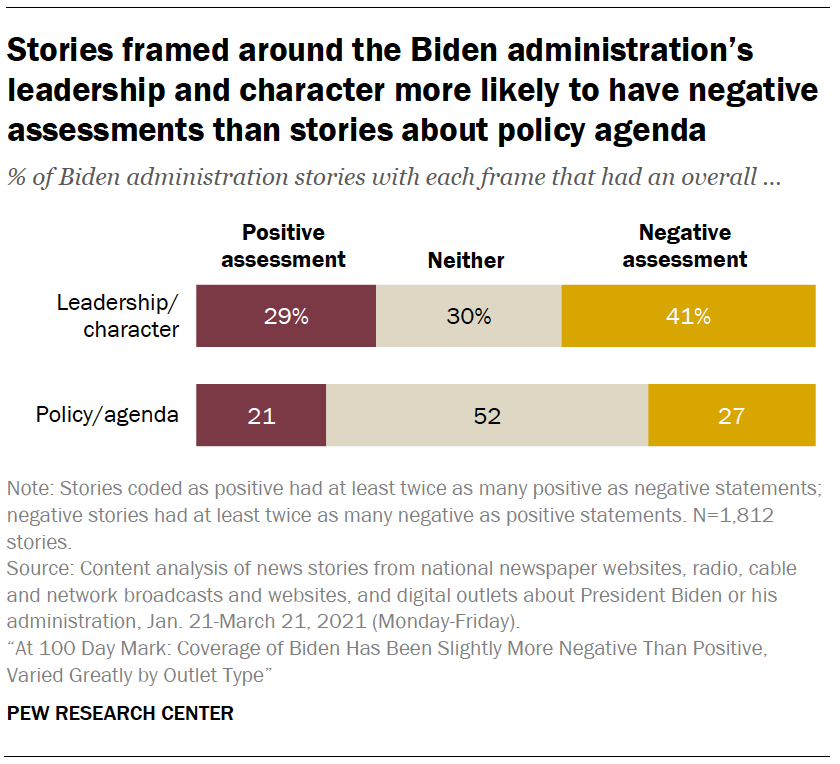
Stories framed around the Biden administration’s leadership and character more likely to have negative assessments than stories about policy agenda

While the media’s overall coverage of the Biden administration’s early days focused much more on the president’s policy agenda than his leadership skills and character, negative assessments were more common in stories that focused on the latter.

Stories framed around Biden’s policy agenda mainly were neither positive nor negative: 52% fell into this category, while 21% had positive assessments and 27% had negative assessments. Stories framed around Biden’s leadership skills and character, on the other hand, were far more negative than positive (41% vs. 29%, with the remainder neither).


2. News outlets with right-leaning audiences used fewer types of sources than those with left-leaning or mixed audiences

The sources journalists turn to are an important factor in any news story. Sources can affect the specific information the public receives, as well as whether the assessment of a president’s administration is positive or negative.

This analysis measures the presence or absence of 13 different types of sources in each news story during Biden’s first 60 days, ranging from administration officials to interest group representatives. (The full list of source types can be found here.) There could be more than one source within any source type – for example, quotes from two administration officials. At the same time, some stories may have used types of sources that are not part of this analysis.

In the early days of the Biden administration, media outlets with right-leaning audiences published fewer stories with two or more source types than outlets with left-leaning or ideologically mixed audiences.

Among outlets with right-leaning audiences, 60% of stories about the new administration included multiple source types, compared with three-quarters of stories published by outlets with left-leaning and mixed audiences (both 75%).

There was virtually no difference between left-leaning and mixed audience outlets in the number of source types they relied on. Only 2% of the stories produced by each group of outlets featured none of the source types examined, while 23% of each offered one source type.

Most common type of source cited in first 60 days of Biden news coverage was the administration itself

Among outlets with right-leaning audiences, by comparison, 9% of stories featured none of the source types examined, while roughly one-third (31%) featured one source type.

Biden himself, or his administration, was the most commonly cited source type. A large majority (82%) of all stories cited Biden or his administration. The next most common source type cited was far less frequent – 32% of stories cited experts or interest groups. About a quarter of stories cited congressional Democrats (27%) or congressional Republicans (23%), and one-in-five (20%) cited another news source or journalist.

Outlets with right-leaning audiences also stood out from the other two groups in some of the specific sources they included or did not include in their coverage.

In one notable example, only 17% of the stories from outlets with right-leaning audiences used sources identified as issue groups or experts. The mixed-audience outlets were roughly twice as likely to cite these types of sources (doing so in 31% of stories), and outlets with left-leaning audiences did so at an even higher rate (39% of stories).

News outlets with different audiences varied in the types of sources they cited in coverage of Biden’s first days in office

News outlets with right-leaning audiences were also less likely than the other two types of outlets to cite Democratic members of Congress and members of the Biden administration in their stories.

One type of source, however, was far more likely to appear in coverage by the right-audience outlets: journalists and media outlets other than the ones producing the story. These kinds of sources appeared in 35% of the stories published by outlets with right-leaning audiences, compared with 17% in the left-leaning audience group and 15% in the mixed-audience group.

There were some shifts in types of sources used in Trump and Biden coverage

Coverage of Biden’s early days more likely to cite experts and interest groups, less likely to cite other news outlets

The total number of source types Pew Research Center measured during the early months of the Trump administration in 2017 was smaller than the number measured in 2021. As a result, the average number of source types cannot be compared directly between the two administrations. However, it is possible to compare the specific source types relied on during the early days of both administrations.

Overall, media coverage of the Biden administration was more likely to cite issue groups or experts than during Trump’s first days as president. This was the case regardless of outlet type. Issue groups or experts were cited in 39% of the stories published by outlets with left-leaning audiences in the early days of the Biden administration, up from 32% under Trump; 31% of stories from outlets with ideologically mixed audiences, up from 26%; and 17% of stories from outlets with right-leaning audiences with Biden, up from 10% in Trump’s early days.

Conversely, all three groups cited fewer journalists and other media outlets as sources in the Biden administration’s early days than under Trump. While 41% of outlets with right-leaning audiences did so in 2017, that percentage dropped to 35% this year, and among mixed-audience outlets, that number dropped from 25% during the early days of the Trump administration to 15% this year. The decrease was most dramatic among the left-leaning audience outlets (39% to 17%).

Trump mentioned in roughly half of stories about the Biden administration

About half of all news stories about Biden’s first 60 days in office mentioned Trump … and those mentions were especially common in stories about immigration and political skills

The transition between the Trump and Biden administrations was anything but traditional. Trump declined to acknowledge his electoral defeat or meet with his successor and repeatedly claimed, without evidence, that the election was stolen. Biden’s inauguration came just two weeks after a group of Trump supporters stormed the U.S. Capitol in an attempt to stop the certification of Biden’s victory.

Given these factors, it is perhaps unsurprising that Trump was a prominent part of the media’s coverage of the first days of the Biden administration. Trump, in fact, was mentioned in about half of all stories examined in this study – with almost no differences by type of media outlet. Among outlets with left-leaning audiences, Trump was mentioned in 50% of the stories about the new administration. Outlets with right-leaning audiences and those with ideologically mixed audiences each mentioned Trump in 47% of stories.

In news stories covering Biden’s early days in office, mentions of Trump were most often associated with two topics. He appeared in 68% of stories about immigration and 72% of stories dealing with political skills and management. Trump was mentioned in about half of stories (48%) about presidential appointments and nominations and 37% of stories about health care. Among the top five topics, Trump was least likely to be mentioned in stories about the economy (29%).

3. Comparing early news coverage of Biden with that of past administrations – among a smaller mix of outlets

Pew Research Center has analyzed news coverage of the beginning of each of the five presidential administrations since President Bill Clinton in 1993. During that time, the news media environment has changed dramatically, from expanded cable offerings to a plethora of digital news sites. At the beginning of the Obama administration in 2009, researchers began to examine a cross-section of the national news media environment as it existed in 1993 while also separately studying a more expansive mix of news outlets based on the news media landscape at that time. We carried this dual-pronged analysis through to the 2017 and now the 2021 study. In this long-term trend, we are able to compare topic, frame and overall assessment of each president and his administration using the seven sampled media organizations that have persisted since 1993 – the nightly evening news on ABC, CBS, NBC and PBS, as well as the print editions of The New York Times, The Washington Post and Newsweek – across the first 60 days of each presidency (see Methodology).

Since the smaller long-term 2021 sample has fewer sources than the main 2021 sample, figures differ in some places. One particular area of difference lies in the assessment of the Biden administration. While the main sample has a more negative than positive overall assessment of the Biden administration (32% vs. 23% of stories; see Chapter 1 for more), the smaller sample for long-term comparison has a more positive than negative assessment (27% vs. 19%). Still, in both samples, the largest share of stories were neither positive nor negative. The five most common topics and framing approaches are much more on par.

Assessments of the Biden administration’s words or actions most likely to be neither positive nor negative

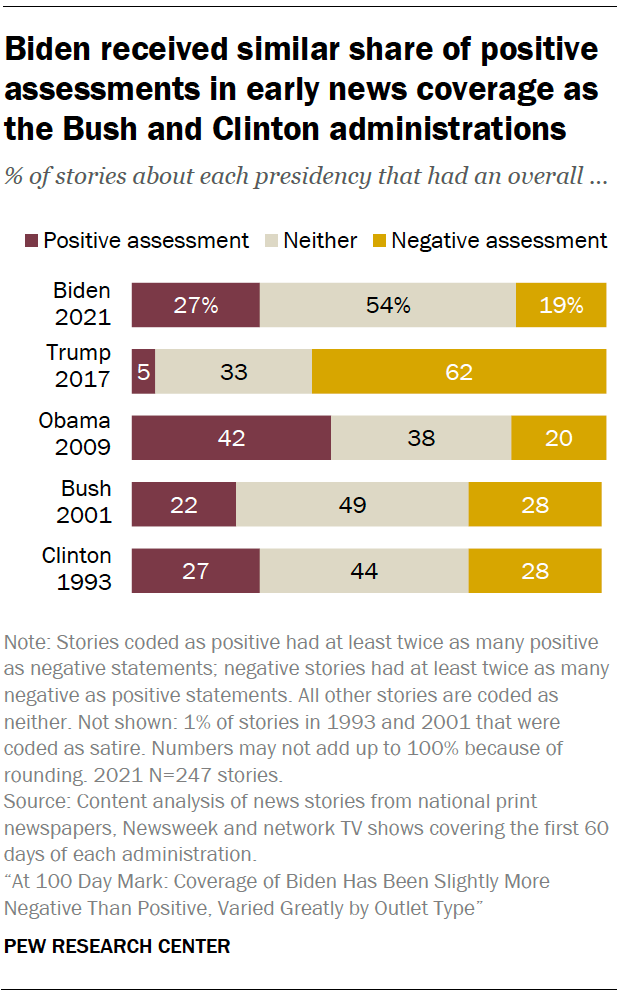
Biden received similar share of positive assessments in early news coverage as the Bush and Clinton administrations

Compared with the coverage among these seven outlets in the first 60 days of the Trump, Obama, Bush and Clinton presidencies, assessments of Biden’s start in office were the most likely to be neither positive nor negative, with the positive slightly outweighing negative.

About a quarter of stories in this smaller sample (27%) offered positive assessments of the Biden administration, versus about two-in-ten (19%) that offered negative assessments. But the largest share (54%) were neither positive nor negative.

As in the main sample, this stands in contrast to the far more negative than positive mix of assessments in the news stories about Trump’s first 60 days in office (62% negative vs. 5% positive).

Biden’s positive coverage sits at similar levels as Clinton and Bush (27% and 22%, respectively). The early days of these two presidencies had higher shares that were negative (28% for both) than for Biden. Early coverage of the Obama administration still stands apart as having far more stories that were positive (42%) than any of the other four.

Focus on policy and agenda over leadership and character in early Biden coverage mirrors that of Bush in 2001

Heavy focus on policy over leadership in early Biden news coverage closely mirrors coverage of Bush in 2001

With the start of the Biden administration, a major shift back toward the Clinton and Bush presidencies came in the way journalists framed the coverage of the day’s events with far more focus on policy and agenda than on leadership and character.

Two-thirds of stories in the smaller 2021 sample (67%) were framed around policy and agenda, while 33% were framed around leadership and character. This is nearly identical to the 65%-35% split during Bush’s first 60 days and similar to the 58%-42% split of Clinton’s early days.

Coverage of the Obama administration in this sample was equally divided between these two frames, while coverage of the first 60 days of the Trump administration stood apart from the others with a heavy orientation around leadership and character – 69% of all stories.

Majority of stories in early 2021 were about domestic issues, more so than in the past

News coverage of Biden gave more prominence to domestic issues than in past administrations

Stories about each president were classified by subject matter into three broad topic categories (in 2021, 47 specific topics were studied): domestic issues, foreign affairs, and the president’s management and political approach.

In the early days of 2021, domestic issues dominated, as the coronavirus pandemic pervaded much of the news coverage. Fully 68% of stories in this smaller, long-term sample were oriented around domestic issues, versus 17% around foreign affairs and 15% around personal issues of management and politics.

This is far less focus on the personal and political than during early coverage of either Trump or Obama (40% and 44%, respectively) and more in line with the level President Bush saw in 2001 (22%). One thing that remained consistent across all five administrations is having foreign affairs account for a small share of the total coverage – never above 24%.

As discussed in Chapter 1, one major component of early coverage of the Biden administration was the pervasive presence of the pandemic. While COVID-19 was not coded for in the smaller comparative sample, its impact is seen in the specific topic areas getting the most attention. Health care received higher levels of attention during Biden’s first 60 days than in early coverage of the four past presidencies: 18% of stories were about health care, roughly on par with the 22% about the economy.


4. Most Americans have been following news about the Biden administration closely

In addition to the analysis of the media coverage of the early days of the Biden administration, this project for the first time includes a survey component in order to study Americans’ sense of the news coverage of the new administration based on their different media diets.

To do this, the survey, conducted March 8-14, 2021, asked respondents to indicate whether they got political news in the past week from each of 25 national news outlets (see Appendix A for details). These are the same outlets included in the content analysis study.1

Roadmap to Part 2 of this report

Part 2 of this study examines Americans’ views and perceptions of the coverage of the early days of the administration. Here, Americans are grouped according to the audience makeup of the outlets that they turned to for political news in the past week. The study focuses on six groups in this section, based on the 25 outlets asked about: those whose media diets are only on the right, those whose media diets tend toward the right, those whose media diets are neither on the left nor the right, those whose media diets tend toward the left, and those whose media diets are only on the left. Categorizing Americans by their media diet in this way can show how views of news coverage and current events can be connected to one’s news choices (see Appendix A for more detail).

Respondents were then grouped into six groups based on the audience makeup of the outlets they turn to for political news. These outlets are classified in the content study as having a left-leaning, right-leaning or mixed audience.

About one-in-ten Americans have media diets only on the right or only on the left

The largest segment of U.S. adults (41%) have media diets that are neither on the left nor on the right – they might turn to outlets with left-leaning and right-leaning audiences at roughly similar rates, or they might turn more toward outlets with mixed audiences. The next largest group (26%) includes those who have media diets that tend toward the left but include some outlets with right-leaning and/or mixed audiences as well. One-in-ten adults turn only to outlets with left-leaning audiences, 9% look only to outlets with right-leaning audiences, and 5% tend to go to outlets with audiences that lean to the right.2

Additionally, 9% of respondents did not get political news in the past week from any of the 25 outlets asked about. This group is less likely to follow news about a variety of topics and is not included in most of the analysis in this report.

The demographic makeup of these media diet groups varies.

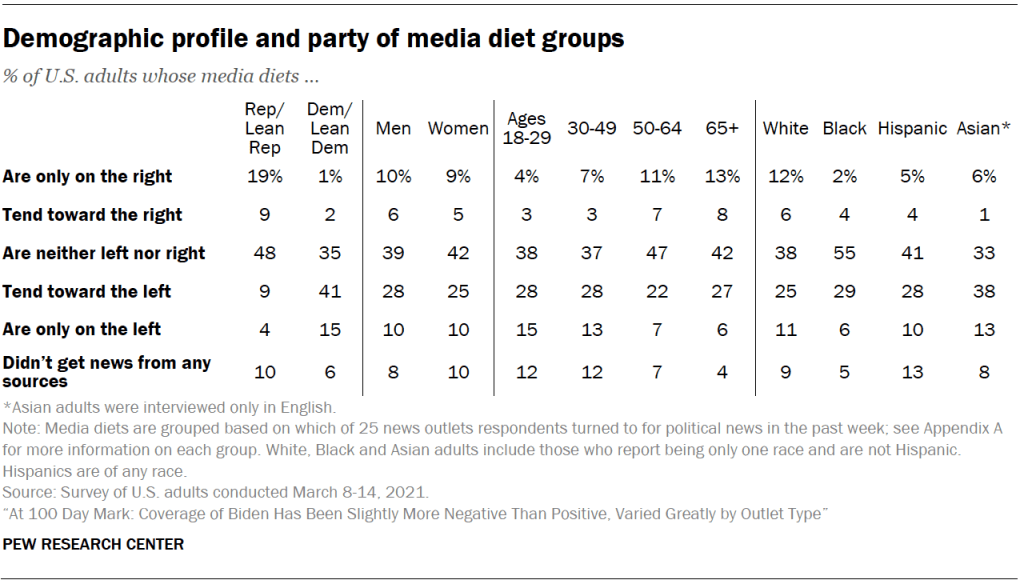
Looking at the groups by party identification, almost one-in-five Republicans and those who lean toward the GOP (19%) have media diets that are only on the right (vs. 1% of Democrats and Democratic leaners), and Democrats are more likely than Republicans to have media diets only on the left (15% vs. 4%). Another large portion of Democrats (41%) have media diets that tend toward the left, compared with 9% of Republicans.

Demographic profile and party of media diet groups

But substantial portions of those who identify with or lean toward each party – including nearly half of Republicans (48%) and about a third of Democrats (35%) – have media diets that do not tend to the left or the right.

Aside from party identification, younger Americans are more likely than those older than them to have a media diet that is only on the left, while older Americans are more likely to have a media diet only on the right. And White adults are more likely than Black adults to turn to news outlets with exclusively right-leaning or left-leaning audiences, while Black adults are more inclined toward a more mixed news diet.

Most U.S. adults paying at least fairly close attention to Biden administration actions

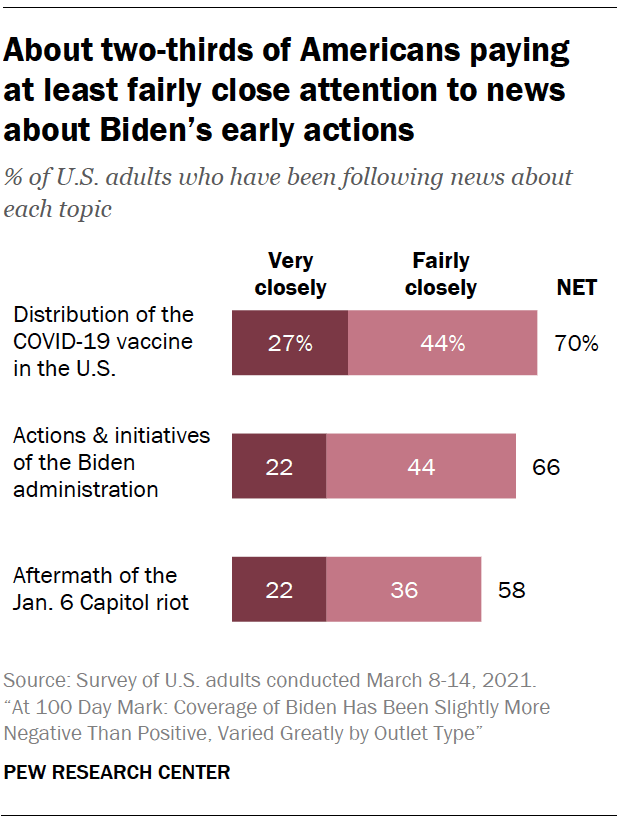
About two-thirds of Americans paying at least fairly close attention to news about Biden’s early actions

Overall, a majority of Americans have paid attention to news about the Biden administration as well as to two other major storylines in the news.

About one-in-five U.S. adults (22%) said at the time of the survey that they had been following news about the Biden administration very closely, with another 44% following it fairly closely. Meanwhile, 27% of Americans had been following news about the COVID-19 vaccine distribution very closely (another 44% were following fairly closely), and 22% said they were following news about the aftermath of the Jan. 6 Capitol riot very closely (with 36% following fairly closely).

Americans who turn only to outlets with left-leaning audiences least likely to be following Biden news very closely

There is some difference in attention to the Biden administration’s actions across media diet groups. Three-in-ten Americans whose news diet is exclusively on the right said they had been following the actions and initiatives of the Biden White House very closely, nearly double the 16% following the administration very closely in the group that gets news only from sources with left-leaning audiences. Individuals with a more mixed news diet were about in the middle, with 21% following the Biden administration’s actions very closely.

Americans’ awareness of news about specific initiatives of the Biden administration varies

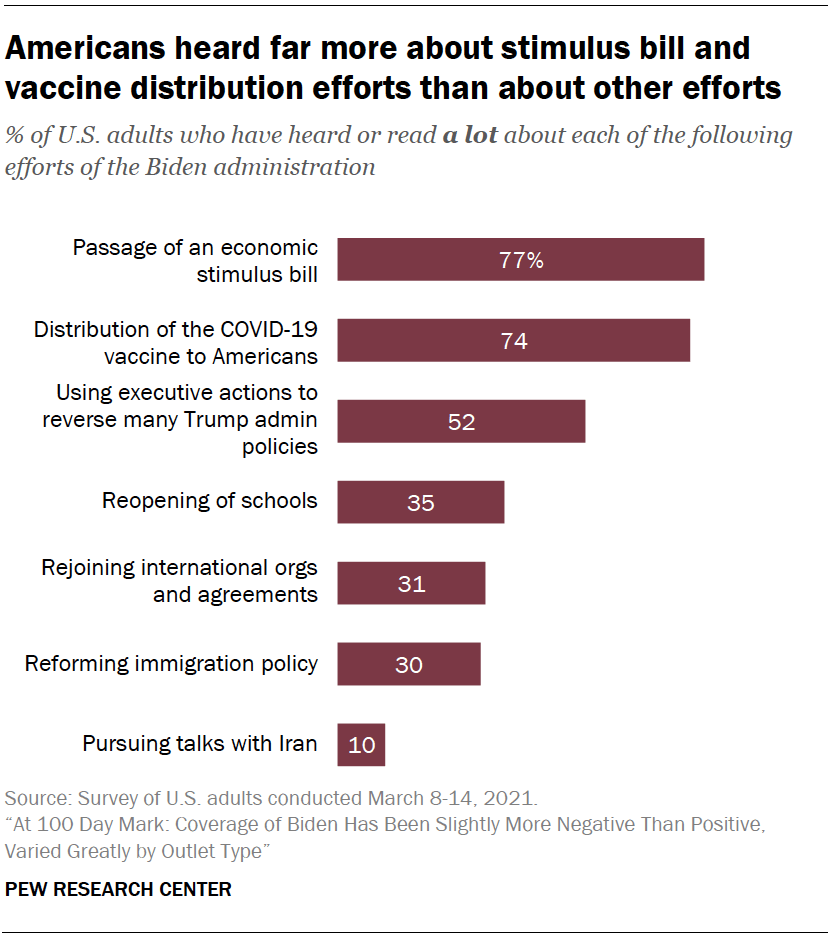
Americans heard far more about stimulus bill and vaccine distribution efforts than about other efforts

A number of key events related to the new Biden administration occurred in the weeks leading up to and during the March 8-14 survey period. These included the following:

  • Biden signed the $1.9 trillion stimulus package on March 11, after it made its way through both houses of Congress.
  • Vaccine distribution was quickly ramping up, and by the first week in March, the nation was averaging 2 million doses a day. On March 11, Biden gave his first prime-time address on vaccine distribution.
  • In December, Biden announced a goal of opening most K-12 schools in the first 100 days of his presidency.
  • As the number of migrants, particularly children, built up at the southern border, media coverage intensified. House Speaker Nancy Pelosi described the situation as a “humanitarian crisis” on March 14.
  • The Biden administration used executive actions to reverse a number of policies put into place by the Trump administration.

Of seven specific efforts presented in the survey, the passage of the economic stimulus bill and the distribution of the COVID-19 vaccine topped the list as the ones that were gaining the most attention. Nearly eight-in-ten U.S. adults (77%) said they had heard a lot about the stimulus package, while 74% had heard a lot about vaccine distribution. Roughly half of U.S. adults (52%) said they have heard a lot about Biden’s use of executive actions to reverse many Trump administration policies. Fewer had heard a lot about the reopening of schools (35%), rejoining international organizations and agreements (31%) or the reforming of immigration policy (30%), and just 10% said they had heard a lot about pursuing talks with Iran.

Media diet groups differed substantially in how much they had heard about these topic areas. Those in the group with a right-only media diet were most likely to say they had heard a lot about Biden’s use of executive actions (79%), nearly twice the share as those who turn only to outlets with left-leaning audiences (42%). This group with a right-only media diet also was about twice as likely as the group with a left-only media diet to have heard a lot about immigration reform efforts (45% vs. 21%).

The one storyline the groups with media diets on the left or tending left had heard considerably more about than the right-only and tend-right groups was vaccine distribution. Three-quarters of those who turn only to outlets with left-leaning audiences had heard a lot about the vaccine rollout, as had 85% of those whose media diet tends toward the left. That compares with 59% of the group with a right-only media diet and 64% of the group whose media diet tends toward the right.

Awareness of news about the economic stimulus bill was more consistent across groups. About three-quarters (73%) or more of all five media diet groups said they had heard a lot about the stimulus bill.

The two topics most Americans were most likely to have heard a lot about are largely in line with the analysis of coverage in Part I, where the economy and health care were the two leading topics covered during the period studied.

Further, the differences based on media diet in what Americans hear a lot about in some cases reflects more coverage from outlets with left- or right-leaning audiences. The topic of immigration, for example, was more likely to be covered by outlets with right-leaning audiences, and Americans who got political news exclusively from those outlets in this survey were about twice as likely to have heard a lot about the efforts to reform immigration policy than those turning only to outlets with left-leaning audiences (45% vs. 21%). The topic of health care, on the other hand, was covered at a higher rate by outlets with left-leaning audiences, and Americans with media diets only on the left or tending toward the left were more likely to have heard a lot about the COVID-19 vaccine distribution than those with only-right and tend-right media diets.

Americans who only get news from outlets with right-leaning audiences are more likely to have heard about Biden’s executive actions

Across media diets, Americans report seeing far more news related to Biden’s policy agenda than character

Across all media diet groups, more have seen coverage focused on Biden’s policy positions than his character

Roughly seven-in-ten Americans overall (69%) said in the March survey they had been seeing more news related to Biden’s policy positions and agenda than to his character and leadership skills.

This is an area of broad consistency across those with varying media diets. Americans who turn only to or tend to get news from outlets with left-leaning audiences were the most likely to say they had seen more news about Biden’s policy positions (79% and 77%, respectively). Still, a majority of those who consume news only from sources with right-leaning audiences (62%) said the same.

These responses are also in line with the findings from the study of news coverage in Part I, which showed a heavier focus on Biden and his administration’s policy and agenda than on character and leadership skills, including a majority of stories from outlets with left-leaning audiences, right-leaning audiences and mixed audiences.

5. Many Americans say early media assessments of Biden administration were mostly positive, fair and accurate

On balance, many Americans sense that the early assessments of the Biden administration have been largely positive, and majorities say that the news coverage has been mostly accurate and fair.

But when it comes to specific issue areas the administration has focused on, whether people have seen mostly positive, negative or mixed evaluations in the news often varies sharply based on where they get their news, according to the survey conducted March 8-14, 2021.

Just under half of U.S. adults say early coverage of the Biden administration has been mostly positive … and majorities say coverage of Biden administration has been accurate, fair

From what they’ve seen and heard in the news, Americans say the early assessments of the Biden administration have been more positive than negative. Just under half (46%) say that the early coverage they’ve seen about the Biden administration has offered mostly positive assessments, while far fewer – 14% – say the news they’ve come across has given mostly negative assessments. About four-in-ten (39%) say the assessments have been about an even mix of positive and negative.

When asked about whether the coverage of Biden is accurate and fair, large majorities of Americans say that it has been both. About seven-in-ten (69%) say that the news coverage they have seen about the Biden administration has been mostly accurate as opposed to mostly inaccurate (26%), and 76% say that coverage has been mostly fair, as opposed to mostly unfair (21%).

Across all media diet groups, substantial portions say early news assessments of Biden have been mostly positive

Those who turn only or mostly to outlets whose audiences lean right politically are much more likely to say they see negativity toward Biden in the news, though substantial portions of these groups also say that the coverage has been mostly positive.

More than half (55%) of those who tend toward the left in their news diet say assessments have been mostly positive, while another 40% say it has been an even mix. Americans who turn only to sources with left-leaning audiences are more evenly divided between those who say the news they’ve seen has been mostly positive (45%) and those who say the assessments have been a pretty even mix (47%). But very few in either of these groups say they have seen mostly negative evaluations of Biden (4% and 6%, respectively).

Meanwhile, about a third of U.S. adults who turn only to sources with right-leaning audiences (35%) say the news they’ve seen has mostly offered negative assessments of Biden. The same is true of those whose media diets tend toward the right (32% say coverage has been mostly negative).

Americans whose news diets are more in the middle or mixed fall somewhere in between the other groups when it comes to the share who say the coverage has been mostly negative (15%).

Americans’ sense of more positive rather than negative coverage stands in some contrast to the content analysis of coverage, which tilted more negative than positive. Still, the differences by media diet match the general pattern of coverage from outlets with right-leaning or left-leaning audiences: Those with a left-only diet are most likely to sense positive or evenly mixed coverage, and the group with a right-only diet have seen a greater degree of negative coverage.

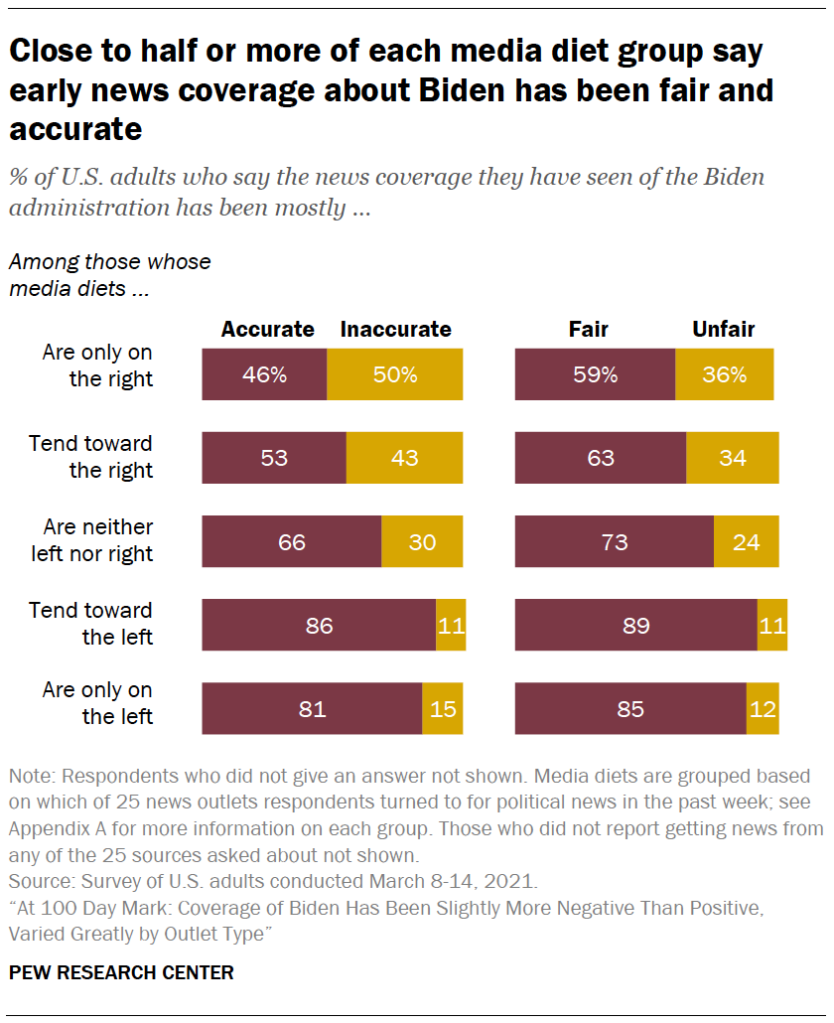
Close to half or more of each media diet group say early news coverage about Biden has been fair and accurate

Beyond the assessment of how the administration was doing in these early days, majorities in each media diet group say the news coverage they’ve seen about the Biden administration thus far has been fair rather than unfair, although those with media diets on the left are more likely than those with media diets on the right to say this.

More than eight-in-ten Americans whose media diets include only outlets with left-leaning audiences or tend toward the left say the coverage they’ve seen has mostly been fair. That sentiment is shared by 59% of those whose media diets are only on the right and 63% whose diets tend toward the right. Roughly three-quarters of those with media diets in the middle (73%) say the coverage they’ve seen has been fair.

There is somewhat less consensus around the accuracy of coverage. Those who only get news from outlets with right-leaning audiences are the most likely to say they have seen inaccurate coverage (50%), while large majorities of those whose media diets tend toward the left say coverage has been accurate.

Public is more divided on news assessments of specific Biden administration issue areas

Of specific Biden administration initiatives, Americans say coverage of vaccine distribution is most positive

For three of seven specific Biden administration policy priorities asked about, at least half of respondents who had heard about them said the coverage they saw was mostly positive: distribution of the COVID-19 vaccine, the passage of the economic stimulus bill and rejoining international organizations and agreements.

Of those who have heard of each topic, 65% say that the coverage of the vaccine distribution has been mostly positive, and 56% say the same of the coverage of the economic stimulus bill. For the topics of the administrations’ pursuit of talks with Iran and reformation of immigration policy, far fewer of those who have heard about it say that coverage of each topic has been mostly positive, with some saying that it has been mostly negative (about a quarter for each topic) and a plurality saying that they saw an even mix of positive and negative coverage.

Americans with media diets only on the right are more likely than those with media diets only on the left to say they have seen negative coverage of several major initiatives of the Biden administration – from the passage of the economic stimulus bill, to efforts at immigration reform, to the reopening of schools. For example, 42% of those with media diets only on the right say that coverage they have seen of the economic stimulus bill has been mostly negative, versus just 4% among the group with a media diet only on the left who say the same.

Those who consume media exclusively from outlets with left-leaning audiences are far more likely than the right-only group to see the coverage of these topics as positive. For example, 57% of the left-only group say that the coverage they’ve seen of the Biden administration using executive actions to reverse policies of the Trump administration has been mostly positive, versus just 17% of the right-only group who say the same.

Americans’ view that vaccine distribution received the most positive coverage is in line with the content analysis findings, which show that health care was the only topic (of the five most common topics) to have more stories that had a positive assessment of the Biden administration than a negative one. For the other common topics – just like assessment of news coverage of the administration overall – Americans’ assessment of the coverage as more positive than negative stands in contrast to the content studied. For the other four most common topics – economy, immigration, political skills and nominations/hires – there was either about an equal portion of negative and positive stories or were more negative than positive stories.

Americans differ by media diet on tone of news coverage they’ve seen of specific Biden administration issues during early days of Biden’s presidency

Most Americans say Biden’s relationship with the media is healthy

About two-thirds of U.S. adults say relationship between Biden and the media is healthy

One major narrative throughout the Trump presidency was the tension between Donald Trump and the news media. Trump regularly criticized both the news media generally and individual outlets, referring often to “fake news” and calling news media outlets the “enemy of the people.” Americans were well aware of this tension. In a 2017 survey, a strong majority (83%) said that the relationship between Trump and the media was generally unhealthy.

There has not been the same kind of attention to the relationship between the news media and the Biden administration, and indeed, about two-thirds of Americans (66%) say that relationship between the two is generally healthy.

This sentiment is especially widespread among those whose news diets include outlets with left-leaning audiences. But those with media diets that tend toward or are exclusively on the right feel differently: Six-in-ten or more in those two groups say that relationship is generally unhealthy.

Americans’ sense of the Biden-media relationship differs based on news diet

The 2017 survey found that large majorities of both Democrats and Republicans said the relationship between Trump and media was unhealthy (media diet groupings were not a part of the 2017 survey).

6. Americans differ by news diet on which Biden administration issues get too much coverage, which get too little

The survey asked respondents whether five different priorities of the Biden White House are getting too much attention, too little attention or the right amount of attention from the news media as a whole during the early days of the administration.

The COVID-19 pandemic is the only issue that a majority of Americans (58%) say is getting the right amount of coverage, although more people say the pandemic is getting too much attention (28%) than too little (13%).

When it comes to racial inequality, there is no clear consensus: 28% say the issue continues to get too little attention, 36% say it gets too much attention and 35% say the level of coverage given to racial inequality is about right.1

On the three other topics (climate policy, immigration and the U.S. economy), more Americans say these issues are receiving too little coverage than too much. And in all three cases, about a third or more of U.S. adults say the issues are receiving about the right amount of coverage.

These opinions differ sharply based on people’s media diets. Majorities of those who get political news only from outlets with right-leaning audiences say that racial inequality (75%), climate policy (64%) and the coronavirus outbreak (57%) are receiving too much attention, compared with no more than 13% who say this among news consumers on the left side of the media ecosystem.

Meanwhile, most of those with a right-only media diet say the U.S. economy (77%) and immigration (59%) are getting too little attention, compared with far fewer among those who get their news only from outlets with left-leaning audiences (23% and 37%, respectively).

The prevailing view among those with a left-only media diet is that the U.S. economy (68%), the coronavirus outbreak (75%) and immigration (50%) are getting about the right amount of coverage. A clear majority (57%) say climate policy gets too little attention, while people in the left-only group are evenly divided over whether racial inequality is getting too little attention (43%) or the right amount (42%).

Those with a media diet only on the right say race, climate, COVID-19 get too much news coverage

Those with a media diet in the middle – neither on the left nor the right – vary more in their views of the attention devoted to these issues. The one topic that more than a third in this group say is getting too much attention is racial inequality (41%), although another 36% say it is getting the right amount. Those with a media diet in the middle are also divided on whether climate policy is getting the right amount of attention (37%) or too little (34%) and whether the U.S. economy is getting the right amount of attention (43%) or too little (48%).

Americans differ on what topic is getting the most attention from their main news sources during Biden’s early days

Right-only media group more divided than others on which story their sources have focused on most

The survey also asked Americans which of these five issues is getting the most attention from their main news sources (rather than the news media overall).

There is no clear consensus among those who only get political news from outlets with right-leaning audiences. About a third in this group (34%) say their news sources are covering immigration the most out of the five issues, followed by 27% who choose the coronavirus outbreak and 21% who say they see the most coverage of the U.S. economy. Fewer say racial inequality (13%) or especially climate policy (3%) are getting the most attention.

Among those with media diets only on the left, nearly two-thirds (64%) say the coronavirus is the most covered of the five topics. People in this left-only group are much less likely than those whose news diets are only on the right to name immigration as the topic getting the most attention (5% vs. 34%). People on the left side of the media ecosystem are no more likely than those on the right to say racial inequality (9%) or climate policy (2%) are getting the most attention from their news sources.

Like those on the left, news consumers with media diets in the middle (neither on the left nor the right) are most likely to say the pandemic is getting the most attention from their main news sources (53%), with the economy next at 21%.

While the list of topics asked about here differs somewhat from those in the study of news coverage in Part 1, these assessments of what their main sources are giving the most attention for each media diet group align fairly closely with the share of coverage devoted to each. The coronavirus was very prevalent throughout coverage in the outlets with left-leaning and mixed audiences, with the economy as the top specific topic area. Among the outlets with right-leaning audiences, immigration was the most covered topic area.

The importance placed on sources

Most Americans pay at least some attention to sources cited in news stories

One way in which coverage differs across the news outlet groups is the types of sources cited in their news stories. Most Americans – including similar shares across media diet groups – say they pay at least somewhat close attention to the sources cited in a news story. About one-in-five of all U.S. adults (22%) pay very close attention to sources, while another 45% pay somewhat close attention. No more than 35% of respondents in any media diet group say they do not pay close attention.

When asked about six possible factors in evaluating the trustworthiness of a story, Americans also rank the sources cited relatively highly. Half of Americans say which news organization publishes a story is very important in determining whether it is trustworthy, and 47% say the same about the sources cited. U.S. adults are far more likely to give high importance to these factors than they are to put a lot of stock in one’s gut instinct about a story (30%), the journalist who reported it (24%), the person who might have shared it with them (23%) or the response on social media (6%).

There is again a good deal of consistency across media diet groups, with a few exceptions. Those who turn only to news sources with right-leaning audiences are twice as likely as those with a left-only news diet to say they place great importance on their gut instinct (40% vs. 20%) and on the journalist reporting the story (36% vs. 18%) when deciding whether to trust a story.

7. Americans more familiar with Biden administration’s proposed minimum wage increase than vaccination goals

Another way of understanding people’s sense of the news is to ask about their knowledge of current events. The survey asked five separate fact-based questions related to issues in the early days of the Biden administration, including the number of doses required for the available COVID-19 vaccines and the administration’s initial goals surrounding vaccine distribution. Other questions gauged knowledge about Biden’s proposed increase in the national minimum wage, his actions surrounding the border wall and climate-related measures.

Overall, Americans are most likely to know the administration’s proposed increase of the national minimum wage: About eight-in-ten U.S. adults (81%) correctly answered that Biden proposed to raise the minimum wage to $15 per hour. Most Americans answered this question correctly regardless of whether they get their news from outlets with right-leaning audiences, left-leaning audiences or some mixture of the two.

Most Americans know that the number of doses required varies for the vaccines approved in the U.S.

Solid majorities of U.S. adults overall and in all media diet groups also correctly responded that the number of doses required for the COVID-19 vaccines approved for use in the U.S. varies. About seven-in-ten Americans (69%) correctly answered this question, including at least 65% in each of the five news consumption groups.

About one-in-five Americans (18%) incorrectly said that all the vaccines require two doses; this is true for the Pfizer-BioNTech vaccine and the Moderna vaccine but not for the Johnson & Johnson vaccine.1

Roughly half of Americans correctly said the Biden administration reentered the Paris agreement and rescinded the Keystone XL permits

Americans are less likely to correctly answer the other three questions, in some cases reflecting differences across media diet groups.

When it comes to climate policy, about half of U.S. adults (49%) knew that the Biden administration both reentered the Paris agreement and rescinded the construction permits for the Keystone XL pipeline. Smaller shares said the administration has only reentered the Paris agreement (14%) or only stopped construction on the pipeline (8%), but not both, and 28% said that they were not sure.

The media diet groups most likely to answer this question correctly were those who turn only to outlets with right-leaning audiences (61%) and the group whose diet tends toward outlets with left-leaning audiences (60%). Those least likely to answer correctly were U.S. adults who consume a mixture of outlets or outlets whose audiences lean in neither direction (41%).

About four-in-ten U.S. adults know which border wall actions Biden administration has taken

When asked about administration actions surrounding immigration, about four-in-ten U.S. adults (43%) correctly answered that the new administration has stopped federal funding of the border wall between the U.S. and Mexico but has not ordered that parts of the wall be taken down. One-in-five incorrectly said that both of these things have happened, while one-third said they were not sure.

There is only modest variation across media groups on this question, with the share answering correctly ranging from 52% among those with media diets that tend toward the left to 39% among the group in the middle.

Much uncertainty over whether White House is meeting initial vaccination goal; those with left-leaning media diets most likely to answer correctly

The greatest level of uncertainty emerged around the question of whether the Biden administration has been meeting its initial goal of vaccinating 1 million Americans per day (a goal that has since been increased to 200 million in the first 100 days).

A third of Americans (33%) correctly responded that the administration was meeting or exceeding this goal, while 27% said the White House was not meeting its goal and 40% said they were unsure.

This question also had the greatest variance across media diet groups. More than four-in-ten of those with a media diet only on the right (44%) or tending to the right (45%) responded that the administration was not meeting this goal, more than any other group. Those whose media diets tend left were most likely to give the correct response – 46% said the administration was meeting or exceeding its initial goal, compared with just 20% who said it was not.

Methodology

The findings in this report are based on the analysis of two main sources of data: 1) a content analysis of the news coverage of the first 60 days of the Biden administration, and 2) a nationally representative survey of U.S. adults conducted between March 8 to March 14, 2021. Below are the details of both of the data sources for this study.

Content analysis of first 60 days of the Biden administration

Media coverage of President Joe Biden and his administration is based on data collected from Jan. 21 to March 21, 2021. This time frame begins the day following the inauguration of Biden and includes all weekdays through his 60th day in office (not including inauguration day). The study is not an analysis of media bias or evaluating whether the coverage of Biden and his administration was accurate or fair.

The content analysis part of the study was conducted in multiple parts: a main analysis, and a secondary long-term trend analysis. The main analysis studied stories about the president and his administration from a set of digital and broadcast news media (the main sample). In order to compare across administrations going back to the Clinton administration in 1993, the analysis pulled stories from a limited set of outlets (the long-term trend sample).

Sample design

Main sample

The main sample incorporated news stories from a selection of broadcast outlets, digital news sites and the digital presence of broadcast outlets and print newspapers. The selection criteria for each platform are described below, along with the sampling method for qualifying stories from each outlet.

For this project, qualifying stories were defined as stories that were at least 50% about Biden and/or his administration.

Broadcast
Outlet selection

News content was collected and studied from the television broadcasts of four cable news networks (CNN, FOX, MSNBC, Newsmax), four major broadcast networks (ABC, CBS, NBC, PBS), and radio broadcasts of NPR and the two highest rated talk radio shows focused on political affairs and current events, according to Talkers.com (The Sean Hannity Show and The Mark Levin Show).1 In all cases, the first 30 minutes of selected programs (defined below), Monday through Friday, were screened for qualifying segments.

Cable

Cable news programming draws its largest audience in prime time. Researchers studied the news programs on each cable network between 7 p.m. and 11 p.m. for MSNBC and Fox News and between 5 p.m. and 11 p.m. for CNN.2 Shows from CNN, Fox News and MSNBC were randomly selected such that two shows from each cable network were included in the sample on each weekday. In all cases, the first 30 minutes of selected programs, Monday through Friday were screened for qualifying stories.

Newsmax is a new addition to this group of cable news outlets this year. Sometimes viewed as a potential competitor to Fox News, about one-in-ten U.S. adults report getting news from the outlet. Researchers studied the first 30 minutes of one selected program from Monday through Thursday between 7 p.m. and 11 p.m.

Network nightly news

Researchers studied weekday evening news programming from ABC, CBS, NBC and PBS’s NewsHour. Two outlets were randomly selected each day and the first 30 minutes of selected programs (all shows ran for 30 minutes except for PBS NewsHour) were screened for qualifying segments.

Radio

Every episode of The Mark Levin Show and The Sean Hannity Show (radio) was included in the sample. For NPR, episodes from Morning Edition and All Things Considered were randomly selected such that one was included each day. Researchers studied the first 30 minutes of each selected program for qualifying segments.

Radio broadcasts were recorded from online streams using automated tools or were accessed through their website. In cases where shows were accidentally not recorded, or the streams were preempted for other programming (although the show itself was still produced), researchers used alternate recordings such as official podcasts.

Story selection

For each outlet selected each day, human coders separated the shows based on segments and determined whether each segment should be included in the sample using a set of rules regarding relevance to the administration. Consequently, only segments from the first 30 minutes of a program that focused primarily (at least 50%) on Biden or the administration’s actions and policies were analyzed. Segments that were shorter than 60 seconds were not included in this study.

Outlets and shows included in the broadcast component of the main sample:

Network ABC World News Tonight with David Muir CBS Evening News with Norah O’Donnell NBC Nightly News with Lester Holt PBS NewsHour

Cable CNN

  • The Situation Room with Wolf Blitzer (5 p.m.)
  • Erin Burnett OutFront (7 p.m.)
  • Anderson Cooper 360 (8 p.m.)
  • Cuomo Prime Time (9 p.m.)
  • CNN Tonight with Don Lemon (10 p.m.)

Fox News

  • Fox News Primetime (7 p.m.)3
  • Tucker Carlson Tonight (8 p.m.)
  • Hannity (9 p.m.)
  • The Ingraham Angle (10 p.m.)

MSNBC

  • The ReidOut (7 p.m.)
  • All In With Chris Hayes (8 p.m.)
  • The Rachel Maddow Show (9 p.m.)
  • The Last Word With Lawrence O’Donnell (10 p.m.)

Newsmax

  • Greg Kelly Reports (7 p.m.)
  • Stinchfield (8 p.m.)
  • Spicer & Co. (9 p.m.)
  • Rob Schmitt Tonight (10 p.m.)

Radio All Things Considered (NPR) Morning Edition (NPR) The Mark Levin Show The Sean Hannity Show

Digital content
Outlet selection

Digital outlets Digital outlets were selected using Comscore Media Metrix® data to determine the average monthly audience of outlets. Unique visitors from October 2020 through December 2020, which were acquired from the Comscore Media Metrix® database for Total Digital Population, were used to determine a site’s inclusion in the study. To be included, a site needed to receive at least 30 million average unique monthly visitors in October-December 2020. This led to a list that included several technology, sports and culture sites that did not extensively report on national affairs or political issues. Researchers then filtered this list to only include sites that produce original content and cover political issues. Sites that mainly focus on either regional or international news were excluded. One business-focused outlet with political content and higher web traffic in the time period analyzed than any other similar outlets (Business Insider) was included.

Additionally, to broaden the list of outlets included in this study, two additional outlets were included, Breitbart and Washington Examiner. While these two outlets did not receive at least 30 million average unique monthly visitors in October-December 2020, these outlets were included based on a combination of factors, such as their presence on social media (according to data from CrowdTangle) and relatively high online sharing and engagement during the early parts of the 2020 presidential election and COVID-19 pandemic.

The digital sites included were:

  • Breitbart
  • Business Insider (now a part of Insider)
  • BuzzFeed
  • HuffPost
  • New York Post
  • Newsweek
  • Politico
  • The Hill
  • Vox
  • Washington Examiner

Digital content of print newspapers Four print newspapers that focused on national affairs in their daily coverage were selected for study, based on their circulation ranking (according to the Alliance for Audited Media). Researchers also verified that the websites of these four legacy newspapers had traffic of at least 30 million average monthly unique visitors in October through December 2020 using Comscore data.

The included newspapers were:

  • The New York Times
  • USA Today
  • The Wall Street Journal
  • The Washington Post

Digital content of broadcast outlets Researchers verified that the digital presence for the broadcast outlets identified above had traffic of at least 30 million average monthly unique visitors in October through December 2020 using Comscore data. The digital presence of most broadcast outlets met these criteria, with the websites of MSNBC, Newsmax, PBS, The Mark Levin Show and The Sean Hannity Show (radio) being the exceptions. Digital content for these outlets was not included.

Story selection

The number of stories selected from each outlet was determined by Comscore traffic. Two stories per weekday were selected from outlets whose websites received more than 50 million average monthly unique visitors from October through December 2020, and one story per weekday was selected from sites below 50 million average monthly unique visitors during this time period (the number of stories per weekday for each outlet is noted below).

The outlets from which two digital stories were coded were: ABC News, Business Insider, CBS News, CNN, Fox News, NBC News, NPR, New York Post, Politico, The Hill, The New York Times, The Washington Post, USA Today and The Wall Street Journal. The outlets from which one digital story was coded were: Breitbart, BuzzFeed, HuffPost, Newsweek, Vox and Washington Examiner.

Each day’s homepage was used to select stories; homepages were drawn from snapshots that were taken at 9 a.m., 2 p.m., and 9 p.m. (all times Eastern) each day, and the snapshots used were randomly selected from among those times (e.g., one day may use 9 a.m. and the next 2 p.m.). These snapshots were collected using automated methods; across all sites, researchers wrote scripts to record the HTML and screenshot of the front page of each site at each of the times above.

The most prominent stories (in terms of where they appear on the home page) that focused on the Biden administration (at least 50% about Biden or his administration) were selected for analysis. Stories that were shorter than 100 words were not included in this study. If there were no relevant stories from the randomly selected snapshot, other snapshots from that day were substituted.

The main sample had a total of 1,812 stories.

Long-term trend sample

The long-term trend sample duplicates for 2021 the samples used in other Pew Research Center studies conducted on the beginning of the presidencies of Bill Clinton, George W. Bush, Barack Obama and Donald Trump. This sample consisted of seven media outlets – two newspapers, one news magazine and four broadcasts – in order to replicate these previous studies. The 2021 time period was Jan. 21 to March 21, 2021. This covers the first 60 days of Biden’s presidency, excluding Inauguration Day, in line with these previous studies.

The specific outlets, selected to develop a sample of coverage provided by the national press, are:

Newspapers The New York Times The Washington Post

Weekly magazine  Newsweek

Evening network TV ABC World News Tonight with David Muir CBS Evening News with Norah O’Donnell NBC Nightly News with Lester Holt PBS NewsHour

Newspaper stories were drawn from the digital replica of section front pages (i.e., national news, style, business, metro, Sunday review) of the print edition of each outlet. Stories that were shorter than 100 words were not included in this study. In prior years, all such stories, as well as the complete newscasts and complete issues of Newsweek, were the basis for the sample of television and magazine stories. In this study, a random sample drawn from all available stories that met these criteria was included. The resulting sample had 247 stories. The 2017 sample had 326 stories, the 2009 sample had 362 stories, the 2001 sample had 333 stories and the 1993 sample had 566 stories.

Human coding of stories

The data in this study was created by a team of nine coders who were trained specifically for this project.

The central variables in this study were:

  • Topic refers to the general subject matter of the story. For every story, each paragraph was assigned a topic, and the overall topic assigned to the story was the one that was the most common. There were a total of 47 different topics, which are grouped below into the three broad topic categories used throughout the analysis – domestic issues, foreign affairs issues and personal/political issues:
    • Domestic issues – Abortion/family planning, agriculture, budget/taxes, business/economy, campaign finance, crime incident or trends, crime/gun policy, culture/arts, defense (U.S. domestic), disasters, education, election process, environment, health care, immigration, labor, poverty, religion, science/technology, women’s rights, Social Security, energy, news media, racial justice, LGBTQ+, other civil liberties/civil rights broadly, social media, made-up information/conspiracy – QAnon specifically, other made-up information/conspiracy, refusal to accept Biden administration, other domestic issues
    • Foreign affairs – Foreign trade, Iraq/Afghanistan generally, Iran, China, Russia, North Korea, European Union/NATO, United Kingdom, Israel/Palestine, international terrorism, other foreign issues
    • President’s management and political approach – Personal profile/character, appointments/nominations, political skills, political philosophy/ideology
    • Other
  • Frame refers to what the journalist is evaluating the president and his administration on. This study classified stories into one of two main frames: 1) leadership and character or 2) core ideology and policy agenda. For every story, each paragraph was assigned a frame, and the overall frame assigned to the story was the one that accounted for a majority of the paragraphs.
  • Source type refers to a person, group, organization or publication cited in a story. Citations included direct or indirect quotes, interviews, attributions or references accompanying factual information. With this in mind, researchers coded for the presence of 13 different source types. Within each story, a source type was coded only once, even if it was cited repeatedly. The 13 source types were:
    • Biden or a member of the administration
    • A member of the Biden family (including Jill Biden)
    • Congressional Democrat
    • Congressional Republican
    • State or local officials
    • Foreign officials
    • Donald Trump & Trump family/former administration (including Melania Trump, Donald Trump Jr., Ivanka Trump, Jared Kushner, Eric Trump, Mike Pence, Mike Pompeo, Bill Barr, Rudy Giuliani, Michael Flynn)
    • Issue-based groups and experts
    • Businesses/corporations
    • Polls
    • Other journalist or news organization
    • Citizen
    • Anonymous/unnamed sources
  • Assessment of the Biden administration refers to a story’s overall tone toward the president and the administration’s actions or words. The evaluation measure is tied to the frame of the story – either leadership and character or core ideology and policy agenda. Each statement (made by a source or the reporter him or herself) in a story was analyzed to determine whether it carried a positive, negative or neither positive nor negative assessment of the president and his administration. Within a story, there needed to be at least twice as many positive as negative statements for a story to be considered positive, and vice versa to be considered negative. Otherwise stories were coded as neither positive nor negative.
  • COVID-19 focus refers to the extent to which COVID-19 was mentioned as part of the story. This captures whether COVID-19 was a major part of the story (focused on in at least 50% of the story), a minor part of the story (at least one mention, but not focused on in at least 50% of the story), or not a part of the story.
  • Trump mention: Each story was analyzed for whether former President Donald Trump was mentioned. This includes all mentions of him, but not of other individuals such as his family members and former administration members or of references to his administration broadly.
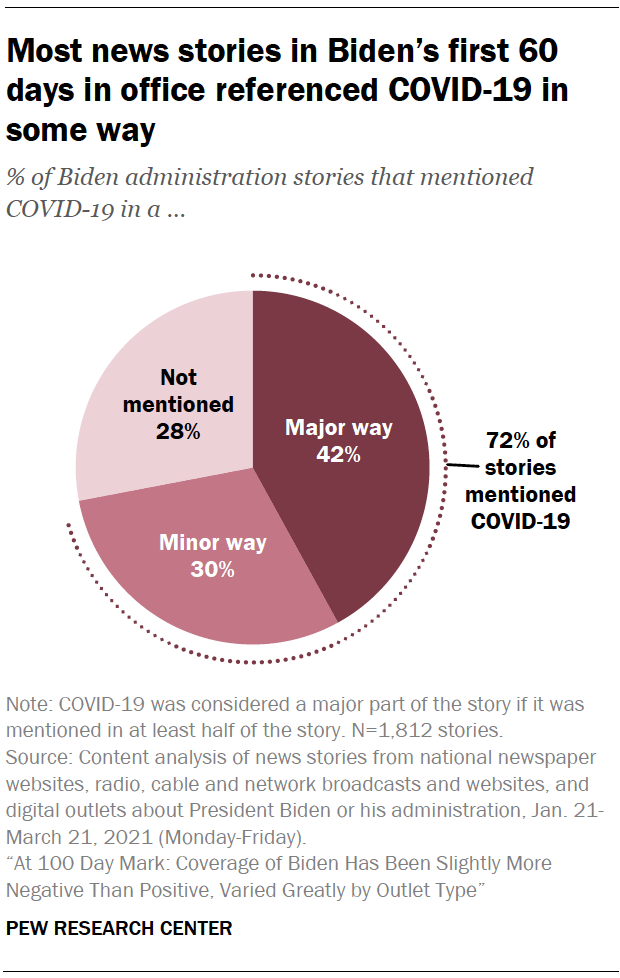
Coders were given multiple sets of news stories from each platform type to evaluate during the training period. Once internal agreement on how to code the variables was established, coding of the content for the study began. The Krippendorf Alpha estimate for each variable is below. For each variable, this estimate is based on a minimum of 103 stories and upwards of 133 stories.

  • Topic: 0.80
  • Frame: 0.64
  • Source type: Minimum of 0.73 (average of 0.83)
  • Assessment of the Biden administration: 0.72
  • COVID-19 focus: 0.92

Throughout the coding process, staff discussed questions as they arose and arrived at decisions under supervision of the content analysis team leader. In addition, the team leader checked coders’ accuracy throughout the process.

The American Trends Panel survey methodology

Overview

The American Trends Panel (ATP), created by Pew Research Center, is a nationally representative panel of randomly selected U.S. adults. Panelists participate via self-administered web surveys. Panelists who do not have internet access at home are provided with a tablet and wireless internet connection. Interviews are conducted in both English and Spanish. The panel is being managed by Ipsos.

Data in this report is drawn from the panel wave conducted March 8 to March 14, 2021. A total of 12,045 panelists responded out of 13,540 who were sampled, for a response rate of 89%. This does not include five panelists who were removed from the data due to extremely high rates of refusal or straightlining. The cumulative response rate accounting for nonresponse to the recruitment surveys and attrition is 4%. The break-off rate among panelists who logged on to the survey and completed at least one item is 1%. The margin of sampling error for the full sample of 12,045 respondents is plus or minus 1.5 percentage points.

This is the latest report in Pew Research Center’s ongoing investigation of the state of news, information and journalism in the digital age, a research program funded by The Pew Charitable Trusts, with generous support from the John S. and James L. Knight Foundation.

Panel recruitment

American Trends Panel recruitment surveys

The ATP was created in 2014, with the first cohort of panelists invited to join the panel at the end of a large, national, landline and cellphone random-digit-dial survey that was conducted in both English and Spanish. Two additional recruitments were conducted using the same method in 2015 and 2017, respectively. Across these three surveys, a total of 19,718 adults were invited to join the ATP, of whom 9,942 (50%) agreed to participate.

In August 2018, the ATP switched from telephone to address-based recruitment. Invitations were sent to a random, address-based sample of households selected from the U.S. Postal Service’s Delivery Sequence File. Two additional recruitments were conducted using the same method in 2019 and 2020, respectively. Across these three address-based recruitments, a total of 17,161 adults were invited to join the ATP, of whom 15,134 (88%) agreed to join the panel and completed an initial profile survey. In each household, the adult with the next birthday was asked to go online to complete a survey, at the end of which they were invited to join the panel. Of the 25,076 individuals who have ever joined the ATP, 13,540 remained active panelists and continued to receive survey invitations at the time this survey was conducted.
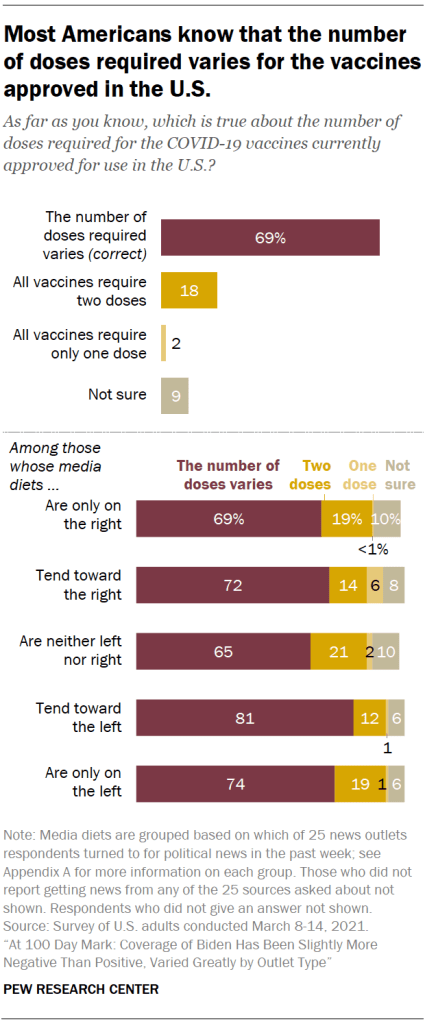
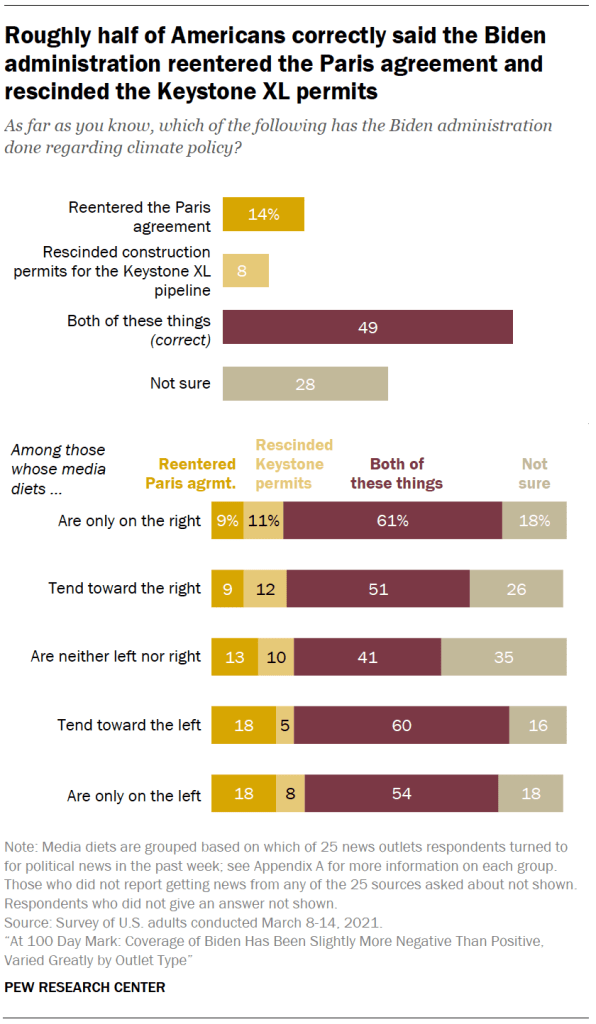
The U.S. Postal Service’s Delivery Sequence File has been estimated to cover as much as 98% of the population, although some studies suggest that the coverage could be in the low 90% range.4 The American Trends Panel never uses breakout routers or chains that direct respondents to additional surveys.

Sample design

The overall target population for this survey was non-institutionalized persons ages 18 and older, living in the U.S., including Alaska and Hawaii.

Questionnaire development and testing

The questionnaire was developed by Pew Research Center in consultation with Ipsos. The web program was rigorously tested on both PC and mobile devices by the Ipsos project management team and Pew Research Center researchers. The Ipsos project management team also populated test data which was analyzed in SPSS to ensure the logic and randomizations were working as intended before launching the survey.

Incentives

All respondents were offered a post-paid incentive for their participation. Respondents could choose to receive the post-paid incentive in the form of a check or a gift code to Amazon.com or could choose to decline the incentive. Incentive amounts ranged from $5 to $20 depending on whether the respondent belongs to a part of the population that is harder or easier to reach.

Differential incentive amounts were designed to increase panel survey participation among groups that traditionally have low survey response propensities.

Data collection protocol

The data collection field period for this survey was March 8 to 14, 2021. Postcard notifications were mailed to all ATP panelists with a known residential address on March 8, 2021.

Invitation and reminder dates

On March 8 and March 9, invitations were sent out in two separate launches: Soft Launch and Full Launch. Sixty panelists were included in the soft launch, which began with an initial invitation sent on March 8. The ATP panelists chosen for the initial soft launch were known responders who had completed previous ATP surveys within one day of receiving their invitation. All remaining English- and Spanish-speaking panelists were included in the full launch and were sent an invitation on March 9.

All panelists with an email address received an email invitation and up to two email reminders if they did not respond to the survey. All ATP panelists that consented to SMS messages received an SMS invitation and up to two SMS reminders.

Data quality checks

To ensure high-quality data, the Center’s researchers performed data quality checks to identify any respondents showing clear patterns of satisficing. This includes checking for very high rates of leaving questions blank, as well as always selecting the first or last answer presented. As a result of this checking, five ATP respondents were removed from the survey dataset prior to weighting and analysis.

Weighting

Weighting dimensions

The ATP data was weighted in a multistep process that accounts for multiple stages of sampling and nonresponse that occur at different points in the survey process. First, each panelist begins with a base weight that reflects their probability of selection for their initial recruitment survey (and the probability of being invited to participate in the panel in cases where only a subsample of respondents were invited). The base weights for panelists recruited in different years are scaled to be proportionate to the effective sample size for all active panelists in their cohort. To correct for nonresponse to the initial recruitment surveys and gradual panel attrition, the base weights for all active panelists are calibrated to align with the population benchmarks identified in the accompanying table to create a full-panel weight.

For ATP waves in which only a subsample of panelists are invited to participate, a wave-specific base weight is created by adjusting the full-panel weights for subsampled panelists to account for any differential probabilities of selection for the particular panel wave. For waves in which all active panelists are invited to participate, the wave-specific base weight is identical to the full-panel weight.

In the final weighting step, the wave-specific base weights for panelists who completed the survey are again calibrated to match the population benchmarks specified above. These weights are trimmed (typically at about the 1st and 99th percentiles) to reduce the loss in precision stemming from variance in the weights. Sampling errors and test of statistical significance take into account the effect of weighting.

The following table shows the unweighted sample sizes and the error attributable to sampling that would be expected at the 95% level of confidence for different groups in the survey.

The unweighted sample sizes and the error attributable to sampling

Sample sizes and sampling errors for other subgroups are available upon request. In addition to sampling error, one should bear in mind that question wording and practical difficulties in conducting surveys can introduce error or bias into the findings of opinion polls.

Dispositions and response rates

Final dispositions
Cumulative response rate


© Pew Research Center, 2021

Appendix A: Grouping outlets by audience ideology and grouping survey respondents by media diet

Determining the ideological composition of news outlets’ audiences

For the analysis of both the content and survey data, each of the 25 news outlets included in this study is grouped according to the ideological composition of its audience. This grouping is based on the ratio of the proportion of the audience who self-identify as liberal Democrats (including independents who lean Democrat) to the proportion that identify as conservative Republicans (including independents who lean Republican).

Outlet by ideological profile of audience

A survey conducted between March 8 to March 14, 2021, asked respondents to indicate whether they got political news from 25 national news outlets in the past week (more details on the survey are available in the methodology. An outlet is considered to have a left-leaning audience if the proportion of all audience members that identify as liberal Democrats is at least two-thirds higher than the proportion that identify as conservative Republicans. Alternatively, an outlet is considered to have a right-leaning audience if the proportion of all audience members that identify as conservative Republicans is at least two-thirds higher than the proportion that identify as liberal Democrats. And an outlet is classified as having a mixed audience if neither liberal Democrats nor conservative Republicans make up at least two-thirds more of the audience than the other.

Grouping respondents by media diet

Respondents were grouped into six media diet groups based on the outlets they said they turned to in the past week for political news. News outlets’ audiences were defined as left-leaning, right-leaning, or mixed based on the ideological composition of their audiences.

Researchers assigned each outlet a value based on these ideological compositions. Outlets with a left-leaning audience were given a value of 0; outlets with a mixed audience were given a value of 1; and outlets with a right-leaning audience were given a value of 2. For each respondent, researchers then calculated the mean of the values of the outlets they turned to. Respondents were grouped based on these means.

News diet groups

The detailed description of each category:

  • U.S. adults whose media diets are only on the right – Respondents whose outlet mean was 2.
  • U.S. adults whose media diets tend toward the right – Respondents whose outlet mean was from 1.5 to 1.99.
  • U.S. adults whose media diets are neither on the left nor on the right – Respondents whose outlet mean was 0.51 to 1.49.
  • U.S. adults whose media diets tend toward the left – Respondents whose outlet mean was from 0.01 to 0.5.
  • U.S. adults whose media diets are only on the left – Respondents whose outlet mean was 0.
  • U.S. adults who didn’t turn to any outlets – Respondents who didn’t get political news from any of the 25 outlets in the past week.

Appendix B: Detailed tables comparing news coverage of the first 100 days vs. 60 days of the Trump administration in 2017

This study analyzes the news coverage of the first 60 days of the Biden administration. For historical context, the current report often makes comparisons to the Center’s 2017 study about news coverage of the beginning of the Trump administration, which reported findings on the first 100 days of that administration. Since the current study is looking at the first 60 days and the 2017 study looked at the first 100 days, researchers assessed how similar or different the 2017 results would have been if the analysis were of the first 60 days. The findings overall show minimal differences that do not change the overall conclusions of the findings in any substantial way. Across the measures for assessment of the Trump administration, top topics covered and frame, the numbers do not differ by more than 5 percentage points. For example, 74% of the stories of the full 100 days of the beginning of the Trump administration were framed around Trump and the administration’s leadership and character, compared with 70% of the stories for the first 60 days.

Top topics
Story framing
Assessment of Trump/administration

Appendix C: Content analysis detailed tables

AT THE 100 DAY MARK: NEWS COVERAGE OF BIDEN SLIGHTLY MORE NEGATIVE THAN POSITIVE, BUT VARIES DRAMATICALLY BY OUTLET

CONTENT ANALYSIS DETAILED TABLES DATE JAN. 21, 2021– MARCH 21, 2021

Topic: Domestic issues
Topic: President’s management and political approach
Topic: Foreign affairs
Story framing
Assessment of Biden/administration
COVID-19 focus
Trump mentions
Source type
Number of source types cited
Broad topic category for each presidency based on comparison sample
Topic: Domestic issues for each presidency based on comparison sample
Topic: Foreign affairs for each presidency based on comparison sample
Topic: President’s management and political approach for each presidency based on comparison sample
Frame for each presidency based on comparison sample
Assessment of each presidency based on comparison sample


Acknowledgments

Pew Research Center is a subsidiary of The Pew Charitable Trusts, its primary funder. This is the latest report in Pew Research Center’s ongoing investigation of the state of news, information and journalism in the digital age, a research program funded by The Pew Charitable Trusts, with generous support from the John S. and James L. Knight Foundation. This report is a collaborative effort based on the input and analysis of the Center’s journalism and media research team, communications, design, digital and editorial teams. Find related reports online at www.pewresearch.org/pewresearch-org/journalism.

Research Team

Amy Mitchell, Director, Journalism Research Katerina Eva Matsa, Associate Director, Journalism Research Jeffrey Gottfried, Senior Researcher Galen Stocking, Senior Computational Social Scientist Elisa Shearer, Research Associate Mark Jurkowitz, Senior Writer Mason Walker, Research Analyst Maya Khuzam, Research Assistant Kirsten Worden, Research Assistant Naomi Forman-Katz, Research Assistant Jacob Liedke, Research Assistant Claudia Deane, Vice President, Research Nick Bertoni, Panel Manager Ricki Wood, Content analysis coder Dana Popky, Content analysis coder Zoe Shadan, Content analysis coder Andrea Tillotson, Content analysis coder

Communications and Web Publishing

Rachel Weisel, Senior Communications Manager Hannah Klein, Communications Manager Andrew Grant, Communications Associate Sara Atske, Associate Digital Producer

Editorial and Graphic Design

Michael Lipka, Editorial Manager, Religion Research David Kent, Senior Copy Editor Margaret Porteus, Information Graphics Designer Andrea Caumont, Digital Engagement Manager John Gramlich, Senior Writer/Editor Bruce Drake, Senior Editor